


separating fiction from reality... a couple of days on the DYNO


Thread Starter

Joined: Oct 2001
Posts: 6,279
Likes: 728
From: Florence, Alabama
post 208
"i use a 0-100 psi pressure sensor from FJO. i combine it w a length of stainless steel 3/16 brakeline and a few fittings. the sensor puts out 0-5 volts to my datalogit. this is the same type of sensor that i use for logging fuel pressure.
i will of course be logging backpressure on all 4 turbos and will post a chart/rpm."
i refer to it as EMP (exhaust manifold pressure) and i believe it is what you are referring to as EMAP... an important metric that will be posted Versus boost along an RPM X plot.
"the log showed 16 psi of EMP (exhaust manifold pressure---"backpressure") at 12 psi boost. one of the design objectives of any good turbo manifold is to have as little EMP as possible."
post 204
this was on my second shakedown outing just pedaling along. i spent my time today attempting to get my big HP laptop dialed into my datalogit. no luck but am taking my car to a local computer guy tomorrow to get it working. i want more samples per second.
i will do a 20 psi run tomorrow and get the number.
"i use a 0-100 psi pressure sensor from FJO. i combine it w a length of stainless steel 3/16 brakeline and a few fittings. the sensor puts out 0-5 volts to my datalogit. this is the same type of sensor that i use for logging fuel pressure.
i will of course be logging backpressure on all 4 turbos and will post a chart/rpm."
i refer to it as EMP (exhaust manifold pressure) and i believe it is what you are referring to as EMAP... an important metric that will be posted Versus boost along an RPM X plot.
"the log showed 16 psi of EMP (exhaust manifold pressure---"backpressure") at 12 psi boost. one of the design objectives of any good turbo manifold is to have as little EMP as possible."
post 204
this was on my second shakedown outing just pedaling along. i spent my time today attempting to get my big HP laptop dialed into my datalogit. no luck but am taking my car to a local computer guy tomorrow to get it working. i want more samples per second.
i will do a 20 psi run tomorrow and get the number.
Last edited by Howard Coleman; Oct 18, 2010 at 07:57 PM.

Additionally, it would be helpful to log the EBP (exhaust back pressure) post turbine for one pull, if possible. Even just a single measurement at the target boost would be useful to characterize the exhaust and help to calculate the actual turbine pressure ratios.
Thread Starter
Joined: Oct 2001
Posts: 6,279
Likes: 728
From: Florence, Alabama

with some computer help i did get my HP laptop logging. so far it doesn't appear that the sample rate is significantly better than my older computer. perhaps there is more to learn.
i did do another partial (3rd gear) pull, the results are above.
boost peak was PIM 31,816 which is 30.54 psi.
rpm was 4940.
EMP or EMAP (pre-turbo backpressure) was 25 psi.
fuel pressure 71 psi
EGT (preturbo of course) was a happy 1567 F
intake air temp pre- alcohol was 79 F. ambient 64
max throttle 2.17 volts or 87%
Knock was pretty much nothing at 19
AFR 10.1... i haven't touched the tune from last year but certainly will when Luke and i get together
the run stopped abruptly when the intercooler to elbow tube blew off.
all on 93 octane and meth.
i may or may not have a sticking wastegate but will let Luke figure that out... probably done til dyno.
Last edited by Howard Coleman; Oct 19, 2010 at 03:34 PM.
Thread Starter
Joined: Oct 2001
Posts: 6,279
Likes: 728
From: Florence, Alabama
finally got onto the dyno monday. the first turbo up is the GT4094r. this is the largest of the four. prior to dynoing i put about 150 miles on the newly assembled (mostly 09) engine. i was getting spiked boost on the road but other than that i was quite surprised how much mid pedal punch the turbo had.
i arrived at Beyond Redline (a 90 mile trip) approx 10 a m and Luke straightened out the WG and worked on a few odds and ends and we actually started our first runs at 1:30 PM.
Luke spent at least an hour removing fuel on the vacuum side of the Map and we then turned off my AVC-R and started boost runs. it was determined that the spring in my Tial 60 mm wastegate delivered about 19-20 psi. and we were still way rich.
the chart (below) is from my last run. after about 10 20 psi pulls we both decided we had a problem. the motor was running ratty around the 20 area.
all the metrics were really good and still very rich... but the motor wasn't happy w something. that's why we got out of it before 8000.
Luke was thinking a slightly plugged secondary injector. i pulled the plugs and it sure looks like it. the rear lower plug was significantly cleaner (running hotter) than the front lead plug. so we called it a day. i changed plugs, drove home using only the primaries (easy)... once home i checked them and the front and rear are identical so it does look like something is up w the secondary injector or any directly connected system... most probable is the injector itself.
while we were interupted in our process (not totally unexpected on the first go-around) we do have some observations:
1. considering the turbo size (80 pounds per minute) making 19 psi at 4239 RPM is pretty sporty. there is a major difference in power output between a GT35 at 19 psi and a GT4094.
average compressor area:
GT35.............................................6 .386 sq inches
GT4094.........................................8.1 75....................(plus 28%)
airflow is everything.
2. EMP (exhaust manifold pressure) is looking really good. if you will note the chart below EMP is the bottom plot. note the data is as of 4239 RPM, 23,608 PIM which is 18.9 PSI and the EMP is 11 PSI! the highest reading while making about 20 psi is the spike to 28. to give you neighboring data to the spike... the reading before the spike is 17 and the 2 readings after the spike are 19 and 20. so it looks like a combination of the ports, manifold, and downpipe are delivering 1 to 1 on boost.
low EMP is great for all the engine components... less EMP is less heat retention in the engine, manifolding and turbo. more importantly it means the energy from the engine is being used to drive the turbine and not wasted sitting around in the engine and manifold.
3. this is reflected in the low EGTs. the EGT line is second from the top. it does show a spike to 1635 at the selected data point but if you look at the chart data you see it dropping significantly. to give you some reference, at the data point just before the boost spike (5914 rpm) the EGT is 1505! that's 19 PSI at just about 6000 on an 80 pound turbo and an EGT 150 degrees cooler than target. at 10.3 AFR.
4. finally Knock. the all important tuning tool and engine indicator. i don't have it up on the chart but it averaged slightly under 20 which is really low and similar to knock readings cruising down the highway. even while running ratty w a partially occluded injector the engine was happy.
we didn't get to attempting to generate hp monday since we were dealing w initial tuning and then had to deal w a problem. i did see that on the last run the motor made 361 SAE rwhp at 5500. this was at the 19-20 boost level, extremely rich (10.2), very cold EGT (timing) and running very ratty. you wouldn't have like the sound...
my target w all my motors is 400 SAE rwhp at 5500 and then of course more on the top end. if you can make 400 at 5500 the top end will look good.
incidentally when you shift from 7800 you end up generally around 5400 so you want lots going on at 5500. porting provides the answer here as well as tuning and here EGT is key.
so Monday was not quite as sweet in Green Bay as Sunday Night a mile from Beyond Redline where the Packers finally got the best of Burt Favre... but we will take it, diagnose the problem (probably injector) and move rapidly forward.
given how far out of optimum we are i am very excited to get back on the rollers.

howard
i arrived at Beyond Redline (a 90 mile trip) approx 10 a m and Luke straightened out the WG and worked on a few odds and ends and we actually started our first runs at 1:30 PM.
Luke spent at least an hour removing fuel on the vacuum side of the Map and we then turned off my AVC-R and started boost runs. it was determined that the spring in my Tial 60 mm wastegate delivered about 19-20 psi. and we were still way rich.
the chart (below) is from my last run. after about 10 20 psi pulls we both decided we had a problem. the motor was running ratty around the 20 area.
all the metrics were really good and still very rich... but the motor wasn't happy w something. that's why we got out of it before 8000.
Luke was thinking a slightly plugged secondary injector. i pulled the plugs and it sure looks like it. the rear lower plug was significantly cleaner (running hotter) than the front lead plug. so we called it a day. i changed plugs, drove home using only the primaries (easy)... once home i checked them and the front and rear are identical so it does look like something is up w the secondary injector or any directly connected system... most probable is the injector itself.
while we were interupted in our process (not totally unexpected on the first go-around) we do have some observations:
1. considering the turbo size (80 pounds per minute) making 19 psi at 4239 RPM is pretty sporty. there is a major difference in power output between a GT35 at 19 psi and a GT4094.
average compressor area:
GT35.............................................6 .386 sq inches
GT4094.........................................8.1 75....................(plus 28%)
airflow is everything.
2. EMP (exhaust manifold pressure) is looking really good. if you will note the chart below EMP is the bottom plot. note the data is as of 4239 RPM, 23,608 PIM which is 18.9 PSI and the EMP is 11 PSI! the highest reading while making about 20 psi is the spike to 28. to give you neighboring data to the spike... the reading before the spike is 17 and the 2 readings after the spike are 19 and 20. so it looks like a combination of the ports, manifold, and downpipe are delivering 1 to 1 on boost.
low EMP is great for all the engine components... less EMP is less heat retention in the engine, manifolding and turbo. more importantly it means the energy from the engine is being used to drive the turbine and not wasted sitting around in the engine and manifold.
3. this is reflected in the low EGTs. the EGT line is second from the top. it does show a spike to 1635 at the selected data point but if you look at the chart data you see it dropping significantly. to give you some reference, at the data point just before the boost spike (5914 rpm) the EGT is 1505! that's 19 PSI at just about 6000 on an 80 pound turbo and an EGT 150 degrees cooler than target. at 10.3 AFR.
4. finally Knock. the all important tuning tool and engine indicator. i don't have it up on the chart but it averaged slightly under 20 which is really low and similar to knock readings cruising down the highway. even while running ratty w a partially occluded injector the engine was happy.
we didn't get to attempting to generate hp monday since we were dealing w initial tuning and then had to deal w a problem. i did see that on the last run the motor made 361 SAE rwhp at 5500. this was at the 19-20 boost level, extremely rich (10.2), very cold EGT (timing) and running very ratty. you wouldn't have like the sound...
my target w all my motors is 400 SAE rwhp at 5500 and then of course more on the top end. if you can make 400 at 5500 the top end will look good.
incidentally when you shift from 7800 you end up generally around 5400 so you want lots going on at 5500. porting provides the answer here as well as tuning and here EGT is key.
so Monday was not quite as sweet in Green Bay as Sunday Night a mile from Beyond Redline where the Packers finally got the best of Burt Favre... but we will take it, diagnose the problem (probably injector) and move rapidly forward.
given how far out of optimum we are i am very excited to get back on the rollers.
howard


Thread Starter
Joined: Oct 2001
Posts: 6,279
Likes: 728
From: Florence, Alabama
sort of off topic but couldn't resist...
here are, in my book, two All Pros.
Nick Barnett primo inside linbacker Packers
and Luke Stubbs, equally accomplished at producing horsepower in anything.
Nick is looking for 850 rwhp from his 2010 black on black bad to the bone Camaro. it won't be long before i have him in an FD .
.

here are, in my book, two All Pros.
Nick Barnett primo inside linbacker Packers
and Luke Stubbs, equally accomplished at producing horsepower in anything.
Nick is looking for 850 rwhp from his 2010 black on black bad to the bone Camaro. it won't be long before i have him in an FD
.

Thread Starter
Joined: Oct 2001
Posts: 6,279
Likes: 728
From: Florence, Alabama
found the injector problem, there are 10 strands that make up the injector wire. all but two were broken.
injectors were cleaned and flowed today and checked out.
changed wastegate springs so can run 15 psi off the spring. (each turbo will be evaluated at 15, 20 and max boost)
i also checked both my MAP sensors and my EMP pressure sensor w my laboratory grade pressure gauge and found all three to be dead accurate.
milling manifold face tomorrow... it's was leaking a tad at the engine and hadn't been milled. my oversight.
should be back on dyno mon or tues.
hc
injectors were cleaned and flowed today and checked out.
changed wastegate springs so can run 15 psi off the spring. (each turbo will be evaluated at 15, 20 and max boost)
i also checked both my MAP sensors and my EMP pressure sensor w my laboratory grade pressure gauge and found all three to be dead accurate.
milling manifold face tomorrow... it's was leaking a tad at the engine and hadn't been milled. my oversight.
should be back on dyno mon or tues.
hc


Howard,
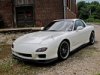
Maybe your buddy, Nick should look into this FD.
http://cgi.ebay.com/ebaymotors/ws/eB...tchlink:top:en
Ken
Maybe your buddy, Nick should look into this FD.
http://cgi.ebay.com/ebaymotors/ws/eB...tchlink:top:en
Ken

Thread Starter
Joined: Oct 2001
Posts: 6,279
Likes: 728
From: Florence, Alabama
"exposed tip or enclosed tip EGT sensor?"
i run the Bullet Series Hyper Exposed Tip probes from Exhaust Gas Technologies.
EGT's extended tips have a reactive time of 300 Ms versus the Enclosed Tip at 500 Ms.
for the rotary you want the largest probe diameter which is .25
sulphur in non synthetic oil is the key item that degrades tips BTW. a degrading tip will generate eratic readings before it fails.
the co recently came out w their own EGT amps recently... about $75 for the two channel model. i think they make great stuff and am just a retail customer so i am not offering anything here but my opinion.
hc
i run the Bullet Series Hyper Exposed Tip probes from Exhaust Gas Technologies.
EGT's extended tips have a reactive time of 300 Ms versus the Enclosed Tip at 500 Ms.
for the rotary you want the largest probe diameter which is .25
sulphur in non synthetic oil is the key item that degrades tips BTW. a degrading tip will generate eratic readings before it fails.
the co recently came out w their own EGT amps recently... about $75 for the two channel model. i think they make great stuff and am just a retail customer so i am not offering anything here but my opinion.
hc


Thread Starter
Joined: Oct 2001
Posts: 6,279
Likes: 728
From: Florence, Alabama
"what oil do you use?"
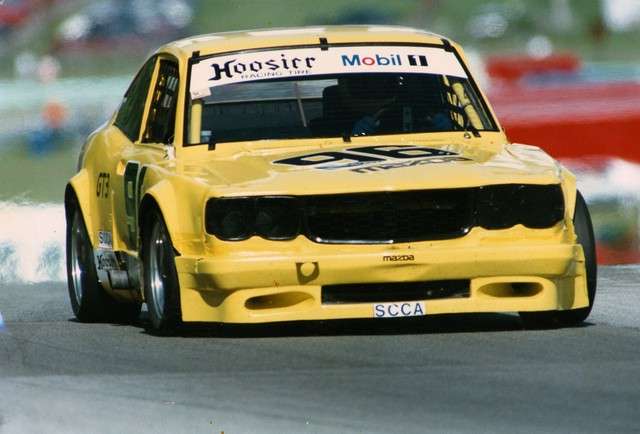
this pic of my racecar in 89 should answer your question
BTW, i run 5-30.
my ultimate go to guy for engine info is Jose LeDuc who has been making over 1000 rwhp from his 13b-rew for a number of years and has never steered me wrong. we got on the subject of oil a few years ago and he said, "Howard, i am dead serious on this piece of advice... there is only one oil that should go in your motor and one weight... Mobil One 5-30."
when Jose gets serious i listen very carefully. of course i was sponsored my Mobil One during the 6 seasons i ran my GT3 RX3 so i was already sold.
my motors make 80 psi oil pressure at 8000 rpm and look really good apart so i concentrate on other aspects of my project.
caveat: there could be 100 other oils that work fine. this thread will not be an oil debate thread... run whatever works for you.
but i do listen to advice from Jose and he has given me some really nice info over the years.
hc
this pic of my racecar in 89 should answer your question
BTW, i run 5-30.
my ultimate go to guy for engine info is Jose LeDuc who has been making over 1000 rwhp from his 13b-rew for a number of years and has never steered me wrong. we got on the subject of oil a few years ago and he said, "Howard, i am dead serious on this piece of advice... there is only one oil that should go in your motor and one weight... Mobil One 5-30."
when Jose gets serious i listen very carefully. of course i was sponsored my Mobil One during the 6 seasons i ran my GT3 RX3 so i was already sold.
my motors make 80 psi oil pressure at 8000 rpm and look really good apart so i concentrate on other aspects of my project.
caveat: there could be 100 other oils that work fine. this thread will not be an oil debate thread... run whatever works for you.
but i do listen to advice from Jose and he has given me some really nice info over the years.
hc
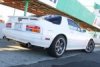
"what oil do you use?"
this pic of my racecar in 89 should answer your question
BTW, i run 5-30.
my ultimate go to guy for engine info is Jose LeDuc who has been making over 1000 rwhp from his 13b-rew for a number of years and has never steered me wrong. we got on the subject of oil a few years ago and he said, "Howard, i am dead serious on this piece of advice... there is only one oil that should go in your motor and one weight... Mobil One 5-30."
when Jose gets serious i listen very carefully. of course i was sponsored my Mobil One during the 6 seasons i ran my GT3 RX3 so i was already sold.
my motors make 80 psi oil pressure at 8000 rpm and look really good apart so i concentrate on other aspects of my project.
caveat: there could be 100 other oils that work fine. this thread will not be an oil debate thread... run whatever works for you.
but i do listen to advice from Jose and he has given me some really nice info over the years.
hc
this pic of my racecar in 89 should answer your question
BTW, i run 5-30.
my ultimate go to guy for engine info is Jose LeDuc who has been making over 1000 rwhp from his 13b-rew for a number of years and has never steered me wrong. we got on the subject of oil a few years ago and he said, "Howard, i am dead serious on this piece of advice... there is only one oil that should go in your motor and one weight... Mobil One 5-30."
when Jose gets serious i listen very carefully. of course i was sponsored my Mobil One during the 6 seasons i ran my GT3 RX3 so i was already sold.
my motors make 80 psi oil pressure at 8000 rpm and look really good apart so i concentrate on other aspects of my project.
caveat: there could be 100 other oils that work fine. this thread will not be an oil debate thread... run whatever works for you.
but i do listen to advice from Jose and he has given me some really nice info over the years.
hc
so 5-30. oops I have been using 10w50 mobile....

"my motors make 80 psi oil pressure at 8000 rpm and look really good apart so i concentrate on other aspects of my project."
So, are you talking about the FD or RX3 when you said this..
So, are you talking about the FD or RX3 when you said this..

Howard this may not tell you much but I ran the Mobil 1 Mobil Clean 5000 5W30 oil through my viscosity program to show you the viscosity of that oil at different temperatures. It really starts to get fun when you compare it to other oils. I have found that the weight on the bottle doesn't always mean a whole lot compared to the weight on the bottle of another brand. They may line up around 212*F but that's it. All oils are not created equal!
ASTM D 341 - 93
Calculated Viscosities at non-standard temperatures
Mobil 1 5W30
Viscosity (cSt) Temperature (°F)
2739.46 -4
1132.62 14
531.03 32
276.23 50
156.65 68
95.47 86
61.82 104
42.13 122
29.97 140
22.13 158
16.85 176
13.19 194
10.57 212
8.64 230
7.19 248
6.07 266
5.20 284
4.51 302
3.95 320
3.49 338
NOTES: 1) The minimum temperature should never be less than the pour point.
2) The maximum temperature should never be so great that the viscosity is less than 1.77 cSt or 32 SUS.
3) All calculations are based on ASTM Methods and use some intermediate rounding.
ASTM D 341 - 93
Calculated Viscosities at non-standard temperatures
Mobil 1 5W30
Viscosity (cSt) Temperature (°F)
2739.46 -4
1132.62 14
531.03 32
276.23 50
156.65 68
95.47 86
61.82 104
42.13 122
29.97 140
22.13 158
16.85 176
13.19 194
10.57 212
8.64 230
7.19 248
6.07 266
5.20 284
4.51 302
3.95 320
3.49 338
NOTES: 1) The minimum temperature should never be less than the pour point.
2) The maximum temperature should never be so great that the viscosity is less than 1.77 cSt or 32 SUS.
3) All calculations are based on ASTM Methods and use some intermediate rounding.
Thread Starter
Joined: Oct 2001
Posts: 6,279
Likes: 728
From: Florence, Alabama
"FD or RX3" 80 psi at 8000
FD.
my RX3 was dry sumped and ran 12 quarts of oil. considering the motor ran only between 7000 (no lower) and 10,000 for 35 minutes it appreciated the extra oil on board and the dry sump tank de-aerated the oil.
FD.
my RX3 was dry sumped and ran 12 quarts of oil. considering the motor ran only between 7000 (no lower) and 10,000 for 35 minutes it appreciated the extra oil on board and the dry sump tank de-aerated the oil.


 All of the sudden I feel all too motivated after reading this thread. I've missed a school day one to many...my watch still reads 2001.
Rotary Enthusiast

Joined: May 2003
Posts: 912
Likes: 1
From: Norway
Howard a quick question. How did you like the spool on the GT4094R?
Im thinking about going with a GT4088R with a tial 1.01 housing for my 13b BP engine. Aiming for max 500rwhp on my street car.
Problem im thinking about is backpressure since it's a BP engine and im gonna run E85 on it. Maybe to small exhaust housing?
JT
Im thinking about going with a GT4088R with a tial 1.01 housing for my 13b BP engine. Aiming for max 500rwhp on my street car.
Problem im thinking about is backpressure since it's a BP engine and im gonna run E85 on it. Maybe to small exhaust housing?
JT

Arrogant Wankeler


Joined: Nov 2006
Posts: 1,012
Likes: 233
From: Hunter Valley NSW Australia
Howard a quick question. How did you like the spool on the GT4094R?
Im thinking about going with a GT4088R with a tial 1.01 housing for my 13b BP engine. Aiming for max 500rwhp on my street car.
Problem im thinking about is backpressure since it's a BP engine and im gonna run E85 on it. Maybe to small exhaust housing?
JT
Im thinking about going with a GT4088R with a tial 1.01 housing for my 13b BP engine. Aiming for max 500rwhp on my street car.
Problem im thinking about is backpressure since it's a BP engine and im gonna run E85 on it. Maybe to small exhaust housing?
JT