


separating fiction from reality... a couple of days on the DYNO


Thread Starter


Joined: Oct 2001
Posts: 6,279
Likes: 728
From: Florence, Alabama
Hi JT,
good to hear from you... i was shocked at how much mid pedal torque/boost i am getting out of the GT4094. it drives like a GT35. this is before an additional bunch of optimisation that lies directly ahead. (as soon as my manifold flange gets ground flat- maybe today).
absolutely does not feel like a big turbo. 20 psi at 4300.
i like the 4094 over the 4088s.
8.175 compressor area V 7.167 for 88r and 7.26 for the 88.
while the hotside wheel area is only 6.423 my manifold design and ports are delivering backpressure at 1 to 1 w boost so the hotside isn't a problem and turbine wheels are heavy to spool so if you can do it w a lighter hotside all the better. EGTs were around 1500 at 6000 20 psi so no heat build in the motor w it's attendent intake charge pollution.
4094 is a compact (can fit alongside the motor so you can have short straight runners unlike the much bigger 4294) wicked 80 pound turbo.
BTW, backpressure is a killer on a BP as you have so much to start with below X rpm. manifolding and the exhaust ports are even more crucial. i do not like BPs on anything but a full out race app.
hc
good to hear from you... i was shocked at how much mid pedal torque/boost i am getting out of the GT4094. it drives like a GT35. this is before an additional bunch of optimisation that lies directly ahead. (as soon as my manifold flange gets ground flat- maybe today).
absolutely does not feel like a big turbo. 20 psi at 4300.
i like the 4094 over the 4088s.
8.175 compressor area V 7.167 for 88r and 7.26 for the 88.
while the hotside wheel area is only 6.423 my manifold design and ports are delivering backpressure at 1 to 1 w boost so the hotside isn't a problem and turbine wheels are heavy to spool so if you can do it w a lighter hotside all the better. EGTs were around 1500 at 6000 20 psi so no heat build in the motor w it's attendent intake charge pollution.
4094 is a compact (can fit alongside the motor so you can have short straight runners unlike the much bigger 4294) wicked 80 pound turbo.
BTW, backpressure is a killer on a BP as you have so much to start with below X rpm. manifolding and the exhaust ports are even more crucial. i do not like BPs on anything but a full out race app.
hc
Last edited by Howard Coleman; Nov 3, 2010 at 08:35 AM.


Hi JT,
good to hear from you... i was shocked at how much mid pedal torque/boost i am getting out of the GT4094. it drives like a GT35. this is before an additional bunch of optimisation that lies directly ahead. (as soon as my manifold flange gets ground flat- maybe today).
absolutely does not feel like a big turbo. 20 psi at 4300.
i like the 4094 over the 4088s.
8.175 compressor area V 7.167 for 88r and 7.26 for the 88.
while the hotside wheel area is only 6.423 my manifold design and ports are delivering backpressure at 1 to 1 w boost so the hotside isn't a problem and turbine wheels are heavy to spool so if you can do it w a lighter hotside all the better. EGTs were around 1500 at 6000 20 psi so no heat build in the motor w it's attendent intake charge pollution.
4094 is a compact (can fit alongside the motor so you can have short straight runners unlike the much bigger 4294) wicked 80 pound turbo.
BTW, backpressure is a killer on a BP as you have so much to start with below X rpm. manifolding and the exhaust ports are even more crucial. i do not like BPs on anything but a full out race app.
hc
good to hear from you... i was shocked at how much mid pedal torque/boost i am getting out of the GT4094. it drives like a GT35. this is before an additional bunch of optimisation that lies directly ahead. (as soon as my manifold flange gets ground flat- maybe today).
absolutely does not feel like a big turbo. 20 psi at 4300.
i like the 4094 over the 4088s.
8.175 compressor area V 7.167 for 88r and 7.26 for the 88.
while the hotside wheel area is only 6.423 my manifold design and ports are delivering backpressure at 1 to 1 w boost so the hotside isn't a problem and turbine wheels are heavy to spool so if you can do it w a lighter hotside all the better. EGTs were around 1500 at 6000 20 psi so no heat build in the motor w it's attendent intake charge pollution.
4094 is a compact (can fit alongside the motor so you can have short straight runners unlike the much bigger 4294) wicked 80 pound turbo.
BTW, backpressure is a killer on a BP as you have so much to start with below X rpm. manifolding and the exhaust ports are even more crucial. i do not like BPs on anything but a full out race app.
hc
Was the 20psi @4300rpm done in 3rd gear?
Thread Starter
Joined: Oct 2001
Posts: 6,279
Likes: 728
From: Florence, Alabama
4th gear and off the WG spring w the boost controller tuned off.
until i get back on the dyno and properly evaluate my total system i will not pop the champaign if you get my drift.
at that point i will offer conclusions based on comprehensive data that you will see... and of course don't know absolutely what i actually have.
the thread is still primarily about comparing 4 turbos.
hc
until i get back on the dyno and properly evaluate my total system i will not pop the champaign if you get my drift.
at that point i will offer conclusions based on comprehensive data that you will see... and of course don't know absolutely what i actually have.
the thread is still primarily about comparing 4 turbos.
hc
Thread Starter
Joined: Oct 2001
Posts: 6,279
Likes: 728
From: Florence, Alabama
things just got a little more interesting...
did you see thewierd's thread re the GT3582X being introduced at SEMA... 10-20% more air
avail at yearend.
i wonder how many would want this turbo to be added to the test. turbo #5.
if the turbo really is a few clicks ahead Garrett ought to be interested. i do have one contact which i will call. anyone else int'd call Garrett.
let's see whatcha got Garrett
did you see thewierd's thread re the GT3582X being introduced at SEMA... 10-20% more air
avail at yearend.
i wonder how many would want this turbo to be added to the test. turbo #5.
if the turbo really is a few clicks ahead Garrett ought to be interested. i do have one contact which i will call. anyone else int'd call Garrett.
let's see whatcha got Garrett
Rotary Enthusiast

Joined: May 2003
Posts: 912
Likes: 1
From: Norway
Hey Howard
Great info in your post as always
The engine is my old setup from a few years back with a verry big BP. The engine is new built and the NRS seals have about 3000 km on them and the same with the rotor housings. The rest of the seals are brand new so gonna give it some miles before the tune next year.
In 2008 i dynoed this engine with a T04Z with a 1.32 exhaust housing and that gave me 17 psi at 3000 rpm with E85, wich is waaaaay to early. And at wg spring pressure it gave me 22 psi and nothing lover even tho it's a .09kg spring :P
I will go with the 4088 instead of the 4094 due to the BP ports. Or are the exhaust housings the same? Im aiming for 500rwhp with E85 and that's it. Will tune it at WG spring for the first 2-3000 miles as i will run it in on normal pump gas first as we have shell 99 V-Power here.
And gonna order the turbo with the Tial V-Band housing as that is so much smaller and easier to put on the manifold. Have a freind that will build the manifoild. What size downpipe would u recomend? 4" and the same for the rest of the exhaust? Gonna run 2x Magnaflow mufflers i think as that gives me low noises.
Looking forward to your test of the turbo and the Stage 3 coilovers. I just mounted mine on the car this weekend
JT
Great info in your post as always
The engine is my old setup from a few years back with a verry big BP. The engine is new built and the NRS seals have about 3000 km on them and the same with the rotor housings. The rest of the seals are brand new so gonna give it some miles before the tune next year.
In 2008 i dynoed this engine with a T04Z with a 1.32 exhaust housing and that gave me 17 psi at 3000 rpm with E85, wich is waaaaay to early. And at wg spring pressure it gave me 22 psi and nothing lover even tho it's a .09kg spring :P
I will go with the 4088 instead of the 4094 due to the BP ports. Or are the exhaust housings the same? Im aiming for 500rwhp with E85 and that's it. Will tune it at WG spring for the first 2-3000 miles as i will run it in on normal pump gas first as we have shell 99 V-Power here.
And gonna order the turbo with the Tial V-Band housing as that is so much smaller and easier to put on the manifold. Have a freind that will build the manifoild. What size downpipe would u recomend? 4" and the same for the rest of the exhaust? Gonna run 2x Magnaflow mufflers i think as that gives me low noises.
Looking forward to your test of the turbo and the Stage 3 coilovers. I just mounted mine on the car this weekend
JT

Borg Warner is also coming out with their new line of EFR turbos...Full Race has some new information on them.
http://www.full-race.com/articles/bo...fr-turbos.html
"Features like ceramic ball bearings, FMW compressor wheels, and Gamma-Ti turbine wheels were combined with Twinscroll stainless steel housings as our intention to maximize the performance of these turbos in every possible way."
...sounds good...interested in results....
http://www.full-race.com/articles/bo...fr-turbos.html
"Features like ceramic ball bearings, FMW compressor wheels, and Gamma-Ti turbine wheels were combined with Twinscroll stainless steel housings as our intention to maximize the performance of these turbos in every possible way."
...sounds good...interested in results....
Thread Starter
Joined: Oct 2001
Posts: 6,279
Likes: 728
From: Florence, Alabama
looking forward into 2011 and beyond it is my opinion that turbocharger design improvements offer the single greatest uptick in FD horsepower,
airflow is everything.
turbos make airflow.
anyone doubting this has just to look closely at the twinplot of psi and hp/tq.
almost linear.
that's the reason for my project and this thread. the single reason for my 4 turbo project is my curiosity. and not, repeat not, looking for top tick highest number on the dyno. i am looking for the fattest hp curve as that is what wins races.
when you shift from, 2nd to third at 7800 you are looking at 5388 rpm or less.
you want to win, you want to go fast... what hp are you making at 5388? have you ever looked at your dyno sheet at 5388???
5388 is at least as important as redline hp.
so midrange spool wins races. lots of factors here... porting, manifolding and tune but the turbo takes center stage.
by logging boost, backpressure, EGTs, knock, optimum IGL/IGT we will in this thread be learning lots of new comparative things about turbos.
not only will this be quite interesting but another factor is bursting onto the scene:
NEW TURBO TECHNOLOGY
Nov 2010 is the epicenter of important new turbo developments that will greatly impact the rotary.
not much has happened since the intro of the ball bearing GT3582r. (here i am speaking only to the dual purpose FD crowd... not the 700+ hp drag racers).
the GT3582r has been universally adopted as the modern turbo of choice as it efficiently churns out 350- 450 with little drama.
Garrett has just introduced the GTX3582r at SEMA. if it is able to produce like it's larger Billet compressor wheel brothers the GTX35 will be a huge success and be adopted in a huge wave. real world performance from the larger GTX models seems to validate the AMAZING compressor map... the key being gains everywhere not just at higher boost.
i am working on getting a GTX35 for our turbo project...
as you know i hold BW turbos in equally high regard. according to BW, they are the largest producer of OE turbos in the world.
BW is also envolved in introducing game changing turbo technology for 2011. so many features it is hard to know where to start although for me their lightweight turbine wheels are at the top of the list.
i have copied material (below) from the joint venture partner in the performance line as i consider it worth everyone giving it a read. sure it's a bit sales material but certainly draws an exciting picture of what is right in front of us so take a read.
here's a hp spread re the new line. just remember that the hp numbers are for piston engines. rotary conversion is divide by 1.3

note the internal wastegate (totally different than any previous design so don't discount it) and the internal BOV

"What started as a dream-team of engineering partners designing a turbocharger lineup from scratch - refusing to be limited by availability of what already exists - resulted with EFR turbochargers. Engineering decisions were made that embody the state-of-the-art in high performance turbocharging. Top shelf aerodynamics were developed. Features like ceramic ball bearings, FMW compressor wheels, and Gamma-Ti turbine wheels were combined with Twinscroll stainless steel housings as our intention to maximize the performance of these turbos in every possible way. Read on for more detail...
EFR Hot Side (Turbine)
The most exciting technology in the EFR package is the low inertia Gamma-Ti Turbine Wheel. All EFR turbine wheels are made from a high performance lightweight material known as "Gamma-Ti". This material innovation is not quite metal and not quite ceramic, it is considered an "inter-metallic compound". Comprised primarily of titanium and aluminum (titanium-aluminide) with other trace elements, the Gamma-Ti turbine wheel is so light it's nearly the same weight as the forged-machined aluminum compressor wheel. This approximate 1:1 turbine:compressor weight ratio dramatically improves turbo response. Further strength benefits are realized at high temperatures as Gamma-Ti gains ductility and exhibits very high stiffness-to-weight ratios with good vibration damping characteristics. The EFR debut marks the first time Gamma-Ti has been offered to the public across a range of turbine wheel sizes and at an enthusiast's price point.
EFR Gamma-Ti Turbine wheels come in six sizes: 55mm, 58mm, 64mm, 70mm, 74mm, and 80mm OD (turbine inducer diameter) and utilize the latest generation Fullback/Superback turbine wheel blade aero designs specifically tailored for high turbine efficiency and high flow at elevated boost levels. The fullback wheel hubs employ a full aerodynamic back-disk, meaning that the hubline extends all the way to the inlet tip. This feature allows for incredibly smooth (low energy loss) guidance of exhaust flow out of the housing and into the blade channels. Going one step further, the Superback shape adds a curved profile to the backdisk and effectively lowers centrifugal stresses - improving stability at elevated rotational speeds. Impossible in the past due to material stress limitations, the combination of Gamma-Ti and the exciting new .fullback/superback. design works in concert to allow best possible efficiency, high speed capability and durability.
There are (4) investment cast stainless steel turbine housings that make up the initial release of the EFR series (with more to come). Sizes are available in .64 A/R T25, 0.83 A/R T3 and 0.92 A/R internal WG or 1.05 A/R external WG T4 twinscroll footprints, all use a 3" Vband outlet. Stainless steel is a superior material choice for manifolds and turbine housings in turbocharged engines which operate at extreme EGTs. From a performance standpoint, the combination of material properties and thinly cast wall thickness allow less heat energy to escape AND are lighter weight while also being more crack resistant. The investment casting process results in a perfectly smooth surface finish that resembles a ported/polished cyl head and serves to lower gas friction losses - all while looking beautiful in the engine bay (a perfect compliment to the Full-Race header it's attached to). Stainless Turbine housings offer exceptional corrosion resistance at elevated temperatures - far superior to rusty/corroded cast iron housings we are used to seeing in the past. These turbine housings are truly fit for street use, road racing, or even endurance racing and when polished they look like modern-artwork.
NOTE: These are NOT designed to be direct bolt-in replacement turbine housings for other mfg turbos so do NOT expect them to bolt up to your car/manifold without changes unless stated.
The optional EFR internal wastegate is truly designed for high flow, even for big-power setups. EFR optional internal wastegates are aerodynamically-optimized to offer the same performance as an external wastegate recirculated back into the downpipe - no 90 degree corners here. This is a real "value" feature of the EFR program, particularly in the case of twinscroll applications which require (2) external wastegates, (2) manifold wastegate ports (2) dumptubes for maximum performance. Furthermore, the manifold fabrication and installation are both simplified with the wastegated EFR models. Boost levels can be easily adjusted by swapping adjustable wastegate canisters available in three different spring rates/boost levels. Lastly, different turbo clocking positions are easy to accomodate without changing the wastegate bracket. This is because the bracket is bolted to the bearing housing backing plate - not to the compressor housing as is the case with most internal WG turbos. For space constrained applications which can not fit the EFR internal WG or Hardcore racers that want to keep their dual external wastegates mounted to the exhaust manifold - you can do that too!
EFR Internal WG Fitment is application specific: most longitudinal engines such as 2JZ, SR20, RB26, will fit the Internal WG, whereas many transverse engines such as some FWD Hondas and some AWD applications will not fit the EFR internal WG. Applications prone to boost creep may prefer large external wastegates for boost levels under 7psi. exceptions to the rules confuse this. Keep an eye out for a Full-Race fitment compatibility chart coming soon!
Cold Side (Compressor)
All EFR turbochargers use Extended Tip Forged Milled Compressor Wheels ***AKA Billet Compressor Wheels*** The six EFR compressor wheels range from 62mm OD (~50mm inducer) to 91mm OD (~67mm inducer). These Extended Tip Technology designs are unique in that they are BorgWarner's highest-boost capable wheel designs yet still produce outstanding map width and flow capacity for efficiency at all boost levels and engine types. EFR compressor wheels are manufactured from forged aluminum for maximum strength and light weight, then CNC machined on a 6-axis CNC Mill. The blade geometry utilizes State-of-the-Art aerodynamics that delivers efficiency, boost capability and surge limits beyond any turbo we have ever seen. The forging strength exceeds that of typical aluminum billet bar-stock and also exceeds the material properties of an aluminum lost-wax compressor wheel casting. These compressors define .top shelf. in terms of strength, efficiency, range/width, and of course pressure ratio (boost) capability.
EFR turbo compressor housings incorporate an integrated BOV. Yes, you read that right - the BOV is a recirculating style *built-in* to the Compressor Housing. The major performance advantage in this design is that it redirects the high-pressure compressed air from the outlet of the compressor wheel -> right at the low-pressure inlet of the turbo. This helps to keep the turbo spooled between shifts and offers cost savings/convenience while keeping MAF-based engine mgt happy. With this in place, there is no need for a BOV or flange on the charge piping. The only downside of this feature is the fact that it makes the compressor housing about 1" (~25mm) longer in axial length. For the hardcore racers who want to use an external traditional BOV, and for applications that can not fit or do not want to use the internal valve, we offer a disabling cover plate. This cover plate installs in place of the plastic cover and uses the original diaphragm to seal the port.
There are three compressor housing sizes and types - All housings come with the same features BOV, BSCV, V-band connection, hose clamp surfaces, etc. The first is a small compressor housing for the T25 turbos. The medium is used with the mid-sized 70mm and 76mm OD compressor wheels available. The large compressor housing is used with the 83mm and 91mm wheels. Lastly, exclusive to the large cover is a dual-machined outlet, useful for both a hose connection and/or a v-band connection. If the v-band feature is needed, the hose connection portion can be cut off and discarded. Full-Race will offer vband 90 degree bends for applications which require a tight bend, close to the turbo (such as RB26 and many subaru rotated setups). The medium and large housings both use an inlet recirculation groove (AKA ported shroud) for maximum compressor map width and anti-surge characteristics.
A Boost Control Solenoid Valve (BCSV) is included with every EFR turbo -- For electonically controlled boost levels, an Electronic Boost Control Solenoid (EBCS) is integrated right into the compressor housing. This solenoid is truly OEM quality and uses an industry standard fuel injector plug, making it easy to connecting to multiple boost control systems. Of course if the hardcore racers want to use an external solenoid OR a manual boost controller (without the integrated EBCS), that is very easy to do.
Speed sensor mounting provisions are also supplied on every compressor cover (speed sensors are sold separately). Turbo speed sensors are not new technology, but the installation procedure has always been difficult for even the most experienced tuners/installers. Traditionally the customer must remove their compressor cover and take it to a machinist. This machinist then has to set up the cover at a compound angle to precisely drill the speed sensor bore while carefully hitting the contour area of the wheel bore at the right angle. The BorgWarner EFR solution provides this precision machining already done to every compressor cover. The hole stops short of protruding into the compressor wheel bore. If a user decides to buy a speed sensor as an upgrade accessory, they simply remove the compressor cover and extend the hole the rest of the way through to the wheel bore using a hand drill. A ¼" drill bit is used and the length required to be drilled is quite short. This hole allows the tip of the sensor to come flush with the contour surface. The hole does not have to be precise, as no sealing takes place in the small hole that the user just created.
Center Section
All EFR turbochargers use high-end Ceramic Ball Bearings for Enhanced Turbo Response -- Even though BorgWarner has been known as a long-time manufacturer of high end journal bearing turbos, the engineering team developed ceramic ball bearing cartridges for the uncompromising EFR series. EFR bearing cartridges house dual-row ceramic ***** in special alloy bearing races to provide substantial friction reduction. The biggest benefits of ball bearings are most clearly realized at low turbo shaft speeds (spool-up region) and they also help improve turbocharger response/boost recovery as found between gear shifts. Once the engine is at full boost, ball bearings offer no advantage in performance - BUT - there are huge performance benefits for getting up to the desired boost level FAST and delivering quick throttle response for on-off-on-off aggressive driving. From a durability standpoint, the EFR cartridge bearing system provides a huge increase in thrust load capacity over conventional systems and requires much less oil supply. From a fuel efficiency standpoint, parasitic loss is reduced at low turbo speed so MPG increases can be realized. Lastly, the EFR bearing system includes the latest in turbo seal technology reducing oil seepage/burning problems often found in aftermarket installations (more on this later!!)
EFR bearing housings have the option for water-cooling. Water cooling is recommended where possible to do so, but not mandatory. If watercooling is not connected, be sure to use clean, high viscosity synthetic oil (15W) and do not repeatedly perform "hot engine shutdowns".
A properly sized "restrictor" aka oil metering orifice is integrated into the bearing housing so EXTERNAL OIL RESTRICTORS SHOULD NOT BE ADDED TO EFR TURBOS. A -4AN male fitting has been provided on the EFR turbo and a -4AN (¼") line is recommended. Oil return is tapped to 3/8NPT as well as 2 bolt flange comaptible.
EFR Summary
The BorgWarner EFR turbo is set to become the new world standard for performance turbocharging due to the high-technology feature package, unbeatable performance, and installation convenience. The EFR turbocharger was designed and manufactured with only one purpose in mind: to dominate the street, track, and strip. (7) different sized turbos, optimally matched for the 250-1000hp per turbo segment - and in (4) different turbine housings are the result. The combination of this top-shelf geometry and the Gamma-Ti turbine wheel significantly raises the bar for performance aftermarket turbochargers. Combined with our ball bearing technology, it is the most responsive range or turbos that are available anywhere, at any price. The EFR series covers all applications except the hardcore drag racers. For those hardcore customers, we still offer the highly popular S400SX and S500SX product lines, and will continue to update those turbos during the next year."
airflow is everything.
turbos make airflow.
anyone doubting this has just to look closely at the twinplot of psi and hp/tq.
almost linear.
that's the reason for my project and this thread. the single reason for my 4 turbo project is my curiosity. and not, repeat not, looking for top tick highest number on the dyno. i am looking for the fattest hp curve as that is what wins races.
when you shift from, 2nd to third at 7800 you are looking at 5388 rpm or less.
you want to win, you want to go fast... what hp are you making at 5388? have you ever looked at your dyno sheet at 5388???
5388 is at least as important as redline hp.
so midrange spool wins races. lots of factors here... porting, manifolding and tune but the turbo takes center stage.
by logging boost, backpressure, EGTs, knock, optimum IGL/IGT we will in this thread be learning lots of new comparative things about turbos.
not only will this be quite interesting but another factor is bursting onto the scene:
NEW TURBO TECHNOLOGY
Nov 2010 is the epicenter of important new turbo developments that will greatly impact the rotary.
not much has happened since the intro of the ball bearing GT3582r. (here i am speaking only to the dual purpose FD crowd... not the 700+ hp drag racers).
the GT3582r has been universally adopted as the modern turbo of choice as it efficiently churns out 350- 450 with little drama.
Garrett has just introduced the GTX3582r at SEMA. if it is able to produce like it's larger Billet compressor wheel brothers the GTX35 will be a huge success and be adopted in a huge wave. real world performance from the larger GTX models seems to validate the AMAZING compressor map... the key being gains everywhere not just at higher boost.
i am working on getting a GTX35 for our turbo project...
as you know i hold BW turbos in equally high regard. according to BW, they are the largest producer of OE turbos in the world.
BW is also envolved in introducing game changing turbo technology for 2011. so many features it is hard to know where to start although for me their lightweight turbine wheels are at the top of the list.
i have copied material (below) from the joint venture partner in the performance line as i consider it worth everyone giving it a read. sure it's a bit sales material but certainly draws an exciting picture of what is right in front of us so take a read.
here's a hp spread re the new line. just remember that the hp numbers are for piston engines. rotary conversion is divide by 1.3
note the internal wastegate (totally different than any previous design so don't discount it) and the internal BOV
"What started as a dream-team of engineering partners designing a turbocharger lineup from scratch - refusing to be limited by availability of what already exists - resulted with EFR turbochargers. Engineering decisions were made that embody the state-of-the-art in high performance turbocharging. Top shelf aerodynamics were developed. Features like ceramic ball bearings, FMW compressor wheels, and Gamma-Ti turbine wheels were combined with Twinscroll stainless steel housings as our intention to maximize the performance of these turbos in every possible way. Read on for more detail...
EFR Hot Side (Turbine)
The most exciting technology in the EFR package is the low inertia Gamma-Ti Turbine Wheel. All EFR turbine wheels are made from a high performance lightweight material known as "Gamma-Ti". This material innovation is not quite metal and not quite ceramic, it is considered an "inter-metallic compound". Comprised primarily of titanium and aluminum (titanium-aluminide) with other trace elements, the Gamma-Ti turbine wheel is so light it's nearly the same weight as the forged-machined aluminum compressor wheel. This approximate 1:1 turbine:compressor weight ratio dramatically improves turbo response. Further strength benefits are realized at high temperatures as Gamma-Ti gains ductility and exhibits very high stiffness-to-weight ratios with good vibration damping characteristics. The EFR debut marks the first time Gamma-Ti has been offered to the public across a range of turbine wheel sizes and at an enthusiast's price point.
EFR Gamma-Ti Turbine wheels come in six sizes: 55mm, 58mm, 64mm, 70mm, 74mm, and 80mm OD (turbine inducer diameter) and utilize the latest generation Fullback/Superback turbine wheel blade aero designs specifically tailored for high turbine efficiency and high flow at elevated boost levels. The fullback wheel hubs employ a full aerodynamic back-disk, meaning that the hubline extends all the way to the inlet tip. This feature allows for incredibly smooth (low energy loss) guidance of exhaust flow out of the housing and into the blade channels. Going one step further, the Superback shape adds a curved profile to the backdisk and effectively lowers centrifugal stresses - improving stability at elevated rotational speeds. Impossible in the past due to material stress limitations, the combination of Gamma-Ti and the exciting new .fullback/superback. design works in concert to allow best possible efficiency, high speed capability and durability.
There are (4) investment cast stainless steel turbine housings that make up the initial release of the EFR series (with more to come). Sizes are available in .64 A/R T25, 0.83 A/R T3 and 0.92 A/R internal WG or 1.05 A/R external WG T4 twinscroll footprints, all use a 3" Vband outlet. Stainless steel is a superior material choice for manifolds and turbine housings in turbocharged engines which operate at extreme EGTs. From a performance standpoint, the combination of material properties and thinly cast wall thickness allow less heat energy to escape AND are lighter weight while also being more crack resistant. The investment casting process results in a perfectly smooth surface finish that resembles a ported/polished cyl head and serves to lower gas friction losses - all while looking beautiful in the engine bay (a perfect compliment to the Full-Race header it's attached to). Stainless Turbine housings offer exceptional corrosion resistance at elevated temperatures - far superior to rusty/corroded cast iron housings we are used to seeing in the past. These turbine housings are truly fit for street use, road racing, or even endurance racing and when polished they look like modern-artwork.
NOTE: These are NOT designed to be direct bolt-in replacement turbine housings for other mfg turbos so do NOT expect them to bolt up to your car/manifold without changes unless stated.
The optional EFR internal wastegate is truly designed for high flow, even for big-power setups. EFR optional internal wastegates are aerodynamically-optimized to offer the same performance as an external wastegate recirculated back into the downpipe - no 90 degree corners here. This is a real "value" feature of the EFR program, particularly in the case of twinscroll applications which require (2) external wastegates, (2) manifold wastegate ports (2) dumptubes for maximum performance. Furthermore, the manifold fabrication and installation are both simplified with the wastegated EFR models. Boost levels can be easily adjusted by swapping adjustable wastegate canisters available in three different spring rates/boost levels. Lastly, different turbo clocking positions are easy to accomodate without changing the wastegate bracket. This is because the bracket is bolted to the bearing housing backing plate - not to the compressor housing as is the case with most internal WG turbos. For space constrained applications which can not fit the EFR internal WG or Hardcore racers that want to keep their dual external wastegates mounted to the exhaust manifold - you can do that too!
EFR Internal WG Fitment is application specific: most longitudinal engines such as 2JZ, SR20, RB26, will fit the Internal WG, whereas many transverse engines such as some FWD Hondas and some AWD applications will not fit the EFR internal WG. Applications prone to boost creep may prefer large external wastegates for boost levels under 7psi. exceptions to the rules confuse this. Keep an eye out for a Full-Race fitment compatibility chart coming soon!
Cold Side (Compressor)
All EFR turbochargers use Extended Tip Forged Milled Compressor Wheels ***AKA Billet Compressor Wheels*** The six EFR compressor wheels range from 62mm OD (~50mm inducer) to 91mm OD (~67mm inducer). These Extended Tip Technology designs are unique in that they are BorgWarner's highest-boost capable wheel designs yet still produce outstanding map width and flow capacity for efficiency at all boost levels and engine types. EFR compressor wheels are manufactured from forged aluminum for maximum strength and light weight, then CNC machined on a 6-axis CNC Mill. The blade geometry utilizes State-of-the-Art aerodynamics that delivers efficiency, boost capability and surge limits beyond any turbo we have ever seen. The forging strength exceeds that of typical aluminum billet bar-stock and also exceeds the material properties of an aluminum lost-wax compressor wheel casting. These compressors define .top shelf. in terms of strength, efficiency, range/width, and of course pressure ratio (boost) capability.
EFR turbo compressor housings incorporate an integrated BOV. Yes, you read that right - the BOV is a recirculating style *built-in* to the Compressor Housing. The major performance advantage in this design is that it redirects the high-pressure compressed air from the outlet of the compressor wheel -> right at the low-pressure inlet of the turbo. This helps to keep the turbo spooled between shifts and offers cost savings/convenience while keeping MAF-based engine mgt happy. With this in place, there is no need for a BOV or flange on the charge piping. The only downside of this feature is the fact that it makes the compressor housing about 1" (~25mm) longer in axial length. For the hardcore racers who want to use an external traditional BOV, and for applications that can not fit or do not want to use the internal valve, we offer a disabling cover plate. This cover plate installs in place of the plastic cover and uses the original diaphragm to seal the port.
There are three compressor housing sizes and types - All housings come with the same features BOV, BSCV, V-band connection, hose clamp surfaces, etc. The first is a small compressor housing for the T25 turbos. The medium is used with the mid-sized 70mm and 76mm OD compressor wheels available. The large compressor housing is used with the 83mm and 91mm wheels. Lastly, exclusive to the large cover is a dual-machined outlet, useful for both a hose connection and/or a v-band connection. If the v-band feature is needed, the hose connection portion can be cut off and discarded. Full-Race will offer vband 90 degree bends for applications which require a tight bend, close to the turbo (such as RB26 and many subaru rotated setups). The medium and large housings both use an inlet recirculation groove (AKA ported shroud) for maximum compressor map width and anti-surge characteristics.
A Boost Control Solenoid Valve (BCSV) is included with every EFR turbo -- For electonically controlled boost levels, an Electronic Boost Control Solenoid (EBCS) is integrated right into the compressor housing. This solenoid is truly OEM quality and uses an industry standard fuel injector plug, making it easy to connecting to multiple boost control systems. Of course if the hardcore racers want to use an external solenoid OR a manual boost controller (without the integrated EBCS), that is very easy to do.
Speed sensor mounting provisions are also supplied on every compressor cover (speed sensors are sold separately). Turbo speed sensors are not new technology, but the installation procedure has always been difficult for even the most experienced tuners/installers. Traditionally the customer must remove their compressor cover and take it to a machinist. This machinist then has to set up the cover at a compound angle to precisely drill the speed sensor bore while carefully hitting the contour area of the wheel bore at the right angle. The BorgWarner EFR solution provides this precision machining already done to every compressor cover. The hole stops short of protruding into the compressor wheel bore. If a user decides to buy a speed sensor as an upgrade accessory, they simply remove the compressor cover and extend the hole the rest of the way through to the wheel bore using a hand drill. A ¼" drill bit is used and the length required to be drilled is quite short. This hole allows the tip of the sensor to come flush with the contour surface. The hole does not have to be precise, as no sealing takes place in the small hole that the user just created.
Center Section
All EFR turbochargers use high-end Ceramic Ball Bearings for Enhanced Turbo Response -- Even though BorgWarner has been known as a long-time manufacturer of high end journal bearing turbos, the engineering team developed ceramic ball bearing cartridges for the uncompromising EFR series. EFR bearing cartridges house dual-row ceramic ***** in special alloy bearing races to provide substantial friction reduction. The biggest benefits of ball bearings are most clearly realized at low turbo shaft speeds (spool-up region) and they also help improve turbocharger response/boost recovery as found between gear shifts. Once the engine is at full boost, ball bearings offer no advantage in performance - BUT - there are huge performance benefits for getting up to the desired boost level FAST and delivering quick throttle response for on-off-on-off aggressive driving. From a durability standpoint, the EFR cartridge bearing system provides a huge increase in thrust load capacity over conventional systems and requires much less oil supply. From a fuel efficiency standpoint, parasitic loss is reduced at low turbo speed so MPG increases can be realized. Lastly, the EFR bearing system includes the latest in turbo seal technology reducing oil seepage/burning problems often found in aftermarket installations (more on this later!!)
EFR bearing housings have the option for water-cooling. Water cooling is recommended where possible to do so, but not mandatory. If watercooling is not connected, be sure to use clean, high viscosity synthetic oil (15W) and do not repeatedly perform "hot engine shutdowns".
A properly sized "restrictor" aka oil metering orifice is integrated into the bearing housing so EXTERNAL OIL RESTRICTORS SHOULD NOT BE ADDED TO EFR TURBOS. A -4AN male fitting has been provided on the EFR turbo and a -4AN (¼") line is recommended. Oil return is tapped to 3/8NPT as well as 2 bolt flange comaptible.
EFR Summary
The BorgWarner EFR turbo is set to become the new world standard for performance turbocharging due to the high-technology feature package, unbeatable performance, and installation convenience. The EFR turbocharger was designed and manufactured with only one purpose in mind: to dominate the street, track, and strip. (7) different sized turbos, optimally matched for the 250-1000hp per turbo segment - and in (4) different turbine housings are the result. The combination of this top-shelf geometry and the Gamma-Ti turbine wheel significantly raises the bar for performance aftermarket turbochargers. Combined with our ball bearing technology, it is the most responsive range or turbos that are available anywhere, at any price. The EFR series covers all applications except the hardcore drag racers. For those hardcore customers, we still offer the highly popular S400SX and S500SX product lines, and will continue to update those turbos during the next year."
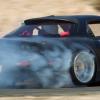

a little off topic.....but is the picture above of the BW turbo and the evo motor..the same set-up as the Sierra Sierra Time attack car runs? I got to see that car in action once... "Absolutely Mind-Blowing."

I think the lighter turbine wheels offered by BW are nice. It will be interesting to compare their new maps with their old ones. I think (and have kind of seen) that you will see very little gain at lower P/r's with the new wheel aero. Compare them and plot them out I think you will see maybe a 1-2% gain in efficiency at a moderate (below 20psi) pressure. Not long ago I plotted BW's new billet 62/83wheel against Garrett's cast 61/82 wheel and the Garrett showed a plot of roughly 3% better efficiency. Same thing goes for Garrett to Garrett, plot out a 4294 both cast and billet and you will see maybe a 1-2% gain at lower P/r's. This backed up what we saw at the track on customers car when comparing the 62 billet wheel from Precision to the 61 cast wheel from Garrett. Below 21psi the difference was no gain in HP. Now when you start to raise the boost you will start to notice how you don't run out of compressor map and drop less in efficiency. In my opinion (and this is just me) you can only move so much air at a lower pressure level (given a specific inducer size and wheel area and engine RPM) and if they focused the aero to address this they will end up with something that wont be able to flow as well at a higher level.
~S~
~S~
Thread Starter
Joined: Oct 2001
Posts: 6,279
Likes: 728
From: Florence, Alabama

70 versus 80 pounds per minute at 14.7 psi doesn't seem like small potatoes. of course compressor maps are just compressor maps and the real world is where it's at.
Sean, does this map not relate to any experience you have had w the GTX?

It doesn't quite work like that. It certainly would help on larger displacement. Say your roughly moving 55lbs/min@2.22 P/r where do you fall on the map? On the cast 4294 it's roughly 78-79% eff. On the GTX it's 80% eff. This assumes a redline of 8500rpm. If we raise the boost to 2.7 P/r it's the same thing roughly 80% eff versus 78-79% eff. If we then go to 3.04 P/r (30psi) it's 78%+ versus 77%. If we jump to 3.38 P/r (35psi) we fall off the map for the cast and the billet is still 75% eff.
Lets bump the redline to 9k which fewer people will run.
At 2.22 P/r cast 78%+ billet 80% compare that to a 4202 cast and your 78% eff.
At 2.7 P/r cast 77% billet 78% compare that to a 4202 cast and your 77% eff.
At 3.04 P/ cast 74%+ billet 76% compare that to a 4202 cast and your 77% eff.
At 3.38 P/r cast off billet 72%+ compare that to a 4202 cast and your 76% eff.
Larger displacement 20B@1bar 4294 cast 74% billet 74% 4202 cast 74%
Now my math is conservative as I always try to be and there are real world variables plotting a map wont fully account for, but that's what it shows when plotted out as most would do. Interestingly enough if you plot out 2.22@6k you're landing at 76% eff on the cast and 72% eff on the billet. With that said, real world has shown they make some more power and so far mainly at higher boost levels and they can be wound higher. The benefit being you no longer need the 102mm wheel to make the power, the 94mm will deliver almost equal if not better power with a definite response advantage, and certainly the 11blade wheel should move more air. My guess is as it has been that at the typical 15-17psi most street FD's run they will see little gain. Hopefully the smaller GTX turbo's show a bigger difference, we saw little to no difference on a cast 35R wheel versus a 62 billet wheel put in its place when run at lower boost levels. All that said Howard I respect your opinion as much as my own and in some cases even more so and I love the thread I wish I had the time for such a project as I have a dyno and turbo's and rotaries
I just don't want people rushing spending $2k on a turbo to be a let down or not amazed by it's performance.~S~

Junior Member
Joined: Feb 2010
Posts: 13
Likes: 0
From: Germany
The advantages of the new BW turbos are probably not the comp wheels themselfs. Compared to the previous turbos, the comp housing (inlet) in now bellmouth shaped, which should be good, they have superior rerouting of the ported shroud (compared to garrett). Did you notice the difference in the exhaust housings? The twin scrolls are excellent designs, that is true race tech, and they come with stainless housings too, which are thin wall! Additionally they seem to come with the new, half wheight turbines. The turbine wheels are normally about three times heavier than the comp wheels, so transient respons will surely improve too. Remember that now they have ball bearing centres too. Considdering, that the spool times were often claimed to be as fast or even better than on compareable garrett units they shoud set a new benchmark.
What more on earth can you ask for???
The higher flow capacity for a certain wheel size I deem to be relatively unimportant for as long as the compessor map width stays the same. If it does not flow enough, go upü one size- no high tech required, worked already 20 year ago.
The downside, I could imagine, will probably the price of the new units. Most likely they will add the price for a wastegate, a recirculation valve and a boos solenoid to their units. BBs will be added too to their current base prices, so they could end up being quite expensive....
What more on earth can you ask for???
The higher flow capacity for a certain wheel size I deem to be relatively unimportant for as long as the compessor map width stays the same. If it does not flow enough, go upü one size- no high tech required, worked already 20 year ago.
The downside, I could imagine, will probably the price of the new units. Most likely they will add the price for a wastegate, a recirculation valve and a boos solenoid to their units. BBs will be added too to their current base prices, so they could end up being quite expensive....
~S~

Thread Starter
Joined: Oct 2001
Posts: 6,279
Likes: 728
From: Florence, Alabama
project continues on the dyno this (11/16) tuesday... still on the 4094. once sorted the others won't take as much time. BW next up and then the two GT35 iterations.

Rotary Enthusiast
Joined: May 2003
Posts: 912
Likes: 1
From: Norway
looking forward for the 4094r charts, as that will be quite close to my setup with the 4088R and the tial 1.01 housing. But i will be running with a quite large bridge port engine and E85.
Getting ready to order the turbo soon. Any good cheap places to get a Garrett turbo from these days? They tend to be quite expensive.
JT
Getting ready to order the turbo soon. Any good cheap places to get a Garrett turbo from these days? They tend to be quite expensive.
JT

ATPturbo.com has been competitively priced and gotten gear to me on time.
looking forward for the 4094r charts, as that will be quite close to my setup with the 4088R and the tial 1.01 housing. But i will be running with a quite large bridge port engine and E85.
Getting ready to order the turbo soon. Any good cheap places to get a Garrett turbo from these days? They tend to be quite expensive.
JT
Getting ready to order the turbo soon. Any good cheap places to get a Garrett turbo from these days? They tend to be quite expensive.
JT
Thread Starter
Joined: Oct 2001
Posts: 6,279
Likes: 728
From: Florence, Alabama
we are working thru some weird problems ATM. for some reason the Datalogit decided not to work so we swapped in another which did work. once finally underway we started blowing fuel pump fuses. (plural). the pump starts drawing 25 amps under boost. a no no.
currently Luke is working the problem and as soon as it is straightened out we will be back on the dyno. ystda the pump was pulled and inspected and found to be fine. that leaves the Kenne Bell Boost A Pump and associated wiring. my bet is the wiring.
should be today or tomorrow.
hc
currently Luke is working the problem and as soon as it is straightened out we will be back on the dyno. ystda the pump was pulled and inspected and found to be fine. that leaves the Kenne Bell Boost A Pump and associated wiring. my bet is the wiring.
should be today or tomorrow.
hc