


New Clutch Issues


Thread Starter
Full Member

Joined: May 2023
Posts: 113
Likes: 5
From: California
New Clutch Issues
Hey all, just got a new clutch in my 81’. It is the racing beat street strip clutch. I also had a new exedy pressure plate, master cylinder, and slave cylinder installed. (And pilot bearing, throw out bearing, the whole works.) I am having some trouble getting used to the new clutch and I’m curious if I should be concerned. The bite point is so high (Basically the top) and it is extremely hard to get rolling. Note that I was running a stock clutch before. I know there is a break in period on new clutches but should I try to adjust the pedal or bleed the system again? The car also vibrates like crazy when I try to get rolling.


Something is very badly not right. From the sound of it your pressure plate is not clamping down on the clutch disk. If it is slipping and chattering it will cause the car to shudder and be hard to get moving. I'm sorry to say it but you probably need to take it back apart and check everything over again. Ensure the bolts holding the pressure plate are tight and that the clutch disk was not put in backwards. It would be hard to put the throwout bearing in wrong but check it anyway. You didn't specify whether you had a new flywheel or resurfaced the old one.
Thread Starter
Full Member
Joined: May 2023
Posts: 113
Likes: 5
From: California
I didn’t get the flywheel resurfaced when I had the job done. I am throwing in a new engine soon that has a new flywheel.
Something is very badly not right. From the sound of it your pressure plate is not clamping down on the clutch disk. If it is slipping and chattering it will cause the car to shudder and be hard to get moving. I'm sorry to say it but you probably need to take it back apart and check everything over again. Ensure the bolts holding the pressure plate are tight and that the clutch disk was not put in backwards. It would be hard to put the throwout bearing in wrong but check it anyway. You didn't specify whether you had a new flywheel or resurfaced the old one.

84SE-EGI helpy-helperton


Joined: Oct 2002
Posts: 3,589
Likes: 546
From: Phoenix, AZ
Did you replace the Pilot Bearing and it's Grease Seal? I'd start by adjusting the clutch pedal under the dash. It's the simplest, easiest, and will put the clutch pedal position where it belongs to engage more smoothly.
I have the same clutch, pressure plate, and TOB and an 11lb RB lightweight aluminum flywheel, and it's no more difficult to engage smoothly than stock. In fact, I'd say it's easier because the reduced rotating mass makes speed differential to the trans neutralize much faster with less slip.
I have the same clutch, pressure plate, and TOB and an 11lb RB lightweight aluminum flywheel, and it's no more difficult to engage smoothly than stock. In fact, I'd say it's easier because the reduced rotating mass makes speed differential to the trans neutralize much faster with less slip.
Thread Starter
Full Member
Joined: May 2023
Posts: 113
Likes: 5
From: California
Yes the pilot bearing and the seal was replaced
Did you replace the Pilot Bearing and it's Grease Seal? I'd start by adjusting the clutch pedal under the dash. It's the simplest, easiest, and will put the clutch pedal position where it belongs to engage more smoothly.
I have the same clutch, pressure plate, and TOB and an 11lb RB lightweight aluminum flywheel, and it's no more difficult to engage smoothly than stock. In fact, I'd say it's easier because the reduced rotating mass makes speed differential to the trans neutralize much faster with less slip.
I have the same clutch, pressure plate, and TOB and an 11lb RB lightweight aluminum flywheel, and it's no more difficult to engage smoothly than stock. In fact, I'd say it's easier because the reduced rotating mass makes speed differential to the trans neutralize much faster with less slip.
84SE-EGI helpy-helperton
Joined: Oct 2002
Posts: 3,589
Likes: 546
From: Phoenix, AZ
Did you grease the Pilot Bearing sufficiently but not too much? The reason why I'm asking is that too much grease there can spit out past the grease seal when you jam the input shaft into it, and that grease may have ended up on your clutch disk or pressure plate, which would explain the chattering as the disk slips.
Also, was the Trans Front Cover where the TOB slides in good shape? Did you grease that shaft where the TOB moves back and forth? Trying to explain why your clutch wouldn't feel buttery smooth. Same with the splines on the clutch disk, which should be greased but not too much. Any of these can cause clutch issues, and recognize also that the increased clutch force will put more pressure on your Master and Slave cylinders. It's not uncommon for people to post here after installing a new high force clutch and it doesn't feel right, only to find that their slave cylinder is now puking hydraulic fluid down the bell housing.
Any marginal part will show it's weakness now,
Also, was the Trans Front Cover where the TOB slides in good shape? Did you grease that shaft where the TOB moves back and forth? Trying to explain why your clutch wouldn't feel buttery smooth. Same with the splines on the clutch disk, which should be greased but not too much. Any of these can cause clutch issues, and recognize also that the increased clutch force will put more pressure on your Master and Slave cylinders. It's not uncommon for people to post here after installing a new high force clutch and it doesn't feel right, only to find that their slave cylinder is now puking hydraulic fluid down the bell housing.
Any marginal part will show it's weakness now,
Thread Starter
Full Member
Joined: May 2023
Posts: 113
Likes: 5
From: California
I didn’t replace the clutch myself. A mechanic who specializes in rotaries did.
Did you grease the Pilot Bearing sufficiently but not too much? The reason why I'm asking is that too much grease there can spit out past the grease seal when you jam the input shaft into it, and that grease may have ended up on your clutch disk or pressure plate, which would explain the chattering as the disk slips.
Also, was the Trans Front Cover where the TOB slides in good shape? Did you grease that shaft where the TOB moves back and forth? Trying to explain why your clutch wouldn't feel buttery smooth. Same with the splines on the clutch disk, which should be greased but not too much. Any of these can cause clutch issues, and recognize also that the increased clutch force will put more pressure on your Master and Slave cylinders. It's not uncommon for people to post here after installing a new high force clutch and it doesn't feel right, only to find that their slave cylinder is now puking hydraulic fluid down the bell housing.
Any marginal part will show it's weakness now,
Also, was the Trans Front Cover where the TOB slides in good shape? Did you grease that shaft where the TOB moves back and forth? Trying to explain why your clutch wouldn't feel buttery smooth. Same with the splines on the clutch disk, which should be greased but not too much. Any of these can cause clutch issues, and recognize also that the increased clutch force will put more pressure on your Master and Slave cylinders. It's not uncommon for people to post here after installing a new high force clutch and it doesn't feel right, only to find that their slave cylinder is now puking hydraulic fluid down the bell housing.
Any marginal part will show it's weakness now,
Trending Topics
Thread Starter
Full Member
Joined: May 2023
Posts: 113
Likes: 5
From: California
I’m going to adjust the clutch pedal and see if that helps. If not what should my next step be?
Did you grease the Pilot Bearing sufficiently but not too much? The reason why I'm asking is that too much grease there can spit out past the grease seal when you jam the input shaft into it, and that grease may have ended up on your clutch disk or pressure plate, which would explain the chattering as the disk slips.
Also, was the Trans Front Cover where the TOB slides in good shape? Did you grease that shaft where the TOB moves back and forth? Trying to explain why your clutch wouldn't feel buttery smooth. Same with the splines on the clutch disk, which should be greased but not too much. Any of these can cause clutch issues, and recognize also that the increased clutch force will put more pressure on your Master and Slave cylinders. It's not uncommon for people to post here after installing a new high force clutch and it doesn't feel right, only to find that their slave cylinder is now puking hydraulic fluid down the bell housing.
Any marginal part will show it's weakness now,
Also, was the Trans Front Cover where the TOB slides in good shape? Did you grease that shaft where the TOB moves back and forth? Trying to explain why your clutch wouldn't feel buttery smooth. Same with the splines on the clutch disk, which should be greased but not too much. Any of these can cause clutch issues, and recognize also that the increased clutch force will put more pressure on your Master and Slave cylinders. It's not uncommon for people to post here after installing a new high force clutch and it doesn't feel right, only to find that their slave cylinder is now puking hydraulic fluid down the bell housing.
Any marginal part will show it's weakness now,
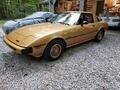

I would start with the clutch pedal adjustment. Often they will need adjusted once a new clutchbis installed. On my RX-8's, it's a must, as I've had to do it every time I've installed a new clutch. It's a simple procedure and you should be up and rolling quickly. If you need the original freeplay measurements let me know and I'll grab the FSM and post a pic.
84SE-EGI helpy-helperton
Joined: Oct 2002
Posts: 3,589
Likes: 546
From: Phoenix, AZ
As a sidenote, our ability to help you much beyond this went downhill when you stated someone else installed the clutch. Usually, if you do the work yourself, you'd know how much or how little grease was applied and where, if the correct tools were used to remove and install the Pilot Bearing, etc. The fact that someone else - even a rotary shop - did the work, suddenly the specifics are unknowable, and you're going to have a hard time pinning down a mechanic who worked on the car days to weeks ago and worked on other cars in between.
Start with the stated basics, and report back what you find. Not giving up, but recognize that there are quite,a few unknowns now to work around...
Start with the stated basics, and report back what you find. Not giving up, but recognize that there are quite,a few unknowns now to work around...
Thread Starter
Full Member
Joined: May 2023
Posts: 113
Likes: 5
From: California
Yeah I totally get that. The mechanic who installed it is actually driving to me today to check it over again. Hopefully it isn’t catastrophic.
As a sidenote, our ability to help you much beyond this went downhill when you stated someone else installed the clutch. Usually, if you do the work yourself, you'd know how much or how little grease was applied and where, if the correct tools were used to remove and install the Pilot Bearing, etc. The fact that someone else - even a rotary shop - did the work, suddenly the specifics are unknowable, and you're going to have a hard time pinning down a mechanic who worked on the car days to weeks ago and worked on other cars in between.
Start with the stated basics, and report back what you find. Not giving up, but recognize that there are quite,a few unknowns now to work around...
Start with the stated basics, and report back what you find. Not giving up, but recognize that there are quite,a few unknowns now to work around...

Thread
Thread Starter
Forum
Replies
Last Post