


New 16X Rotary Engine

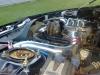



Look closer. It's got one direct injector per rotor but still has the primary injector locations that have been there for 25 years. There is at least 2 injectors per rotor.

I see something wrong with this through.... it used to be, that car companies would overbuild cars for a safety margin, and then also try to make as much as possible, using the cheapest and easiest ways possible.
Hence, the reason we get 50+ HP from an exhaust on a Turbo II, and such huge gains from things like porting, etc. Now, cars seem like they are built to the very limit of the safety margin, with everything designed so well stock, that almost any mods don't really do much and aren't really worth it in terms of gains, etc.
Case in point the RX-8.... lol What I am afraid of, is that this engine will have the most optimized porting possible, and with the combo of "side-housing" intake, exhaust, and the fact that they are aluminum, will create MAJOR issues with detonation if this engine gets turbocharged. It will probably work great stock, but any extensive mods, and bam.
My theory: As the car makes power, the exhaust temperatures rise, and start to severely heat the aluminum side plates that the intake ports are going through.
This in turn heats up the intake air, making it more prone to detonation, and therefore, drastically decreases the reliability of the motor. By having larger displacement, it would only multiply the problem further.
There could be a huge discussion about this, and this is only a theory, and I'm also not quite an automotive engineer, so does anyone want to discuss and tell me their point of view?
Hence, the reason we get 50+ HP from an exhaust on a Turbo II, and such huge gains from things like porting, etc. Now, cars seem like they are built to the very limit of the safety margin, with everything designed so well stock, that almost any mods don't really do much and aren't really worth it in terms of gains, etc.
Case in point the RX-8.... lol What I am afraid of, is that this engine will have the most optimized porting possible, and with the combo of "side-housing" intake, exhaust, and the fact that they are aluminum, will create MAJOR issues with detonation if this engine gets turbocharged. It will probably work great stock, but any extensive mods, and bam.
My theory: As the car makes power, the exhaust temperatures rise, and start to severely heat the aluminum side plates that the intake ports are going through.
This in turn heats up the intake air, making it more prone to detonation, and therefore, drastically decreases the reliability of the motor. By having larger displacement, it would only multiply the problem further.
There could be a huge discussion about this, and this is only a theory, and I'm also not quite an automotive engineer, so does anyone want to discuss and tell me their point of view?

Actually I believe there are still 4 injectors total... It just the secondary injectors have been moved onto the rotor housing. the primaries are still in the center plate runners... I also believe that they are trying to get away from turbos hence the larger displacement




Who wants to be pisst' on
Joined: May 2007
Posts: 133
Likes: 0
From: Bpt,Ct


socialist hippy

Joined: Apr 2006
Posts: 225
Likes: 0
From: canada
if this engine makes a legit 280 horse power, then I don't see why you guys are complaining it's not turbo. The original FD only put out about 255 horse power. 280 horse power and the reliability of an NA in my fb =  .
.
I'm sure it would only be a matter of time before someone makes a turbo kit for it anyway. Their are turbo kits for the current renesis for those that need more power
. I'm sure it would only be a matter of time before someone makes a turbo kit for it anyway. Their are turbo kits for the current renesis for those that need more power

My theory: As the car makes power, the exhaust temperatures rise, and start to severely heat the aluminum side plates that the intake ports are going through.
This in turn heats up the intake air, making it more prone to detonation, and therefore, drastically decreases the reliability of the motor. By having larger displacement, it would only multiply the problem further.
This in turn heats up the intake air, making it more prone to detonation, and therefore, drastically decreases the reliability of the motor. By having larger displacement, it would only multiply the problem further.
And what's wrong with cars coming with the "mods" you wanted to do anyways? If it's done it's done... does it really mater whether you do it or not? It's just a by-product of better design and manufacturing process.es
Anyways, I can't wait for more info.

HEAVY METAL THUNDER
Joined: Oct 2002
Posts: 3,864
Likes: 0
From: Elsenborn, Belgian Eifel
All nice and stuff, but worthless if they want to sell any... I mean: 1.6 means 3.2 for taxes in Europe, so you can forget about selling any serious numbers overhere. Ok, we are not the only market but still... A 3.2 litre engine is above what people will pay for "only a Mazda" (I know, it's stupid, but many people want a stupid BMW or Mercedes, once we're in that price-league).
They should have gone the other way around: make it smaller! Most popular engine size (also for motorsports etc) would be around 2.0 litres, or a 10A sized engine. With modern technics, it should still be able to perform well, yet be in a good tax band, and be less thirsty.
Downsizing is the way forward
They should have gone the other way around: make it smaller! Most popular engine size (also for motorsports etc) would be around 2.0 litres, or a 10A sized engine. With modern technics, it should still be able to perform well, yet be in a good tax band, and be less thirsty.
Downsizing is the way forward

One thing that I find interesting is how big that intake port is. And how far it actually stretched. With having bigger housings too, wilder porting for the racer minded. I would love to see more picture of this thing though.
Thread Starter
Bigus Rotus
Joined: Jun 2004
Posts: 63
Likes: 0
From: Banks of The Muddy Wishkah



All nice and stuff, but worthless if they want to sell any... I mean: 1.6 means 3.2 for taxes in Europe, so you can forget about selling any serious numbers overhere. Ok, we are not the only market but still... A 3.2 litre engine is above what people will pay for "only a Mazda" (I know, it's stupid, but many people want a stupid BMW or Mercedes, once we're in that price-league).
They should have gone the other way around: make it smaller! Most popular engine size (also for motorsports etc) would be around 2.0 litres, or a 10A sized engine. With modern technics, it should still be able to perform well, yet be in a good tax band, and be less thirsty.
Downsizing is the way forward
They should have gone the other way around: make it smaller! Most popular engine size (also for motorsports etc) would be around 2.0 litres, or a 10A sized engine. With modern technics, it should still be able to perform well, yet be in a good tax band, and be less thirsty.
Downsizing is the way forward



Full Member

Joined: Aug 2006
Posts: 197
Likes: 4
From: Chicago

InsaneRotaries.com
Joined: Feb 2002
Posts: 2,748
Likes: 0
From: Westchester, NY
[QUOTE=Asterisk;7400189]
My theory: As the car makes power, the exhaust temperatures rise, and start to severely heat the aluminum side plates that the intake ports are going through.
This in turn heats up the intake air, making it more prone to detonation, and therefore, drastically decreases the reliability of the motor. By having larger displacement, it would only multiply the problem further.
QUOTE]
you would think that the aluminum sides would = easier heat transfer to
the coolant = cooler running?
matt
My theory: As the car makes power, the exhaust temperatures rise, and start to severely heat the aluminum side plates that the intake ports are going through.
This in turn heats up the intake air, making it more prone to detonation, and therefore, drastically decreases the reliability of the motor. By having larger displacement, it would only multiply the problem further.
QUOTE]
you would think that the aluminum sides would = easier heat transfer to
the coolant = cooler running?
matt