Finding power for your N/A


I have been searching through and saw a few people with a Crane HI-6 ignition, but when i looked it up online they say its for a car with distributor? any ideas on this one?

Joined: Mar 2001
Posts: 31,867
Likes: 3,246
From: https://www2.mazda.com/en/100th/
More importantly, they're larger in diameter, so the resonance frequency is altered. The stock driveshaft in a 1st-gen hits a resonance at about 8000rpm. When you go to shorter rearend gears, this seriously puts a hamper on your top speed. With the 4.78's I pretty much kept it under 80mph in order to keep the transmission alive. The resonance destroyed trannies.

i wanna hear about a set of final drive gears as well, that would add a lot more torque on the lower end, which is what our cars need
if your going to get a lightweight flywheel my opinion is to get the 17lb racing beat flywheel over the 12, because as much HP as the 12lb gains, the 17 balances that out and adds more torque, more torque is good
and as little as this adds you can always get larger diamiter spark plug wires such as 8.5mm (mazdatrix), or go all out and get some 10mm (racing beat) wires
another thing to go along with the spark plugs is to invest your money in the HKS super fire race plugs which are 30 a pop, but will add power
and so im guessing that by stating stock parts that rules out an individual throttle body setup and a standalone engine management system to add larger injectors into the mix as well, those horsepower gains would be significant
and if were really going into staying N/A and adding power, NOS is always good : )
if your going to get a lightweight flywheel my opinion is to get the 17lb racing beat flywheel over the 12, because as much HP as the 12lb gains, the 17 balances that out and adds more torque, more torque is good
and as little as this adds you can always get larger diamiter spark plug wires such as 8.5mm (mazdatrix), or go all out and get some 10mm (racing beat) wires
another thing to go along with the spark plugs is to invest your money in the HKS super fire race plugs which are 30 a pop, but will add power
and so im guessing that by stating stock parts that rules out an individual throttle body setup and a standalone engine management system to add larger injectors into the mix as well, those horsepower gains would be significant
and if were really going into staying N/A and adding power, NOS is always good : )
Joined: Mar 2001
Posts: 31,867
Likes: 3,246
From: https://www2.mazda.com/en/100th/
if your going to get a lightweight flywheel my opinion is to get the 17lb racing beat flywheel over the 12, because as much HP as the 12lb gains, the 17 balances that out and adds more torque, more torque is good
and as little as this adds you can always get larger diamiter spark plug wires such as 8.5mm (mazdatrix), or go all out and get some 10mm (racing beat) wires
another thing to go along with the spark plugs is to invest your money in the HKS super fire race plugs which are 30 a pop, but will add power
and so im guessing that by stating stock parts that rules out an individual throttle body setup and a standalone engine management system to add larger injectors into the mix as well, those horsepower gains would be significant
and if were really going into staying N/A and adding power, NOS is always good : )
and as little as this adds you can always get larger diamiter spark plug wires such as 8.5mm (mazdatrix), or go all out and get some 10mm (racing beat) wires
another thing to go along with the spark plugs is to invest your money in the HKS super fire race plugs which are 30 a pop, but will add power
and so im guessing that by stating stock parts that rules out an individual throttle body setup and a standalone engine management system to add larger injectors into the mix as well, those horsepower gains would be significant
and if were really going into staying N/A and adding power, NOS is always good : )
i wanna hear about a set of final drive gears as well, that would add a lot more torque on the lower end, which is what our cars need
if your going to get a lightweight flywheel my opinion is to get the 17lb racing beat flywheel over the 12, because as much HP as the 12lb gains, the 17 balances that out and adds more torque, more torque is good
and as little as this adds you can always get larger diamiter spark plug wires such as 8.5mm (mazdatrix), or go all out and get some 10mm (racing beat) wires
another thing to go along with the spark plugs is to invest your money in the HKS super fire race plugs which are 30 a pop, but will add power
and so im guessing that by stating stock parts that rules out an individual throttle body setup and a standalone engine management system to add larger injectors into the mix as well, those horsepower gains would be significant
and if were really going into staying N/A and adding power, NOS is always good : )
if your going to get a lightweight flywheel my opinion is to get the 17lb racing beat flywheel over the 12, because as much HP as the 12lb gains, the 17 balances that out and adds more torque, more torque is good
and as little as this adds you can always get larger diamiter spark plug wires such as 8.5mm (mazdatrix), or go all out and get some 10mm (racing beat) wires
another thing to go along with the spark plugs is to invest your money in the HKS super fire race plugs which are 30 a pop, but will add power
and so im guessing that by stating stock parts that rules out an individual throttle body setup and a standalone engine management system to add larger injectors into the mix as well, those horsepower gains would be significant
and if were really going into staying N/A and adding power, NOS is always good : )
Plug wires dont do to much, but yes, they can help.
those spark plugs are not for the street, therefore, not relevant here.
standalone, yes. Bigger injectors... MAYBE 550cc secondaries once up to the point of maxing out stockers. as long as the stock injectors are kept in good working order, there is no reason to go bigger until you are at almost the end of upgrades for the N/A. a TII fuel pump and a FPR would do more good than just the 550cc's though. I am going to use the stock injectors (i will have them sent out and cleaned) and a S-AFC II to manage my fuel and also timing.
though NOS is a quick power gain, I, personally, DO NOT recommend it for rotaries. but, if you wish to use NOS, please feel free, i will keep my comments to myself on this one.

The clutch fan stops when the fluid inside the clutch assembly cools enough to release the clutch. If that fluid is cool enough (ie: when the air is moving through the radiator and over the cooling fins on the clutch assembly) then the coolant itself is going to be cooled better by the moving air, not the air pulled by the fan, so the fan is no longer needed.
Why? All you're going to cool is your radiator. There is no coolant circulating unless you have an electric w/p too.
Wrong. the water pump and clutch fan are not one. Also, the electric water pump is a waste of time on anything other than a drag ONLY car, the electric water pump will NOT move the water efficiently for a street driven car.
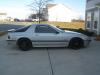
If you guys want to check out what car this is all being done to, take a look at My Project Car page on my site!
i agree with you on the flywheel, you dont want something to light.
Plug wires dont do to much, but yes, they can help.
those spark plugs are not for the street, therefore, not relevant here.
standalone, yes. Bigger injectors... MAYBE 550cc secondaries once up to the point of maxing out stockers. as long as the stock injectors are kept in good working order, there is no reason to go bigger until you are at almost the end of upgrades for the N/A. a TII fuel pump and a FPR would do more good than just the 550cc's though. I am going to use the stock injectors (i will have them sent out and cleaned) and a S-AFC II to manage my fuel and also timing.
though NOS is a quick power gain, I, personally, DO NOT recommend it for rotaries. but, if you wish to use NOS, please feel free, i will keep my comments to myself on this one.
Plug wires dont do to much, but yes, they can help.
those spark plugs are not for the street, therefore, not relevant here.
standalone, yes. Bigger injectors... MAYBE 550cc secondaries once up to the point of maxing out stockers. as long as the stock injectors are kept in good working order, there is no reason to go bigger until you are at almost the end of upgrades for the N/A. a TII fuel pump and a FPR would do more good than just the 550cc's though. I am going to use the stock injectors (i will have them sent out and cleaned) and a S-AFC II to manage my fuel and also timing.
though NOS is a quick power gain, I, personally, DO NOT recommend it for rotaries. but, if you wish to use NOS, please feel free, i will keep my comments to myself on this one.
glad you agree on the first few
why couldnt the plug wires be used for the street? theyre just super fire and give more power, theres no reason they could not be used on the streets
yes i agree with the injectors statement, but once maxed out with a standalone, larger fuel pump, larger injectors will definitely add power
i think on a fully built RX that has a standalone engine management system, a balanced fuel system and a good tune should have no problem handeling a 75 shot of Nitrous, then again thats just an opinion of mine
Old [Sch|F]ool


Joined: May 2001
Posts: 12,880
Likes: 577
From: Cleveland, Ohio, USA
Unpossible. Lighter is better. Heavy flywheels just compensate for crap gearing in drag racing... or a too-strong clutch.
480's should be good for as much power as you can expect to make on a non bridge non peripheral engine, on gasoline. I am told that the stock ECUs will not go over about 70% duty cycle no matter what you do, so then you may need 550s.
Bigger injectors... MAYBE 550cc secondaries once up to the point of maxing out stockers. as long as the stock injectors are kept in good working order, there is no reason to go bigger until you are at almost the end of upgrades for the N/A.


Flywheel weight has absolutely nothing to do with low end torque. Neither does exhaust "backpressure" for that matter. A lighter flywheel takes less power to spin. It's power at the wheels that matters. Torque does absolutely nothing. It never has. What you want is more low end horsepower. The way to get it is not by using a heavy flywheel. A lighter one would actually help you here. While they don't add any horsepower to the engine, they do allow more of it to get to the wheels.
As far as gears being torque multipliers, ignore torque. They are there to get the engine into an rpm range where it makes more horsepower. Again, torque isn't important as torque doesn't do any work. I will be more than happy to prove gearing and power/torque at the wheels if anyone wants to somehow disagree with this.
As far as gears being torque multipliers, ignore torque. They are there to get the engine into an rpm range where it makes more horsepower. Again, torque isn't important as torque doesn't do any work. I will be more than happy to prove gearing and power/torque at the wheels if anyone wants to somehow disagree with this.
Joined: Mar 2001
Posts: 31,867
Likes: 3,246
From: https://www2.mazda.com/en/100th/
yep. on a side port engine, 4x460 with a non stock ecu is plenty for 200hp, with injector duty in the 70's.

B A N N E D

Joined: Nov 2006
Posts: 709
Likes: 0
From: Temecula/San Clemente
. . . . . Torque does absolutely nothing. It never has. . . . . . . , ignore torque. . . . . . Again, torque isn't important as torque doesn't do any work. I will be more than happy to prove gearing and power/torque at the wheels if anyone wants to somehow disagree with this.
Okay, now I have a question.
I have always been told that Torque is an engines ability to do work. (in a rotating motion) It is what gets you moving. Torque is what gets a heavy object to overcome weight and drag to gain momentum.
So if Torque is not important, then why do the large diesel trucks require so much of it with so little horsepower?
glad you agree on the first few
why couldnt the plug wires be used for the street? theyre just super fire and give more power, theres no reason they could not be used on the streets
yes i agree with the injectors statement, but once maxed out with a standalone, larger fuel pump, larger injectors will definitely add power
i think on a fully built RX that has a standalone engine management system, a balanced fuel system and a good tune should have no problem handeling a 75 shot of Nitrous, then again thats just an opinion of mine
why couldnt the plug wires be used for the street? theyre just super fire and give more power, theres no reason they could not be used on the streets
yes i agree with the injectors statement, but once maxed out with a standalone, larger fuel pump, larger injectors will definitely add power
i think on a fully built RX that has a standalone engine management system, a balanced fuel system and a good tune should have no problem handeling a 75 shot of Nitrous, then again thats just an opinion of mine
you dont NEED a standalone, just get a TII fuel pump, a better FPR, a good set of 550cc injectors, and a nice piggy back for the ecu. That would more than enough, take care of the ECU.
Unpossible. Lighter is better. Heavy flywheels just compensate for crap gearing in drag racing... or a too-strong clutch.
480's should be good for as much power as you can expect to make on a non bridge non peripheral engine, on gasoline. I am told that the stock ECUs will not go over about 70% duty cycle no matter what you do, so then you may need 550s.
480's should be good for as much power as you can expect to make on a non bridge non peripheral engine, on gasoline. I am told that the stock ECUs will not go over about 70% duty cycle no matter what you do, so then you may need 550s.
yes they would be fine, but the 550cc's are just for reliability. Working the stock injectors to hard can result in problems.
Flywheel weight has absolutely nothing to do with low end torque. Neither does exhaust "backpressure" for that matter. A lighter flywheel takes less power to spin. It's power at the wheels that matters. Torque does absolutely nothing. It never has. What you want is more low end horsepower. The way to get it is not by using a heavy flywheel. A lighter one would actually help you here. While they don't add any horsepower to the engine, they do allow more of it to get to the wheels.
As far as gears being torque multipliers, ignore torque. They are there to get the engine into an rpm range where it makes more horsepower. Again, torque isn't important as torque doesn't do any work. I will be more than happy to prove gearing and power/torque at the wheels if anyone wants to somehow disagree with this.
As far as gears being torque multipliers, ignore torque. They are there to get the engine into an rpm range where it makes more horsepower. Again, torque isn't important as torque doesn't do any work. I will be more than happy to prove gearing and power/torque at the wheels if anyone wants to somehow disagree with this.

First off, Wrong. the flywheels weight has everything to do with torque. if it is to light then it wont have enough inertia to help get you started off the line. A very light weight flywheel is better suited for Autocross or any type of sprint type racing that does not involve "stop and go". when on the street and starting from a stop, you need at least some weight to get you started, after that, it only slows you down, but it is still better to have some weight for street driving or drag racing.
the gears, im not getting into this discussion because im not touching them and i dont care about it.
also, who said anything about back pressure having anything to do with torque

Remember though, we are shooting for 200 RWHP here, which is different than 200 BHP. And as stated earlier in this post, it is more for reliability, not for the fact that it is needed.
Okay, now I have a question.
I have always been told that Torque is an engines ability to do work. (in a rotating motion) It is what gets you moving. Torque is what gets a heavy object to overcome weight and drag to gain momentum.
So if Torque is not important, then why do the large diesel trucks require so much of it with so little horsepower?
I have always been told that Torque is an engines ability to do work. (in a rotating motion) It is what gets you moving. Torque is what gets a heavy object to overcome weight and drag to gain momentum.
So if Torque is not important, then why do the large diesel trucks require so much of it with so little horsepower?
i am not sure why he said that, but it is a very wrong statement.
[QUOTE=blackball7;8340107]I was talking about the HKS Spark plugs, they are race plugs and intended for just that, racing, not street use.
you dont NEED a standalone, just get a TII fuel pump, a better FPR, a good set of 550cc injectors, and a nice piggy back for the ecu. That would more than enough, take care of the ECU.
sorry, i wrote my reply wrong, i dont see why the plugs could not be used for street use though? they still should add some power and work fine on the streets, why shouldnt they?
and this would probably be ok for an N/A, its just theres so much wider a range that you can do with a standalone if your looking to run nitrous
you dont NEED a standalone, just get a TII fuel pump, a better FPR, a good set of 550cc injectors, and a nice piggy back for the ecu. That would more than enough, take care of the ECU.
sorry, i wrote my reply wrong, i dont see why the plugs could not be used for street use though? they still should add some power and work fine on the streets, why shouldnt they?
and this would probably be ok for an N/A, its just theres so much wider a range that you can do with a standalone if your looking to run nitrous
My god, where to begin with this one...
First off, Wrong. the flywheels weight has everything to do with torque. if it is to light then it wont have enough inertia to help get you started off the line. A very light weight flywheel is better suited for Autocross or any type of sprint type racing that does not involve "stop and go". when on the street and starting from a stop, you need at least some weight to get you started, after that, it only slows you down, but it is still better to have some weight for street driving or drag racing.
the gears, im not getting into this discussion because im not touching them and i dont care about it.
also, who said anything about back pressure having anything to do with torque
exactly, a 12lb flywheel is just gonna spin like crazy of the line cuz it weighs so a little... a 17lb flywheel is lighter then stock so itll be easier to spin but still carry that extra weight to not be spun to fast which is putting the power to the wheels at a lower end call it torque or low end horsepower as you may
and those last two arguments since they dont have anything to do with what he wants on his car we'll throw out and move to the arguments discussed on hand
First off, Wrong. the flywheels weight has everything to do with torque. if it is to light then it wont have enough inertia to help get you started off the line. A very light weight flywheel is better suited for Autocross or any type of sprint type racing that does not involve "stop and go". when on the street and starting from a stop, you need at least some weight to get you started, after that, it only slows you down, but it is still better to have some weight for street driving or drag racing.
the gears, im not getting into this discussion because im not touching them and i dont care about it.
also, who said anything about back pressure having anything to do with torque
exactly, a 12lb flywheel is just gonna spin like crazy of the line cuz it weighs so a little... a 17lb flywheel is lighter then stock so itll be easier to spin but still carry that extra weight to not be spun to fast which is putting the power to the wheels at a lower end call it torque or low end horsepower as you may
and those last two arguments since they dont have anything to do with what he wants on his car we'll throw out and move to the arguments discussed on hand
Last edited by blackedoutFC3S; Jul 2, 2008 at 04:35 PM.
Flywheel weight has absolutely nothing to do with low end torque. Neither does exhaust "backpressure" for that matter. A lighter flywheel takes less power to spin. It's power at the wheels that matters. Torque does absolutely nothing. It never has. What you want is more low end horsepower. The way to get it is not by using a heavy flywheel. A lighter one would actually help you here. While they don't add any horsepower to the engine, they do allow more of it to get to the wheels.
As far as gears being torque multipliers, ignore torque. They are there to get the engine into an rpm range where it makes more horsepower. Again, torque isn't important as torque doesn't do any work. I will be more than happy to prove gearing and power/torque at the wheels if anyone wants to somehow disagree with this.
As far as gears being torque multipliers, ignore torque. They are there to get the engine into an rpm range where it makes more horsepower. Again, torque isn't important as torque doesn't do any work. I will be more than happy to prove gearing and power/torque at the wheels if anyone wants to somehow disagree with this.
Old [Sch|F]ool
Joined: May 2001
Posts: 12,880
Likes: 577
From: Cleveland, Ohio, USA
First off, Wrong. the flywheels weight has everything to do with torque. if it is to light then it wont have enough inertia to help get you started off the line.
If you need a heavy flywheel to launch, try lower gears, or a weaker clutch. Or live with the poorer acceleration in order to get that holeshot, them's the tradeoffs.
when on the street and starting from a stop, you need at least some weight to get you started,
also, who said anything about back pressure having anything to do with torque: