


Finding power for your N/A



ok, so we obviously all have our opinions on the way things are, i say we try and move back to the point of this thread and obtain more knowledge of how to add power
so even though were on a disagreement about light weight flywheels we all agree they add power, good! theres something
now somone said something earlier about rear end gears, and we all know that 4.3:1 over 4.10:1 gears is a good thing, agreed?
does anyone else have anything that they would think is a good upgrade to an N/A RX?
so even though were on a disagreement about light weight flywheels we all agree they add power, good! theres something
now somone said something earlier about rear end gears, and we all know that 4.3:1 over 4.10:1 gears is a good thing, agreed?
does anyone else have anything that they would think is a good upgrade to an N/A RX?

ok, so we obviously all have our opinions on the way things are, i say we try and move back to the point of this thread and obtain more knowledge of how to add power
so even though were on a disagreement about light weight flywheels we all agree they add power, good! theres something
now somone said something earlier about rear end gears, and we all know that 4.3:1 over 4.10:1 gears is a good thing, agreed?
does anyone else have anything that they would think is a good upgrade to an N/A RX?
so even though were on a disagreement about light weight flywheels we all agree they add power, good! theres something
now somone said something earlier about rear end gears, and we all know that 4.3:1 over 4.10:1 gears is a good thing, agreed?
does anyone else have anything that they would think is a good upgrade to an N/A RX?

Well, we all know that lighter is better, im not trying to sell anything here, but, I am starting a new line of different CF and FG parts for the interior, which may not take off much, but every bit helps. Theres no reason to have a bare interior, street driven car. with many things converted of to CF or FG there is still a weight lose, the old, brittle parts of our cars are replaced with new, stronger parts, and when the parts are made and installed correctly, they tend to look a lot better than stock.
also, clean the engine bay! years of dirt, oil, and grime can add up and weight up too! also, it makes the car not only perform better, but it makes it look nicer too. Who doesn't want a fast car that looks good too?
Im gonna go work on a new project of mine for a minute, ill be back to this in a minute guys. (just got me a good idea
 )
)


Joined: Mar 2001
Posts: 31,867
Likes: 3,247
From: https://www2.mazda.com/en/100th/
save your money and buy a better muffler, or an msd or something
Joined: Mar 2001
Posts: 31,867
Likes: 3,247
From: https://www2.mazda.com/en/100th/
i like a lighter flywheel, 17lbs is what it should have had stock.
they run way way rich under full throttle, leaning it from 11:1 to 12:1, even with an safc, feels huge.
fix all the rattles and exhaust leaks
put some decent shocks on it, and you have a nice fun street car.

There's alot of wrong information given about flywheels. Most drag racers use the heavier flywheels to help them get off the line and most autocross/circle track racers use the alluminum. THe lightened steel is a good compromise between the two and can be used for all. Here is a quote directly from Mazdatrix which better exlpains. You and also go to Racing Beat and read the same thing.
FLYWHEELS and CLUTCHES
FLYWHEELS: The actual horsepower of the engine does not change related to the weight of the flywheel. However, to increase the engine RPM, and accelerate the car, all rotating weight (as well as the entire car) must be speeded up. This requires power, and the heavier the part, the more power needed to speed it up. The less power needed to speed up the flywheel (and rotors, clutch, driveshaft, wheels, tires, car, etc.) the more power available to speed up everything else. The question we are asked frequently - "How much more horsepower will my engine have with a light flywheel" - is not the right question, because the answer is NONE. What you will have is more available horsepower to accelerate the car and yourself down the road.
The trade-offs are as follows: the heavier the flywheel, the smoother the idle, the easier the starting is from a stop, and the smoother the cruising/slight throttle changes are. BUT - the slower the acceleration is. The lighter the flywheel is, the harder it is to get the car moving from a stop (just requires a somewhat higher RPM before the clutch is let out - which wears the clutch faster), depending on porting, intake, and exhaust, the idle will be somewhat rougher, and some "jerkiness" may be noticed while cruising. BUT - you will be able to accelerate faster. This is true to a much lesser degree on fuel injected engines than on carbureted engines.
The above reasons are why there are basically three types of flywheels offered. The stock units are fine for most "normal" driving, as done by the vast majority of drivers. The light steel ones are great for "spirited" street driving, middle range autocross classes, some drag racing (heavier is sometimes better), and just general high-performance applications that will still be driven on the street sometimes. The lighter aluminum flywheels are recommended for all road race applications and fuel injected street driven cars where the highest performance is desired
FLYWHEELS and CLUTCHES
FLYWHEELS: The actual horsepower of the engine does not change related to the weight of the flywheel. However, to increase the engine RPM, and accelerate the car, all rotating weight (as well as the entire car) must be speeded up. This requires power, and the heavier the part, the more power needed to speed it up. The less power needed to speed up the flywheel (and rotors, clutch, driveshaft, wheels, tires, car, etc.) the more power available to speed up everything else. The question we are asked frequently - "How much more horsepower will my engine have with a light flywheel" - is not the right question, because the answer is NONE. What you will have is more available horsepower to accelerate the car and yourself down the road.
The trade-offs are as follows: the heavier the flywheel, the smoother the idle, the easier the starting is from a stop, and the smoother the cruising/slight throttle changes are. BUT - the slower the acceleration is. The lighter the flywheel is, the harder it is to get the car moving from a stop (just requires a somewhat higher RPM before the clutch is let out - which wears the clutch faster), depending on porting, intake, and exhaust, the idle will be somewhat rougher, and some "jerkiness" may be noticed while cruising. BUT - you will be able to accelerate faster. This is true to a much lesser degree on fuel injected engines than on carbureted engines.
The above reasons are why there are basically three types of flywheels offered. The stock units are fine for most "normal" driving, as done by the vast majority of drivers. The light steel ones are great for "spirited" street driving, middle range autocross classes, some drag racing (heavier is sometimes better), and just general high-performance applications that will still be driven on the street sometimes. The lighter aluminum flywheels are recommended for all road race applications and fuel injected street driven cars where the highest performance is desired
There's alot of wrong information given about flywheels. Most drag racers use the heavier flywheels to help them get off the line and most autocross/circle track racers use the alluminum. THe lightened steel is a good compromise between the two and can be used for all. Here is a quote directly from Mazdatrix which better exlpains. You and also go to Racing Beat and read the same thing.
FLYWHEELS and CLUTCHES
FLYWHEELS: The actual horsepower of the engine does not change related to the weight of the flywheel. However, to increase the engine RPM, and accelerate the car, all rotating weight (as well as the entire car) must be speeded up. This requires power, and the heavier the part, the more power needed to speed it up. The less power needed to speed up the flywheel (and rotors, clutch, driveshaft, wheels, tires, car, etc.) the more power available to speed up everything else. The question we are asked frequently - "How much more horsepower will my engine have with a light flywheel" - is not the right question, because the answer is NONE. What you will have is more available horsepower to accelerate the car and yourself down the road.
The trade-offs are as follows: the heavier the flywheel, the smoother the idle, the easier the starting is from a stop, and the smoother the cruising/slight throttle changes are. BUT - the slower the acceleration is. The lighter the flywheel is, the harder it is to get the car moving from a stop (just requires a somewhat higher RPM before the clutch is let out - which wears the clutch faster), depending on porting, intake, and exhaust, the idle will be somewhat rougher, and some "jerkiness" may be noticed while cruising. BUT - you will be able to accelerate faster. This is true to a much lesser degree on fuel injected engines than on carbureted engines.
The above reasons are why there are basically three types of flywheels offered. The stock units are fine for most "normal" driving, as done by the vast majority of drivers. The light steel ones are great for "spirited" street driving, middle range autocross classes, some drag racing (heavier is sometimes better), and just general high-performance applications that will still be driven on the street sometimes. The lighter aluminum flywheels are recommended for all road race applications and fuel injected street driven cars where the highest performance is desired
FLYWHEELS and CLUTCHES
FLYWHEELS: The actual horsepower of the engine does not change related to the weight of the flywheel. However, to increase the engine RPM, and accelerate the car, all rotating weight (as well as the entire car) must be speeded up. This requires power, and the heavier the part, the more power needed to speed it up. The less power needed to speed up the flywheel (and rotors, clutch, driveshaft, wheels, tires, car, etc.) the more power available to speed up everything else. The question we are asked frequently - "How much more horsepower will my engine have with a light flywheel" - is not the right question, because the answer is NONE. What you will have is more available horsepower to accelerate the car and yourself down the road.
The trade-offs are as follows: the heavier the flywheel, the smoother the idle, the easier the starting is from a stop, and the smoother the cruising/slight throttle changes are. BUT - the slower the acceleration is. The lighter the flywheel is, the harder it is to get the car moving from a stop (just requires a somewhat higher RPM before the clutch is let out - which wears the clutch faster), depending on porting, intake, and exhaust, the idle will be somewhat rougher, and some "jerkiness" may be noticed while cruising. BUT - you will be able to accelerate faster. This is true to a much lesser degree on fuel injected engines than on carbureted engines.
The above reasons are why there are basically three types of flywheels offered. The stock units are fine for most "normal" driving, as done by the vast majority of drivers. The light steel ones are great for "spirited" street driving, middle range autocross classes, some drag racing (heavier is sometimes better), and just general high-performance applications that will still be driven on the street sometimes. The lighter aluminum flywheels are recommended for all road race applications and fuel injected street driven cars where the highest performance is desired
and now, moving on...
There's alot of wrong information given about flywheels. Most drag racers use the heavier flywheels to help them get off the line and most autocross/circle track racers use the alluminum. THe lightened steel is a good compromise between the two and can be used for all. Here is a quote directly from Mazdatrix which better exlpains. You and also go to Racing Beat and read the same thing.
FLYWHEELS and CLUTCHES
FLYWHEELS: The actual horsepower of the engine does not change related to the weight of the flywheel. However, to increase the engine RPM, and accelerate the car, all rotating weight (as well as the entire car) must be speeded up. This requires power, and the heavier the part, the more power needed to speed it up. The less power needed to speed up the flywheel (and rotors, clutch, driveshaft, wheels, tires, car, etc.) the more power available to speed up everything else. The question we are asked frequently - "How much more horsepower will my engine have with a light flywheel" - is not the right question, because the answer is NONE. What you will have is more available horsepower to accelerate the car and yourself down the road.
The trade-offs are as follows: the heavier the flywheel, the smoother the idle, the easier the starting is from a stop, and the smoother the cruising/slight throttle changes are. BUT - the slower the acceleration is. The lighter the flywheel is, the harder it is to get the car moving from a stop (just requires a somewhat higher RPM before the clutch is let out - which wears the clutch faster), depending on porting, intake, and exhaust, the idle will be somewhat rougher, and some "jerkiness" may be noticed while cruising. BUT - you will be able to accelerate faster. This is true to a much lesser degree on fuel injected engines than on carbureted engines.
The above reasons are why there are basically three types of flywheels offered. The stock units are fine for most "normal" driving, as done by the vast majority of drivers. The light steel ones are great for "spirited" street driving, middle range autocross classes, some drag racing (heavier is sometimes better), and just general high-performance applications that will still be driven on the street sometimes. The lighter aluminum flywheels are recommended for all road race applications and fuel injected street driven cars where the highest performance is desired
FLYWHEELS and CLUTCHES
FLYWHEELS: The actual horsepower of the engine does not change related to the weight of the flywheel. However, to increase the engine RPM, and accelerate the car, all rotating weight (as well as the entire car) must be speeded up. This requires power, and the heavier the part, the more power needed to speed it up. The less power needed to speed up the flywheel (and rotors, clutch, driveshaft, wheels, tires, car, etc.) the more power available to speed up everything else. The question we are asked frequently - "How much more horsepower will my engine have with a light flywheel" - is not the right question, because the answer is NONE. What you will have is more available horsepower to accelerate the car and yourself down the road.
The trade-offs are as follows: the heavier the flywheel, the smoother the idle, the easier the starting is from a stop, and the smoother the cruising/slight throttle changes are. BUT - the slower the acceleration is. The lighter the flywheel is, the harder it is to get the car moving from a stop (just requires a somewhat higher RPM before the clutch is let out - which wears the clutch faster), depending on porting, intake, and exhaust, the idle will be somewhat rougher, and some "jerkiness" may be noticed while cruising. BUT - you will be able to accelerate faster. This is true to a much lesser degree on fuel injected engines than on carbureted engines.
The above reasons are why there are basically three types of flywheels offered. The stock units are fine for most "normal" driving, as done by the vast majority of drivers. The light steel ones are great for "spirited" street driving, middle range autocross classes, some drag racing (heavier is sometimes better), and just general high-performance applications that will still be driven on the street sometimes. The lighter aluminum flywheels are recommended for all road race applications and fuel injected street driven cars where the highest performance is desired
now what do most of you think about stainless steel braided lines? i used to just think they were for looks, and to protect the lines you have but from reading articles in super rod and other mags i came to find out theyre actually larger in diamiter, cool the different substances inside them better, and look freaking sweet... does anyone think theyre worth the money for the amount they help?
i dont think anyone actually stated it would make more horsepower, we were talking about how it put the power you already had to the wheels faster, and more efficient
now what do most of you think about stainless steel braided lines? i used to just think they were for looks, and to protect the lines you have but from reading articles in super rod and other mags i came to find out theyre actually larger in diamiter, cool the different substances inside them better, and look freaking sweet... does anyone think theyre worth the money for the amount they help?
now what do most of you think about stainless steel braided lines? i used to just think they were for looks, and to protect the lines you have but from reading articles in super rod and other mags i came to find out theyre actually larger in diamiter, cool the different substances inside them better, and look freaking sweet... does anyone think theyre worth the money for the amount they help?
Joined: Feb 2006
Posts: 3,162
Likes: 1
From: London, Ontario, Canada
well, im not to positive on this one, but i hear that when used for brake lines, they keep the pedal more firm than the stock rubber. i havent heard why, but i imagine that it is because they are harder and expand less than just rubber alone. so, i guess the same principle would apply to all, but this is just a shot in the dark here.
BINGO!! Plain stock rubber lines flex when pressure is applied, meaning that you have to push more fluid into it to compensate for the outward flexing of the line, which means longer pedal travel (if we're talking brakes) and less consistent brake feel. I put a set of brake lines from RB on my FB and it certainly made an improvement in the pedal feel. The pedal gets to one point and stays there, no matter how hard I push. Basically the braiding won't flex outward because it is a solid material, unlike rubber, and the strands are wound pretty tight.
I also have a braided line on my clutch system but haven't noticed an improvement in the clutch feel, although it is still the stock clutch which is pretty soft to begin with. That may change when the time comes to upgrade the clutch and pressure plate. And yeah the same basic principles would apply for the oil and cooling systems as well, although you wouldn't notice as much of an improvement. I'm pretty sure it's more for durability, since stainless steel won't rust and will actually cut it's way through anything it rubs against, and it looks pretty.

Bongolio

Joined: Nov 2004
Posts: 1,556
Likes: 1
From: visalia,california
If you want to get some power i would start with making sure all your ground's are in good shape and i would add an extra one going from the block to the firewall. Also make sure your TPS is set right.
A good set of magnacore 10mm race wires will smooth out your powerband a bit also. But if you want to make as much power as possible then you are going to get into non street legal area things.
First i would unrestrict your exhuast i would go with 2-1/2 inch piping from the cat back to a fart can or muffler of choice. Then i would install a cone intake or better yet fabricate a cold air intake.
I would pull the LIM and UIM and port match them together and bore them out as much as possible using a carbid bit. This will take some time and may take several tries until you get that right port! Also removing the extra TB plates will unrestrict the intake allowing air to pass through into the engine easier but at a cost of a good idle!
By now you should have a pretty damn peppy car! But what about ultimate hp?
Well you can remove your Aux port sleeves,rod's, and acuator's but you should not leave it like that take that same carbid bit you used to port your manifold's and smooth out the uneven edges in your LIM from the sleeves,rods being removed! Now your going to lose low end TQ but your high end will benifiet and even more so if you advance your timing a bit to fit the new power curve!
At this point your going to be running rich as hell at idle so invest in a SAFCII and a wideband with an air/fuel guage and take some fuel away from idle to maybe 3k rpm's and compensate from there! BUT DONT RUN LEAN!!
Now your car is going to be running like a straped ape! but what if you want more power?
Well now you get into taking away creature comfort's!
Start by ditching the complete A.C system and it will save you about 55-60lbs but have a shop depressurize it for you please! Then ditch the P.S system and bracket that will shed about 20-30lb's and make changing plug's wayy easier!
Now install a lightweight flywheel and an electric fan for a pretty good hp increase! And gut out that rear hacht and remove the sound deadening material!
I removed the sound deadening material in my old GXL once and weighed it and it was like 35lbs that stuff is heavy!
Remember for every 100lbs lost you will gain about a 10th in the 1/4 or about one car length and even more so with more hp or a lighter car!
Now i would throw on a good set of racing beat spring's and tokico strut's and call it a day!
A good set of magnacore 10mm race wires will smooth out your powerband a bit also. But if you want to make as much power as possible then you are going to get into non street legal area things.
First i would unrestrict your exhuast i would go with 2-1/2 inch piping from the cat back to a fart can or muffler of choice. Then i would install a cone intake or better yet fabricate a cold air intake.
I would pull the LIM and UIM and port match them together and bore them out as much as possible using a carbid bit. This will take some time and may take several tries until you get that right port! Also removing the extra TB plates will unrestrict the intake allowing air to pass through into the engine easier but at a cost of a good idle!
By now you should have a pretty damn peppy car! But what about ultimate hp?
Well you can remove your Aux port sleeves,rod's, and acuator's but you should not leave it like that take that same carbid bit you used to port your manifold's and smooth out the uneven edges in your LIM from the sleeves,rods being removed! Now your going to lose low end TQ but your high end will benifiet and even more so if you advance your timing a bit to fit the new power curve!
At this point your going to be running rich as hell at idle so invest in a SAFCII and a wideband with an air/fuel guage and take some fuel away from idle to maybe 3k rpm's and compensate from there! BUT DONT RUN LEAN!!
Now your car is going to be running like a straped ape! but what if you want more power?
Well now you get into taking away creature comfort's!
Start by ditching the complete A.C system and it will save you about 55-60lbs but have a shop depressurize it for you please! Then ditch the P.S system and bracket that will shed about 20-30lb's and make changing plug's wayy easier!
Now install a lightweight flywheel and an electric fan for a pretty good hp increase! And gut out that rear hacht and remove the sound deadening material!
I removed the sound deadening material in my old GXL once and weighed it and it was like 35lbs that stuff is heavy!
Remember for every 100lbs lost you will gain about a 10th in the 1/4 or about one car length and even more so with more hp or a lighter car!
Now i would throw on a good set of racing beat spring's and tokico strut's and call it a day!

Old [Sch|F]ool


Joined: May 2001
Posts: 12,880
Likes: 577
From: Cleveland, Ohio, USA
Gasket matching... what a way to kill flow 
Don't match to the gaskets, match to the ports, but only in the direction of flow. If you match to the gaskets, you will make a "bulb" in the port where the air will slow down and speed up again. This hurts flow!
But if the lower is bigger than the upper, don't port the upper to match. You don't want to make it easy for air to flow backwards.
Don't match to the gaskets, match to the ports, but only in the direction of flow. If you match to the gaskets, you will make a "bulb" in the port where the air will slow down and speed up again. This hurts flow!
But if the lower is bigger than the upper, don't port the upper to match. You don't want to make it easy for air to flow backwards.
Bongolio
Joined: Nov 2004
Posts: 1,556
Likes: 1
From: visalia,california
Gasket matching... what a way to kill flow
Don't match to the gaskets, match to the ports, but only in the direction of flow. If you match to the gaskets, you will make a "bulb" in the port where the air will slow down and speed up again. This hurts flow!
But if the lower is bigger than the upper, don't port the upper to match. You don't want to make it easy for air to flow backwards.
Don't match to the gaskets, match to the ports, but only in the direction of flow. If you match to the gaskets, you will make a "bulb" in the port where the air will slow down and speed up again. This hurts flow!
But if the lower is bigger than the upper, don't port the upper to match. You don't want to make it easy for air to flow backwards.
Alot of times on stock port's the gasket is smaller than the port's and can be trimmed back! Ive seen this where the LIM bolts to the UIM .


If you want to get some power i would start with making sure all your ground's are in good shape and i would add an extra one going from the block to the firewall. Also make sure your TPS is set right.
A good set of magnacore 10mm race wires will smooth out your powerband a bit also. But if you want to make as much power as possible then you are going to get into non street legal area things.
First i would unrestrict your exhuast i would go with 2-1/2 inch piping from the cat back to a fart can or muffler of choice. Then i would install a cone intake or better yet fabricate a cold air intake.
I would pull the LIM and UIM and port match them together and bore them out as much as possible using a carbid bit. This will take some time and may take several tries until you get that right port! Also removing the extra TB plates will unrestrict the intake allowing air to pass through into the engine easier but at a cost of a good idle!
By now you should have a pretty damn peppy car! But what about ultimate hp?
Well you can remove your Aux port sleeves,rod's, and acuator's but you should not leave it like that take that same carbid bit you used to port your manifold's and smooth out the uneven edges in your LIM from the sleeves,rods being removed! Now your going to lose low end TQ but your high end will benifiet and even more so if you advance your timing a bit to fit the new power curve!
At this point your going to be running rich as hell at idle so invest in a SAFCII and a wideband with an air/fuel guage and take some fuel away from idle to maybe 3k rpm's and compensate from there! BUT DONT RUN LEAN!!
Now your car is going to be running like a straped ape! but what if you want more power?
Well now you get into taking away creature comfort's!
Start by ditching the complete A.C system and it will save you about 55-60lbs but have a shop depressurize it for you please! Then ditch the P.S system and bracket that will shed about 20-30lb's and make changing plug's wayy easier!
Now install a lightweight flywheel and an electric fan for a pretty good hp increase! And gut out that rear hacht and remove the sound deadening material!
I removed the sound deadening material in my old GXL once and weighed it and it was like 35lbs that stuff is heavy!
Remember for every 100lbs lost you will gain about a 10th in the 1/4 or about one car length and even more so with more hp or a lighter car!
Now i would throw on a good set of racing beat spring's and tokico strut's and call it a day!
A good set of magnacore 10mm race wires will smooth out your powerband a bit also. But if you want to make as much power as possible then you are going to get into non street legal area things.
First i would unrestrict your exhuast i would go with 2-1/2 inch piping from the cat back to a fart can or muffler of choice. Then i would install a cone intake or better yet fabricate a cold air intake.
I would pull the LIM and UIM and port match them together and bore them out as much as possible using a carbid bit. This will take some time and may take several tries until you get that right port! Also removing the extra TB plates will unrestrict the intake allowing air to pass through into the engine easier but at a cost of a good idle!
By now you should have a pretty damn peppy car! But what about ultimate hp?
Well you can remove your Aux port sleeves,rod's, and acuator's but you should not leave it like that take that same carbid bit you used to port your manifold's and smooth out the uneven edges in your LIM from the sleeves,rods being removed! Now your going to lose low end TQ but your high end will benifiet and even more so if you advance your timing a bit to fit the new power curve!
At this point your going to be running rich as hell at idle so invest in a SAFCII and a wideband with an air/fuel guage and take some fuel away from idle to maybe 3k rpm's and compensate from there! BUT DONT RUN LEAN!!
Now your car is going to be running like a straped ape! but what if you want more power?
Well now you get into taking away creature comfort's!
Start by ditching the complete A.C system and it will save you about 55-60lbs but have a shop depressurize it for you please! Then ditch the P.S system and bracket that will shed about 20-30lb's and make changing plug's wayy easier!
Now install a lightweight flywheel and an electric fan for a pretty good hp increase! And gut out that rear hacht and remove the sound deadening material!
I removed the sound deadening material in my old GXL once and weighed it and it was like 35lbs that stuff is heavy!
Remember for every 100lbs lost you will gain about a 10th in the 1/4 or about one car length and even more so with more hp or a lighter car!
Now i would throw on a good set of racing beat spring's and tokico strut's and call it a day!
 )
)2. plug wires are good, but not one of the first things that needs to be done. street legal doesnt concern me too much. i doubt some fatass pig would even know what the **** was under my hood, let alone whats what

3.sorry to say but... Wrong! were going for FULL power here! not just some "rice me up" ****. Full exhaust, header back. custom cold air box with a great cone filter such as K&N is the best way to go.
4. intake porting is a must! theres a write up in the 2nd gen archive that is great! also the tb mod with a tb port job work wonders for flow! (im not talking about some bs port job on the tb either. im talking, barrels ported and new butterflies made! otherwise it really doesnt help for ****.) and you can make your car idle stock again, it just takes a little bit of a tunning.
5. removing all that is great, but remember, you dont want to smooth anything out after the fuel injectors otherwise the fuel will have a hard time atomizing properly before it gets in the engine. also, a Super AFC-II will work for changing timing.
6. i believe with the Super AFC-II you can manage your fuel input from more than one rpm range so do so! if you dont have confidence in yourself to do this right, then fork over some cash to someone to do it for you! this is a very important part. DONT SKIMP BY HERE!!!!!
7. Ditching stuff is good, i ditched my a/c but im gonna leave my p/s. you dont HAVE to get rid of these things though.
8. we have been talking about flywheels here lately and there was a big controversy, for the flywheel, pick weight for your application.
9. lets leave suspension for another thread, shall we.
all in all, good solid advice
lets keep it coming guys!
ok guys, im back from my vacation and im ready to get back to work! ive been talking to moonless and a few other people and i have a new challenge for everybody!!!
And the challenge is....
Stock port, 6 port 13B engine making 200+ RWHP, 25+ MPG, and Street drivable!
the only rules:
You cant crack the engine open for ANY modifications, this means stock ports and everything else inside the engine.
NO NOS!
No turbo (a given)
Must be street drivable! this means it must be comfortable enough to drive in the city, on the highway, and on road trips!
Those are the only rules! I'll give you guys one hint in making a car like this: Your going to use just about everything posted in here and a few things that havent even been posted on this site.
I know for a fact that this can be done, as soon as i get my car running correctly and all the mods done on my car I will get it dyno'd for all to see.
Good Luck!
And the challenge is....
Stock port, 6 port 13B engine making 200+ RWHP, 25+ MPG, and Street drivable!
the only rules:
You cant crack the engine open for ANY modifications, this means stock ports and everything else inside the engine.
NO NOS!
No turbo (a given)
Must be street drivable! this means it must be comfortable enough to drive in the city, on the highway, and on road trips!
Those are the only rules! I'll give you guys one hint in making a car like this: Your going to use just about everything posted in here and a few things that havent even been posted on this site.
I know for a fact that this can be done, as soon as i get my car running correctly and all the mods done on my car I will get it dyno'd for all to see.
Good Luck!
Old [Sch|F]ool
Joined: May 2001
Posts: 12,880
Likes: 577
From: Cleveland, Ohio, USA
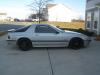
I don't car what kind of fancy cross drilled fuel lines and neon colored air filters you put on the thing, you're not going to make 200+ RWHP (meaning 230+ flywheel HP) without porting.
Stock engine means you're starting with a GSL-SE engine, because it doesn't have the exhaust port doohickeys in it. But that also limits you in *other* ways.
Anyone who can't get 25mpg with a rotary fails as a tuner and/or a driver.
Not happening.
I don't car what kind of fancy cross drilled fuel lines and neon colored air filters you put on the thing, you're not going to make 200+ RWHP (meaning 230+ flywheel HP) without porting.
Stock engine means you're starting with a GSL-SE engine, because it doesn't have the exhaust port doohickeys in it. But that also limits you in *other* ways.
Anyone who can't get 25mpg with a rotary fails as a tuner and/or a driver.
I don't car what kind of fancy cross drilled fuel lines and neon colored air filters you put on the thing, you're not going to make 200+ RWHP (meaning 230+ flywheel HP) without porting.
Stock engine means you're starting with a GSL-SE engine, because it doesn't have the exhaust port doohickeys in it. But that also limits you in *other* ways.
Anyone who can't get 25mpg with a rotary fails as a tuner and/or a driver.

Old [Sch|F]ool
Joined: May 2001
Posts: 12,880
Likes: 577
From: Cleveland, Ohio, USA
I thought those made about 200hp no matter what you did with them
And no they don't count, anyway, since every time I see an RX-8 being driven, it's either some girl who looks almost old enough to be in college, or some ****** looking guy with a weird haircut and a collar popped so high it obscures part of his jawline.
PS - I accept that my own haircut is unusual but at least it doesn't look like something you'd see in manga Anyway my new engine is a high compression mild street port Turbo II engine, N/A at first but who knows... and it's a MILD street port because a WILD street port won't leave enough meat for future BRIDGES...
And no they don't count, anyway, since every time I see an RX-8 being driven, it's either some girl who looks almost old enough to be in college, or some ****** looking guy with a weird haircut and a collar popped so high it obscures part of his jawline.
PS - I accept that my own haircut is unusual but at least it doesn't look like something you'd see in manga
Anyway my new engine is a high compression mild street port Turbo II engine, N/A at first but who knows... and it's a MILD street port because a WILD street port won't leave enough meat for future BRIDGES...
Joined: Mar 2001
Posts: 31,867
Likes: 3,247
From: https://www2.mazda.com/en/100th/

Okay, now I have a question.
I have always been told that Torque is an engines ability to do work. (in a rotating motion) It is what gets you moving. Torque is what gets a heavy object to overcome weight and drag to gain momentum.
So if Torque is not important, then why do the large diesel trucks require so much of it with so little horsepower?
I have always been told that Torque is an engines ability to do work. (in a rotating motion) It is what gets you moving. Torque is what gets a heavy object to overcome weight and drag to gain momentum.
So if Torque is not important, then why do the large diesel trucks require so much of it with so little horsepower?
Power is the source that gets things moving, torque is the method.
Without power, torque is meaningless. A human can generate x million lbs of torque, but not much power.
A large diesel truck makes very good low end power, in addition to low end torque. The reason why people love talking about torque? It's easy to describe the snapping feeling you get on quick acceleration as torque, but it's the power that's actually moving you.
Joined: Mar 2001
Posts: 31,867
Likes: 3,247
From: https://www2.mazda.com/en/100th/