paintjob on a budget!


I live in the lounge...

Joined: Aug 2004
Posts: 2,000
Likes: 0
From: lathrup, MI
all the info you will need is here
http://board.moparts.org/ubbthreads/...6e789ba9e7f47c
http://board.moparts.org/ubbthreads/...6e789ba9e7f47c


Thread Starter
most triumphant

Joined: Mar 2006
Posts: 293
Likes: 0
From: Litchfield, CT
yes it is possible for glossy black, here is a link to the rustoleum protective enamel page has a bunch of colors home depot had like 6 colors, including, sunburst yellow, glossy almond, gloss black (top of my two tone), gloss hunter green (what im doing two tone), carnival red, gloss white a whole bunch and it should be able to be tint matched.
Zak
Edit: Link
Zak
Edit: Link

Joined: Apr 2005
Posts: 3,785
Likes: 30
From: And the horse he rode in on...
You might be working too hard at this!
Are you wet sanding between every coat?
The original site says:
After you lay on two coats, wet sand the whole car, then repeat….
(Two coats/wet sand, two coats/wet sand).
Use progressively finer sand paper each time.
Link
You are doing double the sanding if you are sanding between every coat.
FWIW.
Good luck!
The original site says:
Originally Posted by basqueinmyFC
After you lay on two coats, wet sand the whole car, then repeat….
(Two coats/wet sand, two coats/wet sand).
Use progressively finer sand paper each time.
Link
FWIW.
Good luck!

Originally Posted by jackhild59
Are you wet sanding between every coat?
The original site says:
You are doing double the sanding if you are sanding between every coat.
FWIW.
Good luck!
The original site says:
You are doing double the sanding if you are sanding between every coat.
FWIW.
Good luck!

Back.
Joined: Apr 2004
Posts: 890
Likes: 0
From: San Diego
I didn't go through the 20+ pages of the original post and maybe this was answered there, but I'll ask anyway. The charger and beetle are all steel. It's pretty evident that the paint works well on the metal parts of the car, but what about our uerathane bumpers and plastic trim? Are you satisfied with the way your bumper is turning out so far or are you noticing a difference in the way that the paint is bonding as opposed to the metal?
 )
)

Former Moderator. RIP Icemark.
Joined: Apr 2001
Posts: 25,896
Likes: 24
From: Rohnert Park CA
I am instested in seeing the long term here. I hope you keep us informed.
See it is against everything I have learned about enamel paint chem to do what you are doing here. So I am very intrested in seeing the long term results.
As I have been taught on enamel paint chem, the enamel sets up with two distinct layers. If you were to cut the paint and look at it sideways with a electron microscope, there is a outer layer/skin, and an inner layer. If the outer layer of the enamel is puctured the inner layer dries out leading to a chalky dissolve of the paint.
So with your wet sands, and final polishes, it should also distroy that outer layer.
So just from a paint chem level, I am intrested to see what happens with this paint method a year or two down the road.
See it is against everything I have learned about enamel paint chem to do what you are doing here. So I am very intrested in seeing the long term results.
As I have been taught on enamel paint chem, the enamel sets up with two distinct layers. If you were to cut the paint and look at it sideways with a electron microscope, there is a outer layer/skin, and an inner layer. If the outer layer of the enamel is puctured the inner layer dries out leading to a chalky dissolve of the paint.
So with your wet sands, and final polishes, it should also distroy that outer layer.
So just from a paint chem level, I am intrested to see what happens with this paint method a year or two down the road.

Rotary Apprentice

Joined: Jan 2005
Posts: 2,181
Likes: 0
From: USA
Originally Posted by Icemark
I am instested in seeing the long term here. I hope you keep us informed.
See it is against everything I have learned about enamel paint chem to do what you are doing here. So I am very intrested in seeing the long term results.
As I have been taught on enamel paint chem, the enamel sets up with two distinct layers. If you were to cut the paint and look at it sideways with a electron microscope, there is a outer layer/skin, and an inner layer. If the outer layer of the enamel is puctured the inner layer dries out leading to a chalky dissolve of the paint.
So with your wet sands, and final polishes, it should also distroy that outer layer.
So just from a paint chem level, I am intrested to see what happens with this paint method a year or two down the road.
See it is against everything I have learned about enamel paint chem to do what you are doing here. So I am very intrested in seeing the long term results.
As I have been taught on enamel paint chem, the enamel sets up with two distinct layers. If you were to cut the paint and look at it sideways with a electron microscope, there is a outer layer/skin, and an inner layer. If the outer layer of the enamel is puctured the inner layer dries out leading to a chalky dissolve of the paint.
So with your wet sands, and final polishes, it should also distroy that outer layer.
So just from a paint chem level, I am intrested to see what happens with this paint method a year or two down the road.
if you look at the original links of the beetle, that paint job is 6 years old, looks great to me!

Originally Posted by NOPR
if you look at the original links of the beetle, that paint job is 6 years old, looks great to me!
I live in the lounge...
Joined: Aug 2004
Posts: 2,000
Likes: 0
From: lathrup, MI
Originally Posted by classicauto
The orange one or the dark dark blue one..........because the blue one was sprayed............
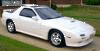
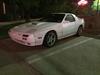
update:
last coat for the hood and light covers is done
coat 4 for the fenders.


Rotary Apprentice
Joined: Jan 2005
Posts: 2,181
Likes: 0
From: USA
Originally Posted by classicauto
The orange one or the dark dark blue one..........because the blue one was sprayed............
I live in the lounge...
Joined: Aug 2004
Posts: 2,000
Likes: 0
From: lathrup, MI
Originally Posted by NOPR
the orange one, i know the blue one was sprayed, and FTR it wasn't sprayed using this paint, it was normal base/clear car paint.

Back.
Joined: Apr 2004
Posts: 890
Likes: 0
From: San Diego
Oh no I think you made the right decision with white for your 10AE. I'm just curious if a dark color like black would come out as nice as the lighter colors. So someone else try it with black before I take the plunge!