


speaking of unobtanium parts..





Joined: Mar 2001
Posts: 31,857
Likes: 3,243
From: https://www2.mazda.com/en/100th/


Figured is was near impossible to get one of these nowaday, borderline Unobtanium. Super nice SA air cleaner, picked off Craigslist.


Tried to attach but they were too big. :/
Tried to attach but they were too big. :/




sweet
Man, that's nice. I hope you wear cotton gloves when you work with it! It should be wall art!
No part number or writing anywhere on it, may not even be a Mazda item. I picked it up from the sellers girlfriend so couldn't ask.

Joined: Jun 2008
Posts: 8,376
Likes: 30
From: Chino Hills, CA
Well, that's an '80 air box (the 79's had a hold-down stud on the front, to the left of the snorkel), & the parts fiches for both 79's and 80's shows a paper-type one-piece element.
So it's either even older, or non-Mazda. Does look like the support for a foam element.
So it's either even older, or non-Mazda. Does look like the support for a foam element.

It a hamster wheel. The hamsters run around inside the air filter and give you a few extra horse power due to the air induction effect.
One of the earlier attempts Mazda made to get emissions down.
And yes, that is one fine looking air filter. Unobtanium for sure.
One of the earlier attempts Mazda made to get emissions down.
And yes, that is one fine looking air filter. Unobtanium for sure.

That is one clean air box!
While we are on the subject, I dont think any one has posted this.
JDM 12A turbo air box, Dont see them come up for sale too often
I just picked up two of them
While we are on the subject, I dont think any one has posted this.
JDM 12A turbo air box, Dont see them come up for sale too often
I just picked up two of them
Joined: Mar 2001
Posts: 31,857
Likes: 3,243
From: https://www2.mazda.com/en/100th/

BEE-U-TEE air cleaner D-man. Nice find. Really the center-piece of a motor so she is something!
Cage frame is v-e-r-y familiar but can't quite put my finger on it. Not for an old-style Racing Beat foamy is it?
Stu Aull
80GS
Alaska
Cage frame is v-e-r-y familiar but can't quite put my finger on it. Not for an old-style Racing Beat foamy is it?
Stu Aull
80GS
Alaska


Thread Starter
Joined: Oct 2003
Posts: 22,598
Likes: 1,276
From: Ohio
"Ray, wasn't this system tied in with the self aligning X-wheel syncros. "
Not exactly, the OCD and the HDI were related but did not work together.
The X wheel OCD system was originally developed for the Hamster Driven Intake (HDI) system to regulate Hamster Rotation Speed (HRS) and was subsequently adapted for the X wheels.
In the HDI system, the Oscillator was used to detect microchips implanted in the hamster's toe nails to be sure all the hamsters were running in synchrony, with all four microchips from each hamster sending data to the Compensator, a very early microcomputer component located in the rats nest. The Compensator simultaneously integrated the activity of as many as 16 hamster feet, allowing up to four hamsters to be used in the system.
If one of the hamsters slowed down or sped up a bit, the Compensator sent a radio signal to Deregulator devices implanted in the hamster's hip muscles to increase or decrease the rate of contraction of that flexor muscle, thus keeping all the hamsters running at the same speed.
The system worked great in testing because the Mazda engineers used their own hamsters and brought them home at night to play with the kids, which kept the hamsters happy.
But when the first SA's went on the US market in 1979, a lot of the new owners were not properly schooled in hamster maintenance, so the hamsters started getting left out in the garage at night. Some of them got depressed and sucked into the Nikki the next day, which obviously caused problems for the design.
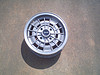
That hat-like thing in the middle of the cleaner was one attempt to counteract hamster sucking, but it made the little guys too claustrophobic and was abandoned - that's why you never see them anymore.

But the Mazda engineers really liked the OCD concept, so they adapted it to keep the X wheels aligned when they became an option in the early '80s.
Not exactly, the OCD and the HDI were related but did not work together.
The X wheel OCD system was originally developed for the Hamster Driven Intake (HDI) system to regulate Hamster Rotation Speed (HRS) and was subsequently adapted for the X wheels.
In the HDI system, the Oscillator was used to detect microchips implanted in the hamster's toe nails to be sure all the hamsters were running in synchrony, with all four microchips from each hamster sending data to the Compensator, a very early microcomputer component located in the rats nest. The Compensator simultaneously integrated the activity of as many as 16 hamster feet, allowing up to four hamsters to be used in the system.
If one of the hamsters slowed down or sped up a bit, the Compensator sent a radio signal to Deregulator devices implanted in the hamster's hip muscles to increase or decrease the rate of contraction of that flexor muscle, thus keeping all the hamsters running at the same speed.
The system worked great in testing because the Mazda engineers used their own hamsters and brought them home at night to play with the kids, which kept the hamsters happy.
But when the first SA's went on the US market in 1979, a lot of the new owners were not properly schooled in hamster maintenance, so the hamsters started getting left out in the garage at night. Some of them got depressed and sucked into the Nikki the next day, which obviously caused problems for the design.
That hat-like thing in the middle of the cleaner was one attempt to counteract hamster sucking, but it made the little guys too claustrophobic and was abandoned - that's why you never see them anymore.
But the Mazda engineers really liked the OCD concept, so they adapted it to keep the X wheels aligned when they became an option in the early '80s.
"Ray, wasn't this system tied in with the self aligning X-wheel syncros. "
Not exactly, the OCD and the HDI were related but did not work together.
...
That hat-like thing in the middle of the cleaner was one attempt to counteract hamster sucking, but it made the little guys too claustrophobic and was abandoned - that's why you never see them anymore.
Not exactly, the OCD and the HDI were related but did not work together.
...
That hat-like thing in the middle of the cleaner was one attempt to counteract hamster sucking, but it made the little guys too claustrophobic and was abandoned - that's why you never see them anymore.
and then post a thread with questions about the hamster mod

Your over the top Professor! Did you dip into some of my special cider for this
inspirational hallucination of a post?

Ray, you OGTA guys are weird. First, the "X" wheels alignment argument. Second, the 13B=X 12A's math; and now Third, The Hamster wheels?
Joined: Jun 2008
Posts: 8,376
Likes: 30
From: Chino Hills, CA
The hamsters are supposed to run in a clockwise direction around the OUTside of that mesh... creates a vortex injection effect.
INside the the mesh, they don't last long once the secondaries open.
INside the the mesh, they don't last long once the secondaries open.
Joined: Mar 2001
Posts: 31,857
Likes: 3,243
From: https://www2.mazda.com/en/100th/
"Ray, wasn't this system tied in with the self aligning X-wheel syncros. "
Not exactly, the OCD and the HDI were related but did not work together.
The X wheel OCD system was originally developed for the Hamster Driven Intake (HDI) system to regulate Hamster Rotation Speed (HRS) and was subsequently adapted for the X wheels.
In the HDI system, the Oscillator was used to detect microchips implanted in the hamster's toe nails to be sure all the hamsters were running in synchrony, with all four microchips from each hamster sending data to the Compensator, a very early microcomputer component located in the rats nest. The Compensator simultaneously integrated the activity of as many as 16 hamster feet, allowing up to four hamsters to be used in the system.
If one of the hamsters slowed down or sped up a bit, the Compensator sent a radio signal to Deregulator devices implanted in the hamster's hip muscles to increase or decrease the rate of contraction of that flexor muscle, thus keeping all the hamsters running at the same speed.
The system worked great in testing because the Mazda engineers used their own hamsters and brought them home at night to play with the kids, which kept the hamsters happy.
But when the first SA's went on the US market in 1979, a lot of the new owners were not properly schooled in hamster maintenance, so the hamsters started getting left out in the garage at night. Some of them got depressed and sucked into the Nikki the next day, which obviously caused problems for the design.
That hat-like thing in the middle of the cleaner was one attempt to counteract hamster sucking, but it made the little guys too claustrophobic and was abandoned - that's why you never see them anymore.
But the Mazda engineers really liked the OCD concept, so they adapted it to keep the X wheels aligned when they became an option in the early '80s.
Not exactly, the OCD and the HDI were related but did not work together.
The X wheel OCD system was originally developed for the Hamster Driven Intake (HDI) system to regulate Hamster Rotation Speed (HRS) and was subsequently adapted for the X wheels.
In the HDI system, the Oscillator was used to detect microchips implanted in the hamster's toe nails to be sure all the hamsters were running in synchrony, with all four microchips from each hamster sending data to the Compensator, a very early microcomputer component located in the rats nest. The Compensator simultaneously integrated the activity of as many as 16 hamster feet, allowing up to four hamsters to be used in the system.
If one of the hamsters slowed down or sped up a bit, the Compensator sent a radio signal to Deregulator devices implanted in the hamster's hip muscles to increase or decrease the rate of contraction of that flexor muscle, thus keeping all the hamsters running at the same speed.
The system worked great in testing because the Mazda engineers used their own hamsters and brought them home at night to play with the kids, which kept the hamsters happy.
But when the first SA's went on the US market in 1979, a lot of the new owners were not properly schooled in hamster maintenance, so the hamsters started getting left out in the garage at night. Some of them got depressed and sucked into the Nikki the next day, which obviously caused problems for the design.
That hat-like thing in the middle of the cleaner was one attempt to counteract hamster sucking, but it made the little guys too claustrophobic and was abandoned - that's why you never see them anymore.
But the Mazda engineers really liked the OCD concept, so they adapted it to keep the X wheels aligned when they became an option in the early '80s.
Rotation direction is up to the hamsters. Contrary to popular belief, the hamsters don't run clockwise in the northern hemisphere and counterclockwise in the southern hemisphere. Rather, rotation direction is determined after you put the hamsters in, when one of them decides which way they're going to run and the rest join in. No discernible increase in HP has been noted going either way.
Also DD, they run INSIDE the hamster wheel, not outside. The Mazda engineers tried putting them on the outside but they all fell off right around 1200 rpm. When you put them inside they just flatten down and run faster under the influence of all those G's (this is why they had that problem with depressed hamsters, when one of them got tired of running it got sucked into the Nikki).
That's how they get the vortex, hamsters running around that fixed hamster wheel (the stator) much like a rotor inside inside a rotor housing.
It's the Wankel concept, all over again.
Also DD, they run INSIDE the hamster wheel, not outside. The Mazda engineers tried putting them on the outside but they all fell off right around 1200 rpm. When you put them inside they just flatten down and run faster under the influence of all those G's (this is why they had that problem with depressed hamsters, when one of them got tired of running it got sucked into the Nikki).
That's how they get the vortex, hamsters running around that fixed hamster wheel (the stator) much like a rotor inside inside a rotor housing.
It's the Wankel concept, all over again.