When you click on links to various merchants on this site and make a purchase, this can result in this site earning a commission. Affiliate programs and affiliations include, but are not limited to, the eBay Partner Network.
Are you sure that's supposed to go to sensor ground? I get that the company putting their sticker on it in that pictures advises to do so, but isn't that different than the thread on here that explains how to properly wire it based on the original designer's guidance?
I cant seem to find the thread you're referring to that contradicts the wiring instructions.
All I can say is AEM were the first to rebrand Mercury Marine coils. This is taken straight out of AEM's installation manual, so AMP EFI is not alone in their thinking.
NOW for the "boot" question, free air is a good conductor.
AGAIN, the spark plug boot needs to completely cover the plug insulator, using internal silicon grease, leaving NO air gap at the plug steel.
MANY here on the site HAVE witnessed this occur, (leaks) at my facility, when viewing spark plugs/plug boots being tested using my CO-2 eight channel pressure chamber, (a product/item a sell to all who ask).
Magnacore products are first class, they make MANY boots of different length.
When I have a fitment problem, I will buy a "longer" boot then trim to size.
The plug wires were a custom set I just called them and specified wire type, length, boot angle, and coil/plug type for the actual connecters inside the boot ends.
The coil is spaced about 1/4 inch below the metal bracket. I could use some sort of plastic spacer and retention so that it is not a ground source but I have not had issues with it before or since I have changed the coil. My old AEM coil that I swapped in has had no issues.
The boots Magencor spec'd on my plug wires cover all but one of the ribs on the spark plug porcelain. They are a little bit longer than my old ones but Ive never have had issues with it arcing to the block through the plug side.
I drove the car to some morning errands and the cool air and little more boost feel goood.
Are you sure that's supposed to go to sensor ground? I get that the company putting their sticker on it in that pictures advises to do so, but isn't that different than the thread on here that explains how to properly wire it based on the original designer's guidance?
Yes 100%, its the same for AEM coils (and the thread for wiring them states the same as well), the one ground (Pin B) is instructed to be ECU sensor ground; Pin C to matching rotor housing, Pin D to battery. I found this same issue with my Rywire harness (all 3 grounds are combined on the ring terminal for the rotor housing ground). I'm not sure why many of these harness' got it wrong; for simplicity I guess.....
I also just recently switched to a custom set of Magnecor wires (mine are only 6" long!) but I went with the KV85 (8.5mm wires). I put different boots on each end (some straight, some 90deg) so I was able to route my wires where the closest they get to each other is at the actual spark plugs. Magnecor was extremely great to deal with, were very fast getting my wires up to me, and so far they have been excellent fit; I understand why Howard praises them.
Last edited by RotaryMachineRx; Oct 11, 2023 at 11:19 AM.
Didn't have a chance to read everything; not sure if this ended up being mechanical issue, bad ecu hardware, or poor tuning but a few thoughts:
In my experience EGT is way often over-associated as an absolute value for warping seals.
There are multiple causes of high EGT, and consideration must be taken not to conflate high EGT as a limit that warps apex seals.
Many of these tuners will chase an EGT number or try to stay under a certain ceiling for fear of warping seals, and in reality this can actually cause the seals to warp.
For example, in my experience its safer to see high EGT with conservative timing vs "safe egt" with aggressive timing.
Be careful of tuners who spit a lot of game and sound extremely knowledgeable. I tend to trust people who have proven their own platforms first, before taking their tuning advice.
Last edited by Monsterbox; Oct 16, 2023 at 12:35 PM.
The issue ended up being my following of the TDC mark on my FFE wheel instead of my stock mark. After I switched to the stock markings everything is holding up as expected.
Originally Posted by Monsterbox
Didn't have a chance to read everything; not sure if this ended up being mechanical issue, bad ecu hardware, or poor tuning but a few thoughts:
In my experience EGT is way often over-associated as an absolute value for warping seals.
There are multiple causes of high EGT, and consideration must be taken not to conflate high EGT as a limit that warps apex seals.
Many of these tuners will chase an EGT number or try to stay under a certain ceiling for fear of warping seals, and in reality this can actually cause the seals to warp.
For example, in my experience its safer to see high EGT with conservative timing vs "safe egt" with aggressive timing.
Be careful of tuners who spit a lot of game and sound extremely knowledgeable. I tend to trust people who have proven their own platforms first, before taking their tuning advice.
This confuses me as there are no timing markings on the FFE trigger wheel. Only an arrow for alignment with the sensor to ensure trigger wheel is flipped and oriented correctly... The timing markings are located on whatever pulley you are using. but it sounds like you figured that part out.
Last edited by R_PROWESS; Oct 17, 2023 at 06:22 PM.
At the time I had spoken with FFE and they indicated that the arrow should point directly to the center of the sensor. Mine was off by several degrees and I decided to use their mark instead which was the course of failure
Originally Posted by R_PROWESS
This confuses me as there are no timing markings on the FFE trigger wheel. Only an arrow for alignment with the sensor to ensure trigger wheel is flipped and oriented correctly... The timing markings are located on whatever pulley you are using. but it sounds like you figured that part out.
Didn't have a chance to read everything; not sure if this ended up being mechanical issue, bad ecu hardware, or poor tuning but a few thoughts:
In my experience EGT is way often over-associated as an absolute value for warping seals.
There are multiple causes of high EGT, and consideration must be taken not to conflate high EGT as a limit that warps apex seals.
Many of these tuners will chase an EGT number or try to stay under a certain ceiling for fear of warping seals, and in reality this can actually cause the seals to warp.
For example, in my experience its safer to see high EGT with conservative timing vs "safe egt" with aggressive timing.
Be careful of tuners who spit a lot of game and sound extremely knowledgeable. I tend to trust people who have proven their own platforms first, before taking their tuning advice.
Chasing numbers is the fatal flaw of a tUnAh.
Instead, feeling the car out with an array of changes that optimize it for it's given application. If a Lambda Sensor shows me π but the thing revs and reacts like it's fueled by Myr, I'm going to trust giving the engine what it wants, not a number; never a number.
EGTs are there to show you trends. It's a slow reacting sensor, so it should really only be used to identify airflow imbalances throughout the range of a pressure vs. RPM table to compensate accordingly. Many great tales are told of V8 Optimization from Cylinder to Cylinder that netted huge power gains as combustion pressure was normalized.
Low Timing can result in high EGTs, but it's more likely an exhaust manifold restriction that should be dealt with first. Advancing the timing can help, but not to a significant enough degree to chance lifespan of vehicle over. A good bit of engine port types prefer LESS ignition timing than what is commonly used throughout this forum to be closer to MBT, and it sure as **** isn't some locked or flat ignition curve.
The issue ended up being my following of the TDC mark on my FFE wheel instead of my stock mark. After I switched to the stock markings everything is holding up as expected.
I even recall someone on here finding out that the various keyways were off on a multi-piece 4-rotor shaft upon blueprinting the eccentric shaft lobe positions
I even recall someone on here finding out that the various keyways were off on a multi-piece 4-rotor shaft upon blueprinting the eccentric shaft lobe positions
That's me haha and true! Top dead center was still marked correctly but the keyways for the multi pieces were slightly off causing lobe angles to be slightly inconsistent
That's me haha and true! Top dead center was still marked correctly but the keyways for the multi pieces were slightly off causing lobe angles to be slightly inconsistent
hmm, so its like a V12 Ferrari, where you measure cam timing on the front and the rear and average it?
How's it going everyone! The 7 has been running smooth since my last post in October. I have just been changing the oil and driving it as my daily. I have over 7000 miles now on the most recent rebuild with no issues (thank God because its freezing). I have not changed the burned coil but did change my plugs last night as I was starting to get some break up in low tps high stoich cells. Would be interested in everyone thoughts on them. Im still at 13 psi and am looking now at a boost controller as the weather starts to get warmer. Hope everyone is doing well
How's it going everyone! The 7 has been running smooth since my last post in October. I have just been changing the oil and driving it as my daily. I have over 7000 miles now on the most recent rebuild with no issues (thank God because its freezing). I have not changed the burned coil but did change my plugs last night as I was starting to get some break up in low tps high stoich cells. Would be interested in everyone thoughts on them. Im still at 13 psi and am looking now at a boost controller as the weather starts to get warmer. Hope everyone is doing well
Normally you'll see the Trailing Plugs are showing more heat as they're finishing up the combustion event. This is why Mazda ran them two heat ranges colder than the Leading plugs.
Seeing your Trailing Plugs with Carbon Deposits and heavy richness is a really scary thing, especially given the fact that they're hidden with a tiny hole.
The WHITE is lean-tip in or misfire due to aggressive ignition timing. Essentially pre-ignition of that plug.
Here's what they should be looking like on your trailing plug:
Leading Plug:
Here's your pre-ignition plug read:
I covered this thoroughly on here:
Hope that helps. Reach out if you need anything.
Last edited by GucciBravo; Feb 5, 2024 at 03:25 PM.
I was driving home yesterday and heard a bad noise when letting off throttle and the car vibrated badly. Drove it very gently rest of the way home with one more vibration event. It felt like a gear in the trans had caught a piece of metal but after further inspection the turbo was in very bad shape. Shaft play like crazy and I started to hear it contact the housing when starting the car after changing trans fluid. I didn't notice the engine running any different but I'm sure the aluminum dust was good for the motor
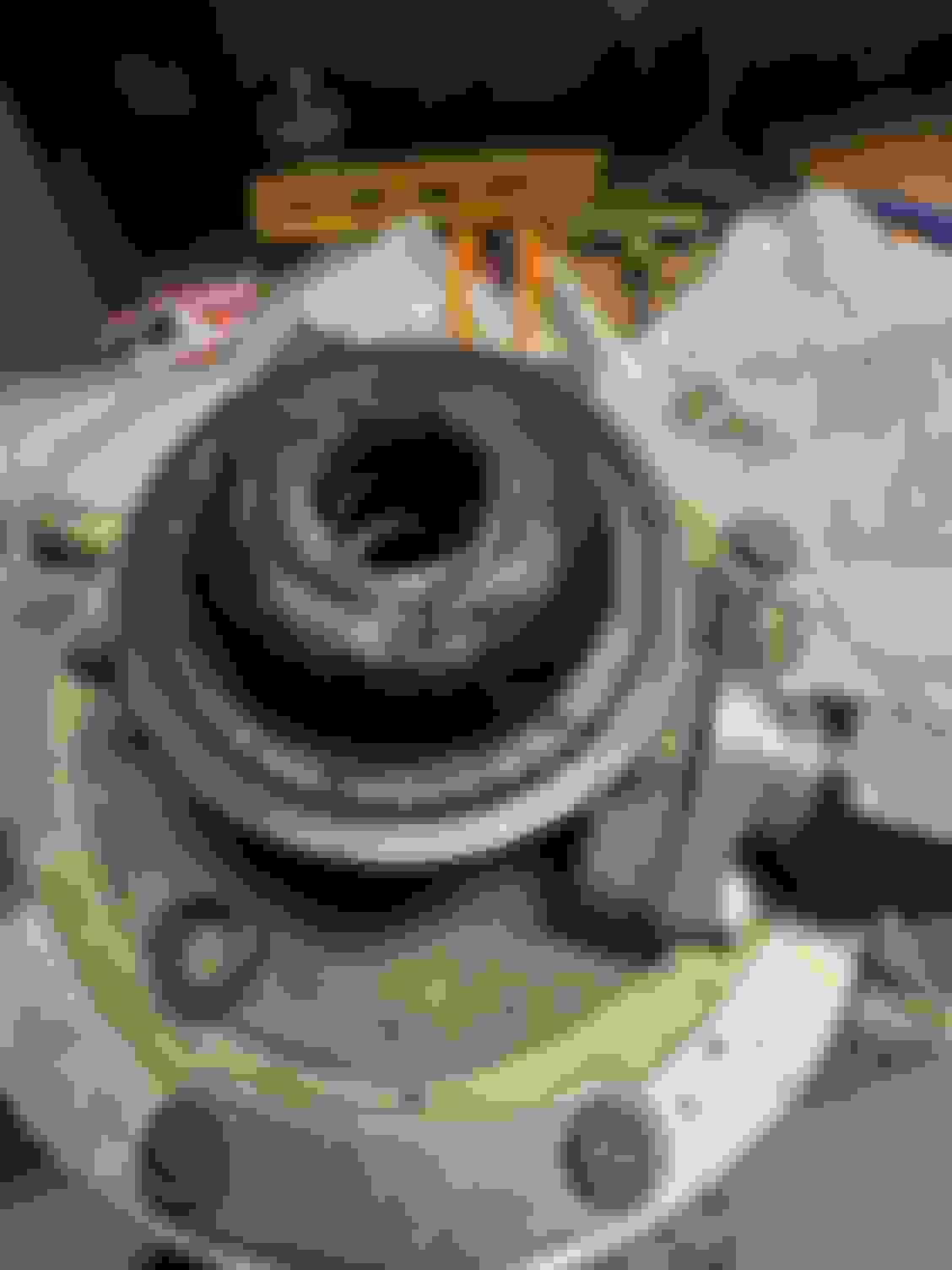
Got the turbo removed and disassembled and can boy can you say cooked!
I did not treat this turbo well and I made some mistakes that killed it early. First was the Turbosmart OPR I don't think I needed it but was afraid of blowing my motor and sending crap into the turbo. The lack of oil flow I'm sure really helped the situation and I always noticed an odd burning smell at idle. I'm assuming lack of flow at idle with the added restriction of the OPR scorched these bearings. Second was my ignition timing used to be very advanced in cruise. I recently retarded the timing slightly as the tune I purchased was running 34+ degrees in the cruise cells which seemed advanced to me. Also the car vibrated due to the excessive advance in high vacuum. Smoothed right out with the retard. Also I'm assuming will dump less heat into the exhaust. 3rd and final item is I never ran a blow off valve. I know that wont cause this damage but doesn't help with the loads on the bearings.
Ill be moving from an s369 to an s364.5 as I am only shooting for 4-500whp
I was driving home yesterday and heard a bad noise when letting off throttle and the car vibrated badly. Drove it very gently rest of the way home with one more vibration event. It felt like a gear in the trans had caught a piece of metal but after further inspection the turbo was in very bad shape. Shaft play like crazy and I started to hear it contact the housing when starting the car after changing trans fluid. I didn't notice the engine running any different but I'm sure the aluminum dust was good for the motor
Got the turbo removed and disassembled and can boy can you say cooked!
I did not treat this turbo well and I made some mistakes that killed it early. First was the Turbosmart OPR I don't think I needed it but was afraid of blowing my motor and sending crap into the turbo. The lack of oil flow I'm sure really helped the situation and I always noticed an odd burning smell at idle. I'm assuming lack of flow at idle with the added restriction of the OPR scorched these bearings. Second was my ignition timing used to be very advanced in cruise. I recently retarded the timing slightly as the tune I purchased was running 34+ degrees in the cruise cells which seemed advanced to me. Also the car vibrated due to the excessive advance in high vacuum. Smoothed right out with the retard. Also I'm assuming will dump less heat into the exhaust. 3rd and final item is I never ran a blow off valve. I know that wont cause this damage but doesn't help with the loads on the bearings.
Ill be moving from an s369 to an s364.5 as I am only shooting for 4-500whp
-Mike
The OPR40 regulates oil pressure from a high 80-140psi Rotary Oil Pressure down to 40psi, just like the name states. It WILL NOT, nor CANNOT cause damage like this coking of a turbo.
This is a drainage issue and likely the turbo drain isn't being fed into air above the oil in the pan. This is the issue with 90% of turbo failures; drainage.
S364SXE is a fantastic turbo and will normally do something like this for very conservative Pump Gas on a Stockport REW:
On the oil change interval that I was referring to for plugs, that's 2500-3000mi each vehicle, one set of standard plugs, or race plugs will last twice that with ease.
The OPR40 regulates oil pressure from a high 80-140psi Rotary Oil Pressure down to 40psi, just like the name states. It WILL NOT, nor CANNOT cause damage like this coking of a turbo.
This is a drainage issue and likely the turbo drain isn't being fed into air above the oil in the pan. This is the issue with 90% of turbo failures; drainage.
S364SXE is a fantastic turbo and will normally do something like this for very conservative Pump Gas on a Stockport REW:
On the oil change interval that I was referring to for plugs, that's 2500-3000mi each vehicle, one set of standard plugs, or race plugs will last twice that with ease.
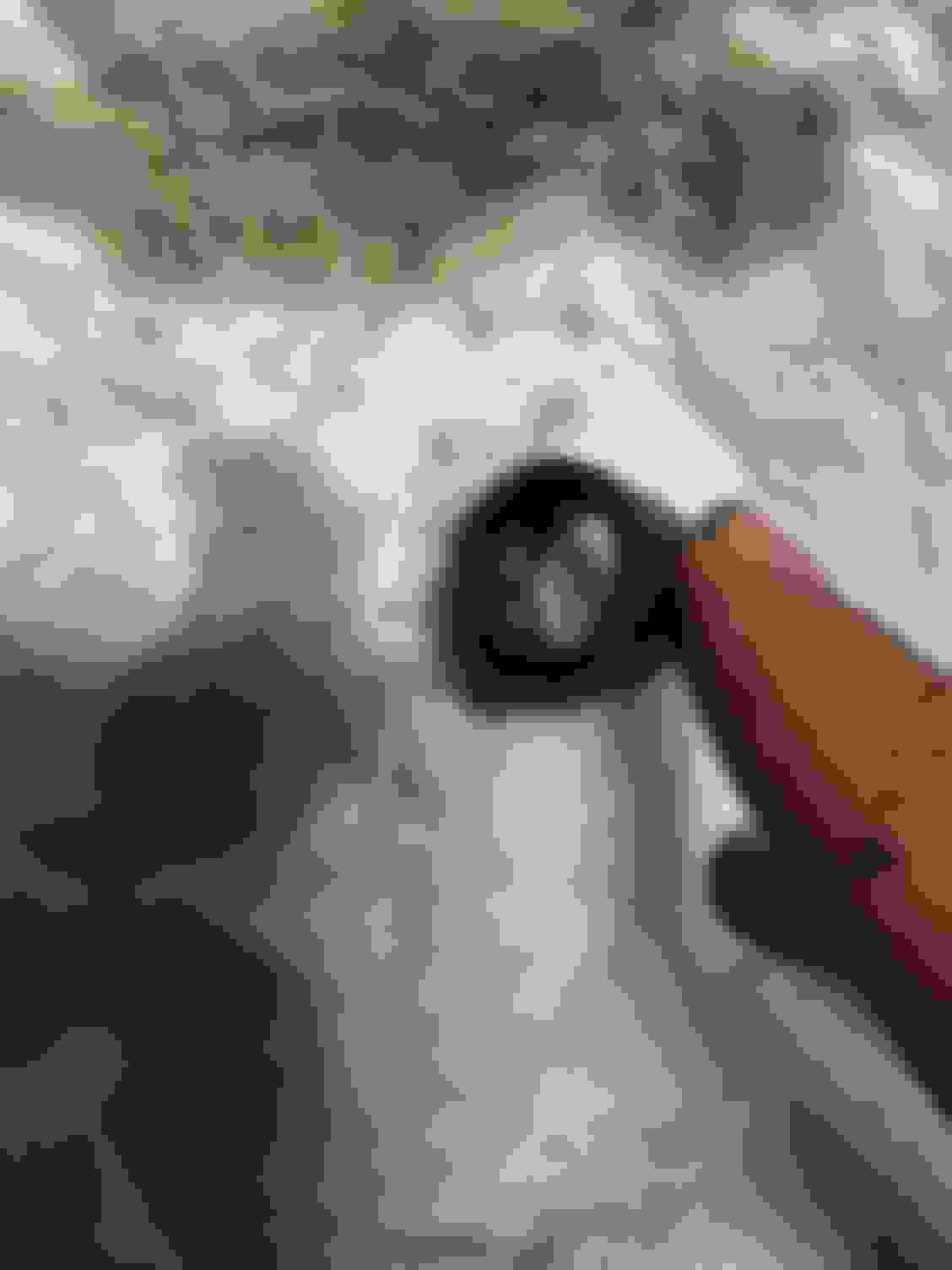
The turbo is being drained into the stock front cover location. It has a 12 AN PTFE line with a high flow 45 degree coming off the turbo to keep it in a constant downward angle. The drain line is also in a DEI heat jacket to keep it further protected, you can see the size of the fitting in the picture. Not sure what else id do besides adding a scavenge pump which seems excessive.
The lower pressure will result in lower flow and less cooling capacity for the turbo. Thats where my logic is behind the OPR not helping the situation
The turbo is being drained into the stock front cover location. It has a 12 AN PTFE line with a high flow 45 degree coming off the turbo to keep it in a constant downward angle. The drain line is also in a DEI heat jacket to keep it further protected, you can see the size of the fitting in the picture. Not sure what else id do besides adding a scavenge pump which seems excessive.
The lower pressure will result in lower flow and less cooling capacity for the turbo. Thats where my logic is behind the OPR not helping the situation
How much boost was that dyno?
10-4 on the plugs.
16psi, somewhere around 10.8 AFR at 8 degrees timing. Real gentle, but clean. The idea being to have it last forever on a stock setup with just injectors and V-Mount.
This heartbreaker dyno will show a stock REW on twins making under 215whp/185wtq by comparison.
There could have been something else causing the coking of the turbo, but it shouldn't be your drain as you've mentioned, nor the OPR40. If the turbo was originally fed with full oil pressure the damage would have occurred then.














 I gotchu.