


12a stock ports, side draft, ITBs, fuel injected.


Thread Starter
Respecognize!

Joined: Sep 2004
Posts: 4,106
Likes: 72
From: Anchor Bay, CA
12a stock ports, side draft, ITBs, fuel injected.
Bringing my engine to the limits of Street Prepared. I can run any intake manifold, throttle body and fuel / timing control system i chose. Only stipulation is that the motor must be a stock port engine.
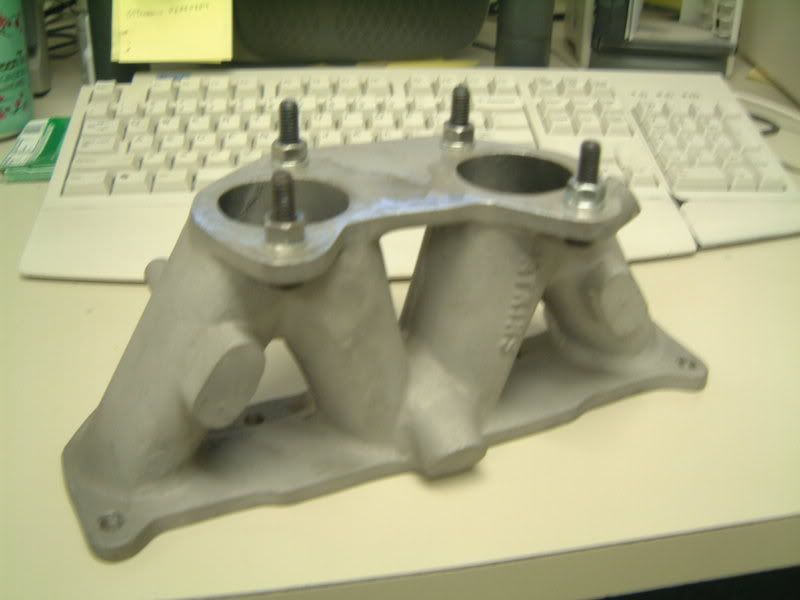
Atkins Side Draft Manifold
TWM Side Draft 55mm throttle body
Megasquirt
FC CAS
ill have pictures along the way. Manifold should be here on the 30th. Then once i get paid on the 15th, ill be ordering my Throttle body. Megasquirt soon after. I'm still removing the horrible rust preventative scrap from all over the engine bay.
Atkins Side Draft Manifold
TWM Side Draft 55mm throttle body
Megasquirt
FC CAS
ill have pictures along the way. Manifold should be here on the 30th. Then once i get paid on the 15th, ill be ordering my Throttle body. Megasquirt soon after. I'm still removing the horrible rust preventative scrap from all over the engine bay.

I'd like to see the dyno results when its done. I've heard that in theory a NA stockport 12a can only get to ~150 hp due to the port size and timing.
Whats your goal for this build? I know your maximizing but what kind of limit do you expect to top out at? Cool project.
Whats your goal for this build? I know your maximizing but what kind of limit do you expect to top out at? Cool project.
Thread Starter
Respecognize!
Joined: Sep 2004
Posts: 4,106
Likes: 72
From: Anchor Bay, CA
I'd like to see the dyno results when its done. I've heard that in theory a NA stockport 12a can only get to ~150 hp due to the port size and timing.
Whats your goal for this build? I know your maximizing but what kind of limit do you expect to top out at? Cool project.
Whats your goal for this build? I know your maximizing but what kind of limit do you expect to top out at? Cool project.
Im thinking about skimping on the TWM throttle body and go with a Ford 5.9L throttle body. It would save me about 400 dollars and a lot headaches. I could adapt it to the Atkins manifold without too much difficulty.


Joined: Mar 2001
Posts: 31,851
Likes: 3,239
From: https://www2.mazda.com/en/100th/
ive read that 150hp number too, couple ideas....
1. if 150hp is the max amount of air the motor will flow (at what rpms?!), maximise the power curve under that. if the power peak is 7k, work on the 4-6k range
2. we used to see 1-2psi of positive pressure in the s4 manifold on the k2rd race car with the haltech, if its real, then you can do more than 150hp
1. if 150hp is the max amount of air the motor will flow (at what rpms?!), maximise the power curve under that. if the power peak is 7k, work on the 4-6k range
2. we used to see 1-2psi of positive pressure in the s4 manifold on the k2rd race car with the haltech, if its real, then you can do more than 150hp


Trending Topics
Thread Starter
Respecognize!
Joined: Sep 2004
Posts: 4,106
Likes: 72
From: Anchor Bay, CA
Thread Starter
Respecognize!
Joined: Sep 2004
Posts: 4,106
Likes: 72
From: Anchor Bay, CA
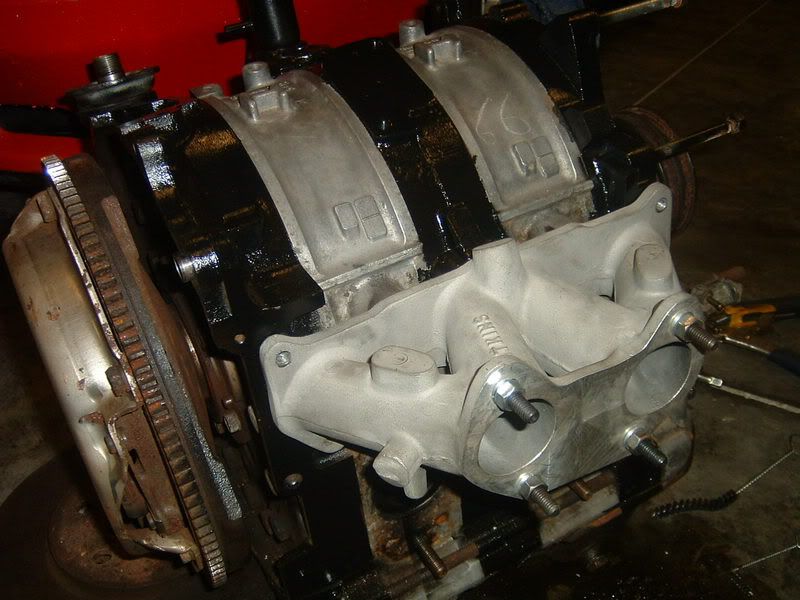
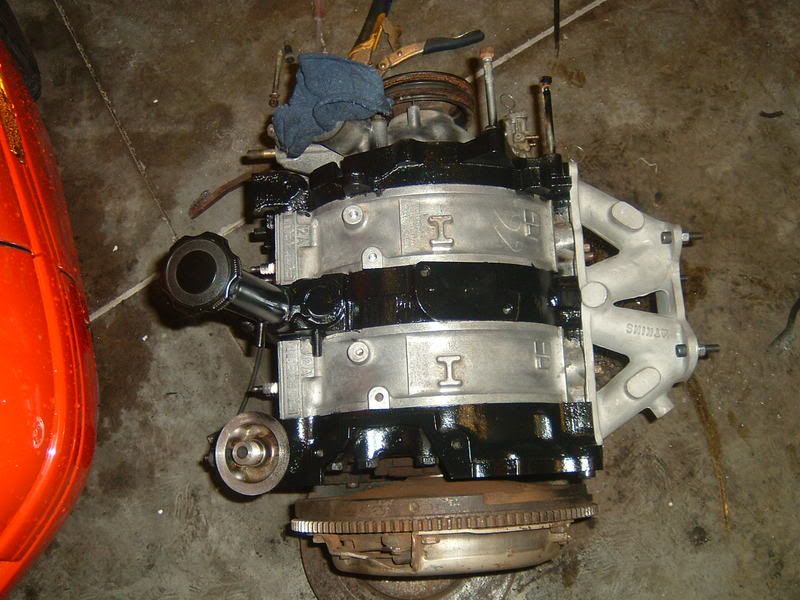
Test fitted the manifold. Seems pretty good. The manifold itself could use a little cleaning up on the inside. Especially the ports on the intake manifold flange. Ill get pics of this.


Thread Starter
Respecognize!
Joined: Sep 2004
Posts: 4,106
Likes: 72
From: Anchor Bay, CA
the only issue i'm thinking is going to hold me back is the heavier rotors w/ the light flywheel. I think there might be more to gain from a 83-85 rotor set with an after market flywheel. If i rebuild the engine with later model rotors and the light OEM flywheel then balance accordingly, i think i would find some power.

Old [Sch|F]ool


Joined: May 2001
Posts: 12,876
Likes: 575
From: Cleveland, Ohio, USA
Well Mr. Engineering Guy, do the math. Mazdatrix's FAQ section has weights for the flywheels and rotors. You can roughly guesstimate the mass's average radius, then all you have to do is figure the rotating inertia of the rotors (remember that besides rotating at 1/3rd speed, they orbit at full speed, I think those are additive) vs. the rotating inertia of the flywheels.
Rebalancing a '81-82 flywheel to work with '83-85 rotors is an old racer's trick. Personally I wonder if the .04lb weight difference between a '83-85 12A rotor and a Series 5 rotor is miniscule enough that you couldn't just slam a S5 N/A flywheel on there. That's the second lightest RX-7 flywheel evar.
My gut feeling is that the rotor weight differences aren't as significant as they first appear because if the weight loss comes from inside the cavities, then any missing iron is going to be replaced by oil, and while oil is a bit lighter than iron (proof: connecting rod bits do not float in the oil pan) it's still not insignificant.
Also, you won't see a power gain anywhere but on a Dynojet. Reducing rotating inertia doesn't make more power, it just requires less power to accelerate, so more acceleration makes it to the drive wheels. Lighter rotors *are* nicer from the standpoint of eccentric shaft flex and bearing stresses, though.
Rebalancing a '81-82 flywheel to work with '83-85 rotors is an old racer's trick. Personally I wonder if the .04lb weight difference between a '83-85 12A rotor and a Series 5 rotor is miniscule enough that you couldn't just slam a S5 N/A flywheel on there. That's the second lightest RX-7 flywheel evar.
My gut feeling is that the rotor weight differences aren't as significant as they first appear because if the weight loss comes from inside the cavities, then any missing iron is going to be replaced by oil, and while oil is a bit lighter than iron (proof: connecting rod bits do not float in the oil pan) it's still not insignificant.
Also, you won't see a power gain anywhere but on a Dynojet. Reducing rotating inertia doesn't make more power, it just requires less power to accelerate, so more acceleration makes it to the drive wheels. Lighter rotors *are* nicer from the standpoint of eccentric shaft flex and bearing stresses, though.

Thread
Thread Starter
Forum
Replies
Last Post
trickster
2nd Generation Specific (1986-1992)
25
Jul 1, 2023 04:40 PM
