


AI consumption?


 AI consumption?
im going to be using water/meth injection on my road race car this season. was curious as to about how much i would go thru in a 40 minute or so race? i just wanna make sure ill have a big enough reservoir so i dont run out mid race.
thanks in advance...
thanks in advance...



Joined: Oct 2001
Posts: 6,279
Likes: 728
From: Florence, Alabama
"im going to be using water/meth injection on my road race car"
good decision.
consumption depends on the sizing of your nozzles or solenoids. that depends on what the purpose is for your system. if you are just wishing to cool your engine your consumption will be half of replacing 25% of your base fuel w injectant.
i advise a 4 gallon fuel cell especially if you will be doing 40 minute sessions.
see my threads on optimised installation for details and pics.
good luck,
howard coleman
good decision.
consumption depends on the sizing of your nozzles or solenoids. that depends on what the purpose is for your system. if you are just wishing to cool your engine your consumption will be half of replacing 25% of your base fuel w injectant.
i advise a 4 gallon fuel cell especially if you will be doing 40 minute sessions.
see my threads on optimised installation for details and pics.
good luck,
howard coleman
sorry i probably should of mentioned this will be on a 450hp boosted fc. not just your average ITS car for example. i want to use pump gas to keep fuel costs down, so thats the purpose of my system. but wow 4 gallons, thats way more than i was guessing....


a good way to tell how far your system will get you, since nozzle size and pump pressure can change the actual output, is to select a nozzle(s) that fits your needs power/delivery wise, and then rig a temporary jug, perhaps a gas can, to feed your pump.
Then run the pump wide open and time how long it takes to empty. That will give you a good idea of how long you can throttle the car before running out.
Then run the pump wide open and time how long it takes to empty. That will give you a good idea of how long you can throttle the car before running out.

Again it depends on your nozzel size. If you're going to run a 450hp FC without an inter-cooler I would run a 4 gallon fuel cell. If you're just going to squirt a little in, and run a inter-cooler; I would at least get a 2 gallon.

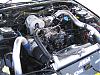
it also depends on what kind of control unit you use. will you be using a controler that you can set the boost level that the system starts injecting? if so theres no need to be injecting below 14 psi or so. are you using the system to prevent detonation or just to cool the engine? what boost levels will you be running?
it also depends on what kind of control unit you use. will you be using a controler that you can set the boost level that the system starts injecting? if so theres no need to be injecting below 14 psi or so. are you using the system to prevent detonation or just to cool the engine? what boost levels will you be running?
ill have to figure out what nozzles im gonna need and try that temporary jug hook up and find out for sure the consumption. dont know what i didnt think of that before quite frankly
Trending Topics
Joined: Oct 2001
Posts: 6,279
Likes: 728
From: Florence, Alabama
re the "jug" test...
there needs to be some consideration for the fact that you will be injecting against one bar of manifold Pressure.
bottom line is that for your purposes you will need a 4 gallon fuel cell and it should have antislosh foam in it and the pickup in the right place.
hc
there needs to be some consideration for the fact that you will be injecting against one bar of manifold Pressure.
bottom line is that for your purposes you will need a 4 gallon fuel cell and it should have antislosh foam in it and the pickup in the right place.
hc
re the "jug" test...
there needs to be some consideration for the fact that you will be injecting against one bar of manifold Pressure.
bottom line is that for your purposes you will need a 4 gallon fuel cell and it should have antislosh foam in it and the pickup in the right place.
hc
there needs to be some consideration for the fact that you will be injecting against one bar of manifold Pressure.
bottom line is that for your purposes you will need a 4 gallon fuel cell and it should have antislosh foam in it and the pickup in the right place.
hc
re the "jug" test...
there needs to be some consideration for the fact that you will be injecting against one bar of manifold Pressure.
bottom line is that for your purposes you will need a 4 gallon fuel cell and it should have antislosh foam in it and the pickup in the right place.
hc
there needs to be some consideration for the fact that you will be injecting against one bar of manifold Pressure.
bottom line is that for your purposes you will need a 4 gallon fuel cell and it should have antislosh foam in it and the pickup in the right place.
hc
But that test's main purpose (at least for me) was to have a rough idea of the absolute minimum time I'll be able to run the injectant. Spraying into the pressurized enviroment should only lengthen the time you can inject correct? Which would mean in real world operations, your tank should last longer then in the test.....which is good


here's a question, do any race classes actually allow use of water/meth injection?
Next, would they allow the fuel cell / tank to be installed inside the car?
What are the requirements for the fuel cell to be in the car for a particular class?
Next, would they allow the fuel cell / tank to be installed inside the car?
What are the requirements for the fuel cell to be in the car for a particular class?

-J
Most usually will only permit water... As in water IC's and drinking bags etc. This is obviously for fire safty. So as far as what the "class" will permit for power adders/fuels is another question. He should deff find this out first.
-J
-J
you can have a cell inside the car if you build a bulkhead around it so its not exposed to the cockpit
and im gonna be running super touring 1 (ST1) with nasa that has no engine related rules other than a power to weight limit and no nitrous. so dont see why couldnt use water/meth injection!
and im gonna be running super touring 1 (ST1) with nasa that has no engine related rules other than a power to weight limit and no nitrous. so dont see why couldnt use water/meth injection!
you can have a cell inside the car if you build a bulkhead around it so its not exposed to the cockpit
and im gonna be running super touring 1 (ST1) with nasa that has no engine related rules other than a power to weight limit and no nitrous. so dont see why couldnt use water/meth injection!
and im gonna be running super touring 1 (ST1) with nasa that has no engine related rules other than a power to weight limit and no nitrous. so dont see why couldnt use water/meth injection!
Does the cell need to be fully enclosed, or is it just a firewall to go between the cell and the driver?
also what are the requirements for the bulkhead?
I have a 2+2 FC model, and with the seats up and the cargo cover in place the area under the hatch is completely covered as if it was a car with a trunk, but somehow I think this wouldn't count.
Also what are the requirements for the fuel cell to be using alcohol?
I called one of the major fuel cell manufacturers and was told that certified alcohol fuel cells cannot be built. I'll try and dig up the email they sent me.
These are the requirements as pulled from the NASA rule book, guess what I called fuel safe, they cannot certify a fuel cell FIA FT3 for methanol:
"15.4 Fuel Cell / Tank
As of January 1, 2009 no new logbooks will be issued for vehicles with a fuel cell, unless
the fuel cell is FIA FT3 (or higher) certified. As of January 1, 2012 all fuel cells must be
56
FIA FT3 (or higher) certified, regardless of the date of purchase or date of the logbook
issuance.
A fuel cell is not required, except as specified by class rules. It is recommended for all
NASA classes, unless specifically listed otherwise. All vehicles having a fuel cell MUST
comply with the rules in this section, even if a fuel cell is not required.
• There must be a solid metal bulkhead completely separating the fuel tank, fuel
pump, fuel cell, filler neck hoses, and/or vent lines, from the driver compartment.
• Good quality fuel cells The cell must contain a bladder constructed of Nylon or
Dacron woven fabric impregnated and coated with a fuel resistant elastomer and
be FIA FT-3 (or higher) rated.
• The cell should be in a container made of at least 0.036-inch steel, 0.059-inch
aluminum, or 0.125-inch Marlex, fully surrounding the bladder.
• Foam internal baffling is required, as per FIA FT3-1999 (or higher).
• The filler cap, line, vents hoses, etc. should be designed so that no fuel will
escape if the car is partially or totally inverted.
• There should be a small drain hole in the outside box to purge fuel trapped
between the bladder and the box.
• Filler necks should not be mounted through a window panel (exceptions may be
made at the discretion of the Chief Scrutineer).
• The competitor is responsible for ensuring that the cell, bladder, and components
are installed, maintained, and replaced per the manufacturer’s instructions and in
accordance with applicable sections of the CCR.
• The bladder has a date of manufacture and serial number. The competitor is
responsible to note this in the front of the logbook.
• Bladders older than 5 years should not be used, no exceptions.
• As a January 1, 2009 the competitor will be responsible for showing proof of the
age of the bladder. It is highly recommended that the receipt for the purchase of
the bladder (or entire cell) be stored with the Vehicle Logbook.
15.4.1 Installation
Fuel cells shall be located within twelve (12) inches of the original tank. This
measurement is taken from the perimeter edge of the original tank to the perimeter edge
of the fuel cell. Additional reinforcements may be added to aid in the installation of the
cell, but they shall not attach to the roll cage. Floor structure may be modified to aid in
the installation of the cell. Steel location strapping is strongly recommended to keep the
fuel cell from dislocating in a crash. Installing a fuel cell that hangs significantly close to
the ground or one that is mounted closest to the rear of the vehicle, even if the
installation meets with these rules, may be deemed unsafe and therefore excluded from
competition. [Notes: There are some car builders that believe that installing a fuel cell in
the aforementioned manner is advantageous to the handling of the vehicle. While this
publication is not intended to cause debate, NASA encourages each car owner to
choose an installer very wisely. A burning fuel cell is not easily extinguished in a short
period of time, and therefore any claimed advantages in handling as justification for an
installation configuration or location, should be questioned.]
15.4.2 Rotary-molded cells
Rotary-molded cells are not allowed unless the bladder meets the current FIA FT3
specifications and carries the current FIA FT3 standard certification mark, label, or
stamp. Most or all JAZ and RCI brand cells are examples of rotary-molded cells that do
not carry such ratings. [Notes: A good fuel cell is made by companies such as ATL or
Fuel Safe (other than their entry level models), and should cost $550 or more. Beware
57
of inexpensive “SCCA APPROVED” cells. While SCCA is a fine organization, the stamp
of approval found on some safety items may pertain to other forms of racing, and may
not be consistent with these rules. Consult an expert before purchase.]"
"15.4 Fuel Cell / Tank
As of January 1, 2009 no new logbooks will be issued for vehicles with a fuel cell, unless
the fuel cell is FIA FT3 (or higher) certified. As of January 1, 2012 all fuel cells must be
56
FIA FT3 (or higher) certified, regardless of the date of purchase or date of the logbook
issuance.
A fuel cell is not required, except as specified by class rules. It is recommended for all
NASA classes, unless specifically listed otherwise. All vehicles having a fuel cell MUST
comply with the rules in this section, even if a fuel cell is not required.
• There must be a solid metal bulkhead completely separating the fuel tank, fuel
pump, fuel cell, filler neck hoses, and/or vent lines, from the driver compartment.
• Good quality fuel cells The cell must contain a bladder constructed of Nylon or
Dacron woven fabric impregnated and coated with a fuel resistant elastomer and
be FIA FT-3 (or higher) rated.
• The cell should be in a container made of at least 0.036-inch steel, 0.059-inch
aluminum, or 0.125-inch Marlex, fully surrounding the bladder.
• Foam internal baffling is required, as per FIA FT3-1999 (or higher).
• The filler cap, line, vents hoses, etc. should be designed so that no fuel will
escape if the car is partially or totally inverted.
• There should be a small drain hole in the outside box to purge fuel trapped
between the bladder and the box.
• Filler necks should not be mounted through a window panel (exceptions may be
made at the discretion of the Chief Scrutineer).
• The competitor is responsible for ensuring that the cell, bladder, and components
are installed, maintained, and replaced per the manufacturer’s instructions and in
accordance with applicable sections of the CCR.
• The bladder has a date of manufacture and serial number. The competitor is
responsible to note this in the front of the logbook.
• Bladders older than 5 years should not be used, no exceptions.
• As a January 1, 2009 the competitor will be responsible for showing proof of the
age of the bladder. It is highly recommended that the receipt for the purchase of
the bladder (or entire cell) be stored with the Vehicle Logbook.
15.4.1 Installation
Fuel cells shall be located within twelve (12) inches of the original tank. This
measurement is taken from the perimeter edge of the original tank to the perimeter edge
of the fuel cell. Additional reinforcements may be added to aid in the installation of the
cell, but they shall not attach to the roll cage. Floor structure may be modified to aid in
the installation of the cell. Steel location strapping is strongly recommended to keep the
fuel cell from dislocating in a crash. Installing a fuel cell that hangs significantly close to
the ground or one that is mounted closest to the rear of the vehicle, even if the
installation meets with these rules, may be deemed unsafe and therefore excluded from
competition. [Notes: There are some car builders that believe that installing a fuel cell in
the aforementioned manner is advantageous to the handling of the vehicle. While this
publication is not intended to cause debate, NASA encourages each car owner to
choose an installer very wisely. A burning fuel cell is not easily extinguished in a short
period of time, and therefore any claimed advantages in handling as justification for an
installation configuration or location, should be questioned.]
15.4.2 Rotary-molded cells
Rotary-molded cells are not allowed unless the bladder meets the current FIA FT3
specifications and carries the current FIA FT3 standard certification mark, label, or
stamp. Most or all JAZ and RCI brand cells are examples of rotary-molded cells that do
not carry such ratings. [Notes: A good fuel cell is made by companies such as ATL or
Fuel Safe (other than their entry level models), and should cost $550 or more. Beware
57
of inexpensive “SCCA APPROVED” cells. While SCCA is a fine organization, the stamp
of approval found on some safety items may pertain to other forms of racing, and may
not be consistent with these rules. Consult an expert before purchase.]"
I reviewed the rules for ST1, it would seem that water injection is allowed, and it says that water/alcohol mixtures are allowed, so it would seem that they would likely not have any requirement for a fuel tank for cell using a non flammable mixture of alcohol and water.
It does expressly prohibit meth injection.
It does expressly prohibit meth injection.

Thread
Thread Starter
Forum
Replies
Last Post

