


Identify this nipple!


Thread Starter
Senior Member
Joined: Aug 2009
Posts: 288
Likes: 0
From: Houston, Texas
Identify this nipple!
I bit the bullet and took the ACV and air pump off.
I found the nipple shown below with crappy, wrong size, un-secured vacuum cap falling off of it. What should of it be connected to originally and can I now use it for the vacuum line going to the bypass valve and boost gauge?
<a href="http://s222.photobucket.com/albums/dd66/crackattak/?action=view&current=Nipple.jpg" target="_blank"><img src="http://i222.photobucket.com/albums/dd66/crackattak/Nipple.jpg" border="0" alt="Photobucket"></a>
I found the nipple shown below with crappy, wrong size, un-secured vacuum cap falling off of it. What should of it be connected to originally and can I now use it for the vacuum line going to the bypass valve and boost gauge?
<a href="http://s222.photobucket.com/albums/dd66/crackattak/?action=view&current=Nipple.jpg" target="_blank"><img src="http://i222.photobucket.com/albums/dd66/crackattak/Nipple.jpg" border="0" alt="Photobucket"></a>
Thread Starter
Senior Member
Joined: Aug 2009
Posts: 288
Likes: 0
From: Houston, Texas
The original owner had both the bypass/blowoff valve and pressure sensor connected to a T that went to the ACV.
From looking at the vac diagram that nipple was is probably the correct feed for bypass or the sensor, or am I wrong?
From looking at the vac diagram that nipple was is probably the correct feed for bypass or the sensor, or am I wrong?
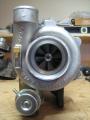

It's a manifold vacuum/pressure source, so you can use it for the bypass valve, boost sensor or boost gauge. In stock form, I think it was used for the boost sensor. It's used for the boost sensor and gauge on my car.


cap them if you are not using them any longer.
also, that is a horrible spot for a boost gauge connection and even worse for a map sensor hose. that as well as the stock pressure sensor port have the most resonance and bouncy signal of all the ports on the engine.. i have seen signals bounce as much as 5psi in boost and 5"hg on naturally aspirated engines with that port, throwing your timing all over the map as well as fuelling(with a standalone ems) and causing inaccurate boost gauge readings.
i have no idea why mazda chose to put them there aside from they read the signal 1 millisecond faster than at the T/B. the stock line however was supposed to have a restrictor to smooth the signal but now with everyone changing their hoses most have long since gone and their owners not even realized that they have bad timing figures while driving. there are 3 ports at the throttle body that give boost+vacuum signals(top and bottom on the front side and i forget which one at the rear as there was 2 different configurations).
also, that is a horrible spot for a boost gauge connection and even worse for a map sensor hose. that as well as the stock pressure sensor port have the most resonance and bouncy signal of all the ports on the engine.. i have seen signals bounce as much as 5psi in boost and 5"hg on naturally aspirated engines with that port, throwing your timing all over the map as well as fuelling(with a standalone ems) and causing inaccurate boost gauge readings.
i have no idea why mazda chose to put them there aside from they read the signal 1 millisecond faster than at the T/B. the stock line however was supposed to have a restrictor to smooth the signal but now with everyone changing their hoses most have long since gone and their owners not even realized that they have bad timing figures while driving. there are 3 ports at the throttle body that give boost+vacuum signals(top and bottom on the front side and i forget which one at the rear as there was 2 different configurations).
Last edited by RotaryEvolution; Dec 30, 2010 at 11:53 AM.
Trending Topics



cap them if you are not using them any longer.
also, that is a horrible spot for a boost gauge connection and even worse for a map sensor hose. that as well as the stock pressure sensor port have the most resonance and bouncy signal of all the ports on the engine.. i have seen signals bounce as much as 5psi in boost and 5"hg on naturally aspirated engines with that port, throwing your timing all over the map as well as fuelling(with a standalone ems) and causing inaccurate boost gauge readings.
i have no idea why mazda chose to put them there aside from they read the signal 1 millisecond faster than at the T/B. the stock line however was supposed to have a restrictor to smooth the signal but now with everyone changing their hoses most have long since gone and their owners not even realized that they have bad timing figures while driving. there are 3 ports at the throttle body that give boost+vacuum signals(top and bottom on the front side and i forget which one at the rear as there was 2 different configurations).
also, that is a horrible spot for a boost gauge connection and even worse for a map sensor hose. that as well as the stock pressure sensor port have the most resonance and bouncy signal of all the ports on the engine.. i have seen signals bounce as much as 5psi in boost and 5"hg on naturally aspirated engines with that port, throwing your timing all over the map as well as fuelling(with a standalone ems) and causing inaccurate boost gauge readings.
i have no idea why mazda chose to put them there aside from they read the signal 1 millisecond faster than at the T/B. the stock line however was supposed to have a restrictor to smooth the signal but now with everyone changing their hoses most have long since gone and their owners not even realized that they have bad timing figures while driving. there are 3 ports at the throttle body that give boost+vacuum signals(top and bottom on the front side and i forget which one at the rear as there was 2 different configurations).
sometimes you don't see what the ECU is actually compensating for until you read your logs, some ECUs will buffer the map signal, others will not because it causes a delay.
if you want to keep using it that's fine, it's just a suggestion.
Last edited by RotaryEvolution; Dec 30, 2010 at 02:14 PM.

Rotary Freak
Joined: Jul 2008
Posts: 1,660
Likes: 2
From: FORT WORTH TEXAS
If you still have the vacuum rack and solenoids on the left side of the engine then cap off the one that gets fed from the Switching solenoid (grey solenoid). The one of the three that got fed vacuum at times would be the most inbd one if memory serves. It had a hose on it that went to a nipple on the top side of the turbo ACV. Just cap all three and be done with it. Keeps dirt out if nothing else.

Thread
Thread Starter
Forum
Replies
Last Post
24seven_dada
3rd Generation Specific (1993-2002)
20
Nov 10, 2018 12:03 PM
MidnightOwl
2nd Generation Specific (1986-1992)
1
Sep 25, 2015 10:24 PM
t-von
3rd Generation Specific (1993-2002)
9
Sep 10, 2015 01:56 PM
