


help! blown water seal


Thread Starter
Full Member
Joined: Oct 2007
Posts: 77
Likes: 0
From: Phoenix AZ
 help! blown water seal
if my water seals are blown but everything else is fine can i tear my engine apart and replace the seals or do i have to do a complete rebuild? the only reason im not doing a complet rebuild is due to money.
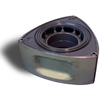

it'll probably blow again soon after.
If one thing is fuct, there is likely much else that needs repair.
Unless you know exactly what 'in-spec' and ; out of spec' means, it's a pretty hell-acious task.
If one thing is fuct, there is likely much else that needs repair.
Unless you know exactly what 'in-spec' and ; out of spec' means, it's a pretty hell-acious task.



Trending Topics


If that is what you need to do then do it, just measure the length of all of the ceals and check all clearances while you're at it, mazda created the fsm as a tool that lets us not have to open the damn thing and say, well, gotta replace everything!


Joined: Feb 2001
Posts: 29,798
Likes: 128
From: London, Ontario, Canada
Basically what everyone else says. In addition, if you intend to rebuilding the engine you will want to pull it apart now and clean everything up. If you leave it assembled, you'll have a rusted mess when you finally do get around to rebuilding it.

Joined: Oct 2003
Posts: 11,576
Likes: 27
From: Morristown, TN (east of Knoxville)
I took apart an overheated/coolant seal motor that was let to sit a few months just last night:
http://www.rotaryresurrection.com/builds/musgrove/
Do not let the engine sit.
Either continue to start it regularly (do not drive it far or at all in this condition) to keep rust from forming,
OR
drain the radiator and block entirely of coolant, start the engine and let it run for about 15-30 seconds to burn off any internal coolant puddles, and then inject it with motor oil/atf/mmo/whatever liberally to coat all internal surfaces and displace water, to preserve internals for a later rebuild,
OR
go ahead and tear it apart right now.
At a very minimum you will be replacing coolant seals, apex seals, and oil control ring inserts. These are the MAJOR wear items in the engine that you absolutely would not want to reuse. These parts at retail will cost you around 400 bucks. For a few dollars more you should also do front and rear main seals, thermal pellet replacement for the e-shaft, and 93+ corner seal springs.
IF you are careful and lucky everything else inside the enigne will be reuseable. So, here we have established a baseline for the minimum requirements to successfully open an old, worn, original rotary engine and reseal it and expect it to last more than a few months.
Now, if you compare this parts list to my "base" rebuild parts list on my site, you'll notice they are identical. This is the bare minimum you can expect to do and have a decent engine rebuild; of course there are other parts that may be damaged or worn, or that you could replace to gain better longevity or compression.
http://www.rotaryresurrection.com/builds/musgrove/
Do not let the engine sit.
Either continue to start it regularly (do not drive it far or at all in this condition) to keep rust from forming,
OR
drain the radiator and block entirely of coolant, start the engine and let it run for about 15-30 seconds to burn off any internal coolant puddles, and then inject it with motor oil/atf/mmo/whatever liberally to coat all internal surfaces and displace water, to preserve internals for a later rebuild,
OR
go ahead and tear it apart right now.
At a very minimum you will be replacing coolant seals, apex seals, and oil control ring inserts. These are the MAJOR wear items in the engine that you absolutely would not want to reuse. These parts at retail will cost you around 400 bucks. For a few dollars more you should also do front and rear main seals, thermal pellet replacement for the e-shaft, and 93+ corner seal springs.
IF you are careful and lucky everything else inside the enigne will be reuseable. So, here we have established a baseline for the minimum requirements to successfully open an old, worn, original rotary engine and reseal it and expect it to last more than a few months.
Now, if you compare this parts list to my "base" rebuild parts list on my site, you'll notice they are identical. This is the bare minimum you can expect to do and have a decent engine rebuild; of course there are other parts that may be damaged or worn, or that you could replace to gain better longevity or compression.
Thread Starter
Full Member
Joined: Oct 2007
Posts: 77
Likes: 0
From: Phoenix AZ
I called a junk yard and found a used engine off a 88SE for $188 so i think im going to put that in for the mean time.
new question.
i think i will have the plates resurfaced and ported while its out and do a complete rebuild.
now are the plates and housings the same on a S4 N/A and a S4 turbo? and the only dif is the high and low compression rotars? is that correct?
if so than i should get me some turbo rotars and slap them in with my newly rebuilt/ painted motor.
PS dont the rotars have to be etched out to take 3mm apex seals?
new question.
i think i will have the plates resurfaced and ported while its out and do a complete rebuild.
now are the plates and housings the same on a S4 N/A and a S4 turbo? and the only dif is the high and low compression rotars? is that correct?
if so than i should get me some turbo rotars and slap them in with my newly rebuilt/ painted motor.
PS dont the rotars have to be etched out to take 3mm apex seals?
Joined: Feb 2001
Posts: 29,798
Likes: 128
From: London, Ontario, Canada
if so than i should get me some turbo rotars and slap them in with my newly rebuilt/ painted motor.
PS dont the rotars have to be etched out to take 3mm apex seals?
Thread Starter
Full Member
Joined: Oct 2007
Posts: 77
Likes: 0
From: Phoenix AZ
86-88 nonturbo:
chrome flake and compression surface wears moderately, most of these aren't in very good condition if they have over 100k miles. They're usually fine to reuse in a street nonturbo engine, but not for something like a modded t2 or an FD. They have the noise diffusers in the exhaust, so you can either cut them out or swap sleeves entirely. The port itself is identical. Plug timing is different from 89+, and these do not have the casting above the T plug for the knock sensors. Required 4 oil injectors for lube.
87-88 turbo:
same as above, except with smooth exhaust port. Also they have an additional coolant passage where the LIM bolts up, on FC's this feeds water to the stock turbo through the LIM which has a drilled passage. To use this housing on a nonturbo engine or an FD engine you have to block off this coolant passage, usually by tapping and plugging.
yes, well maybe.
Joined: Feb 2001
Posts: 29,798
Likes: 128
From: London, Ontario, Canada
The turbo engines are 4 port, the NA engines are 6 port. That's the biggest difference. Entirely different intake manifolds. Just browse through some of the pictures in the pictures forum to see what I mean.
If you only may turbocharge the engine, stick with the higher compression NA rotors.
If you only may turbocharge the engine, stick with the higher compression NA rotors.

Thread
Thread Starter
Forum
Replies
Last Post
[For Sale] Scratch & Dent, Used, and Open-Box Sale!
SakeBomb Garage
Vendor Classifieds
5
Aug 9, 2018 05:54 PM
msilvia
3rd Generation Specific (1993-2002)
15
Sep 11, 2015 12:13 PM
