


pozi trac ?


Thread Starter
Full Member

Joined: Apr 2004
Posts: 120
Likes: 0
From: St. Louis, MO
pozi trac ?
so,i've had my 85 gsl-se for 6 months....i have only burned them (the tires) 2 times. anyway,i really got on it today and to my suprise ...bolth tires spun,threw 1st,2nd and a 3rd gear scatch! so,my question is...is it suposed to have pozi?i know it has power,it's a 7,but how about the other?
Old [Sch|F]ool


Joined: May 2001
Posts: 12,862
Likes: 569
From: Cleveland, Ohio, USA
Only Chevys have Positraction...
Posi is Chevy's name for limited slip diff, or generally called an LSD, which a GSL-SE should have.
- Pete (I got a paper cut from the Post-It so I grabbed a Band-Aid and Xeroxed stuff instead)
Posi is Chevy's name for limited slip diff, or generally called an LSD, which a GSL-SE should have.
- Pete (I got a paper cut from the Post-It so I grabbed a Band-Aid and Xeroxed stuff instead)

maurice lives!
Joined: May 2003
Posts: 34
Likes: 0
From: chicagoland
haha, pozi, what a linguistic event that word is. ****** hilarious. is there any real difference between a pozitrac and the clutch type diffs that are found in the rx of 7 or i sit just a name?
Thread Starter
Full Member
Joined: Apr 2004
Posts: 120
Likes: 0
From: St. Louis, MO
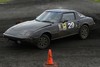
thats cool ,you know what i ment though!(haha!)but it's news to me! i really dont drive it like that,as a matter of fact,i bought another ca to keep the miles off of it! that is it on the left!
Old [Sch|F]ool
Joined: May 2001
Posts: 12,862
Likes: 569
From: Cleveland, Ohio, USA
Originally Posted by okk0to
is there any real difference between a pozitrac and the clutch type diffs that are found in the rx of 7 or i sit just a name?
Is there a functional difference between Tylenol and other acetaminophen pain relievers? Other than strength, no.
Is there a functional difference between Chevrolet's clutch type LSD (Positraction) and other clutch type LSD's? No.
- Pete (Positraction, Twin-Grip, Sure Grip, Equa-Lok, Traction-Lok, it's all the same crap)
Last edited by peejay; Aug 5, 2004 at 10:19 PM.


There are several different types of mechanism used to allow differential action in normal driving, but put driving torque to both wheels when needed. I am not certain of the names, but there are to my knowledge two fundamental types - those that have a breakaway torque, and those that have no torque until some load is applied. My Ford truck and my Mitsubishi Montero will shudder when starting out with a turn from a stop sign. The differential is trying to go straight. On gravel it will scrub the inside wheel in this condition. My impression is that "Positraction" is of this type.
The differential used in the 1st gen RX-7 does not act this way. It produces no torque until some load is applied. I had the experience years ago of getting stuck on a very slight uphill slope on glare ice. I very slowly let the clutch out and one rear wheel just sat there spinning slowly while I got out and looked at it. I then remembered what I was told about the need for some torque. I got back in the car, gently applied the hand brake and away I went! I think the general term for this type of mechanism is "torque sensing" differential, but they are all called limited slip.
The differential used in the 1st gen RX-7 does not act this way. It produces no torque until some load is applied. I had the experience years ago of getting stuck on a very slight uphill slope on glare ice. I very slowly let the clutch out and one rear wheel just sat there spinning slowly while I got out and looked at it. I then remembered what I was told about the need for some torque. I got back in the car, gently applied the hand brake and away I went! I think the general term for this type of mechanism is "torque sensing" differential, but they are all called limited slip.
Trending Topics
Old [Sch|F]ool
Joined: May 2001
Posts: 12,862
Likes: 569
From: Cleveland, Ohio, USA
Originally Posted by stilettoman
There are several different types of mechanism used to allow differential action in normal driving, but put driving torque to both wheels when needed. I am not certain of the names, but there are to my knowledge two fundamental types - those that have a breakaway torque, and those that have no torque until some load is applied.
There's the clutch type, which 95% of the LSD's out there are. There is a clutch (either a plate type clutch similar to what is used in automatic trannies, or a cone type clutch similar to a manual transmission's synchros only *much* larger) mounted between one or both, usually both, side gears and the diff case. The clutches prevent the side gears from moving in relation to the diff case, so both wheels are forced to move at the same speed. There is generally a preload spring, and a ramp arrangement so that accelerating or decelerating will increase the load against the clutch packs, which is why you can feel a diff "lock up" when you accelerate.
Then there's the worm gear type, which is what Torsen and Quaife are. They have no clutch packs, or 90 degree side/spider gears, they have a collection of worm gears that does the differential action. The nature of worm gears (easy for a worm gear to drive, not easy to drive the worm) means that the mechanism locks itself up when you try to have differential action, and apply torque to the diff. Furthermore the nature of the diff is such that the torque tends to only be applied to the wheel that can *accept* the torque. The torque biasing can only be done to a certain degree, though, and the strength of the diff goes down as the bias ratio goes up. Since there is no preload (requiring torque to be applied for the limited-slip action to occur), if one wheel has *zero* traction, torque cannot be applied, no limited-slip action occurs, and it's just like driving an open diff. Plus, despite the hype, worm gear type diffs *do* wear out, only they're "replace as assembly" instead of popping in some new clutches.
Finally there's the ratcheting type. (Like the Detroit Locker) No differential action at all, but the outside wheel in a corner is permitted to turn faster by means of a ratchet mechanism. Popular with the off road crowd. These have been used in road racing as well, but they can be "tricky"... imagine starting to put power down mid-corner. All the power goes to the inside wheel, since the outside wheel is not being driven, and the inside wheel spins. Until it catches up with the speed of the outside wheel, at which point the diff locks and now you're spinning both rear tires...
I wouldn't call the air lockers (such as ARB sells) "limited slip" since they are simply open diffs, that you can lock up solid like a spool, no clutches or ratchet mechanism.

Old [Sch|F]ool
Joined: May 2001
Posts: 12,862
Likes: 569
From: Cleveland, Ohio, USA
All-wheel drive generally means it drives all the wheels, all the time, for on-road purposes (no low range)
What gets me is "Full-Time AWD". No ****? That's great. I hope the car has Part-Time Windshield Wipers as well.
What gets me is "Full-Time AWD". No ****? That's great. I hope the car has Part-Time Windshield Wipers as well.

Rotary Enthusiast
Joined: Jul 2002
Posts: 1,119
Likes: 4
From: Virginia
Auto manufacturers will call their products whatever they want to sell cars. Yes it is annoying.
All = each and every one
Wheel = round things the car rolls on
Drive = to make go
Subaru started the attempt-not without success-to redefine the English language to make AWD or 4WD carry other subtle meanings. "All Wheel Drive" means logically that a vehicle has some number of wheels and all of them are, or can be, driven. Thus four wheel drive is a special case of AWD where there are four wheels. AWD can of course be part-time or full-time, just as 4WD.
All = each and every one
Wheel = round things the car rolls on
Drive = to make go
Subaru started the attempt-not without success-to redefine the English language to make AWD or 4WD carry other subtle meanings. "All Wheel Drive" means logically that a vehicle has some number of wheels and all of them are, or can be, driven. Thus four wheel drive is a special case of AWD where there are four wheels. AWD can of course be part-time or full-time, just as 4WD.


Thread
Thread Starter
Forum
Replies
Last Post
misterstyx69
Suspension/Wheels/Tires/Brakes
0
Dec 2, 2014 08:39 AM