


Why Apex Seals Fail


Senior Member

Joined: Nov 2008
Posts: 357
Likes: 0
From: Czech republic
If you looked at posted threads, graf clearly shows that EMP all the way to the point of wastegate opening is a bit lower than inlet pressure, then goes suddenly down as wastegate opened(also inlet pressure goes down i bit) but then wastegate didn´t closed, it stays open, inlet pressure is again around 15 psi but EMP goes steadily up... It has nothing to do about inertia and such... If it was that easy, we could have more wastegates, opening them progressively and get rid of back-pressure totally...


Like those? Best picture I could find, seems like a similar tip design to the stock plugs, but without the 4 cutaways. Interesting....





Originally Posted by Liborek
. . . but then wastegate didn´t closed, it stays open, inlet pressure is again around 15 psi but EMP goes steadily up . . .

. . .
if you look at the chart at 16 psi boost the additional backpressure is 16-17 psi. notice how it tracks from zero to 16.
THEN... the wastegate opens. the boost controller was set for 15.5 psi and it overshot so it opened up the wastegate. look what that does to EMP. it dives from 16 to 7 while boost drops about 1 psi.
THEN... the controller decides enough and closes [the wastegate] to raise boost. just like slamming a door the EMP shoots up to 25 PSI.
. . .
Please explain how an engine will instantly produce a more highly pressurized exhaust charge as a result of a wastegate opening.
Thread Starter
"Elusive, not deceptive!”

Joined: May 2007
Posts: 930
Likes: 13
From: Slidell, LA
Well it seems that we have gotten off subject somewhat. I think we should continue to address the temps and pressures around the combustion side of the housing.
The turnstile that is the rotor doesn't care much about the pileup going on outside of the exhaust port.
Let me reconsider that last statement. One effect of high exhaust back pressure would be an increase in exhaust gases mixing with the next intake charge (reversion). This would slow the burn rate causing higher EGT's.
Barry
The turnstile that is the rotor doesn't care much about the pileup going on outside of the exhaust port.
Let me reconsider that last statement. One effect of high exhaust back pressure would be an increase in exhaust gases mixing with the next intake charge (reversion). This would slow the burn rate causing higher EGT's.
Barry



Joined: Mar 2001
Posts: 31,854
Likes: 3,243
From: https://www2.mazda.com/en/100th/
Well it seems that we have gotten off subject somewhat. I think we should continue to address the temps and pressures around the combustion side of the housing.
The turnstile that is the rotor doesn't care much about the pileup going on outside of the exhaust port.
Let me reconsider that last statement. One effect of high exhaust back pressure would be an increase in exhaust gases mixing with the next intake charge (reversion). This would slow the burn rate causing higher EGT's.
Barry
The turnstile that is the rotor doesn't care much about the pileup going on outside of the exhaust port.
Let me reconsider that last statement. One effect of high exhaust back pressure would be an increase in exhaust gases mixing with the next intake charge (reversion). This would slow the burn rate causing higher EGT's.
Barry
https://www.rx7club.com/showpost.php...12&postcount=6
https://www.rx7club.com/showpost.php...92&postcount=6
https://www.rx7club.com/showthread.p...&highlight=egt
Senior Member
Joined: Nov 2008
Posts: 357
Likes: 0
From: Czech republic
You are incorrect. The wastegate did not stay open. It did close.
The quote is from the thread that you linked. As Howard says, the drop in EMP corresponds to where his wastegate opened and the spike corresponds to where it closed, just as I described in my last post.
Please explain how an engine will instantly produce a more highly pressurized exhaust charge as a result of a wastegate opening.
The quote is from the thread that you linked. As Howard says, the drop in EMP corresponds to where his wastegate opened and the spike corresponds to where it closed, just as I described in my last post.
Please explain how an engine will instantly produce a more highly pressurized exhaust charge as a result of a wastegate opening.
The necessity to limit the boost pressure in turbocharged gasoline engines results in higher exhaust pressure than inlet pressure at engine speeds when the wastegate is opened. This imbalance has a negative influence on the exhaust scavenging of the engine and results in high levels of residual gas and consequently the engine is more prone to knock.
http://ausrotary.com/viewtopic.php?f...it=ebp+vs.+imp

Try this

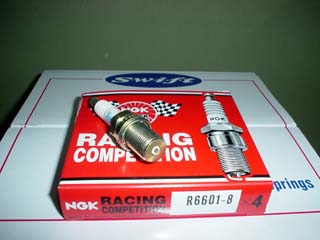
Pic is small but the tip design is interesting. Never saw plugs like these before, thanks for the part number Barry.
On the EGT/EMP vs. intake (reversion) I would like to add that porting on both sides needs to be considered into the equation when comparing numbers. Anything ported more then whats its being compared to will obviously be more suspetible to ingesting exhaust then something that's ported less (with less overlap) so it would be benefical to state your porting, or at least as much as you know about what your builder did
What about raising overall pressure in the system? I know many people run evan's and go pressureless because the evan's won't tend to hot spot or skip over the boiling housing surface, but what about jacking the overall system pressure for people who run regular coolant/water? Anyone experimented with that along with jacket mods for this purpose?
Joined: May 2005
Posts: 2,745
Likes: 0
From: North Bay, Ontario
Joe, I'm not sure raising the pressure in the cooling system will help it absorb heat any more efficiently. The only benefit it would have is if the cooling mixture is boiling, it will raise the boiling point of it, so it depends how hot these little spots are getting 
I'll take some pics of some spots I've noticed in housings I have around here (not from engines I ran using them though.....) that appear to be BURNT. As in, briefly touched by a torch at the edges of the coolant jacket.
I know the spots we're dealing with are very hot, according to the yamamoto book, around 400C
I'm just wondering how much of a benefit you would get (or rather, how much of a negative effect is the standard pressure giving us) from raising it with regards to keeping the coolant in full contact with that area.
I know the spots we're dealing with are very hot, according to the yamamoto book, around 400C
I'm just wondering how much of a benefit you would get (or rather, how much of a negative effect is the standard pressure giving us) from raising it with regards to keeping the coolant in full contact with that area.
Joined: May 2005
Posts: 2,745
Likes: 0
From: North Bay, Ontario
I think it's worthwhile to explore, but keep in mind the downsides to running more pressure too (I would think it would put more stress on the waterpump, maybe reduce flow?)
My solution is this: EWP and fan controller , Set it to 80 C and call it a day. I hope.
My solution is this: EWP and fan controller , Set it to 80 C and call it a day. I hope.
Thread Starter
"Elusive, not deceptive!”
Joined: May 2007
Posts: 930
Likes: 13
From: Slidell, LA
Try this
Pic is small but the tip design is interesting. Never saw plugs like these before, thanks for the part number Barry.
On the EGT/EMP vs. intake (reversion) I would like to add that porting on both sides needs to be considered into the equation when comparing numbers. Anything ported more then whats its being compared to will obviously be more suspetible to ingesting exhaust then something that's ported less (with less overlap) so it would be benefical to state your porting, or at least as much as you know about what your builder did
What about raising overall pressure in the system? I know many people run evan's and go pressureless because the evan's won't tend to hot spot or skip over the boiling housing surface, but what about jacking the overall system pressure for people who run regular coolant/water? Anyone experimented with that along with jacket mods for this purpose?
Pic is small but the tip design is interesting. Never saw plugs like these before, thanks for the part number Barry.
On the EGT/EMP vs. intake (reversion) I would like to add that porting on both sides needs to be considered into the equation when comparing numbers. Anything ported more then whats its being compared to will obviously be more suspetible to ingesting exhaust then something that's ported less (with less overlap) so it would be benefical to state your porting, or at least as much as you know about what your builder did
What about raising overall pressure in the system? I know many people run evan's and go pressureless because the evan's won't tend to hot spot or skip over the boiling housing surface, but what about jacking the overall system pressure for people who run regular coolant/water? Anyone experimented with that along with jacket mods for this purpose?
Surface gap plugs are presently used in two-stroke outboards. You would need something colder than an -8.Plug fouling might be a problem.
As for increasing the pressure, Goodfellow has the right idea with the 17psi cap.
Have you seen water boiling in a pot, you know the little streams of bubbles emanating from the bottom usually at the scratches first. At high altitude (low pressure) this will start at about 180ºF. At 17psig (gage) the boiling point would be about 260ºF. That is what is happening around the plug cooling area.
Barry
Anyone ever gone higher then 1.1-1.2 bar?
Is there a practial limit to what the water jacket o-rings will hold?
I can't see the waterpump being too adversly affected by 20-30psi being a volume, not pressure pump, design.
I have wanted to use Evan's for a while but I haven't done it because I'm afraid to convert fully in the event that I need to top it up, or if I ever need to crack the system since its basically $100 to fill it up.
Is there a practial limit to what the water jacket o-rings will hold?
I can't see the waterpump being too adversly affected by 20-30psi being a volume, not pressure pump, design.
I have wanted to use Evan's for a while but I haven't done it because I'm afraid to convert fully in the event that I need to top it up, or if I ever need to crack the system since its basically $100 to fill it up.
Barry,
Sorry for partially threadjacking. While I do think that Exhaust Manifold Pressure (EMP) is important to bear in mind for the problem being discussed in this thread, I agree that the discussion of EMP dynamics are inappropriate here. Anyone interested in partaking in that discussion should go to this thread.
Thanks for taking up this undertaking in increasing our understanding and exploitation of these engines.
ryan
Sorry for partially threadjacking. While I do think that Exhaust Manifold Pressure (EMP) is important to bear in mind for the problem being discussed in this thread, I agree that the discussion of EMP dynamics are inappropriate here. Anyone interested in partaking in that discussion should go to this thread.
Thanks for taking up this undertaking in increasing our understanding and exploitation of these engines.
ryan

I have wanted to use Evan's for a while but I haven't done it because I'm afraid to convert fully in the event that I need to top it up, or if I ever need to crack the system since its basically $100 to fill it up.
Just use 100% Sierra Pet Safe coolant (PG based) then. It is MUCH cheaper and readily available.
I have done this for 3 years and before that ran Evans and I have seen no difference besides price.
In fact, Evans' performance data and Sierra (PG) is very close. Evans only claim to supperiority over straight PG that I have read is that PG will degrade and thicken quickly without their blend of additives, but I have had the coolant in and out of the engine and the engines apart and have noticed no degredation of the same 3 year old Sierra coolant.
Perhaps it is not a lifetime coolant as Evans advertises, but Sierra going on 3 years now with no degredation is good enough for me...
Just use 100% Sierra Pet Safe coolant (PG based) then. It is MUCH cheaper and readily available.
I have done this for 3 years and before that ran Evans and I have seen no difference besides price.
In fact, Evans' performance data and Sierra (PG) is very close. Evans only claim to supperiority over straight PG that I have read is that PG will degrade and thicken quickly without their blend of additives, but I have had the coolant in and out of the engine and the engines apart and have noticed no degredation of the same 3 year old Sierra coolant.
Perhaps it is not a lifetime coolant as Evans advertises, but Sierra going on 3 years now with no degredation is good enough for me...
Joined: May 2005
Posts: 2,745
Likes: 0
From: North Bay, Ontario
I've always worried about that long-time stuff. I've seen some pretty pics of corrosion it's done on engines before to not bother with it. Never really seen any long-term tests of evans though.


TO all the guys saying they are not seeing a drop in EGT's from water injection. Dont expect one. Water simply eliminates or hugely reduces KNOCK.
My 700rwhp engine on the freeway will go to over 1080 Degrees Celcius. My engine still has excellent compression no problems. 1050 degrees celcius over a short period of time is alittle high, but over a good distance of full power its not uncommon to see high egts.
My 700rwhp engine on the freeway will go to over 1080 Degrees Celcius. My engine still has excellent compression no problems. 1050 degrees celcius over a short period of time is alittle high, but over a good distance of full power its not uncommon to see high egts.
TO all the guys saying they are not seeing a drop in EGT's from water injection. Dont expect one. Water simply eliminates or hugely reduces KNOCK.
My 700rwhp engine on the freeway will go to over 1080 Degrees Celcius. My engine still has excellent compression no problems. 1050 degrees celcius over a short period of time is alittle high, but over a good distance of full power its not uncommon to see high egts.
My 700rwhp engine on the freeway will go to over 1080 Degrees Celcius. My engine still has excellent compression no problems. 1050 degrees celcius over a short period of time is alittle high, but over a good distance of full power its not uncommon to see high egts.
 but what about having more fuel or a better timming ??? thats supposed to drop some egts ? right?
Thread Starter
"Elusive, not deceptive!”
Joined: May 2007
Posts: 930
Likes: 13
From: Slidell, LA
Barry,
Sorry for partially threadjacking. While I do think that Exhaust Manifold Pressure (EMP) is important to bear in mind for the problem being discussed in this thread, I agree that the discussion of EMP dynamics are inappropriate here. Anyone interested in partaking in that discussion should go to this thread.
Thanks for taking up this undertaking in increasing our understanding and exploitation of these engines.
ryan
Sorry for partially threadjacking. While I do think that Exhaust Manifold Pressure (EMP) is important to bear in mind for the problem being discussed in this thread, I agree that the discussion of EMP dynamics are inappropriate here. Anyone interested in partaking in that discussion should go to this thread.
Thanks for taking up this undertaking in increasing our understanding and exploitation of these engines.
ryan
There are so many people working on improving the common reciprocal engine. Just when you think everything has been thought of ….BAM. And their database just keeps expanding.
We need this same expanding research and sharing of data. Our Rotary Forums are the way to do this.
Again, it is great to use the forum as a source of information rather than drama.
Barry