


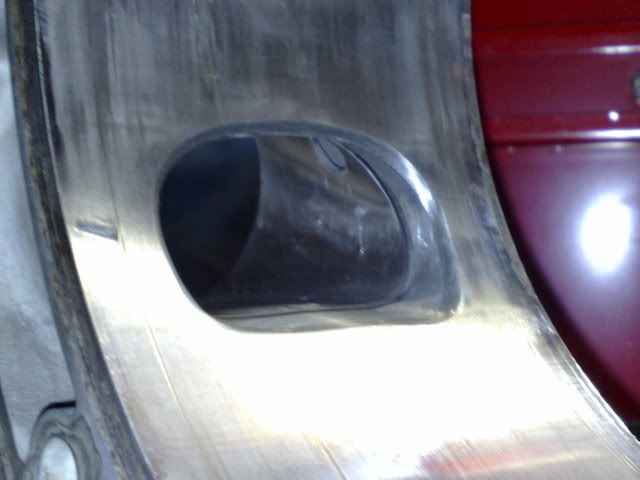
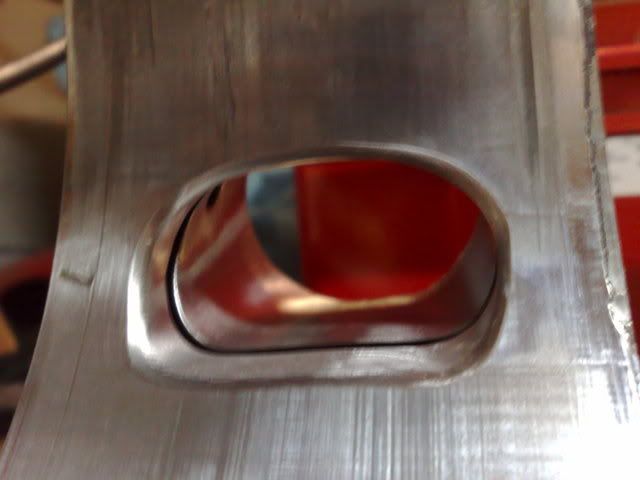
How's my first exhaust port look?


How's my first exhaust port look?
It's a pineapple template I used on a trash housing. Let me know what you think I can take constructive critisism.

On this one for some reason the bottom edge looks wavy when it's really not
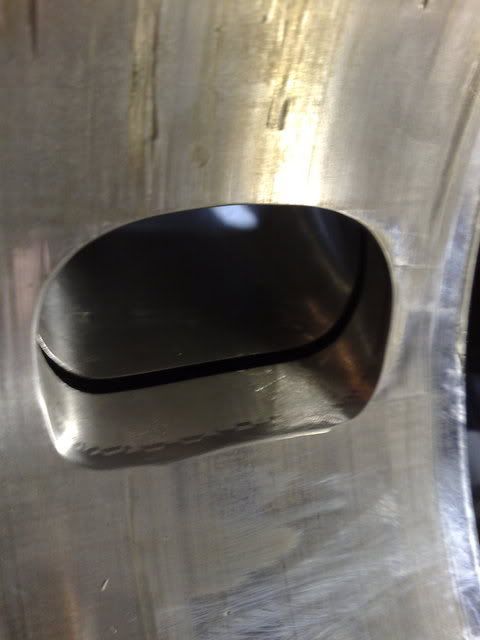
I noticed nobody seems to take the sharp bevel out of the inside of the sleeve, I did but I don't know if for some reason that's the wrong thing to do.
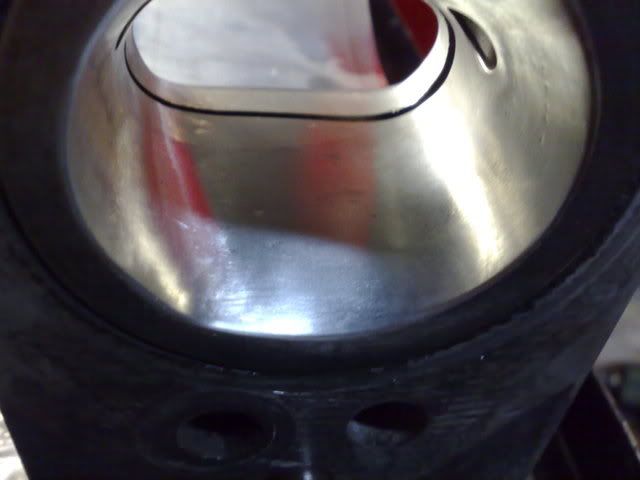
the top of the sleeve exit.
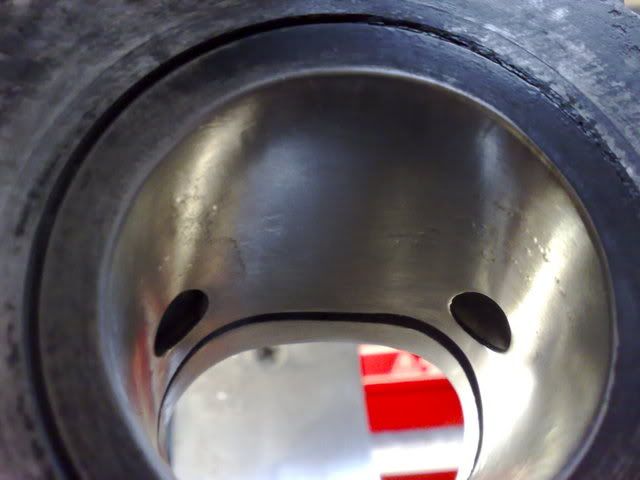
Let me know what you guys think!I'm more concerned with the actual geometry of the porting I did rather than a tiny dimple here or there. Am I ready to move on to my new housings or should I do my other used one first?
On this one for some reason the bottom edge looks wavy when it's really not
I noticed nobody seems to take the sharp bevel out of the inside of the sleeve, I did but I don't know if for some reason that's the wrong thing to do.
the top of the sleeve exit.
Let me know what you guys think!I'm more concerned with the actual geometry of the porting I did rather than a tiny dimple here or there. Am I ready to move on to my new housings or should I do my other used one first?

Banned. I got OWNED!!!
Joined: Dec 2007
Posts: 71
Likes: 0
From: usa
Looks very nice, but I am not a fan of that shape. I like a gradual opening and a flat closing edge.
You definitely need more bevel on the sides and especially the top. You need a 1-2mm bevel.
You definitely need more bevel on the sides and especially the top. You need a 1-2mm bevel.



normal? i don't know. it is a good idea to do so though.
nice work, by the way. bevel the closing edge when you do them on your "real" housings. also, are you building your motor for turbo or no?
nice work, by the way. bevel the closing edge when you do them on your "real" housings. also, are you building your motor for turbo or no?

Nice work. Take a look at a stock exhaust port and note the bevel that is used. There is 2mm all around. This is very important to do especially on the closing side. I also prefer the more square closing line like RB uses.
Trending Topics
You can port to the scribed line and then bevel. The bevel is there to aid in apex seal smooth transistion and life longevity and is not going to effect your port timing, at least to anything measurable.

Joined: Dec 2006
Posts: 1,763
Likes: 0
From: bayamon pr, orlando fl, paterson nj
 but its is to my understanding that the exhaust shape and diamater differs from boosted , all motor or laughing gas aplications
  in this case i think that it looks damm good to be your first exhaust port job i would do the other housing before you do your new ones remember opinoins are like belly buttons , whats works for me might not work for the next guy
 good luck on your build ,keep us posted

BDC Motorsports

Joined: Jun 2002
Posts: 3,667
Likes: 6
From: Grand Prairie, TX
B
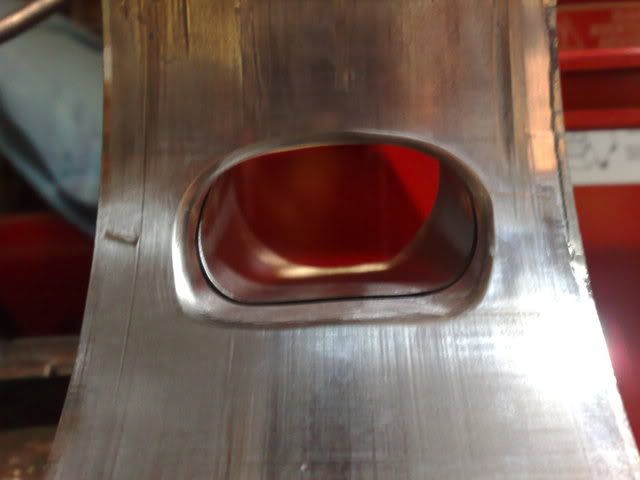
I just happen to have 2 brandy new ones right here
And thank you! Thanks for all the kind words guys I'm trying to get it right now so I don't eff up the new housings!
And thank you! Thanks for all the kind words guys I'm trying to get it right now so I don't eff up the new housings!



'Tuna'

Joined: Feb 2001
Posts: 4,637
Likes: 3
From: Miami,Fl,USA

It's funny because I yet to see this assumption happen on any motors even the the ones turning 10k rpm with stock seals. It's funny because it does not happen on PP intake ports.

I always thought 'bevels' on ports had something to do with flow. Oh hell what do I know!
Not bad for your first port job. With a little more practise you will develop better hand control so as to keep the shapes/lines more linear.
Last edited by crispeed; Jan 14, 2008 at 04:48 PM.
BDC Motorsports
Joined: Jun 2002
Posts: 3,667
Likes: 6
From: Grand Prairie, TX
You know what they say when you assume!
It's funny because I yet to see this assumption happen on any motors even the the ones turning 10k rpm with stock seals. It's funny because it does not happen on PP intake ports.
I always thought 'bevels' on ports had something to do with flow. Oh hell what do I know!
It's funny because I yet to see this assumption happen on any motors even the the ones turning 10k rpm with stock seals. It's funny because it does not happen on PP intake ports.
I always thought 'bevels' on ports had something to do with flow. Oh hell what do I know!
B

Looks pretty good except for the fact that it looks like you used the template upside-down  If you flip it the other way around, then that's pretty much the way all my exhaust ports look after porting. I had bigger gains with the progressive port opening (rounded), and having the closing edge relatively flat (straight with rounded edges). My exhaust note also changed radically from having my port opening shape looking like yours, to that of what it would look like if you flipped your template around.
If you flip it the other way around, then that's pretty much the way all my exhaust ports look after porting. I had bigger gains with the progressive port opening (rounded), and having the closing edge relatively flat (straight with rounded edges). My exhaust note also changed radically from having my port opening shape looking like yours, to that of what it would look like if you flipped your template around.
It's also a good thing you beveled your edges (I use a dremel with a diamond tipped bit for the final bevel all around. I saw a few pics a long time ago of chewed up atkins apex seals that resulted from un-beveled ports. The engine lasted a few thousand miles or so, but eventually the seals gave out. That's all I needed to see to convince me to bevel my ports.
Also, the progressive port opening that I mentioned will help with turbo spool.
Also, the progressive port opening that I mentioned will help with turbo spool.

You know what they say when you assume!
It's funny because I yet to see this assumption happen on any motors even the the ones turning 10k rpm with stock seals. It's funny because it does not happen on PP intake ports.
I always thought 'bevels' on ports had something to do with flow. Oh hell what do I know!
Never knew there were differences.
Not bad for your first port job. With a little more practise you will develop better hand control so as to keep the shapes/lines more linear.
It's funny because I yet to see this assumption happen on any motors even the the ones turning 10k rpm with stock seals. It's funny because it does not happen on PP intake ports.
I always thought 'bevels' on ports had something to do with flow. Oh hell what do I know!
Never knew there were differences.
Not bad for your first port job. With a little more practise you will develop better hand control so as to keep the shapes/lines more linear.
We've done a fair bit of flow testing in the shop and we've found that a 1mm bevel nets about a 3% increase over a sharp edge, a 2mm bevel nets another 2%, and anything greater than 2mm begins to rapidly reduce flow.

How so, what you're basically looking for is finding a vortex generator that creates laminar flow around the edges of the port. 2mm seems to be the magic number that creates a nice boundary layer without encroaching on the unobstructed flow areas in the center of the port.