When you click on links to various merchants on this site and make a purchase, this can result in this site earning a commission. Affiliate programs and affiliations include, but are not limited to, the eBay Partner Network.
The first time I blown an apex (rear rotor) we were tuning at 1.6bar (23psi)
The second time, it was between 100 kPa (14psi) and 120 kPa (17psi) with mecanical WI from wanaspeed. It was also on the rear rotor.
Is there a nice guy who could check these timing maps?
Timing looks conservative. Under 5° by 1 bar isn't advanced at all. Are you sure the timing has been set right? Also what trigger? If using a mag and the base map home and trigger threshold values it's possible for it to skip a home tooth count at high rpm and then...bad things follow
Timing looks conservative. Under 5° by 1 bar isn't advanced at all. Are you sure the timing has been set right? Also what trigger? If using a mag and the base map home and trigger threshold values it's possible for it to skip a home tooth count at high rpm and then...bad things follow
Skeese
not sure if I understand everything but, I use the stock rew trigger. The engine is running smooth and I did 585hp at the crank and 680Nm. Maybe that can help :
Skeese asks the correct first question dealing w timing calibration.
apparently you are running the stock crank pickups and OE wheel which means your calibration is not an issue.
timing is not the issue as your map is extremely conservative.
i am currently tuning the exact turbo and hotside on my car on gas w 100% meth. at peak torque (6400)/ 20 psi i am at 12 degrees lead 11 split and you are just under 2 degrees w the same split.
do you have a log from the two events? if not, what were the exact events at the time of then failures.
pls post a pic of your two lower plugs.
do you log fuel pressure?
pls post a picture of your engine compartment.
i had an engine customer that lost 3 engines all due to a knock event out of the blue, sometimes just driving around. the ECU was tuned by an excellent tuner and every build detail and supportive system was triple checked. he switched from the Platinum Sport to a Haltech Elite and has had zero problems since. he was losing front irons that cracked at the oil service galley for the turbo. the detonation pushed the dowel pin out and cracked the side iron. the events were random. i suspect some sort of misfire and while i have no proof i don't trust that computer. i do like the Haltech Elite, the AEM Infinity and my ViPEC V88.
not sure if I understand everything but, I use the stock rew trigger. The engine is running smooth and I did 585hp at the crank and 680Nm. Maybe that can help :
Do you mean I should upgrade my trigger?
Sorry, I didn't mean to imply that. What I meant was that the given base trigger/home arming voltage values that come in the ECU may warrant some change. It was well known back on the platinum that the provided home and trigger values did not actually represent the pickup voltage requirements of the mag trigger. There was a known set of values that somebody came up with by actually physically testing the home and trigger signals using a drill-mounted trigger wheel and an oscilloscope. This doesn't necessarily translate from the platinum to the elite, as with ESP we only have 4 cells for voltage threshold settings instead of the 7 the platinum had.
There are two main issues that can result from the mag trigger values not be correct. Number 1, you miss a home signal causing the trigger count to not reset causing a mistimed advanced spark and KABOOM. Number 2, the trigger can walk at high rpm. Another benefit of having the data from the drill test is that we can accurately see how far the trigger walks with rpm. When you know HOW much at WHAT rpm, you can plug that into the trigger offset map against the RPM effectively keeping the timing dead nuts to the map.
PM me, and I'll gladly share the trigger and home threshold values that I'm running, but I'm not posting for the masses to misuse. I've had no problems to 9000 rpms, nor have multiple sub 9 second drag rotary guys who spin 9500-10k rpms, which is where I picked up this issue and fix. A tuner friend of mine has logs of the home signal missing on the map with the base haltech voltage/trigger threshold values at 8k rpms and 30 PSI, the results were...about like what happened to you. The tables in the tune I'm referencing are the "trigger arming voltage" and "home arming voltage" tables found under the trigger drop down on the left hand panel.
Originally Posted by Howard Coleman CPR
Skeese asks the correct first question dealing w timing calibration.
apparently you are running the stock crank pickups and OE wheel which means your calibration is not an issue.
timing is not the issue as your map is extremely conservative.
i am currently tuning the exact turbo and hotside on my car on gas w 100% meth. at peak torque (6400)/ 20 psi i am at 12 degrees lead 11 split and you are just under 2 degrees w the same split.
do you have a log from the two events? if not, what were the exact events at the time of then failures.
pls post a pic of your two lower plugs.
do you log fuel pressure?
pls post a picture of your engine compartment.
i had an engine customer that lost 3 engines all due to a knock event out of the blue, sometimes just driving around. the ECU was tuned by an excellent tuner and every build detail and supportive system was triple checked. he switched from the Platinum Sport to a Haltech Elite and has had zero problems since. he was losing front irons that cracked at the oil service galley for the turbo. the detonation pushed the dowel pin out and cracked the side iron. the events were random. i suspect some sort of misfire and while i have no proof i don't trust that computer. i do like the Haltech Elite, the AEM Infinity and my ViPEC V88.
I agree it could be fuel and detonation related, if the pumps run out of pressure above 20lbs of boost and you aren't logging fuel pressure to induce an engine protection ignition cut you could blow it on the first lean cycle it sees. I was assuming at these power levels we were logging fuel pressure for sure, but...may be wrong.
Originally Posted by Fuhnortoner
I see your trigger angle and tooth offset is that of the base map. Had you verified base timing?
Post your full map.
When using a FD front hub and trigger wheel, there is literally only 1 way it can go on. You physically can only put it on at one set angle. Any variance in that and the trigger output comes from a mechanical tolerance stackup between components. When checking timing and changing your base timing offset, you will only be accounting for at max +/- 1-2 degrees of timing from the mechanical stackup or road wear.
So as Howard stated, since he is running the stock pickups and OE FD wheel, it means calibration is not an issue. Especially given his timing is beyond conservative. Tiny offset of an oem trigger stackup isn't causing this. I asked if timing was set right before I knew what trigger, there has been a good bit of confusion related to the settings for the various options out there.
When using a FD front hub and trigger wheel, there is literally only 1 way it can go on. You physically can only put it on at one set angle. Any variance in that and the trigger output comes from a mechanical tolerance stackup between components. When checking timing and changing your base timing offset, you will only be accounting for at max +/- 1-2 degrees of timing from the mechanical stackup or road wear.
So as Howard stated, since he is running the stock pickups and OE FD wheel, it means calibration is not an issue. Especially given his timing is beyond conservative. Tiny offset of an oem trigger stackup isn't causing this. I asked if timing was set right before I knew what trigger, there has been a good bit of confusion related to the settings for the various options out there.
-Skeese
Who is to say that 65 and 10 are the correct settings? Because base map? I cannot stress enough the importance of zeroing timing. Tolerance stacks that lead to ±2*, meaning you can be off up to 4* off, but I actually think its could be more than that. that can be the difference between a blown engine and a running one. I understand his timing map is super retarded, but we don't have any idea where he started off.
Skeese asks the correct first question dealing w timing calibration.
apparently you are running the stock crank pickups and OE wheel which means your calibration is not an issue.
timing is not the issue as your map is extremely conservative.
i am currently tuning the exact turbo and hotside on my car on gas w 100% meth. at peak torque (6400)/ 20 psi i am at 12 degrees lead 11 split and you are just under 2 degrees w the same split.
do you have a log from the two events? if not, what were the exact events at the time of then failures.
pls post a pic of your two lower plugs.
do you log fuel pressure?
pls post a picture of your engine compartment.
i had an engine customer that lost 3 engines all due to a knock event out of the blue, sometimes just driving around. the ECU was tuned by an excellent tuner and every build detail and supportive system was triple checked. he switched from the Platinum Sport to a Haltech Elite and has had zero problems since. he was losing front irons that cracked at the oil service galley for the turbo. the detonation pushed the dowel pin out and cracked the side iron. the events were random. i suspect some sort of misfire and while i have no proof i don't trust that computer. i do like the Haltech Elite, the AEM Infinity and my ViPEC V88.
here are the requested pictures:
right one is the rear rotor plug
engine bay:
I wanted to datalogg but I didn't work... I surely did something wrong.
First time:
I was on the dyno for the tune, I set the injection map and got the 585hp. I was disapointed because I didn't get power above 7k rpm as you know, so I tried to remove 2 degrees on the timing, got misfires in the mid range, turned off the engine and when I started it again, the apex was blown. Tune was made with 98 octane fuel (europe).
I have EGT gauges on both runners of the manifold, I don't remember the temperatures but it was lower than 850°C. I don't remember air temp. Oil and water temp were about 90°C
Second time: I was on a racetrack for a drift event. For this event, I added the mecanical water injection from Wannaspeed. WI started at 0.9 bar. The engine saw max 90°C on the water and max 105°C on the oil. I just refueled the tank 10 minutes before it blew. I drove the whole day with no issue, I blew 12 new tyres during the day and then the apex said goodbye at the end of a curve at about 6k rpm. Fuel was 100 octane.
Originally Posted by Fuhnortoner
I see your trigger angle and tooth offset is that of the base map. Had you verified base timing?
Post your full map.
Yes it is the base map. I didn't verify anything as the engine was running good. There is absolutely nobody here who know the rotary so I did everything myself with the informations I could find on this forum. I always try to find the informations I need but the searching tool is hard to use when english is not your main language. I learn new words everyday here^^
Something might be (and surely is) wrong in my map so I am here to learn if you want to share this information with me.
Originally Posted by Havoc
Isn't your timing map just the base map as well? Never had a pro tuning the car any change any timing?
Measuring knock?
It is. As said just above, nobody knows the rotary here so I was with a piston guy on this dyno and we did what we could with both our knowledge. He was controlling knock.
Originally Posted by Skeese
Sorry, I didn't mean to imply that. What I meant was that the given base trigger/home arming voltage values that come in the ECU may warrant some change. It was well known back on the platinum that the provided home and trigger values did not actually represent the pickup voltage requirements of the mag trigger. There was a known set of values that somebody came up with by actually physically testing the home and trigger signals using a drill-mounted trigger wheel and an oscilloscope. This doesn't necessarily translate from the platinum to the elite, as with ESP we only have 4 cells for voltage threshold settings instead of the 7 the platinum had.
There are two main issues that can result from the mag trigger values not be correct. Number 1, you miss a home signal causing the trigger count to not reset causing a mistimed advanced spark and KABOOM. Number 2, the trigger can walk at high rpm. Another benefit of having the data from the drill test is that we can accurately see how far the trigger walks with rpm. When you know HOW much at WHAT rpm, you can plug that into the trigger offset map against the RPM effectively keeping the timing dead nuts to the map.
PM me, and I'll gladly share the trigger and home threshold values that I'm running, but I'm not posting for the masses to misuse. I've had no problems to 9000 rpms, nor have multiple sub 9 second drag rotary guys who spin 9500-10k rpms, which is where I picked up this issue and fix. A tuner friend of mine has logs of the home signal missing on the map with the base haltech voltage/trigger threshold values at 8k rpms and 30 PSI, the results were...about like what happened to you. The tables in the tune I'm referencing are the "trigger arming voltage" and "home arming voltage" tables found under the trigger drop down on the left hand panel.
I agree it could be fuel and detonation related, if the pumps run out of pressure above 20lbs of boost and you aren't logging fuel pressure to induce an engine protection ignition cut you could blow it on the first lean cycle it sees. I was assuming at these power levels we were logging fuel pressure for sure, but...may be wrong.
When using a FD front hub and trigger wheel, there is literally only 1 way it can go on. You physically can only put it on at one set angle. Any variance in that and the trigger output comes from a mechanical tolerance stackup between components. When checking timing and changing your base timing offset, you will only be accounting for at max +/- 1-2 degrees of timing from the mechanical stackup or road wear.
So as Howard stated, since he is running the stock pickups and OE FD wheel, it means calibration is not an issue. Especially given his timing is beyond conservative. Tiny offset of an oem trigger stackup isn't causing this. I asked if timing was set right before I knew what trigger, there has been a good bit of confusion related to the settings for the various options out there.
-Skeese
Thanks for your clear explanation. I will PM you! I'm not logging fuel pressure and it is something I am thinking about for a while. It could be great to have it before, but I will do it for the next time... I knew that this car will be a lot of work and experiment for me but I prepared myself for this kind of things... I am quite happy with my work so far, haha! The car was working very good, chassis and engine, and the feeling is good to me.
Originally Posted by Fuhnortoner
Who is to say that 65 and 10 are the correct settings? Because base map? I cannot stress enough the importance of zeroing timing. Tolerance stacks that lead to ±2*, meaning you can be off up to 4* off, but I actually think its could be more than that. that can be the difference between a blown engine and a running one. I understand his timing map is super retarded, but we don't have any idea where he started off.
Maybe my answers above answer your question? What you're saying is that I should control the "zeroing" with a strobe light or something like that?
Who is to say that 65 and 10 are the correct settings? Because base map? I cannot stress enough the importance of zeroing timing. Tolerance stacks that lead to ±2*, meaning you can be off up to 4* off, but I actually think its could be more than that. that can be the difference between a blown engine and a running one. I understand his timing map is super retarded, but we don't have any idea where he started off.
I see you wish to continue.
65 and 10 are the correct settings because the platinum series ECU has been out and powering FD rx7's using ECU manager for 10+ years. The values in the map are correct, and just because it is the current "base" that comes with the latest download of ECU manager doesn't mean that it was the original file they started with. If you use the search function and look back, there have been extended threads where many-a-real-tuner have weighted in, ranging from BDC to Ludwig and Steve Kan, all falling on the conclusion that those WERE the correct angles referencing multiple multiple events where they tested and found them to be...correct.
So no...I'm not just accepting a value out of a basemap to be correct, but what you are suggesting is not the reason for the OP's issue given his insanely conservative map. IF the trigger walks 5 degrees by random chance, he has the max mechanical stackup from worn parts at ~4 degrees then he is only running 8.4 degrees of timing at 7000 rpms at 23lbs...on race fuel, with water injection.
Of course a person should check base timing before running 500+ hp out of any car as good practice, but in this case I don't need him to verify that to know that isn't the issue.
I'm interested to hear Howard's reply on the pics, and fuel pressure.
That being said, I think logging fuel pressure is a critical matter especially in a 585hp rotary being driven HARD at track events for both datalogging and engine protection. As for datalogging, you may see that at certain fueling levels using large injectors you can get fuel pressure pulsations which may not blow an engine with the first pulse, but across a day of hard racing the factors could align and it go KABOOM. That may not be, and likely is not, the issue, but logging fuel pressure will tell you. Engine protection is plain and simple. Pressure drops below X, then ignition cut and fuel flows, big backfire then you keep racing. OR it could simply tell you that you are running out of fuel pump.
Either way, it is worth logging. I'll send you the spreadsheet with the proven home/trigger arming threshold values.
Maybe my answers above answer your question? What you're saying is that I should control the "zeroing" with a strobe light or something like that?
When I say "zeroing" timing, I mean setting the base timing. Locking the timing at -5*BTDC and throwing a strobe on the leading wires, and checking the mark on the pulley.
Well this isnt about that. Now if you are here to troll me feel free to PM me and we can talk mechanical tolerance stackup or the evolution of legacy haltech trigger settings, but what you are saying is not relative to the OP's issue and not contributing to the thread.
So now, we got big power, lots of boost, guy who tracks a car hard and a problem. This is the kinda thread that keeps these forums relevant and collectively we need to find a real solution, not bandaiding something that isnt broken.
You're not helping the thread. Leave your side comments to your post about drowning with stupid low AFRs.
A Walbro 450 aka F90000267 or F90000274 (high pressure) cannot sustain anywhere near this power level unless your nominal fuel pressure is in the 30s (psi), in which fuel trickles out of the injectors vs. atomizing into a fine mist.
On track and not using a Coachman Performance Internal Surge Tank (lift pump)?! I'd guarantee you're starving under cornering loads. You should probably run at least one more Walbro F90000274 and a proper Fuel Pressure Regulator.
There's so much wrong here... Timing is too retarded and likely raising EGTs beyond the 850°C you've mentioned, or at least spiking them faster than normal operation.
Listen to Skeese for the trigger setup, or convert to a FFE Hall Effect, or custom 60-2 Hall Effect sensor setup.
You're not helping the thread. Leave your side comments to your post about drowning with stupid low AFRs.
A Walbro 450 aka F90000267 or F90000274 (high pressure) cannot sustain anywhere near this power level unless your nominal fuel pressure is in the 30s (psi), in which fuel trickles out of the injectors vs. atomizing into a fine mist.
On track and not using a Coachman Performance Internal Surge Tank (lift pump)?! I'd guarantee you're starving under cornering loads. You should probably run at least one more Walbro F90000274 and a proper Fuel Pressure Regulator.
There's so much wrong here... Timing is too retarded and likely raising EGTs beyond the 850°C you've mentioned, or at least spiking them faster than normal operation.
Listen to Skeese for the trigger setup, or convert to a FFE Hall Effect, or custom 60-2 Hall Effect sensor setup.
Rotaries need more fuel. Plain and simple.
You are right. I think the solution here includes a few things since we don't have a log and definitive reason.
1. Add another fuel pump. If one 450 is enough, its being run to the brink every single pull.
2. Consider adding surge tank. Fuel slosh in a drift car could most definitely cause this in a hard cornering situation
3. Get a fuel pressure sensor for both logging and to use the engine protection function to cut it if you drop fuel pressure from anything
4. Update trigger values. They aren't necessary different values but more accurate, tested and proven values that extend deeper into the rpm range.
5. Check base timing and zero it between ecu and engine using the trigger angle. Its not what's blowing your motor but its good practice.
Once back up and running I would spend some time looking at EGT and timing. I don't necessarily think the timing is TOO low as I've seen similarly conservative timing maps that have gone the distance, but its worth looking at.
You're not helping the thread. Leave your side comments to your post about drowning with stupid low AFRs.
A Walbro 450 aka F90000267 or F90000274 (high pressure) cannot sustain anywhere near this power level unless your nominal fuel pressure is in the 30s (psi), in which fuel trickles out of the injectors vs. atomizing into a fine mist.
On track and not using a Coachman Performance Internal Surge Tank (lift pump)?! I'd guarantee you're starving under cornering loads. You should probably run at least one more Walbro F90000274 and a proper Fuel Pressure Regulator.
There's so much wrong here... Timing is too retarded and likely raising EGTs beyond the 850°C you've mentioned, or at least spiking them faster than normal operation.
Listen to Skeese for the trigger setup, or convert to a FFE Hall Effect, or custom 60-2 Hall Effect sensor setup.
Rotaries need more fuel. Plain and simple.
This surge tank is a nice thing ! I didn't know it existed. I wanted to add one, but because of the regulations, I can't add one in my trunk! An internal surge tank is a good thing, I will look for it. I understand now what an IST is...
I already have an Aeromotive FPR. Isn't it a proper FPR ?
You said that I should add a walbro but is there a way to mount them externally if I add this Coachman IST?
I am sure it is a good solution to add a surge tank and a second fuel pump, and I will study my possibilities but when I was on the dyno, I had enough fuel to maintain 10,5-11,0 afr at 1.6 bar of boost. So at the track, as my boost was lower and my fuel tank absolutely full, I don't think that the problem comes from here. It might come from my fuel pump as it is a bit noisy now... I didn't hear anything at the track though.
All this pushes me to add an IST, a second fuel pump, and a pressure sensor to log the fuel pressure.
Originally Posted by Skeese
You are right. I think the solution here includes a few things since we don't have a log and definitive reason.
1. Add another fuel pump. If one 450 is enough, its being run to the brink every single pull.
2. Consider adding surge tank. Fuel slosh in a drift car could most definitely cause this in a hard cornering situation
3. Get a fuel pressure sensor for both logging and to use the engine protection function to cut it if you drop fuel pressure from anything
4. Update trigger values. They aren't necessary different values but more accurate, tested and proven values that extend deeper into the rpm range.
5. Check base timing and zero it between ecu and engine using the trigger angle. Its not what's blowing your motor but its good practice.
Once back up and running I would spend some time looking at EGT and timing. I don't necessarily think the timing is TOO low as I've seen similarly conservative timing maps that have gone the distance, but its worth looking at.
Skeese
As there is no one who knows this engine, what would be the correct procedure to set my ignition timing?
1° do not go higher than 950°C EGTs ?
2° add 2 degrees at a time on the timing? If yes, at the whole map?
As I will have to rebuild, do you suggest to replace my mazda apex with another brand? Rob from Pineapple Racing told me about the apex from Ric Shaw in AU "as I will go through development" but I can't find them..
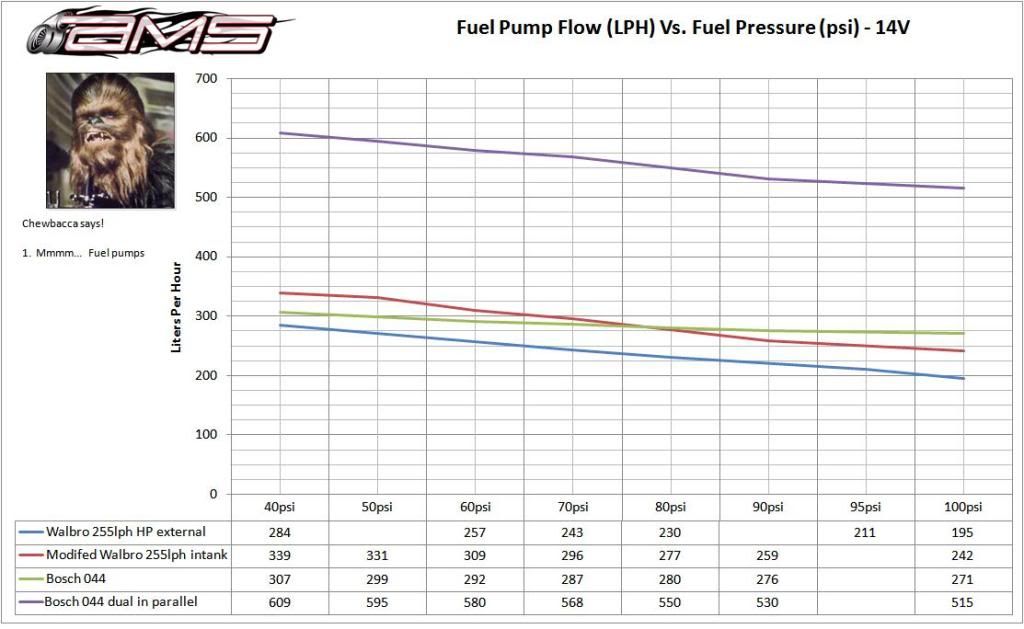
Well, the better option would be to run Dual Bosch 044 Fuel Pumps Inline after your IST, which don't drop pressure dramatically over 60psi (when you enter boost) at the pump.
2 Degrees of Timing is a lot to add at once. On cars that I've street tuned, we go 0.5 degree at a time until a difference isn't felt (both driver and passenger are well versed in tuning and engine parameters).
I think your o2 sensor calibration is crap. There's no way you're running that rich (10.5-11.0 AFR) with a single Walbro 450. Take it out and free-air calibrate it again.
Last edited by RGHTBrainDesign; Nov 23, 2017 at 06:45 PM.
Yeah I run dual 044's on mine for that exact reason. The 044 is a beast of a pump and the output doesn't really drop off when exposed to boost like pretty much all of the others, and its damn reliable.
Are you breaking seals or bending them and sticking them? What seals?
I agree you should have a fuel pressure sensor installed and logging the pressure. I'd be interested to see some logs with injector duty cycle as well. You're likely running the injectors near 100% duty and that can cause some really odd distribution issues. So, even if you have the pump to push the necessary fuel and maintain pressure, there could still be distribution issues.
What do you have for fuel line?
The plugs look like they've seen a fair amount of oil. Oil mist in the charge has a large effect on combustion properties and can hinder the detonation resistance of the fuel. That said, accurately reading plugs involves a lot more than pulling them out after several hours of running them at various loads and RPM. I'd want to see a new set installed and see them after a plug chop.
Post you map file instead of the screenshots.
How are the crank sensors wired? Did you use the Haltech loom to wire them and use the yellow and green wires in the shielded cables? If so, you have the wrong -ve GND settings. If you're using a patch loom from Haltech, the settings are correct.
Have you ensured correct polarity of the crank sensors?
The values of trigger offset and trigger angle are correct as a base setting only. You absolutely MUST put a timing light on it to confirm your trigger synch. Anything else is just guessing. I put the light on all four coils to ensure that they're all doing what they're supposed to do. The mark on the FD is 15 ATDC. It's hard to get the engine to run with that kind of timing. There are a number of tricks but what I like to do is make a mark on the trigger wheel one tooth to the right of the factory mark. Each tooth is 30 degrees so going one tooth to the right puts a mark at 15 BTDC. Make another mark 180 degrees out from the mark you just made. Set the lock timing at 15 and lock split at 30. Now the leading will fire on the 15 BTDC mark and trailing on the factory mark. And the engine will actually idle and rev easily so you can check the timing by yourself and check the timing dynamically. L2 and T2 can be checked by referencing the mark you made on the opposite side of the wheel.
Check the timing dynamically. Rev the engine to 4000-5000 with the timing light on it to see what the timing does. With a basic trigger setup, it's going to retard around 3 degree by 4000 RPM. You can enable the variable trigger angle map in the trigger setup page to dial out this drift.
Get in touch with a competent calibrator. You've broken two engines and will break more if you keep down this path. You're also leaving a TON of power on the table. Nothing worse than being overly conservative AND breaking engines.
Skeese's remarks in post #2 about trigger thresholds have no bearing on any conversation dealing with the Sport ECUs. That's an Elite only conversation.
For the peanut gallery... The tooth offset and trigger angle values can be anything within the allowable range in the software and the engine will still run perfectly fine. The one rule is that you want the trigger angle value to be 10 degrees greater than the max ignition advance you want to run. So, assuming you want to run 40 degrees BTDC max, you'd want a trigger angle value of no less than 50 degrees. Anything else is permissible. In the end, as long as you lock the timing and what you see with the timing light matches the lock angle you have set, you're good. None of this applies to the new Elite ECUs since they not only represent these values differently in the software, they actually calculate engine position differently.
As far as the Sport providing reliable performance on the rotary engine; I've stuck seals on one engine running a Sport ECU over the years. That we feel was related to things other than the ECU. I have one local turbo drag car that we shift at 10.5k and it's ran for several seasons with zero issues. The Sport was an outstanding ECU in terms of reliable performance. If you're breaking stuff with one, you have issues other than the electronics in the box.
Last edited by C. Ludwig; Nov 24, 2017 at 08:53 AM.
OP you list a single fuel pump if I am not mistaken.
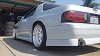
The picture of the car posted would lead one to believe it is not a highway queen doing low g acceleration pulls.
If you don't already have such a system, you need a lift pump in the fuel cell/fuel tank to a swirl pot/reservoir fed by the lift pump and the fuel regulator return line and at least one capable pump fed by the swirl pot/reservoir.
I speak from experience. Lost my last engine on 110 aki (r+m/2) because I thought 3/4 tank was fine and ignored the engine stutter on Left hand turns- cracked front side housing.
I found my problem I think, even if you're surely all right. My rear wastegate (Tial MV-S) has never opened itself. My manifold is the one from Gleaseman so does is mean I had too much backpressure on the rear rotor?
How should I connect both wastegates as they're both new and working? For now, I have a T between both of them but I think that when the front opens, there is not enough pressure on the rear one...
Originally Posted by C. Ludwig
To the OP:
Are you breaking seals or bending them and sticking them? What seals?
I agree you should have a fuel pressure sensor installed and logging the pressure. I'd be interested to see some logs with injector duty cycle as well. You're likely running the injectors near 100% duty and that can cause some really odd distribution issues. So, even if you have the pump to push the necessary fuel and maintain pressure, there could still be distribution issues.
What do you have for fuel line?
The plugs look like they've seen a fair amount of oil. Oil mist in the charge has a large effect on combustion properties and can hinder the detonation resistance of the fuel. That said, accurately reading plugs involves a lot more than pulling them out after several hours of running them at various loads and RPM. I'd want to see a new set installed and see them after a plug chop.
Post you map file instead of the screenshots.
How are the crank sensors wired? Did you use the Haltech loom to wire them and use the yellow and green wires in the shielded cables? If so, you have the wrong -ve GND settings. If you're using a patch loom from Haltech, the settings are correct.
Have you ensured correct polarity of the crank sensors?
The values of trigger offset and trigger angle are correct as a base setting only. You absolutely MUST put a timing light on it to confirm your trigger synch. Anything else is just guessing. I put the light on all four coils to ensure that they're all doing what they're supposed to do. The mark on the FD is 15 ATDC. It's hard to get the engine to run with that kind of timing. There are a number of tricks but what I like to do is make a mark on the trigger wheel one tooth to the right of the factory mark. Each tooth is 30 degrees so going one tooth to the right puts a mark at 15 BTDC. Make another mark 180 degrees out from the mark you just made. Set the lock timing at 15 and lock split at 30. Now the leading will fire on the 15 BTDC mark and trailing on the factory mark. And the engine will actually idle and rev easily so you can check the timing by yourself and check the timing dynamically. L2 and T2 can be checked by referencing the mark you made on the opposite side of the wheel.
Check the timing dynamically. Rev the engine to 4000-5000 with the timing light on it to see what the timing does. With a basic trigger setup, it's going to retard around 3 degree by 4000 RPM. You can enable the variable trigger angle map in the trigger setup page to dial out this drift.
Get in touch with a competent calibrator. You've broken two engines and will break more if you keep down this path. You're also leaving a TON of power on the table. Nothing worse than being overly conservative AND breaking engines.
Skeese's remarks in post #2 about trigger thresholds have no bearing on any conversation dealing with the Sport ECUs. That's an Elite only conversation.
For the peanut gallery... The tooth offset and trigger angle values can be anything within the allowable range in the software and the engine will still run perfectly fine. The one rule is that you want the trigger angle value to be 10 degrees greater than the max ignition advance you want to run. So, assuming you want to run 40 degrees BTDC max, you'd want a trigger angle value of no less than 50 degrees. Anything else is permissible. In the end, as long as you lock the timing and what you see with the timing light matches the lock angle you have set, you're good. None of this applies to the new Elite ECUs since they not only represent these values differently in the software, they actually calculate engine position differently.
As far as the Sport providing reliable performance on the rotary engine; I've stuck seals on one engine running a Sport ECU over the years. That we feel was related to things other than the ECU. I have one local turbo drag car that we shift at 10.5k and it's ran for several seasons with zero issues. The Sport was an outstanding ECU in terms of reliable performance. If you're breaking stuff with one, you have issues other than the electronics in the box.
That is a lot of information I've looking for for hours before to start the engine. Thank you!
1. The first time, I broke the apex. A small part was missing but it didn't damage anything. The second time, I can't tell as I will take the engine out tomorrow. I just know that my turbine is not damaged. I use the Mazda 2 pieces 2mm seals.
2. It will be done.
3. I have 1/2" hardline from tank to engine (and return), and then a parallel setup going through dm-motorsport fuel rails
4. Yes I might have too much oil. I use the OMP base map. What is a plug chop ?
6. I wired them as described in the "series 6 manual". I don't remember the colors but they were grounded, yes.
7. No. How do you do that on an inductive sensor?
8. I will do it. Thanks for the explanation.
9. I might come back to you for further information...
10. What do you mean by a ton? more horsepower or a broader powerband?
Thank you for your long message
Originally Posted by BLUE TII
OP you list a single fuel pump if I am not mistaken.
The picture of the car posted would lead one to believe it is not a highway queen doing low g acceleration pulls.
If you don't already have such a system, you need a lift pump in the fuel cell/fuel tank to a swirl pot/reservoir fed by the lift pump and the fuel regulator return line and at least one capable pump fed by the swirl pot/reservoir.
I speak from experience. Lost my last engine on 110 aki (r+m/2) because I thought 3/4 tank was fine and ignored the engine stutter on Left hand turns- cracked front side housing.
You're right, I will do it as said earlier.
Originally Posted by Houstonderk
First time I seen a hood dump with looks to be a small muffler on it...Does it actually quiet it down?
Can't tell... As I have not tried without the muffler. But I think it quiets it down at idle. Not under load. I think it changes the sound. It is a very deep sound.
I found my problem I think, even if you're surely all right. My rear wastegate (Tial MV-S) has never opened itself. My manifold is the one from Gleaseman so does is mean I had too much backpressure on the rear rotor?
How should I connect both wastegates as they're both new and working? For now, I have a T between both of them but I think that when the front opens, there is not enough pressure on the rear one...
No. If you have them T'd off the controller or manifold, both gates will see the same pressure at all times. Ideally, with twin gates, you'd run two solenoids. But we've all run single solenoids on dual gates and have had good results. As long as that gate wasn't completely disconnected, it was opening.
Curious to see the AFR / Map curve as boost comes online and TPS goes 100%. Always a possibility the event is occurring during staging / initial lean spike etc. If timing/AFR in power band/fuel pressure looks good, maybe its an initial staging lean spike that hasn't been noticed



 Blowing seals, timing map?