When you click on links to various merchants on this site and make a purchase, this can result in this site earning a commission. Affiliate programs and affiliations include, but are not limited to, the eBay Partner Network.
Anxiously awaiting this video. Any update Turblown?
Originally Posted by Turblown
With the release of the Eugene software I decided to hold off on the video( and obviously make it with the Eugene software). Its probably going to take a half to full week to shoot, and edit so I don't want to do that twice
I have our test mule coming back after a weekend of racing to tune on the modular FD PNP. However we have 2 cars that need to leave, and we need to do one last high boost dyno session on our ND miata. So its going to be 3+ weeks minimum. I have a lot to learn to be honest on the new software, its quite different..
There was a personal issue with the owner of the test mule, and his car is not available. We are wrapping up two more FD builds and should start tuning them late next week, or the following...
I finally bought me another DD so now that I don't have to rely on the RX7 for the day to day grind I'm going to start making some bigger tuning changes! My most recent map was tuned to hold the target 11.8 AFR across the 15 PSI range however as I was seeing places in my logs where the AFR stayed on target at one end of the 500 rpm step size cells, but at the other end seemed to fluctuate +/- 0.1-0.2 off of the target I have decided to finally re-scale my map for a 300 rpm step size.
I've been meaning to do this for quite some time now, however I didn't feel that my map was close enough to the actual fuel requirements to warrant the change, but now I feel that there will be an adequate gain from doing so to justify the extra time it will take to analyze log information and input data into the higher resolution map.
I still plan to change my target AFR values to better reflect the lambda ratio for E85, but first I'm going to ensure this step size change works out the way I'm thinking and I'll likely need to re-tune this 300 step size map according to the way my logs read with this setting. I don't expect a large amount of re-work will be required as WARI automatically interpolates the fuel values for the new RPM points based on the fuel values set in the 500 rpm step size map.
I've attached my latest tune file. As this will be the first in a series of 300 rpm step size map tunes, I've changed my naming to include 300 in the description and started back over with this being version A. I'll be loading this onto the car this afternoon and testing it out! I'll post the results and my thought on the change soon.
-Skeese
that looks like a nice smooth map! I am wondering myself for a few day how it can be that one ends up with values like 150% in the VE table. Keeping in mind that the car is actually tuned to run the afr setpoint. I would personally not expect a turbo engine to have a volumetric efficiency of over 100-110%. let apart 150% at 7000 rpm, an rpm where backpressure will likely be equal or slightly over boost pressure.
Backpressure will always be over boost pressure. An ideal system would be equal.
One way to think of the higher than 100% VE is this:
Ambient Atmospheric Air is 101kPa = 14.7psi Absolute = 0psi on his graph. Your turbo is a form of forced induction which then forces MORE AIR into the cylinder, which is giving it a higher theoretical VE once losses are taken out due to heat from compression of the air. So at 14.7psi (29.4psi Absolute) you would expect quite a large VE, no? Seth has this as +30% over ambient, which is pretty reasonable.
Oh, and another thing to consider is that these VE models aren't as advanced as the newer software. So you give the engine what it's asking for, not what you want.
Backpressure will always be over boost pressure. An ideal system would be equal.
One way to think of the higher than 100% VE is this:
Ambient Atmospheric Air is 101kPa = 14.7psi Absolute = 0psi on his graph. Your turbo is a form of forced induction which then forces MORE AIR into the cylinder, which is giving it a higher theoretical VE once losses are taken out due to heat from compression of the air. So at 14.7psi (29.4psi Absolute) you would expect quite a large VE, no? Seth has this as +30% over ambient, which is pretty reasonable.
Oh, and another thing to consider is that these VE models aren't as advanced as the newer software. So you give the engine what it's asking for, not what you want.
hmm, if I look at the manual and the movie on the adaptronic website concerning VE tuning, it appears to me that the VE is corrected to manifold conditions. Thats why they say to start with whole map to 80%.
Normally as they explain it, 100% means the chamber gets a 100% fill, so if manifold density is increased (colder or more boost). Airflow, and thus fuel via afr setpoint rises linear with boost at constant VE value from table.
For a street side port rotary at WOT with boost= backpressure I would expect between 85 and 100%, bridge or PP with alot of overlap can get higher numbers, especially if boost > backpressure.
Turbo engines normally have more boost than backpressure if you are in good turbine and comp efficiency. This is usaully between spool and peak torque, after that backpressure grows over boost.
I wouldn't put too much stock into the meaning or relevancy actually behind the VE numbers. For the tuning purposes for which they are used in the end user interface they really are just arbitrary unit-less scalars the ECU uses in the fuel calculation. While you could derive some theoretical meaning from it, I don't think it is necessary. I've seen a wide array of 13b adatpronic tunes from both home tuners and "pros" alike and the general range of numbers really seems to vary with real world factors beyond the theory.
Each engine will is unique and will have a different sweet spot especially when you start looking into the various fuel/ignition/intake/intercooler/altitude/temperature/climate/landscape combinations a heavily modified car will see. When you tune by logs your map will automatically take the shape suited for the motor, so long as your targets and setup are correct.
I've said from the beginning tuning is not rocket science, need to try and turn it into such.
I wouldn't put too much stock into the meaning or relevancy actually behind the VE numbers. For the tuning purposes for which they are used in the end user interface they really are just arbitrary unit-less scalars the ECU uses in the fuel calculation. While you could derive some theoretical meaning from it, I don't think it is necessary. I've seen a wide array of 13b adatpronic tunes from both home tuners and "pros" alike and the general range of numbers really seems to vary with real world factors beyond the theory.
Each engine will is unique and will have a different sweet spot especially when you start looking into the various fuel/ignition/intake/intercooler/altitude/temperature/climate/landscape combinations a heavily modified car will see. When you tune by logs your map will automatically take the shape suited for the motor, so long as your targets and setup are correct.
I've said from the beginning tuning is not rocket science, need to try and turn it into such.
-Skeese
Well said!
Maybe it is because of my profession, I do calibration/apllication for OEMs, and usually when one find values in the tune that seem not realistic, it means some other part of the dataset has an issue. And while it can work fine and in many cars that drive on the street is the case that inplausible values are in various maps, the end result is still acceptable and 99.9% of customers do not notice.
But my experience over the years is that usually this backfires at some moment in time back in your face, usually just before data freeze. And the there must be done some bandaid bending of corrections and maps, to compensate for example for a wrong calibration of the filling or torque model. Which can only really be tuned well with engine on a engine dyno, and when project is almost ended, one usually only has vehicles without much instrumentation lambda control really is a life saver nowadays
For a street side port rotary at WOT with boost= backpressure I would expect between 85 and 100%, bridge or PP with alot of overlap can get higher numbers, especially if boost > backpressure.
Turbo engines normally have more boost than backpressure if you are in good turbine and comp efficiency. This is usaully between spool and peak torque, after that backpressure grows over boost.
Good news, by running MAP vs. EMAP (on the exhaust), you'll see that you're wrong very easily.
Bad news, you're wrong.
A better use of a second MAP sensor is barometric pressure, which can help with elevation change calculations and actually benefit you, instead of just telling you your exhaust/turbine housing is a restrictive piece of junk.
Last edited by RGHTBrainDesign; Jan 26, 2017 at 05:53 PM.
A better use of a second MAP sensor is barometric pressure, which can help with elevation change calculations and actually benefit you, instead of just telling you your exhaust/turbine housing is a restrictive piece of junk.
I must strongly disagree with you concerning that is better to use a extra sensor as Barometric sensor than as P3/Pre turbine pressure.
Barometric pressure brings zero, as in none, added information that can be used to model airflow through an engine. For a given rpm, the airflow is only variable by (manifold air density (map, iat, afr) and volumetric efficiency of the engine constant, which can be corrected by the pressure at exh port/pre turbine.
If you have at a mountain at x rpm same boost with same iat, afr and same pressure before turbine, you will have the same mass airflow/torque/power than at sealevel.
In reality pre turbine pressure is greatly transient( inertia of turbo, exh volume flow due to egt/afr) , and use this as direct input for a filling/airflow model is much easier and more efficient than using a static input like Baro pressure.
In reality pre turbine pressure is greatly transient( inertia of turbo, exh volume flow due to egt/afr) , and use this as direct input for a filling/airflow model is much easier and more efficient than using a static input like Baro pressure.
Interesting. I have yet to hear of anyone measuring pressure pre-turbo for data. Theirs is always located post turbo, in the downpipe.
I don't live in a flat climate, so altitude compensation IS a big deal. The turbo has to work harder to compensate for ambient atmospheric air being less abundant, and at 4000ft vs. sea level (like a common mountain run), there's a noticeable difference.
EGTs and Lambda Sensors go here all the time! I have yet to hear someone measure the exhaust pressure of the engine here.
My train of thought is, neither manifold nor turbine housing would be even factored into this measurement, so you have no idea of knowing what the combination of parts actually does for you. At least when placed BEHIND the turbo on the downpipe, you can see restriction or minimal-restriction. The figures themselves don't seem valuable except for a Go, No-Go type scenario. "Is my EMAP retardedly high? Hmm, okay, time to upsize."
My train of thought is, neither manifold nor turbine housing would be even factored into this measurement
that is exactly what IS factored by measuring P3/pre turbine pressure. anything that happens after turbine is unimportant for the engine (obviously when pressure rises the pressure beofre turbine will rise too to maintain similar pressure ratio over the turbine to keep shaft power constant). what counts for the engine is maximum ratio of boost/backpressure
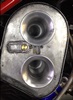
I recently built a car with efr8473. I put pressure sensor in the intake manifold at the hole in the center housing where the EGR passage is. this way u measure pressure directly at the exh port. (average for both rotors)
I will tune the car next week so i will post some results then.
This thread is meant to serve as a basic guide to those looking to learn to learn to tune their own car. There is no need for any in depth discussion beyond the intended content of this thread. If you over complicated it and muddy the waters with theory beyond function, those who are learning will get lost in translation.
If you would like to discuss specific advanced tuning theories or practices please create another thread for it.
This thread is meant to serve as a basic guide to those looking to learn to learn to tune their own car. There is no need for any in depth discussion beyond the intended content of this thread. If you over complicated it and muddy the waters with theory beyond function, those who are learning will get lost in translation.
If you would like to discuss specific advanced tuning theories or practices please create another thread for it.
Yeah...oops. It appears I typed that last bit on a cell phone in a hurry.
I'm starting the new build up in the next few days and am debating starting another thread like this to help push me along and keep me motivated, but no promises yet.








 EGTs and Lambda Sensors go here all the time! I have yet to hear someone measure the exhaust pressure of the engine here.

