When you click on links to various merchants on this site and make a purchase, this can result in this site earning a commission. Affiliate programs and affiliations include, but are not limited to, the eBay Partner Network.
After reading this thread: https://www.rx7club.com/3rd-gen-gene...eo-fd-1154838/ which turned into a classic forum debate of sequential vs non sequential vs single turbo, I am left wondering when is the appropriate time to go single turbo?
As discussed from the thread, in years past you would go non sequential or single turbo to reach peak horsepower; however, with todays turbo advancements à la BW EFR it seems you can have your cake and eat it too. The EFR offers the response of the sequential twins and the big power and simplicity of a single turbo. Also, with the modern top feed injectors and smart ignition coils it seems more difficult to fit this stuff around the rat's nest. Finally the EFR offers more ECU options. As far as I know the only ECUs that can control the twins are the PFC and Haltech. With a single you can use just about anything you want.
Here is the meat and potatoes of the question: should I go single turbo if I want to keep the car under 350hp? It seems obvious to me that if you are planning on going above 350hp a single turbo is the best route, but what about people who want to keep their car in a sweet spot? I have heard from many experienced FD guys that the best FD is a sequential turbo at 300whp.
Just food for though, wanted to see the old men of the forum spread some knowledge..
There will always be a difference among us all. There will be a slew of people trying to keep the vehicle as close to stock as possible. The twins had their time in the limelight when they made their debut. As you so eloquently put it, todays tech allows you to achieve the same results with significant increase in reliability.
If you plan to keep the vehicle for a long period of time, going single significantly increases the longevity of the vehicle.
I did my conversion after 2yrs of ownership. So around 2000 or so. I’ve been running single for 21yrs.
There are 2 obvious things you’ll notice right away after doing the conversion. The vehicle will actually blow cold air! That really took me by surprise the first time I started to drive the car. Lol. As we all know, if you want cold air, you’ll have to run the a/c. Not so when you go single.
The 2nd obvious thing will be the added quickness you notice whenever you attempt to turn the vehicle. Removing the twins and going single significantly changes the way the front end lets you change direction. The car feels a lot lighter on it’s feet and you can place the car where you want too with more confidence.
The big bonus is the added reliability. No more chasing vacuum leaks or wondering why the boost transition hasn’t worked correctly. Also you will get boost consistently and for hours. Not to mention the vehicle will feel a lot faster since you will inadvertently add a lot more power to the overall system. A nice little bonus for going single. Keep in mind that was never my intention. I was mainly looking for reliability and simplicity. If I managed to almost double the output of the stock power, so be it.
Anyone who says you need more than 400hp for a street vehicle is a complete power junky or simply wants to own bragging rights. Our car doesn’t weigh all that much to begin with. You not only make the vehicle overall lighter going single but you add more power. The vehicle will feel like a rocket ship.
I understand if you want to go seriously racing, you’ll want to get the most power. But honestly, you would probably be better off in investing in a dedicated race car and not converting a street car to a race car.
As the famous line has said “Join the dark side..”.
There will always be a difference among us all. There will be a slew of people trying to keep the vehicle as close to stock as possible. The twins had their time in the limelight when they made their debut. As you so eloquently put it, todays tech allows you to achieve the same results with significant increase in reliability.
If you plan to keep the vehicle for a long period of time, going single significantly increases the longevity of the vehicle.
I did my conversion after 2yrs of ownership. So around 2000 or so. I’ve been running single for 21yrs.
There are 2 obvious things you’ll notice right away after doing the conversion. The vehicle will actually blow cold air! That really took me by surprise the first time I started to drive the car. Lol. As we all know, if you want cold air, you’ll have to run the a/c. Not so when you go single.
The 2nd obvious thing will be the added quickness you notice whenever you attempt to turn the vehicle. Removing the twins and going single significantly changes the way the front end lets you change direction. The car feels a lot lighter on it’s feet and you can place the car where you want too with more confidence.
The big bonus is the added reliability. No more chasing vacuum leaks or wondering why the boost transition hasn’t worked correctly. Also you will get boost consistently and for hours. Not to mention the vehicle will feel a lot faster since you will inadvertently add a lot more power to the overall system. A nice little bonus for going single. Keep in mind that was never my intention. I was mainly looking for reliability and simplicity. If I managed to almost double the output of the stock power, so be it.
Anyone who says you need more than 400hp for a street vehicle is a complete power junky or simply wants to own bragging rights. Our car doesn’t weigh all that much to begin with. You not only make the vehicle overall lighter going single but you add more power. The vehicle will feel like a rocket ship.
I understand if you want to go seriously racing, you’ll want to get the most power. But honestly, you would probably be better off in investing in a dedicated race car and not converting a street car to a race car.
As the famous line has said “Join the dark side..”.
Interesting. I never would have thought about a single being significantly lighter. Do you think any of this is related to movement of a battery or deletion of AC components?
Interesting. I never would have thought about a single being significantly lighter. Do you think any of this is related to movement of a battery or deletion of AC components?
Thats the best part. My battery is exactly where it’s always been. My a/c is fully operational.
The twins weigh a ton! Running a gt35r with almost a fmic setup (I say almost because the intercooler sits a bit behind not fully up front covering the entire opening. Giving an opening to allow air to hit the condenser and the rad). Also, the turbo sits a bit up high for easier service. Which I was very grateful for recently since I had to send it out for rebuild. 21yrs of providing boost. I think she did well all things considered.
Oh, forgot to mention. Yes, the battery is in its stock location. However I’m running a Honda Civic size battery. Not the extra huge size of the OEM. Still, a standard OEM battery only from a civic. It’s even slightly slimmer than the battery you’ll find in a miata. Just enough to clear the pulleys for the a/c and steering.
Interesting thread. I'm also curious what a medium power single turbo setup would bring to the table. Most people talk about GT35 when going single turbo and end up with a setup that is capable of 400 hp +. But what about a smaller turbo, at 300whp? Would this setup approach or even exceed the response of well setup sequential twins? EFR 7670 at low PSI hits full boost by 2,000 RPM from what I have read.
If you want 300 rwhp, IMO keep the twins if they're working properly. If you want 500 rwhp, go with a nice single...... PT6466 is my current hairdryer of choice on my '95 BB car. If you want 400 rwhp, you can go single or modified BNR twins. 350 rwhp is a tough level--- best IMO to upgrade to BNRs or a single turbo as the OEM twins are not happy being driven hard at that power/boost level. You're not going to get a lot of longevity on your original factory twins in this case. '99 spec is a different story, but I still prefer the BNR twins to 99s.
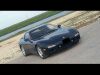
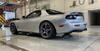
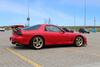
I was making first 400 rwhp then 500 rwhp on my old VR R1 for many years leading up to stuffing it into the wall at NJMP Lightning in 2012. I bought the black '95 FD pictured below fairly stock from an IRP customer. I was very familiar with the car as we'd done a bunch of the work on it and rebuilt the engine etc after a coolant o-ring failure from lack of coolant flushes over a decade by the previous owner. It had bolt on mods and I added a few more bolt on mods to where it was as modified as you can get with a stock engine and stock twin turbos. I vividly remember the night that an SRT8 charger pulled on me at triple digit speeds on the NJ Turnpike late one night. I decided then and there that this factory stock twin turbo stuff was for the birds . Of course in my case I'd already been bitten by the big power bug, so YMMV
Last edited by GoodfellaFD3S; Jan 1, 2022 at 08:39 PM.
IMO - it does not make sense if you have a perfectly working sequential setup and are not craving more power. Because a stock twin FD with all of the bolt-ons is actually quite fast, fun, and reliable (12 psi and below) so it doesn't make sense to go through all the trouble and do all of the custom work (other than an ECU upgrade for any boost above 10 psi). Meaning you can buy any IC, intake, DP, BOV, ect and it will bolt right up to the stock piping. Going single involves not just the purchase of the turbo but also exhaust manifold, DP, ECU, turbo blanket, IC. Also depending of what size turbo you'll be looking at injectors, fuel pump, and ignition upgrades as well. Don't forget the additional engine bay work to make the turbo kit compatible such as custom piping, engine harness modifications, ECU tuning, turbo install, block off plates, ect.
This is when it makes sense to go single:
The perfect excuse to go single is if your stock turbos are shot and you want more power. FYI- stock turbos are technically rebuildable but they don't last very long (they go out right away). So it is best to just purchase a brand new set and of course if you are craving more power this is the best time to bite the bullet and use that money towards the upgrade.
You want more power 330+RWHP. Good as reason as any.
You have an issue with your sequential system that you can't fix and/or you are stuck with non-sequential turbos. This is the weakest reason but a reason non-the-less
Perfectly working seq twins FD is quite fun, my vote go to BNR if you only want 350rwhp. My BB made 355rwhp at 1bar on a set of N3C1 twins, with no issue on the sequential system since it was tuned back in 2014, and turbos just starting to smoke a bit this year
BNR will be able to get you that 350rwhp easily and last a lot longer than the OEM twins, plus keeping the sequential system will keep one of the main identity of the FD IMO.
If you want 300 rwhp, IMO keep the twins if they're working properly. If you want 500 rwhp, go with a nice single...... PT6466 is my current hairdryer of choice on my '95 BB car. If you want 400 rwhp, you can go single or modified BNR twins. 350 rwhp is a tough level--- best IMO to upgrade to BNRs or a single turbo as the OEM twins are not happy being driven hard at that power/boost level. You're not going to get a lot of longevity on your original factory twins in this case. '99 spec is a different story, but I still prefer the BNR twins to 99s.
I was making first 400 rwhp then 500 rwhp on my old VR R1 for many years leading up to stuffing it into the wall at NJMP Lightning in 2012. I bought the black '95 FD pictured below fairly stock from an IRP customer. I was very familiar with the car as we'd done a bunch of the work on it and rebuilt the engine etc after a coolant o-ring failure from lack of coolant flushes over a decade by the previous owner. It had bolt on mods and I added a few more bolt on mods to where it was as modified as you can get with a stock engine and stock twin turbos. I vividly remember the night that an SRT8 charger pulled on me at triple digit speeds on the NJ Turnpike late one night. I decided then and there that this factory stock twin turbo stuff was for the birds . Of course in my case I'd already been bitten by the big power bug, so YMMV
Clean setup. In one of my searches reading up on the forum I remember reading that you said the 99 spec twins don't last as long, especially under higher boost compared to the non 00 spec ones. Did your opinion change, or did I misunderstand something here?
Curious because I have 99 spec twins that I'm bolting on now. If the case is they don't do as well, I'll just aim for the low 300's. Really care mostly about reliability and fun.
This is a solid question. Also something I've personally given a lot of thought to. Every situation will be somewhat different.
First off, the twins aren't the problem some people make them out to be. IMHO 90% of the problem with twins working right is down to poor maintenance or sloppy workmanship. I bought my car in 2004, the ONLY problem I've had with the twins on my car was one bad solenoid causing a lazy transition. That's it. Oh, and I had a broken check valve that was the impetus for me selling Viton check valves.
About 8 years ago I put on a used set of 99 twins, ran them most of their life at 12psi and have upped it to 14 psi within the past year. Right now they are doing great. I also run 20w50 oil which I think makes a big difference in turbo life.
All that said, when I drove @estevan62274 's silver FD last year at Deal's Gap with the EFR 8374 I was blown away. The response was literally just like the twins and then the power just BUILT and BUILT, it was amazing. But, all that said, I have a bought and paid for setup on my car now, is it worth putting $5k into a single swap? For me, no. I'm making plenty of power as it sits to the extent that I have traction problems in cold weather (which Steven can attest to, I think that was the only real drive he got of my car!).
Banzai Racing's dyne upgrade thread proves you can make 350hp to the ground with stock twins, good bolt-ons, a PowerFC, and a good tune. That makes for an awesome car to drive that's still comfortable and solid.
So, here's my take by situation -
- Stock or near-stock car and you want to have more fun with it. PFC, intake/exhaust/IC, have a blast with it. This would also be reversible for future resale value.
- Car that has twins and was badly hacked on - someone went non-sequential and did a poor job of it, bad twins, crappy front mount, etc. I'd seriously consider a BW 8374 at that point. Trying to fix hacked up wiring and missing parts to make a working sequential setup again would be a mess unless you have deep knowledge or get a pull-out long block of a sequential car to use for parts and reference.
- Older single turbo car that has a laggy old-school turbo, I'd seriously look at the BW as well.
One take away I hope people can go with is PLEASE stop doing non-sequential. It's such a shitty hack job. It only made SOME sense 20 years ago and now it's just dumb.
Also I'm not a big fan of doing something because, maybe, somewhere in the future it will be a problem. Yes, ALL turbos will fail at some point in time, but enjoy it while it's going. It's like having a box of cookies - it's sole purpose is to be consumed and enjoyed. If you're worried about the day the cookies will be gone and you don't eat them, then you aren't enjoying them and what are they for?
Neo’s comments are baffling. With an upgraded FMIC and 35r I can’t imagine he cut more than 5-7lbs over the stock twins. If you factor in emissions add another 12-14lbs max. He also added more weight toward the nose and the majority of the 35r weight is likely sitting higher than the bulk of the stock twins weight. It appears it’s someone justifying their personal choice. His comment about engine bay temps is valid but you will notice zero difference in handling.
Neo’s comments are baffling. With an upgraded FMIC and 35r I can’t imagine he cut more than 5-7lbs over the stock twins. If you factor in emissions add another 12-14lbs max. He also added more weight toward the nose and the majority of the 35r weight is likely sitting higher than the bulk of the stock twins weight. It appears it’s someone justifying their personal choice. His comment about engine bay temps is valid but you will notice zero difference in handling.
I know its incredibly difficult to convey context on a forum. Especially nowadays.
I did mention there will be people with difference of opinions. I however have nothing to justify to anyone. The question was posted "when should I go single?". Not if I should. You know what they say, advice is what you ask for when you already know the answer.
Let me give you a bit of a run down transitioning from twins to single. I was actually 1 of the few early adapters of the power FC together with the whole Apex'i GT intercooler kit. Adding the intercooler kit and upgrading the computer did give a whole new perspective on "stock power". Which was anything but. I think it increased output to just shy of 300 rwhp. Running at about 12-13lbs of boost. Yeah, at the time I was searching for a bit more power because you could tell the car can definitely handle more. Especially after I've upgraded the sway bars and changed over to a coil-over setup for the suspension. A nice big difference with the way the car handled was adding the top strut bar for the suspension points. That sharpened up the car significantly. Mind you, weight wasn't too much of a factor right now. The car reacted better due to all the other bits I changed out. The added power was a bonus.
I enjoyed the setup for a few years when eventually the turbos gave up the ghost. At the time finding slightly used turbos was near impossible. After hearing the actual design flaw of the twin turbos themselves, I wasn't too keen on spending x amount of money on a system that's just flawed to begin with. This is when I made the decision to go single.
At the time the latest turbo to hit the market and making a great impression for its streetability and it's overall top end range was the GT35R. I already had everything else in place so changing to a single turbo only made more sense. The only thing that had to be made relatively from scratch was the exhaust manifold as well as the downpipe (that turbo has a big exhaust side).
So, at the time, the stock turbos came out as well as the rats nest and the intake filters from the GT kit. While I was at it, running emissions was pointless so out came the airpump (which at the time was still in place but not doing anything since I was basically running cat free anyway). In went the GT35R, the custom exhaust manifold, the Tial bov as well as the wastegate, and the upgraded injectors. A shorter pipe was made to run from the single turbo to the intercooler so out went the GT spec pipe that came with the kit. The other side of the kit remained and is still used till this day.
Now we have the mentioned hardware along with the stock rad, condenser and the GT spec intercooler. Just doing this change over, I immediately noticed the difference in handling. This isn't some sort of placebo affect. You know your own car after driving it for a few years. You know what to expect. Especially when its as responsive as the FD. The car felt alot lighter in the front end. Turn in was alot sharper and more immediate. The overall impression was the car felt alot more planted.
Then of course you get to the power delivery. They mentioned you should start to feel full boost around 2700-2900rpm. Saying it and actually feeling it are 2 different things. While yes, the stock twins will give you a good shove as low as even 1900rpm (not too sure who runs that low a rev range on this type of car, but there are people out there..) the power delivery is very predictable with that noticeable dip around the 4000rpm and then leading to another nice pickup all the way up to redline. Even with the added GT kit and ECU, that type of power delivery didn't change. It was a tiny bit more noticeable in the upper range but nothing surprising. The first time I felt the "low boost" setting on the new turbo setup..... That turbo fired up and shot you forward straight from as low as 2500rpm. It was a freight train all the way to redline. First time experiencing something like that you never forget that moment. Best part was it would continue to do so in almost all its gears. It only really starts to taper off as you get into 5th. Of course by then you're really violating street limits. Hell, you're violating street limits by 2nd gear. Let alone 5th.
Suffice to say I was extremely satisficed with the decision. Car was lighter, more responsive, and the power was absolutely spot on even on the low boost setting. The guys doing the work were eager to get the turbo up to 20-22lbs and I told them the current setting was more than enough. I didn't want anymore. Especially for street use. As it turns out, the turbo is currently set to 15lbs. Which is very modest for this size of turbo. Trust me when I tell you it's more than enough to get you into trouble. Especially if the weather starts to get cold. I have seen the boost hit 17-18lbs on really cold days. Thankfully there's a fail safe built into the system so it won't damage itself and by the time the weather turns into those coolish days, I typically have the car hibernating. Road salt is the death of all vehicles!
There's your context. I simply wanted a system that stood the test of time, and could be worked on by myself. Time has flown by and nowadays you rarely see anyone who's willing to touch anything rotary related. It's very satisfying to know and work on your own vehicle. I've been fortune it to have space to work on the vehicle and have learned a few things in the years of ownership.
Here is the meat and potatoes of the question: should I go single turbo if I want to keep the car under 350hp? It seems obvious to me that if you are planning on going above 350hp a single turbo is the best route, but what about people who want to keep their car in a sweet spot? I have heard from many experienced FD guys that the best FD is a sequential turbo at 300whp.
First and foremost guys I’ve been spending a lot of time on rx8club, and coming back to this forum is a breath of fresh air. That forum is….uggh.
Anywho…I read through these comments, and all of you guys made some very valid points. I always appreciate the perspectives from you guys that have been around a while. Your experiences are a treasure to read and I love catching a glimpse of what it was like owning a FD in the early 2000s….very interesting indeed.
So OP I have a problem with your question. I only point this out because I had the same problem before I decided to go single, and after coming to terms with this problem I haven’t looked back since; What do YOU want out of YOUR car?
I understand what you’re asking, but you have to understand that nobody’s opinion is going to fulfill you if it’s not what YOU want to do. All of these gentlemen have their own cars with their own builds; if there was a definitive answer to any of these questions this wouldn’t be a forum…it would be a rule book. Every person’s car is a reflection of what they wanted out of said car (or what the previous owner wanted, but I digress). And you should follow suit. Do like most people do, go out and find people with FDs and ride in their cars. Much like Dale’s experience, I drove a 8374 FD and it blew me away. In that moment I just knew I had to go 8374, and every single day I get that same feeling and knew I made the right choice. You have to find your own path, because as you can see everyone on here has a different opinion on the matter.
I enjoy the stock twins and not pushing a ton of power. A good running sequential system is plenty of fun. I think we get lost in numbers sometimes and while some of us do track or autocross our cars, they are mainly driven on the street. Even on the stock twins, It is hard to rev out to 8k rpms each drive and have enough road to do it. At least, where I live...
I've owned over 45+ cars. Ranging from civics to Porsche 911 Turbos, AMGs, F80 M3, etc. I guess, after owning just about every "fast" car I could, the FD is still my favorite. I always felt like much of the "fast" cars I owned were wasted on the lack of road they could be driven on safely at high speeds. It is one of the reasons I daily drive an STI. Low end torque, nice sounds, 4 doors, and a 6 spd manual trans. I can feel "fast" while not having to break any laws.
Going single has its positives and negatives:
Positives:
1) Easy to diagnose problems
2) No emissions equipment (not really a problem on JDM FD)
3) No rats nest
4) Less vacuum lines
5) More fueling upgrades available
Negatives:
1) Need a good and proper tune
2) Up front costs for single turbo and proper fuel system
3) Definitely need upgraded clutch
4) Possibility of other drivetrain issues
I don't really consider "resale value" a consideration on these cars. Someone will pay for what they think a car is worth, no matter what the mods or market says. Plus, I plan to hold on to mine. 45+ cars, 4 of which have been RX-7s. I'm pretty partial to these cars. So in my humble opinion, going single is about what YOU want and YOUR current situation with the car. Is it broken already? Are the twins clapped out? Are you wanting more power? Do you have the funds to actually finish the project? I think a lot of people forget the money and time aspect to this. That is why not long ago, there were tons of clapped out FDs for sale. Projects that were never finished or projects started by people who wanted to cut corners.
Thanks for the responses guys! I truly enjoy this forum more than most car magazines.
I will preface this with fact that I am in no position to make any moves towards a certain turbo upgrade at the moment. Maybe in a year or two. Currently lack the time and would rather save up to do a complete turbo swap rather than slowly piecing together parts, like I have been. I just wanted to create a discussion, because I think the argument for a low horsepower single turbo is overlooked. I have zero desire to go high horsepower with my car. I am from the foothills of NC and I find the most joy carving the back country roads and mountains. My goal with my car is to be a (relatively) comfortable and reliable street car that I can push on the street without becoming public enemy #1.
That being said my stock twins are becoming quite tired and regularly barfing up oil and I am always having to replace connectors on my wiring harness. I think I will ultimately replace them with a BNR stage 1 or 2, whenever BNR starts producing FD turbos again. I also have not been super thrilled with my PFC and if I could have done it again I would have gone Haltech.
I think Dale put it best - Stock or near-stock car and you want to have more fun with it. PFC, intake/exhaust/IC, have a blast with it. This would also be reversible for future resale value. - Car that has twins and was badly hacked on - someone went non-sequential and did a poor job of it, bad twins, crappy front mount, etc. I'd seriously consider a BW 8374 at that point. Trying to fix hacked up wiring and missing parts to make a working sequential setup again would be a mess unless you have deep knowledge or get a pull-out long block of a sequential car to use for parts and reference. - Older single turbo car that has a laggy old-school turbo, I'd seriously look at the BW as well.
I just wanted to create a discussion, because I think the argument for a low horsepower single turbo is overlooked.
one Haltech. ell.
I'll have more info on my stock/pettit ecu/apexi base map 7670 likely later this month or early next month. It ran great on a stock port reman but my front cover leak got so bad I pulled the engine a few weeks ago. I have now installed the small street ported engine I built with Ianetti Steel seals and just need to get a few hundred break in miles on it and then I will try to get to the dyno and 1/8th mile track in March as weather improves. I believe it should be a great alternative to sequential twins but will still be a touch laggier below 2500rpms. One thing most overlook on the stock sequential is the cost to do all new solenoids and wiring harness which most of these cars need. That is about $1500.00 alone. The last few sequential cars I put together I replaced all solenoids with new parts as it is really the only way to justify it these days with my limited spare time.
Because I am petty I will weigh a bunch of single manifolds and turbos I have on the shelf to show there is way less weight savings than what is being posted. Removing AC or emissions should not factor in at all. I also have several ICs(Apexi FMIC as well) I will weigh. Most of the weight savings comes from removing the airpump, relocating batter/lighter battery and AC compressor/accessories in the engine bay. The rats nest and few other things that get deleted going single are not much weight savings at all.
Because I am petty I will weigh a bunch of single manifolds and turbos I have on the shelf to show there is way less weight savings than what is being posted. Removing AC or emissions should not factor in at all. I also have several ICs(Apexi FMIC as well) I will weigh. Most of the weight savings comes from removing the airpump, relocating batter/lighter battery and AC compressor/accessories in the engine bay. The rats nest and few other things that get deleted going single are not much weight savings at all.
There is a box full of stock parts on my garage floor that would beg to differ; that thing weighs in the light heavyweight boxing class. I'd be willing to bet my car is AT LEAST 100 lbs lighter than stock from going single. Mind you, I also got rid of my ABS pump, AC system, and the OEM engine harness in favor for a harness from Chris Ludwig, but I digress. The FD is by no means a heavy car in stock form, and I drove my car for at least a year with a hacked up non-sequential setup before going single, but I am certain my car, with a full stock interior outside of a couple gauges and a Momo steering wheel, single turbo, coil overs and 18in wheels, would weigh in lighter than my car before I went single.
I just wanted to create a discussion, because I think the argument for a low horsepower single turbo is overlooked.
fun and speed often correlate, but are two different things. i personally find that the shape of the power curve is what makes a car fun (or not), more than the amount of power.
just as a for instance, a stock FD is fun, the power delivery is crazy. if you put a downpipe on it, it gets better, but throwing on the single and another 100hp, is it more fun? or did it suddenly get very serious?
as a corollary, too many gauges can be bad too. i remember when my FD friends would go to the track, and the most exciting thing for them was comparing how much they overheated. i mean they were really excited, but if you take a step back...
I've watched enough Christies, B.A.T. and Mecum auctions to see that stock cars are worth more. Reliability mods like a downpipe and AST are good signs of a knowledgeable previous owner, but making the car illegal in more than one state won't help if and when you decide to sell.
I ran oem twins back in 1998 and switched to a laggy single turbo system in 2001. I regretted going single and in 2016 I bought a jdm long block. I had to make a decision, single or twin. Considering I had everything ready for single setup, I went with a single setup. I went with a pte 6262 1ar twin scroll divided manifold with dual waste gates and never looked back. I only have one regret and that is that I did not go with the borg warner IWG 8374. I currently get my full boost at 15psi by 3500rpm. I hear the borg warner does that below 3k.















 . Of course in my case I'd already been bitten by the big power bug, so YMMV