


s4 vs s5 turbo exhaust manifold



s4 vs s5 turbo exhaust manifold
i searched, but couldnt find much.
so the series 4 exhaust manifolds are better flowing than the s5? why? i always assumed the s5 would outflow the s4, but it seems to not be the case.
as far as being a flow restriction, can anything be done to the manifold so that it is not a flow restriction or is there nothing? the reason i ask this is because im having some serious issues controlling boost and i think its from a combination of things.
bnr stage1 s5 turbo on a s4 t2 block with s4 na rotors. the downpipe is a 2.5 inch all the way to the catback which gets bigger. i have a haltech ems so overboost is not a problem. the problem im having is that boost is impossible to control. it was tried on any and every combination of boost controllers and settings and it just wants to do what it wants to do. my main problem is that it is not consistent day to day. meaning, sometimes it will boost 7 lbs, and sometimes it will do 11 lbs. even with the wastegate unhooked and flapping around, it still made 11 psi.
also, the top end falls greatly. from 11 down to 4 or 5 psi.
what is the general consensus?
so the series 4 exhaust manifolds are better flowing than the s5? why? i always assumed the s5 would outflow the s4, but it seems to not be the case.
as far as being a flow restriction, can anything be done to the manifold so that it is not a flow restriction or is there nothing? the reason i ask this is because im having some serious issues controlling boost and i think its from a combination of things.
bnr stage1 s5 turbo on a s4 t2 block with s4 na rotors. the downpipe is a 2.5 inch all the way to the catback which gets bigger. i have a haltech ems so overboost is not a problem. the problem im having is that boost is impossible to control. it was tried on any and every combination of boost controllers and settings and it just wants to do what it wants to do. my main problem is that it is not consistent day to day. meaning, sometimes it will boost 7 lbs, and sometimes it will do 11 lbs. even with the wastegate unhooked and flapping around, it still made 11 psi.
also, the top end falls greatly. from 11 down to 4 or 5 psi.
what is the general consensus?

Senior Member
Joined: Jul 2010
Posts: 375
Likes: 0
From: jordan ny
get an s4 mani and port the wastegate? i don't know a whole lot about turbos and stuff associated with it but maybe its a problem with the turbo? bad vacuum some where? just tryin to give some ideas



from what I remember, the S4 manifolds are better suited for high peak power, while the S5 divided is good for the low range to mid range.
What kind of BOV are you running, it might stay open when the boost climbs
What kind of BOV are you running, it might stay open when the boost climbs
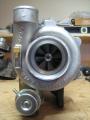

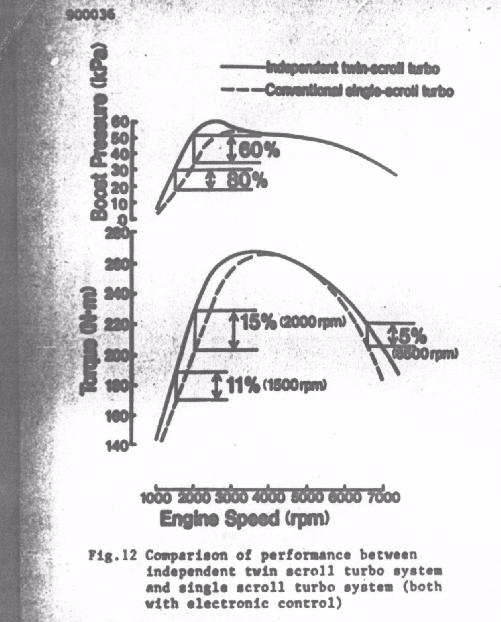
It's actually a misconception that the S4 exhaust manifold & turbo have better top-end flow than an S5. In the S5 SAE paper, a dyno for both turbos is shown, and the result is the S5 out-performing the S4 in all respects. Up to 15% gains at low RPMs and 5+% gain at high RPMs. The A/R of the turbines is also identical. I've measured both and did a rough calculation. The scrolls of the S5 are both 0.5 A/R, and the scrolls of the S4 are 0.4 and 0.6 A/R. So effectively they're both 1.0 A/R. But the exhaust manifold has a large impact.
As far as your boost dropping off at high RPMs, has the wastegate been modified on your BNR? Brian is now fitting the hybrids with aftermarket wastegate actuators that can hold the door closed better. I know some people have had issues with the door being forced open by exhaust gases, even though the actuator may be attempting to keep it closed.
As far as your boost dropping off at high RPMs, has the wastegate been modified on your BNR? Brian is now fitting the hybrids with aftermarket wastegate actuators that can hold the door closed better. I know some people have had issues with the door being forced open by exhaust gases, even though the actuator may be attempting to keep it closed.

No, the S5 is the true twin-scroll. At low RPMs on the S4, one scroll is active so it would act like a small A/R single scroll turbo. At high RPMs, it would act like a twin-scroll, but without the advantage of a divided manifold.
Last edited by RotaryRocket88; Sep 11, 2010 at 10:40 PM. Reason: combined posts
I am lost.. Twin scroll turbos typicall have a flapper door style manifold thats indicative of the S4 Style turbo.
I am gonna do some homework on this because I see what you are saying.. The divided housing makes it a twin scroll.
I am gonna do some homework on this because I see what you are saying.. The divided housing makes it a twin scroll.
Trending Topics
The paper discusses all the changes made for the S5s, and what the benefits are. It has info on the S5 NA VDI setup too; including torque curves for it.
I know Mazda calls the actuator on the S4 a "twin-scroll" actuator, but the manifold is not divided at all. The manifold does not separate exhaust pulses, it just mashes them together, then they enter each side of the turbine. So I guess you could say it's somewhere between the "conventional single scroll turbo" on the graph and the "independent twin scroll turbo" (S5). So the gains over the S4 aren't exactly the 15% and 5% numbers, but it's going to have to be somewhere in the middle. Twin scroll > single scroll. The S5 exhaust manifold is fully divided, so the two scrolls are always fed exhaust pulses with higher velocity.
I can send you the paper if you want; I got it from arghx. PM me your email address.
I know Mazda calls the actuator on the S4 a "twin-scroll" actuator, but the manifold is not divided at all. The manifold does not separate exhaust pulses, it just mashes them together, then they enter each side of the turbine. So I guess you could say it's somewhere between the "conventional single scroll turbo" on the graph and the "independent twin scroll turbo" (S5). So the gains over the S4 aren't exactly the 15% and 5% numbers, but it's going to have to be somewhere in the middle. Twin scroll > single scroll. The S5 exhaust manifold is fully divided, so the two scrolls are always fed exhaust pulses with higher velocity.
I can send you the paper if you want; I got it from arghx. PM me your email address.
Maybe with the increased exhaust gases from the bigger turbo? But I can say that a 2.5" DP doesn't appear to be a restriction on my stock turbo. Boost only drops off to about 8-9 psi at redline for me.


a bigger exhaust will only make it worse. To control boost better you would need more exhaust restriction, not less. You are reaching the limits of an internal gate on an uncorked rotary. My ported s5 wastegate could not keep boost under control on stock turbo with only a 2.5" exhaust (no cat). Even external gates struggle to control boost that low. My HKS 40mm on the undivided HKS manifold did exactly what you are describing... unpredictable boost (especially was weather got colder), even without a controller. It had a 10psi spring. I ended up switching to a Feed stainless divided manifold with Tial 44mm wastegate and 13psi spring.
The other option for you to try is adjusting the preload in the wastegate arm. Lengthen the wastegate arm with the threaded nut so that your base boost (no controller, just a straight pressure source) is say 12psi. The lower the boost you want, the more flow you need out of the gate. And there's only so much an internal can do.
Once you get the preload adjusted, you can use an electronic boost controller to reduce the amount of taper up top.
The other option for you to try is adjusting the preload in the wastegate arm. Lengthen the wastegate arm with the threaded nut so that your base boost (no controller, just a straight pressure source) is say 12psi. The lower the boost you want, the more flow you need out of the gate. And there's only so much an internal can do.
Once you get the preload adjusted, you can use an electronic boost controller to reduce the amount of taper up top.
Now let's clear some stuff up about the OEM exhaust manifolds and turbine housings. From series 3 through series 5, mazda used three different designs.
Series 3 (12A Turbo)
--undivided manifold, undivided turbine housing
--This is the typical design you will see on most 90s inline-4 turbo engines, like the DSM 4G63 and the Sylvia SR20DET
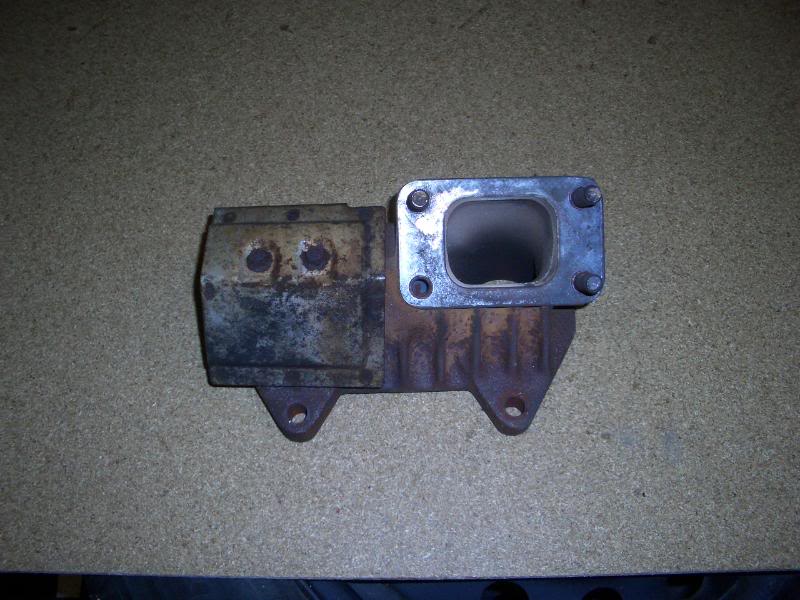
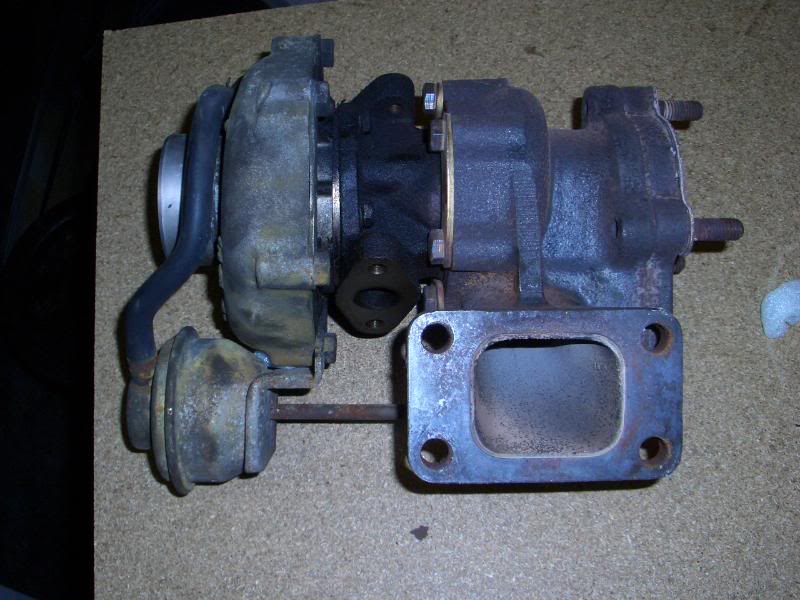
Series 4 (S4 T2)
--undivided manifold with vacuum-controlled valve, divided turbine housing with unequally sized passageways
--When vacuum is applied, the swing valve closes and exhaust only flows through one passageway. The ECU uses a solenoid to control the vacuum based on rpm. Mazda used this same basic design in the FD to control exhaust flow to the secondary turbo, except the actuator used both vacuum and pressure (2 solenoids triggered at the same time).
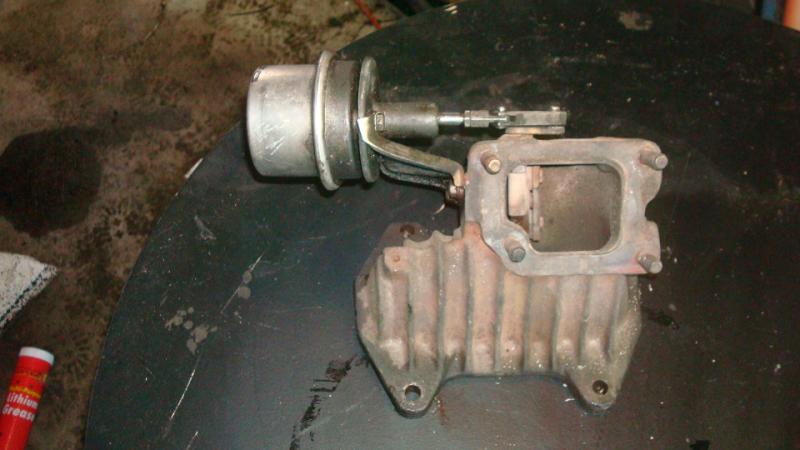
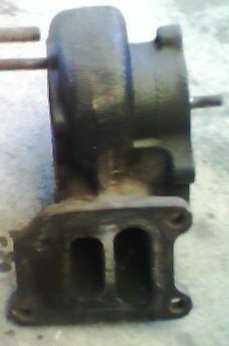
Sound performance has copied this design somewhat with their Quick Spool Valve, meant for universal applications.
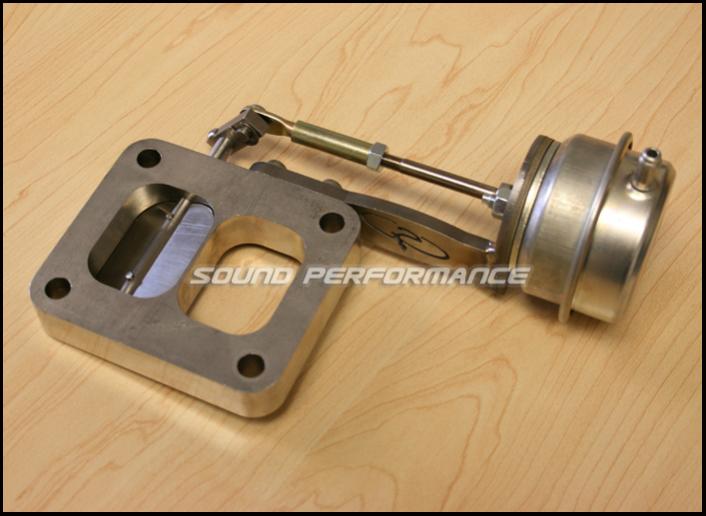
Notice that it uses a butterfly valve versus the swing valve on the OEM s4 design. It also has equally sized passageways and can work with regular off-the-shelf turbine housings. The actuator is controlled by pressure (like a typical internal wastegate) rather than vacuum.
Series 5 (S5 T2)
--divided manifold with divided turbine housing. Passageways are equally sized.
--Exhaust pulses do not interfere with each other as the firing order alternates between front and rear rotor.
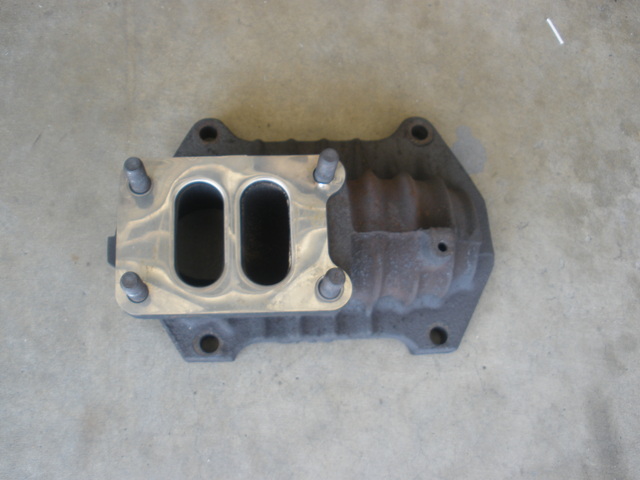
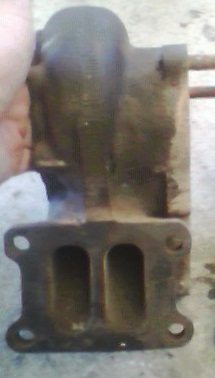
Here is a Mitsubishi Evo 9 turbine manifold. It also uses independent twin scroll:
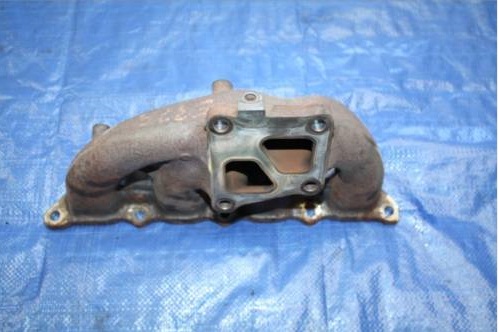
The #2 and #3 cylinders go to the passageway on the left and the #1 and #4 go to the passageway on the right. Just like on the Rx-7, this separates the exhaust pulses according to the firing order. An Evo fires 1-3-4-2. So looking at the picture, first the right passageway is pulsed, then the left, then the right, then the left. On the Rx-7 the firing order is front, rear, front, rear. So looking at the s5 manifold, the pulses go the right, then left, then right, then left. The Mitsu design is the same thing Mazda was doing 20+ years ago. Other manufacturers use twin scroll designs as well. The EJ207 engine on the JDM Subaru WRX STi has an independent twin scroll manifold, but the plumbing is longer on the boxer engine.
Now what makes this discussion confusing is the terminology. You could call any divided turbine housing twin scroll, but you can't call an undivided manifold twin scroll. Mazda differentiates between series 4 and series 5 by calling the later design "independent twin scroll."
Series 3 (12A Turbo)
--undivided manifold, undivided turbine housing
--This is the typical design you will see on most 90s inline-4 turbo engines, like the DSM 4G63 and the Sylvia SR20DET
Series 4 (S4 T2)
--undivided manifold with vacuum-controlled valve, divided turbine housing with unequally sized passageways
--When vacuum is applied, the swing valve closes and exhaust only flows through one passageway. The ECU uses a solenoid to control the vacuum based on rpm. Mazda used this same basic design in the FD to control exhaust flow to the secondary turbo, except the actuator used both vacuum and pressure (2 solenoids triggered at the same time).
Sound performance has copied this design somewhat with their Quick Spool Valve, meant for universal applications.
Notice that it uses a butterfly valve versus the swing valve on the OEM s4 design. It also has equally sized passageways and can work with regular off-the-shelf turbine housings. The actuator is controlled by pressure (like a typical internal wastegate) rather than vacuum.
Series 5 (S5 T2)
--divided manifold with divided turbine housing. Passageways are equally sized.
--Exhaust pulses do not interfere with each other as the firing order alternates between front and rear rotor.
Here is a Mitsubishi Evo 9 turbine manifold. It also uses independent twin scroll:
The #2 and #3 cylinders go to the passageway on the left and the #1 and #4 go to the passageway on the right. Just like on the Rx-7, this separates the exhaust pulses according to the firing order. An Evo fires 1-3-4-2. So looking at the picture, first the right passageway is pulsed, then the left, then the right, then the left. On the Rx-7 the firing order is front, rear, front, rear. So looking at the s5 manifold, the pulses go the right, then left, then right, then left. The Mitsu design is the same thing Mazda was doing 20+ years ago. Other manufacturers use twin scroll designs as well. The EJ207 engine on the JDM Subaru WRX STi has an independent twin scroll manifold, but the plumbing is longer on the boxer engine.
Now what makes this discussion confusing is the terminology. You could call any divided turbine housing twin scroll, but you can't call an undivided manifold twin scroll. Mazda differentiates between series 4 and series 5 by calling the later design "independent twin scroll."
Your wastegate isn't flowing enough. You have two basic methods of addressing this: increase backpressure or raise the basic level of boost. So your options are:
1) increase restriction in the exhaust. Add a high flow cat for example.
2) increase the wastegate spring pressure so that your minimum boost level is high enough that the wastegate won't be overwhelmed. BNR probably installed a 7psi actuator like this: http://www.atpturbo.com/mm5/merchant...Category_Code=
but you could install a 14psi actuator like this: http://www.atpturbo.com/mm5/merchant...Category_Code=
Or you could just call up BNR, talk to Bryan, and ask what he recommends in order to increase spring pressure. You might be able to send him the turbo and he can do something with the actuator.
3) keep the wastegate you have now but adjust the preload in the arm (stiffen it up) by lengthening the rod. This isn't exactly the same as changing out the actuator, but it will increase your "base" boost level. More pressure will be required to push open the wastegate valve. You don't want to go overboard on the adjustment because if there is too much preload the gate won't open all the way.
What you're trying to do is reduce the amount of exhaust that will be trying to flow out of the wastegate so it doesn't get overwhelmed. You want your wastegate to be able to control boost consistently when no boost controller is installed. You should hit peak boost and then maybe taper off a little bit. The peak boost shoudn't vary with the weather much if no controller is installed, nor should it creep.
1) increase restriction in the exhaust. Add a high flow cat for example.
2) increase the wastegate spring pressure so that your minimum boost level is high enough that the wastegate won't be overwhelmed. BNR probably installed a 7psi actuator like this: http://www.atpturbo.com/mm5/merchant...Category_Code=
but you could install a 14psi actuator like this: http://www.atpturbo.com/mm5/merchant...Category_Code=
Or you could just call up BNR, talk to Bryan, and ask what he recommends in order to increase spring pressure. You might be able to send him the turbo and he can do something with the actuator.
3) keep the wastegate you have now but adjust the preload in the arm (stiffen it up) by lengthening the rod. This isn't exactly the same as changing out the actuator, but it will increase your "base" boost level. More pressure will be required to push open the wastegate valve. You don't want to go overboard on the adjustment because if there is too much preload the gate won't open all the way.
What you're trying to do is reduce the amount of exhaust that will be trying to flow out of the wastegate so it doesn't get overwhelmed. You want your wastegate to be able to control boost consistently when no boost controller is installed. You should hit peak boost and then maybe taper off a little bit. The peak boost shoudn't vary with the weather much if no controller is installed, nor should it creep.
hm.... if it doesn't work arghx, im driving the 5 hours to raleigh and and will force you into a game of roshambo. nah just kidding.
time to get a new actuator.
question. wont messing with the rod length prevent the gate from opening as far as it does?
time to get a new actuator.
question. wont messing with the rod length prevent the gate from opening as far as it does?
At some point yes, which is what I was trying to get at. A lot of turbos have adjustable wastegate arms from the factory though, and they are pre-set. All the TD04-13T turbos factory on most of the WRX's have an adjustable arm.

Thread
Thread Starter
Forum
Replies
Last Post
