


just posting pics of work im doing


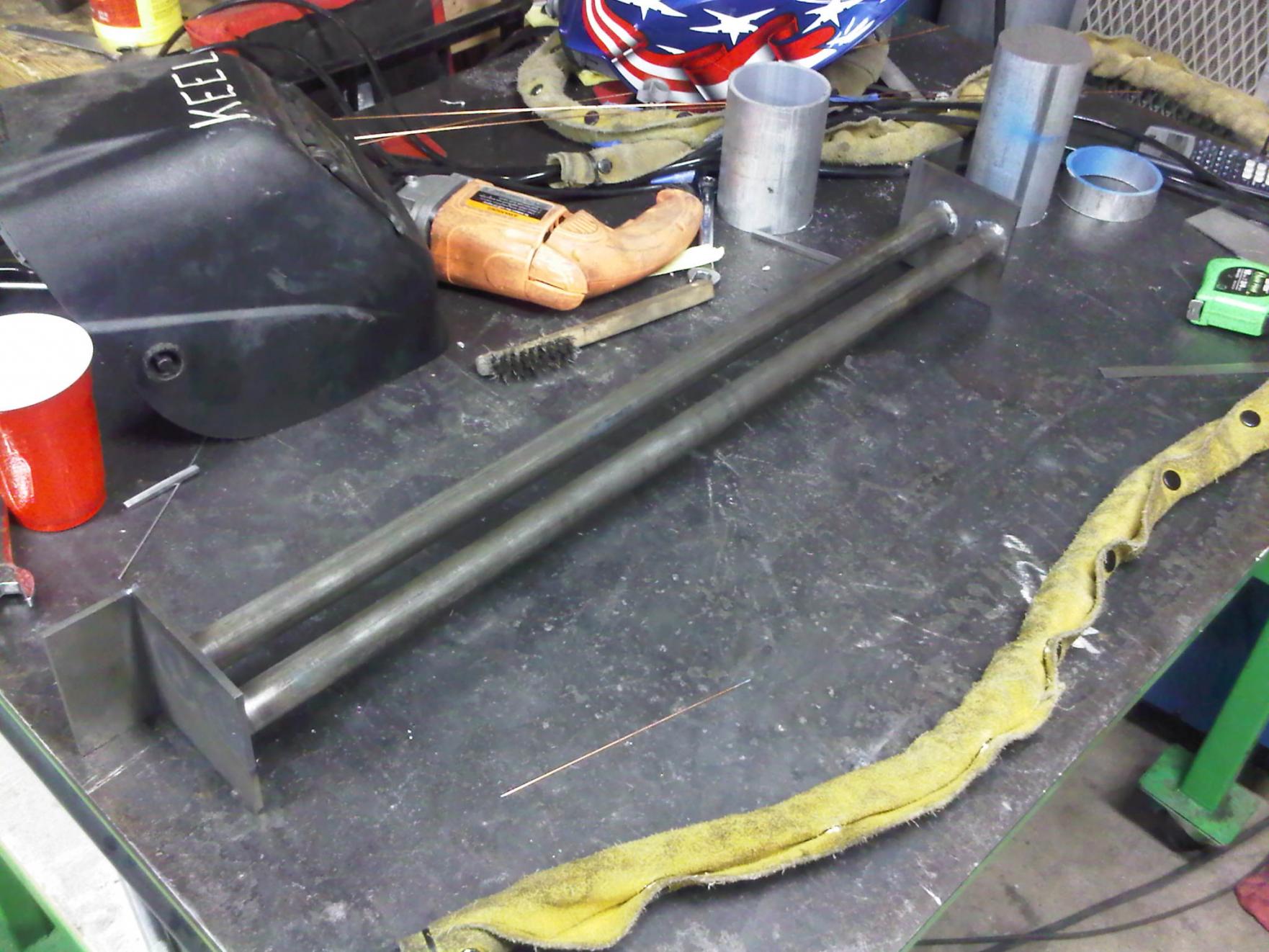
got the frame rails cut, now i need to cut metal, box in the frame rails to the width i need, do some morewelding and then drop the cell in for good!!!
i saved alot of $$ on the cell purchase itself but all this work is a real pita...hope it will be worth it in the end
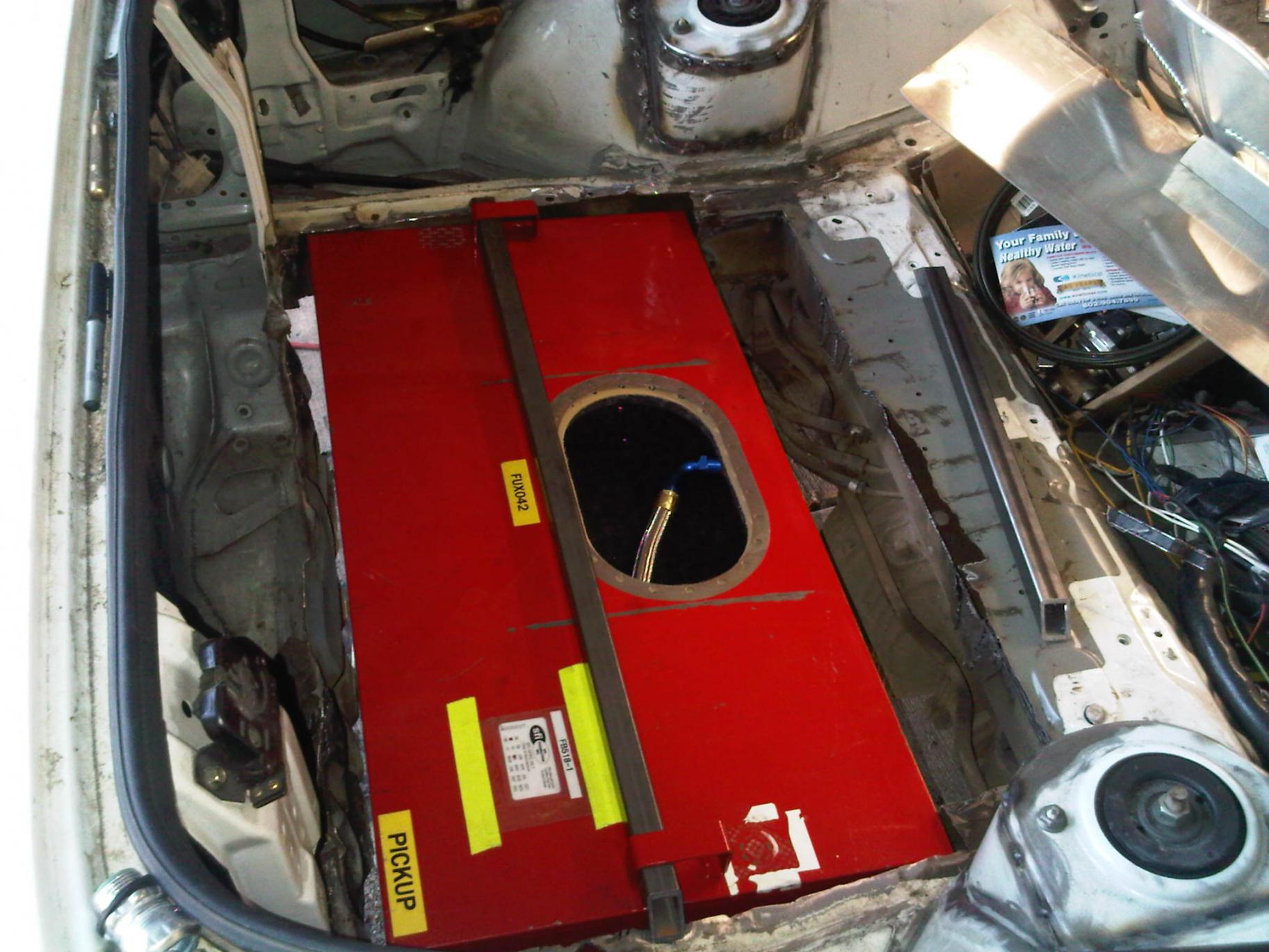
i saved alot of $$ on the cell purchase itself but all this work is a real pita...hope it will be worth it in the end


 nice to see your full speed ahead with the 7!
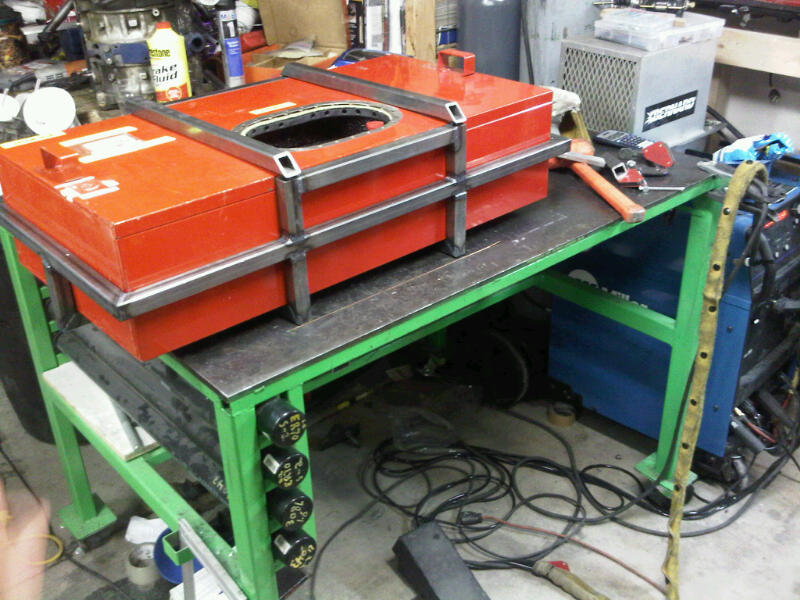
finally got around to getting some stainless steel bolts/lock washers, welded in the nuts and tada! this is the final product...i just need to box the frame in now, i kinda got side tracked cutting stuff out of the front of the car  making room for dual 25 row oil coolers
making room for dual 25 row oil coolers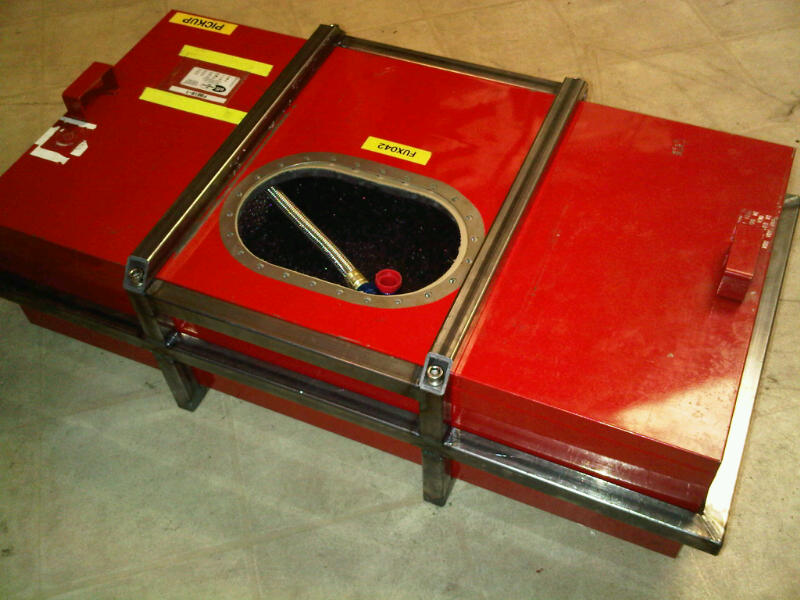

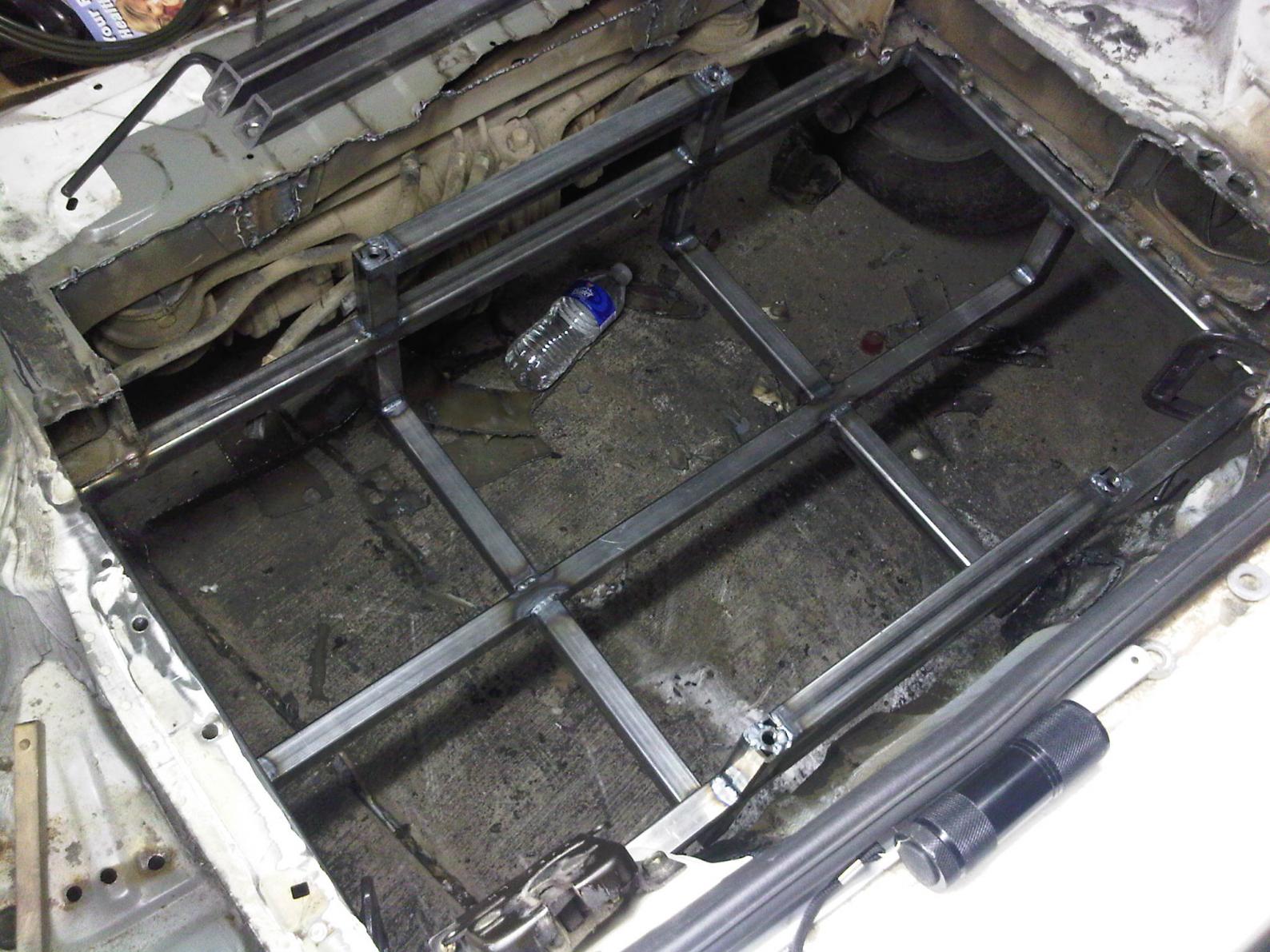
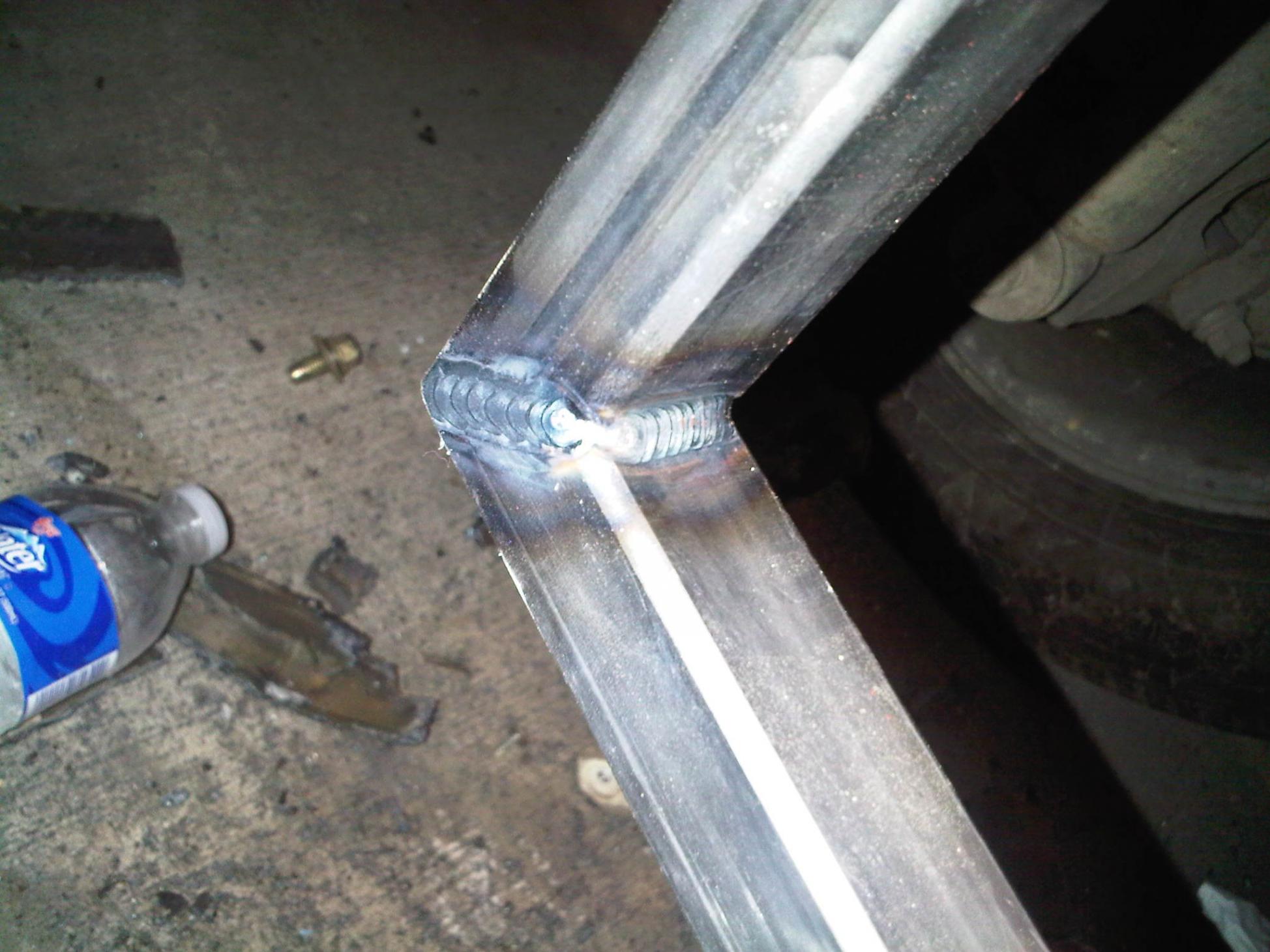


thanks thanks, i got the metal cut to box in the frame rails, ill finish grinding to get fitment real tight and ill weld those in, then i have to paint the cage/exposed metal. tank in and start on the fuel lines
everything seems study enough, i sat in the thing without any issues and im 200lbs, i know it will be a different story under race conditions...but the weight of 20 gallons of e85 + weight of the fuel cell complete with the weight of the cage came to 190lbs give or take
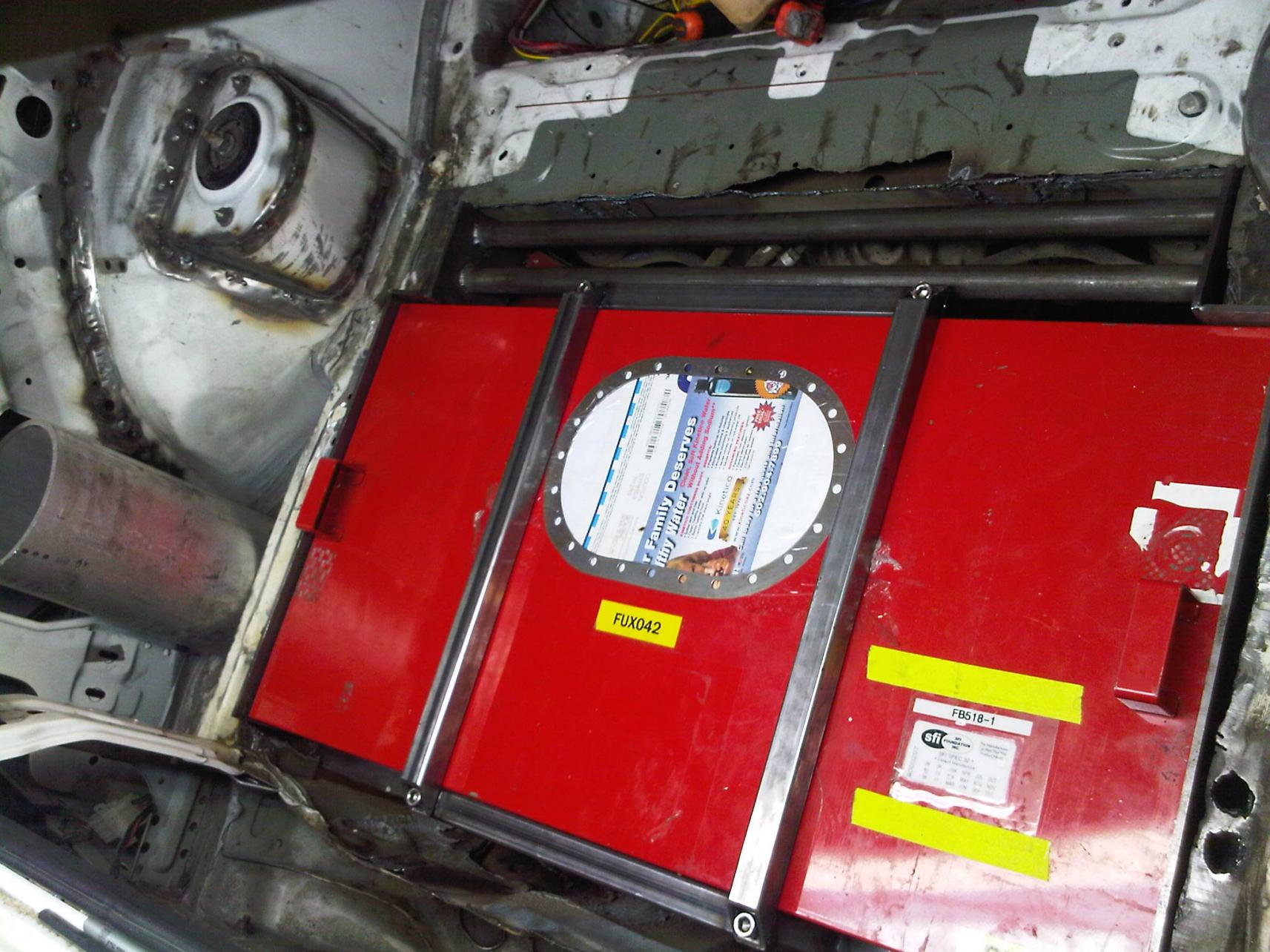
fuel cell is pretty much in, just have to remove it and run a quick bead around the frame rail pieces, shouldnt be ANY issues with removing part of the frame rail


well let me clarify a few things...
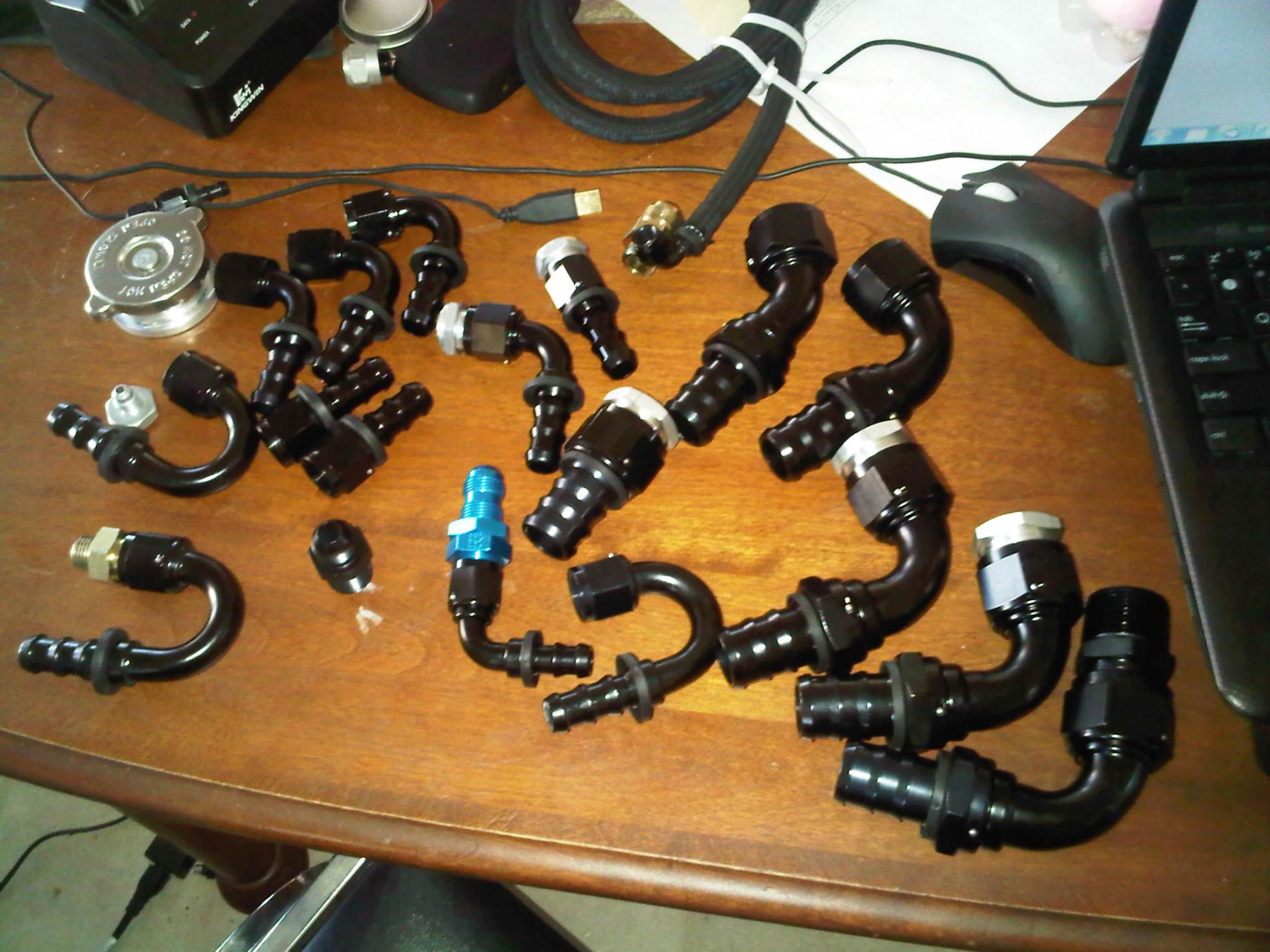
1) they arent barb fittings
2) they arent twist-lock fittings
3) they ARE AN fittings
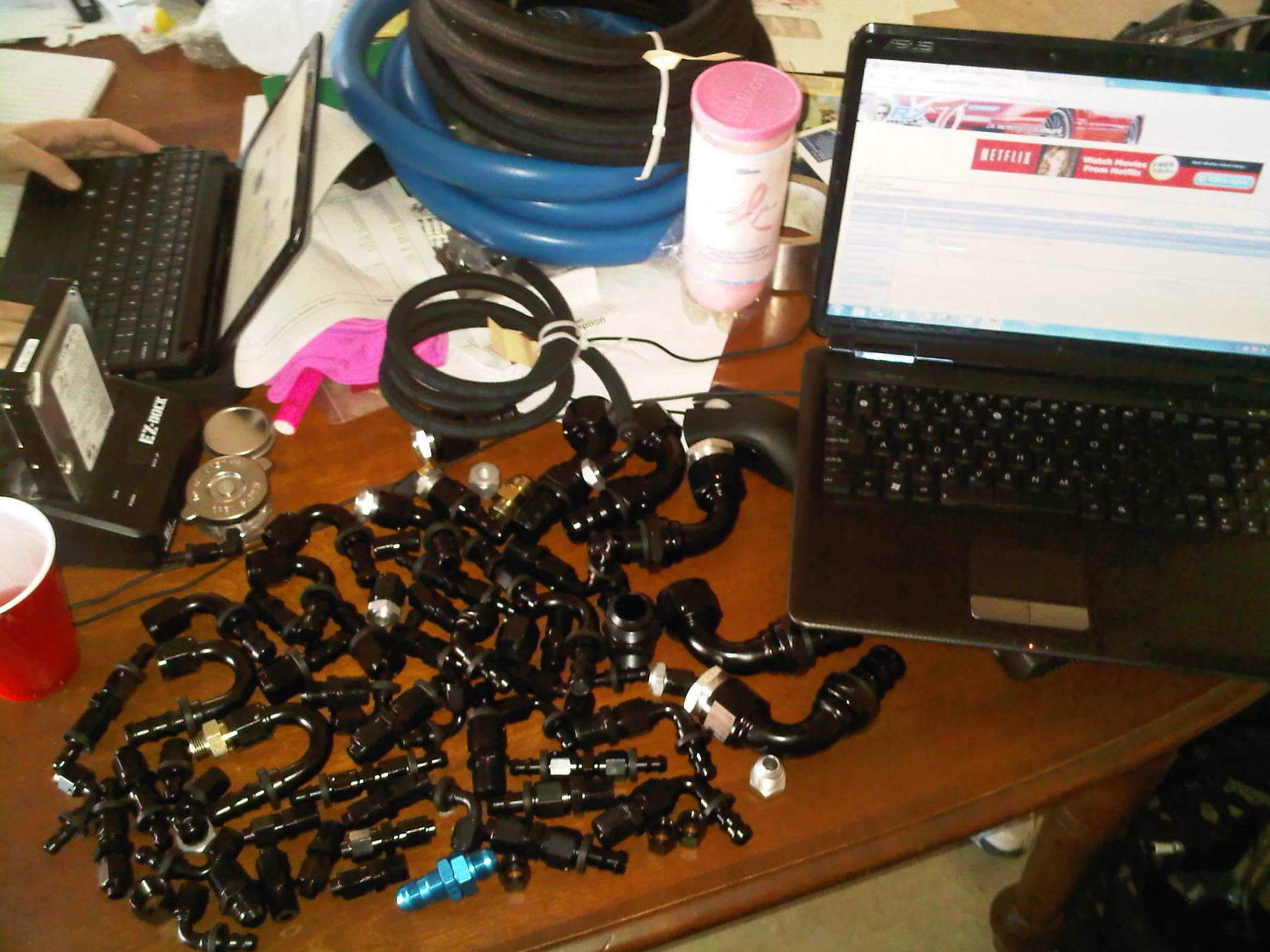
these are parker style push-lok AN fittings
1) they are less expensive
2) they are better engineered for what im doing (nothing in my car that uses these will be over 200psi)
3) they are less expensive, think about it..if im over $1200 deep into these fittings..imagine with the normal fittings would cost if i bought high quality fittings
dont let anyone fool you..these fittings are very high quality and work great without any leaks at all....stainless steel lines are bad, they are very abrasive and can literally saw holes through things if there is any movement
im using all race-lite hose which is retarded light-weight
so whats the reason you hate them? cant get the hose onto the push-lok fitting? ill let ya know a little secret get a metal pot, buy a "stinger" to warm/boil the water and keep it near your work on a table...dip the end of the hose in the water for 10 seconds then push it on the hose fitting and thats it you are done
you dont need hose clamps, and these things are good for 200psi
anymore questions let me know! push-lok are a great option despite many of the misguided thoughts any of you might have to clarify..THESE ARE NOT THE TYPICAL BARB FITTING NOR ARE THEY TWIST-LOCK FITTINGS!!!
1) they arent barb fittings
2) they arent twist-lock fittings
3) they ARE AN fittings
these are parker style push-lok AN fittings
1) they are less expensive
2) they are better engineered for what im doing (nothing in my car that uses these will be over 200psi)
3) they are less expensive, think about it..if im over $1200 deep into these fittings..imagine with the normal fittings would cost if i bought high quality fittings
dont let anyone fool you..these fittings are very high quality and work great without any leaks at all....stainless steel lines are bad, they are very abrasive and can literally saw holes through things if there is any movement
im using all race-lite hose which is retarded light-weight
so whats the reason you hate them? cant get the hose onto the push-lok fitting? ill let ya know a little secret
get a metal pot, buy a "stinger" to warm/boil the water and keep it near your work on a table...dip the end of the hose in the water for 10 seconds then push it on the hose fitting and thats it you are doneyou dont need hose clamps, and these things are good for 200psi
anymore questions let me know! push-lok are a great option despite many of the misguided thoughts any of you might have
to clarify..THESE ARE NOT THE TYPICAL BARB FITTING NOR ARE THEY TWIST-LOCK FITTINGS!!!

Joined: Feb 2001
Posts: 29,798
Likes: 128
From: London, Ontario, Canada
I just hate them because it is a real ***** to push the hose on. Socket AN fittings clamp just so easily, once you wrestle the hose into the socket, of course. Twist-Lock, Push-Lock, same difference judging by the appearance of the fittings.
Twist-Lock, Push-Lock, same difference judging by the appearance of the fittings.
if you have ever had to push a hose into the regular socket fitting..then you know its no easier than these lol....next time grab some of these fittings, use the boiling water trick...you will NEVER go back to any other type of fitting


No offense here, but just wanted to say I tried using that welding-the-races trick for the front bearings on my car, and I didn't find it any more useful than the method I used otherwise. The first bearing I did, I went down the street from work and traded a 6-pack for the guy to weld the races. It took probably 20-30 minutes total including the time to walk down there. Then the second one I did after-hours and the welder had left so I went back and used an acetylene torch to heat just the bearing races for about 10-15 seconds - I didn't want to melt any aluminum or anything - and it simply tapped out in about 5 seconds with a small punch that I made. I heated and bent a punch/chisel to allow it to get inside the hub properly and tap the race from the opposite side. I wasn't timing anything but it was certainly less hassle heating the race than it was to locate a welder or someone to weld it for me.
Either way, both bearings are super-quiet now - I no longer sound like a tractor trailer on the highway. And I saved $800++ thanks to you and Aaron Cake for posting that there are aftermarket bearings; I probably wouldn't have even checked otherwise, since Mazda's EPC doesn't list the bearings separately.
Either way, both bearings are super-quiet now - I no longer sound like a tractor trailer on the highway. And I saved $800++ thanks to you and Aaron Cake for posting that there are aftermarket bearings; I probably wouldn't have even checked otherwise, since Mazda's EPC doesn't list the bearings separately.
Last edited by CS13B; Jun 15, 2010 at 10:18 PM.
hell ya dude thats what i like to hear! there are lots of way to get stuff done, most times there are more than a few RIGHT ways to accomplish the task...
i personally like to TIG weld the inside of the race 360 degrees to the starting point and slam it on the metal table....kind of hard to weld through that thick piece of steel at 130amps, you would need 200+ amps to even make a mark on the back side
i personally like to TIG weld the inside of the race 360 degrees to the starting point and slam it on the metal table....kind of hard to weld through that thick piece of steel at 130amps, you would need 200+ amps to even make a mark on the back side