When you click on links to various merchants on this site and make a purchase, this can result in this site earning a commission. Affiliate programs and affiliations include, but are not limited to, the eBay Partner Network.
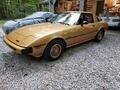
Just acquired our "new" 1983 RX-7. This is a project car for my son and I to work on together. Excited to have found this forum and eager to learn from this community.
The car is in fair condition and will start/run with some assistance, but the emissions have been deleted and we are attempting to make sense of the necessary modifications needed to ensure the best runnng condition possible. It seems like some fuel issues alongside vacuum leaks are present. I have never worked on a carb this complex.
I am looking for any resources (guides, etc) that might be out there on how to do an emissions delete, so that I can trace back what has been done already and try to complete accurately. It is clear parts have been removed or disconnected from the carb, and I cannot make much sense of it.
Much thanks in advance for any suggestions or reccomendations.
Thank you. These resources are great, really appreciate it.
So now that I've searched the forum for "rats nest" vs emissions delete, I am learning that this is not overly favorable by many, and prone to issues/challenges (perhaps where the previous owner left off). I see there was once a tutorial on FAQ, but all links I've found are dead - 404.
Is locating parts and returning to a stock setup something to consider/possible?
Doing a rats nest delete or emissions change on a stock 12A with the nikki carb can be done and have great drivability if done well. Its a challenge to do it well. Reversing what you have is also a huge challenge. You would need to take a lot of pics and show us what is there to determine what you need to reinstall or replace.
Well, sounds like we are stuck with a challenge then either way, lol. I'm working my way through the carb manual... Much thanks in advance for any savvy eyes that could take a look over these photos and provide thoughts/recommendations. I can take more if needed.
The problem is that when removing the emissions rack on a car with a stock carburetor, things typically don't go as planned and wr have seen many running issues and terrible fuel economy. Removing the emissions does not free up any hidden horsepower, it only serves to complicate things on an otherwise stock car.
Now if you have an aftermarket carburetor and intake manifold, the emissions system is worthless and should be removed.
You base plate looks to be have had an ear broken off of it and the screws in the vacuum lines are just horrible. Parts are missing as well. All of the things on the carburetor are not only for smooth operation, but are also for the vacuum operated secondaries. No doubt those are not functional, and thus the car is slower.
Understood and thanks for the review & comments. We are learning a lot while attempting to come up with our plan on how to move forward. Would you recommend cleaning up the sub-par job on this carb or abandon outright for a new and/or aftermarket one? If cleaning up, what missing parts would you add back; all or just some? Our goal is to get to a good running condition only. Not looking to max HP or anything else to that effect.
Man, that carb setup is a mess. So many hacks. I would start by sourcing an intake and carb setup for the model year you have along with the entire rats nest from a good running car or a recycler. What you have there implies a lot of really poor tinkering has been done and may never be easily undone. Or go with a webber down draft or even a DCOE side draft.
So I am working through this thing, manual in hand, trying to make sense of what's what. Briefly, can someone tell me what this is here (yellow circle)? Thanks in advance.
FYI. According to the Mazda Carburetor Manual you have either an 84 or 85, not an 83.
See the insert in the upper-right.
84-85 added the #2 Main Air Bleed. There are a few differences between the 83 and 84/85 in the fuel jets and air bleed specifications chart (Section E)
I also attached an image of a stock 84 showing the vacuum tubes on the right side, and left side, and the big hose is question.
Right Side
Big vacuum hose left side.
Vacuum lines left.
Vacuum lines right.
I'm good at following directions without really understanding what everything does.
So I am working through this thing, manual in hand, trying to make sense of what's what. Briefly, can someone tell me what this is here (yellow circle)? Thanks in advance.
And this?
I believe that is where the Coasting valve connects to the Shutter valve inside the intake manifold.
Image from the 85 FSM, Emissions chapter:
The Coasting valve was the first thing I replaced and the first time I took off the carb.
Thanks so much. Yes, I also realized following review of the carb manual that this is not the original carb for the car, and looks like an 84 or 85. I am most likely going to find a replacement for this hot mess, but in the meantime my son and I are making the best out of understanding what we have in place now.
It does run, although dies at idle. The first image I posted with the yellow circle around the hose leading to nowhere just started to leak gas when the car is key-on. Fuel pump looks to be aftermarket and runs constant. The second image of what seems to be the coasting/shutter valve deal (much thanks Tim) is all but hanging on by a thread.
If anyone has any addiitonal insights on how we might ensure all appropriate vacuum lines that should be plugged following a rat nest deletion are correct, why that hose is leaking fuel (and what it is), or any other thoughts, we will take them!
Fuel pump looks to be aftermarket and runs constant.
Mine runs whenever the key is on. Which is what I want.
Check to see if a jumper has been installed under the right side of the driver's dash. That is how you check the output and pressure.
Image: Page 47 in the Fuel and Emissions chapter of the 85 FSM
So I am working through this thing, manual in hand, trying to make sense of what's what. Briefly, can someone tell me what this is here (yellow circle)? Thanks in advance.
And this?
That is the bowl vent and is normally connected to the aircleaner so filtered air can balance the air pressure in the bowls. It prevents the bowls from pressurizing when hot and also if plugged will cause the bowls to siphon out when parked and cause flooding on the next startup. I had that plugged for a while and didn't realize it was causing my hot restart issues until I revented it to the air cleaner.
That is the bowl vent and is normally connected to the air cleaner so filtered air can balance the air pressure in the bowls.
84 with rats nest still installed.
My big hose (A) goes to the large tube on the rats nest.
There is a vacuum line (B) which is large at the air cleaner, and small at the rats nest.
With the deletion of the rats nets would (A) then be connected to air cleaner where (B) is currently?
That would explain for me why (B) was a custom replacement.