


Carbon Ceramic Brakes (CCB) interest


 Carbon Ceramic Brakes (CCB) interest
Hi Guys,
I've been looking to see if I could get a carbon ceramic brakes developed for the FD. I currently work as an aerospace engineer and we've been using them in aircraft landing gear for a while. Long story short, I've been in touch with the manufacturer of the carbon ceramic brakes for our landing gear and it turns out they also as the suppleirs for brembo (who supplies ferrari, porsche, and corvette zr-1).
After looking at some designs I was quoted $2200 per rotor. Now I know that sounds ridiculous but considering that OEM from porsche/ferrari is $8000 per rotor, this is a huge cost savings.
Here are the advantages of carbon ceramic brakes:
During an aggressive application of the brakes, the rotor temperature may rise to 1000-degrees C (1800-degrees F) before stabilizing in the 500-750-degrees C (900-1400-degrees F) range. The host vehicle must be carefully developed to route vast amounts of heat away from the spinning CCM rotors.
CCM has 85 percent higher thermal capacity than iron and more than twice the thermal radiance. But since it has less than one-third of iron's density and only 40-percent of iron's conductivity, the heat accumulation in a CCM rotor is far lower, a boon to braking efficiency. In essence, CCM heats up and cools off much faster than iron. Thermal and fluid mechanical analyses are used to configure a CCM rotor's radial and lateral vent channels.
CCM rotors provide higher heat (fade) resistance, greater stopping torques, and significantly longer life than cast iron brake rotors. Their friction coefficient doesn't change much with temperature. They are also about half the weight of iron rotors, a characteristic with three-fold benefits: Acceleration is enhanced because of CCM's lower rotating inertia and because the car's total mass is reduced. The lighter unsprung weight with CCM rotors yields handling gains.
CCM rotors do not corrode and their normal service life is nearly 100,000 miles according to Brembo. In racing use-such as Ferrari Challenge-their useful life is shorter but still more than a 1000 miles of flat-out running.
An SAE white paper on carbon ceramic brakes cooling efficiency:
http://www.sae.org/events/bce/presen...6wuellner3.pdf
Anyone else interested in getting a set for the track?
I've been looking to see if I could get a carbon ceramic brakes developed for the FD. I currently work as an aerospace engineer and we've been using them in aircraft landing gear for a while. Long story short, I've been in touch with the manufacturer of the carbon ceramic brakes for our landing gear and it turns out they also as the suppleirs for brembo (who supplies ferrari, porsche, and corvette zr-1).
After looking at some designs I was quoted $2200
per rotor. Now I know that sounds ridiculous but considering that OEM from porsche/ferrari is $8000 per rotor, this is a huge cost savings.Here are the advantages of carbon ceramic brakes:
During an aggressive application of the brakes, the rotor temperature may rise to 1000-degrees C (1800-degrees F) before stabilizing in the 500-750-degrees C (900-1400-degrees F) range. The host vehicle must be carefully developed to route vast amounts of heat away from the spinning CCM rotors.
CCM has 85 percent higher thermal capacity than iron and more than twice the thermal radiance. But since it has less than one-third of iron's density and only 40-percent of iron's conductivity, the heat accumulation in a CCM rotor is far lower, a boon to braking efficiency. In essence, CCM heats up and cools off much faster than iron. Thermal and fluid mechanical analyses are used to configure a CCM rotor's radial and lateral vent channels.
CCM rotors provide higher heat (fade) resistance, greater stopping torques, and significantly longer life than cast iron brake rotors. Their friction coefficient doesn't change much with temperature. They are also about half the weight of iron rotors, a characteristic with three-fold benefits: Acceleration is enhanced because of CCM's lower rotating inertia and because the car's total mass is reduced. The lighter unsprung weight with CCM rotors yields handling gains.
CCM rotors do not corrode and their normal service life is nearly 100,000 miles according to Brembo. In racing use-such as Ferrari Challenge-their useful life is shorter but still more than a 1000 miles of flat-out running.
An SAE white paper on carbon ceramic brakes cooling efficiency:
http://www.sae.org/events/bce/presen...6wuellner3.pdf
Anyone else interested in getting a set for the track?


 Maybe in a few years

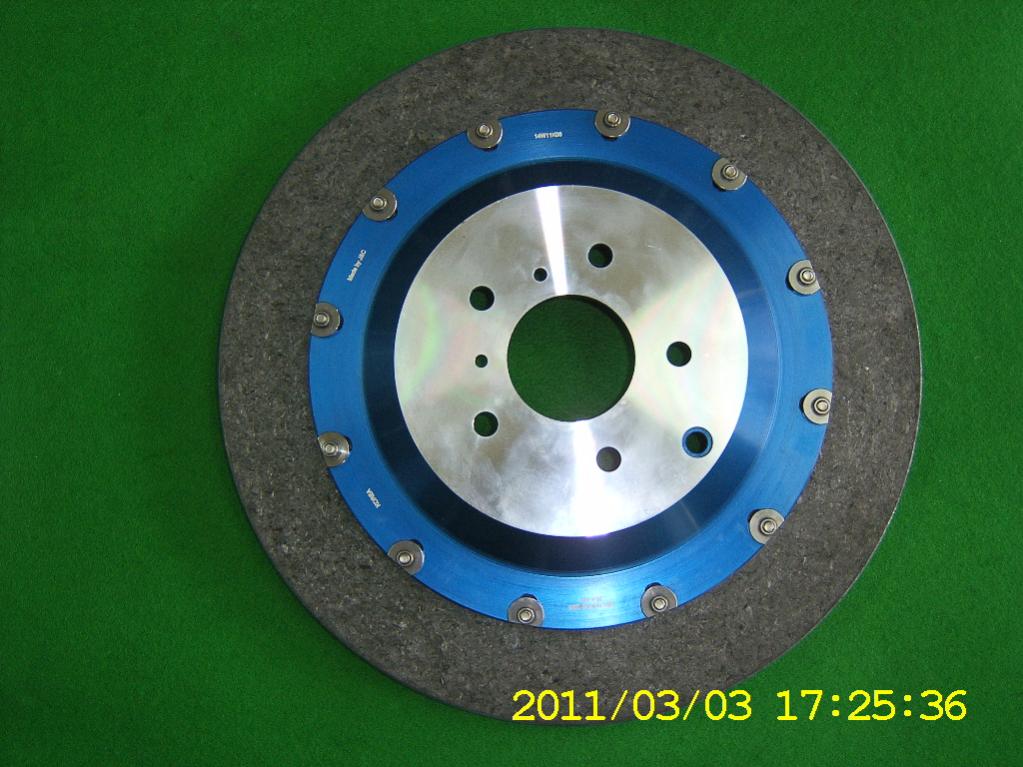
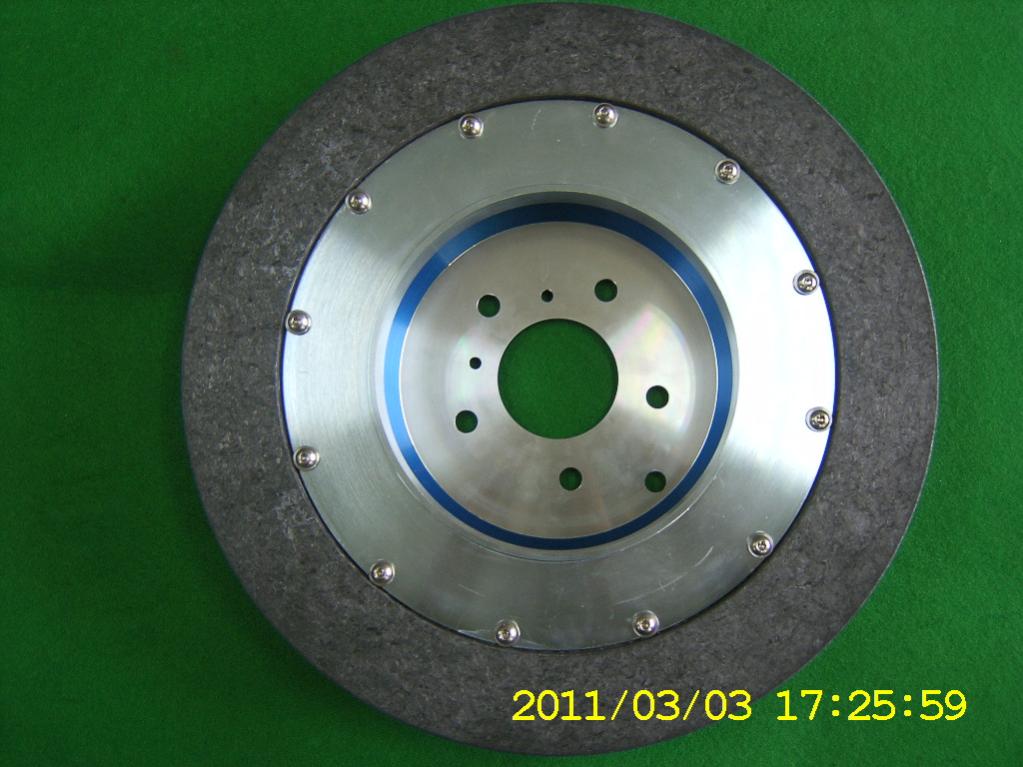

Sent them an email to try to find volume pricing, but unless there is significant volume, i.e. 200+ rotors a year I don't forsee a significant price reduction.
Here is a litte more information on CCB's (taken from edmunds):
First, carbon fibers are blended with a resin containing carbon and silicon. The compound is then pressed into a mold to create the basic disc shape, including its internal cooling vents. Next, using carefully controlled heat (up to 3,000 degrees Fahrenheit), the resin in the disc is converted to silicon carbide, a material nearly as hard as diamond. This is the "ceramic" in "carbon ceramic." Finally, the center section of the brake rotor — typically made of stainless steel or aluminum — is pinned or bolted to the ceramic composite disc.
Specially formulated brake pads are used in combination with the ceramic composite discs. This is an important point: Whether we're talking about CCB or "conventional" brakes, the pads and the rotors work together to do the braking.
The benefits of CCB begin with the fact that they're lightweight — the discs being approximately 50 percent lighter than those made of cast iron. In the case of the Boxster S, checking the PCCB option drops the overall vehicle weight by 34.4 pounds.
Well, when it comes to vehicle dynamics, not all weight is created equal. The brakes — like the wheels and tires, the spindles and approximately half the weight of the suspension components — are unsprung weight, the portion of the vehicle's weight that isn't supported by its suspension.
Lightweight CCBs also improve a vehicle's acceleration, but the relationship is not straightforward. Because the brake rotors are, well, rotating, they require more energy to accelerate and decelerate than a non-rotating element of equivalent weight
Ceramic composite rotors are extremely durable. In fact, manufacturers claim that they'll never need replacement — at least with "normal" driving. They're also resistant to the kind of warping that leads to pedal pulsation — merely an annoyance in the "real world," but a noticeable performance issue on the track.
The single greatest benefit of CCBs, however, is their resistance to brake fade. With repeated use — especially at high speeds — brake temperatures can rise dramatically, causing performance to drop off. This is a common occurrence during racing, but can also occur if you ride your brakes down a long mountain grade rather than downshifting to take advantage of engine braking. In either case, the consequences can be disastrous. Unlike conventional brakes, CCBs are designed for outstanding performance at very high temperatures
Here is a litte more information on CCB's (taken from edmunds):
First, carbon fibers are blended with a resin containing carbon and silicon. The compound is then pressed into a mold to create the basic disc shape, including its internal cooling vents. Next, using carefully controlled heat (up to 3,000 degrees Fahrenheit), the resin in the disc is converted to silicon carbide, a material nearly as hard as diamond. This is the "ceramic" in "carbon ceramic." Finally, the center section of the brake rotor — typically made of stainless steel or aluminum — is pinned or bolted to the ceramic composite disc.
Specially formulated brake pads are used in combination with the ceramic composite discs. This is an important point: Whether we're talking about CCB or "conventional" brakes, the pads and the rotors work together to do the braking.
The benefits of CCB begin with the fact that they're lightweight — the discs being approximately 50 percent lighter than those made of cast iron. In the case of the Boxster S, checking the PCCB option drops the overall vehicle weight by 34.4 pounds.
Well, when it comes to vehicle dynamics, not all weight is created equal. The brakes — like the wheels and tires, the spindles and approximately half the weight of the suspension components — are unsprung weight, the portion of the vehicle's weight that isn't supported by its suspension.
Lightweight CCBs also improve a vehicle's acceleration, but the relationship is not straightforward. Because the brake rotors are, well, rotating, they require more energy to accelerate and decelerate than a non-rotating element of equivalent weight
Ceramic composite rotors are extremely durable. In fact, manufacturers claim that they'll never need replacement — at least with "normal" driving. They're also resistant to the kind of warping that leads to pedal pulsation — merely an annoyance in the "real world," but a noticeable performance issue on the track.
The single greatest benefit of CCBs, however, is their resistance to brake fade. With repeated use — especially at high speeds — brake temperatures can rise dramatically, causing performance to drop off. This is a common occurrence during racing, but can also occur if you ride your brakes down a long mountain grade rather than downshifting to take advantage of engine braking. In either case, the consequences can be disastrous. Unlike conventional brakes, CCBs are designed for outstanding performance at very high temperatures
So I've heard back from the manufacturer, and here is the cost brake down.
In fact, we are selling Disc to Europan countries at $2,500-2,800/each. Of course, it is 380-400mm.
I will post pictures soon of the calipers they make for Brembo. They are a korean company called J&C.
In fact, we are selling Disc to Europan countries at $2,500-2,800/each. Of course, it is 380-400mm.
I would like to suggest you as below.
1. $2,100.00 for 100
2. $2,000.00 101-200
3. At the above price for 320-360mm, but
$2,300.00 for more than 380mm.
By the way, for the caliper that we have developed already, it shall be $250.00/each.
1. $2,100.00 for 100
2. $2,000.00 101-200
3. At the above price for 320-360mm, but
$2,300.00 for more than 380mm.
By the way, for the caliper that we have developed already, it shall be $250.00/each.
Trending Topics
Wangan Nasty

Joined: Apr 2006
Posts: 1,779
Likes: 3
From: Irvine, Southern California
Most Porsche and Ferrari owners who race or DE their cars ditch the CCBs for Steel brakes for cost effective performance. Not to mention, most homologated racecars use steel brakes as well.
There are also several types of "CCM" brakes. F1 and LMP1/2/GT1 CCM brakes are a true 3D design and cost a lot more than the standard CCM variant.
Steel brakes are cost effective and are more than up to the task of stopping even some of the fastest and high brake energy applications.
There are also several types of "CCM" brakes. F1 and LMP1/2/GT1 CCM brakes are a true 3D design and cost a lot more than the standard CCM variant.
Steel brakes are cost effective and are more than up to the task of stopping even some of the fastest and high brake energy applications.
Most Porsche and Ferrari owners who race or DE their cars ditch the CCBs for Steel brakes for cost effective performance. Not to mention, most homologated racecars use steel brakes as well.
There are also several types of "CCM" brakes. F1 and LMP1/2/GT1 CCM brakes are a true 3D design and cost a lot more than the standard CCM variant.
Steel brakes are cost effective and are more than up to the task of stopping even some of the fastest and high brake energy applications.
There are also several types of "CCM" brakes. F1 and LMP1/2/GT1 CCM brakes are a true 3D design and cost a lot more than the standard CCM variant.
Steel brakes are cost effective and are more than up to the task of stopping even some of the fastest and high brake energy applications.
Curreently there are only 4 companies in the world I know of that make CCB's and production volumes are around 35,000 rotors per year world wide versus steel rotors which are 4-5 million a year. Looking at this it's easy to see supply and cost issues for most racing series.
In higher performance series like F1 Carbon-Carbon brakes are used due to increased braking performance and even lower weight. These discs are similar to the ones used in aircraft. However, the disadvantage of these brakes is the low life and the need to be pre-warmed in order to acheive good braking co-efficients.
The reason to use Carbon Ceramic is that it has the incredible resistance to brake fade and warping of rotors but retains incredibly high wear resistance. The wear resistance is important as it allows the rotors to be run for entire seasons without being changed where carbon-carbon rotors need to be replaced often. Wear resistance isn't a issue in racing series like F1 where everything is constantly being changed and everything costs incredible amounts money anyway. For these race teams the reduced sprung weight and increased peak braking power is perfered.
While I believe that steel rotors are more the 'adequate' for most applications, there isn't a single racer with them that hasn't experience brake fade or had to apply brakes earlier or had to take fewer hot laps because of their brakes cooking. This is the single greatest reason to get CCB's, is that it not only is extremely resistant to brake fade (retains 98% braking power up to thermal limit!). Not to mention the fact that it also significantly reduces the thermal transfer to the brake fluid.

My understanding of the "promise" of ceramic brakes was that, because of the fade resistance, they wouldn't need different pads for street/track, and would last longer.
For a race car obviously that wouldn't matter, but for a street car that is tracked, not having to swap pads would be pretty sweet if that's actually how it worked. At $3-$400/set, it wouldn't take too many sets of track pads to pay for expensive *** ceramic rotors.
My sense is though, since everybody gets rid of them, maybe it doesn't actually work that way?
For a race car obviously that wouldn't matter, but for a street car that is tracked, not having to swap pads would be pretty sweet if that's actually how it worked. At $3-$400/set, it wouldn't take too many sets of track pads to pay for expensive *** ceramic rotors.
My sense is though, since everybody gets rid of them, maybe it doesn't actually work that way?
My understanding of the "promise" of ceramic brakes was that, because of the fade resistance, they wouldn't need different pads for street/track, and would last longer.
For a race car obviously that wouldn't matter, but for a street car that is tracked, not having to swap pads would be pretty sweet if that's actually how it worked. At $3-$400/set, it wouldn't take too many sets of track pads to pay for expensive *** ceramic rotors.
My sense is though, since everybody gets rid of them, maybe it doesn't actually work that way?
For a race car obviously that wouldn't matter, but for a street car that is tracked, not having to swap pads would be pretty sweet if that's actually how it worked. At $3-$400/set, it wouldn't take too many sets of track pads to pay for expensive *** ceramic rotors.
My sense is though, since everybody gets rid of them, maybe it doesn't actually work that way?
CCM rotors do not corrode and their normal service life is nearly 100,000 miles according to Brembo. In racing use-such as Ferrari Challenge-their useful life is shorter but still more than a 1000 miles of flat-out running.
 . The other advantage is the significant reduction of brake dust so maintenance is simpler and cleaner.
Wangan Nasty
Joined: Apr 2006
Posts: 1,779
Likes: 3
From: Irvine, Southern California
I definitely agree with steel rotors being more cost effective when you compare $8000 vs $100-$400 for a steel version. Most race cars also use steel rotors for the same reason.
Curreently there are only 4 companies in the world I know of that make CCB's and production volumes are around 35,000 rotors per year world wide versus steel rotors which are 4-5 million a year. Looking at this it's easy to see supply and cost issues for most racing series.
In higher performance series like F1 Carbon-Carbon brakes are used due to increased braking performance and even lower weight. These discs are similar to the ones used in aircraft. However, the disadvantage of these brakes is the low life and the need to be pre-warmed in order to acheive good braking co-efficients.
The reason to use Carbon Ceramic is that it has the incredible resistance to brake fade and warping of rotors but retains incredibly high wear resistance. The wear resistance is important as it allows the rotors to be run for entire seasons without being changed where carbon-carbon rotors need to be replaced often. Wear resistance isn't a issue in racing series like F1 where everything is constantly being changed and everything costs incredible amounts money anyway. For these race teams the reduced sprung weight and increased peak braking power is perfered.
While I believe that steel rotors are more the 'adequate' for most applications, there isn't a single racer with them that hasn't experience brake fade or had to apply brakes earlier or had to take fewer hot laps because of their brakes cooking. This is the single greatest reason to get CCB's, is that it not only is extremely resistant to brake fade (retains 98% braking power up to thermal limit!). Not to mention the fact that it also significantly reduces the thermal transfer to the brake fluid.
Curreently there are only 4 companies in the world I know of that make CCB's and production volumes are around 35,000 rotors per year world wide versus steel rotors which are 4-5 million a year. Looking at this it's easy to see supply and cost issues for most racing series.
In higher performance series like F1 Carbon-Carbon brakes are used due to increased braking performance and even lower weight. These discs are similar to the ones used in aircraft. However, the disadvantage of these brakes is the low life and the need to be pre-warmed in order to acheive good braking co-efficients.
The reason to use Carbon Ceramic is that it has the incredible resistance to brake fade and warping of rotors but retains incredibly high wear resistance. The wear resistance is important as it allows the rotors to be run for entire seasons without being changed where carbon-carbon rotors need to be replaced often. Wear resistance isn't a issue in racing series like F1 where everything is constantly being changed and everything costs incredible amounts money anyway. For these race teams the reduced sprung weight and increased peak braking power is perfered.
While I believe that steel rotors are more the 'adequate' for most applications, there isn't a single racer with them that hasn't experience brake fade or had to apply brakes earlier or had to take fewer hot laps because of their brakes cooking. This is the single greatest reason to get CCB's, is that it not only is extremely resistant to brake fade (retains 98% braking power up to thermal limit!). Not to mention the fact that it also significantly reduces the thermal transfer to the brake fluid.
2) NASCAR Sprint Cup brake disks get up to 900-1000 C Hot. Nationwide, and other series see less temperature, but still in the 800-900 C range. Not to mention these are bulk temperatures meaning they stay hot due to poor cooling(the rotors glow orange in the pits). Sports cars on the other hand cool down right after the brake event due to cooling, aerodynamics, and do not see the same bulk temperatures as US Stock Cars see. These guys run steel brakes.
Pad and disk technology for steel brakes has come a long way since 3-4 or 5 years ago.
There is no FD that gets their front brake temperatures anywhere close to 800 C.
A good pad, and disk upgrade on the factory or 99 spec calipers on an FD will be more than enough for even hard braking applications.
3) If boiling brake fluid is an issue, use a proper high grade brake fluid that does not boil unless you get to the 620 C range.
4) For a regular club racer, the cost/performance ratio of steel vs CCB makes absolutely 0 sense. Steel brake pads/disks/calipers these days can run to unreal temperatures with little to no fade. The technology is there and people are using it.
5) A lot of teams run CCB brakes more for aerodynamic reasons than for brake cooling reasons. Because these days, steel brakes can take sustained high temperatures. However, running more ducts to cool steel brakes does disrupt aerodynamics. A non issue on a street car.
6) The Rx7 is not a brake challenged vehicle unlike other newer cars that are heavier, have poorer cooling to the brakes, have more aggressive ABS units, and run larger tire sizes. Even those guys run steel brakes.
1) F1 Carbon Brakes are made by 2 companies: Hitco and Carbon Industries. They also are made completely different than these disks and also cost around $15,000 a piece.
2) NASCAR Sprint Cup brake disks get up to 900-1000 C Hot. Nationwide, and other series see less temperature, but still in the 800-900 C range. Not to mention these are bulk temperatures meaning they stay hot due to poor cooling(the rotors glow orange in the pits). Sports cars on the other hand cool down right after the brake event due to cooling, aerodynamics, and do not see the same bulk temperatures as US Stock Cars see. These guys run steel brakes.
Pad and disk technology for steel brakes has come a long way since 3-4 or 5 years ago.
There is no FD that gets their front brake temperatures anywhere close to 800 C.
A good pad, and disk upgrade on the factory or 99 spec calipers on an FD will be more than enough for even hard braking applications.
3) If boiling brake fluid is an issue, use a proper high grade brake fluid that does not boil unless you get to the 620 C range.
4) For a regular club racer, the cost/performance ratio of steel vs CCB makes absolutely 0 sense. Steel brake pads/disks/calipers these days can run to unreal temperatures with little to no fade. The technology is there and people are using it.
5) A lot of teams run CCB brakes more for aerodynamic reasons than for brake cooling reasons. Because these days, steel brakes can take sustained high temperatures. However, running more ducts to cool steel brakes does disrupt aerodynamics. A non issue on a street car.
6) The Rx7 is not a brake challenged vehicle unlike other newer cars that are heavier, have poorer cooling to the brakes, have more aggressive ABS units, and run larger tire sizes. Even those guys run steel brakes.
2) NASCAR Sprint Cup brake disks get up to 900-1000 C Hot. Nationwide, and other series see less temperature, but still in the 800-900 C range. Not to mention these are bulk temperatures meaning they stay hot due to poor cooling(the rotors glow orange in the pits). Sports cars on the other hand cool down right after the brake event due to cooling, aerodynamics, and do not see the same bulk temperatures as US Stock Cars see. These guys run steel brakes.
Pad and disk technology for steel brakes has come a long way since 3-4 or 5 years ago.
There is no FD that gets their front brake temperatures anywhere close to 800 C.
A good pad, and disk upgrade on the factory or 99 spec calipers on an FD will be more than enough for even hard braking applications.
3) If boiling brake fluid is an issue, use a proper high grade brake fluid that does not boil unless you get to the 620 C range.
4) For a regular club racer, the cost/performance ratio of steel vs CCB makes absolutely 0 sense. Steel brake pads/disks/calipers these days can run to unreal temperatures with little to no fade. The technology is there and people are using it.
5) A lot of teams run CCB brakes more for aerodynamic reasons than for brake cooling reasons. Because these days, steel brakes can take sustained high temperatures. However, running more ducts to cool steel brakes does disrupt aerodynamics. A non issue on a street car.
6) The Rx7 is not a brake challenged vehicle unlike other newer cars that are heavier, have poorer cooling to the brakes, have more aggressive ABS units, and run larger tire sizes. Even those guys run steel brakes.
As you've mentioned, cast iron rotors have progressed a long way, with variable vane and other technologies to ensure proper cooling. The braking power that can be applied to the stock RX7 is not great enough to cook most after market rotors of today. However, as down force is increased, suspension is upgraded, and race slicks are applied, the braking limit (limit of cohesion) of the car also rises. With the increase of braking power (by way of aftermarket calipers and master/slave cylinder) there is more heat to dissipate. As the rest of the car gets 'faster' the brakes need to follow suit for the car to stay balanced.
Here is a article about typical rules of thumb for brakes:
http://racingarticles.com/article_racing-27.html
Cast iron rotors are the most common and readily available for many applications. Cast Iron rotors should not operate at a bulk temperature over 610 C and above 3000 rpm.
http://sports.espn.go.com/rpm/nascar...ory?id=3628852
Which states that you can get peak temperatures of 1000+ but not sustained temperatures. It also states they are using aluminium rotors (didn't read it completely so I could be wrong). The other point is that these rotors are changed at the end of each session. Even assuming that they are only 100 per rotor, after a session of running these you're running costs will be comparable to that of a CCB.
Here is an article from stoptech talking about braking http://www.stoptech.com/tech_info/wp...rakedisk.shtml

Radioactive Rotary Rocket
Joined: Aug 2005
Posts: 1,061
Likes: 1
From: Minneapolis, MN
I could see these being a worthwhile investment just for the cost savings if they really last 100,000 miles. That's pretty amazing considering I can't get 50 track miles out of a set of iron rotors.
But a set of these would run me more than I paid for my entire car. I'm afraid I can't afford them now, but I will keep them in mind if I meet some friends who need something like this. But if you could find me a set of racing tires that last for 100,000 miles I would be beating down your door.
But a set of these would run me more than I paid for my entire car. I'm afraid I can't afford them now, but I will keep them in mind if I meet some friends who need something like this. But if you could find me a set of racing tires that last for 100,000 miles I would be beating down your door.
Agreed on all, except that the anti-fade capabilities, torque, etc. are all predicated on running track pads on a street car that you wouldn't want to run on the street, and that don't last long on track.
The advantages to ceramic, IF that's the way it worked, would be in not having to swap pads all the time. Sounds like a minor thing, but if you do a lot of events, it's really not, and especially when swapping in pads that cost 3-400 a set, and only last 4-5 days on track.
Also, getting good brake ducts on an FD is tough, because there's really no place to route the hoses that the wheel won't rub, and there's no decent off-the-shelf-kit.
The advantages to ceramic, IF that's the way it worked, would be in not having to swap pads all the time. Sounds like a minor thing, but if you do a lot of events, it's really not, and especially when swapping in pads that cost 3-400 a set, and only last 4-5 days on track.
Also, getting good brake ducts on an FD is tough, because there's really no place to route the hoses that the wheel won't rub, and there's no decent off-the-shelf-kit.
1) F1 Carbon Brakes are made by 2 companies: Hitco and Carbon Industries. They also are made completely different than these disks and also cost around $15,000 a piece.
2) NASCAR Sprint Cup brake disks get up to 900-1000 C Hot. Nationwide, and other series see less temperature, but still in the 800-900 C range. Not to mention these are bulk temperatures meaning they stay hot due to poor cooling(the rotors glow orange in the pits). Sports cars on the other hand cool down right after the brake event due to cooling, aerodynamics, and do not see the same bulk temperatures as US Stock Cars see. These guys run steel brakes.
Pad and disk technology for steel brakes has come a long way since 3-4 or 5 years ago.
There is no FD that gets their front brake temperatures anywhere close to 800 C.
A good pad, and disk upgrade on the factory or 99 spec calipers on an FD will be more than enough for even hard braking applications.
3) If boiling brake fluid is an issue, use a proper high grade brake fluid that does not boil unless you get to the 620 C range.
4) For a regular club racer, the cost/performance ratio of steel vs CCB makes absolutely 0 sense. Steel brake pads/disks/calipers these days can run to unreal temperatures with little to no fade. The technology is there and people are using it.
5) A lot of teams run CCB brakes more for aerodynamic reasons than for brake cooling reasons. Because these days, steel brakes can take sustained high temperatures. However, running more ducts to cool steel brakes does disrupt aerodynamics. A non issue on a street car.
6) The Rx7 is not a brake challenged vehicle unlike other newer cars that are heavier, have poorer cooling to the brakes, have more aggressive ABS units, and run larger tire sizes. Even those guys run steel brakes.
2) NASCAR Sprint Cup brake disks get up to 900-1000 C Hot. Nationwide, and other series see less temperature, but still in the 800-900 C range. Not to mention these are bulk temperatures meaning they stay hot due to poor cooling(the rotors glow orange in the pits). Sports cars on the other hand cool down right after the brake event due to cooling, aerodynamics, and do not see the same bulk temperatures as US Stock Cars see. These guys run steel brakes.
Pad and disk technology for steel brakes has come a long way since 3-4 or 5 years ago.
There is no FD that gets their front brake temperatures anywhere close to 800 C.
A good pad, and disk upgrade on the factory or 99 spec calipers on an FD will be more than enough for even hard braking applications.
3) If boiling brake fluid is an issue, use a proper high grade brake fluid that does not boil unless you get to the 620 C range.
4) For a regular club racer, the cost/performance ratio of steel vs CCB makes absolutely 0 sense. Steel brake pads/disks/calipers these days can run to unreal temperatures with little to no fade. The technology is there and people are using it.
5) A lot of teams run CCB brakes more for aerodynamic reasons than for brake cooling reasons. Because these days, steel brakes can take sustained high temperatures. However, running more ducts to cool steel brakes does disrupt aerodynamics. A non issue on a street car.
6) The Rx7 is not a brake challenged vehicle unlike other newer cars that are heavier, have poorer cooling to the brakes, have more aggressive ABS units, and run larger tire sizes. Even those guys run steel brakes.
Wangan Nasty
Joined: Apr 2006
Posts: 1,779
Likes: 3
From: Irvine, Southern California
Good points all around. These are not rotors you'd get if all you cared about is doing club racing or even extensive racing as there are much better price per performance gain modifications that can be done. However, in the pursuit of the ultimate potential of the vehicle, all things must be balanced. While the RX7 certainly is respectable in it's braking capacity, compared to other cars (Toyota Supra, 3000GT) the cars stopping distance and durability of the brakes are not at the top of the pecking order (at least in stock format).
As you've mentioned, cast iron rotors have progressed a long way, with variable vane and other technologies to ensure proper cooling. The braking power that can be applied to the stock RX7 is not great enough to cook most after market rotors of today. However, as down force is increased, suspension is upgraded, and race slicks are applied, the braking limit (limit of cohesion) of the car also rises. With the increase of braking power (by way of aftermarket calipers and master/slave cylinder) there is more heat to dissipate. As the rest of the car gets 'faster' the brakes need to follow suit for the car to stay balanced.
Here is a article about typical rules of thumb for brakes:
http://racingarticles.com/article_racing-27.html
This is what I've always been told and have observed on many occasions. Perhaps the brakes being used in NASCAR sprint cup races are using a technology I'm not familar with. Can you link me to some information? The only thing I was able to find was this one article:
http://sports.espn.go.com/rpm/nascar...ory?id=3628852
Which states that you can get peak temperatures of 1000+ but not sustained temperatures. It also states they are using aluminium rotors (didn't read it completely so I could be wrong). The other point is that these rotors are changed at the end of each session. Even assuming that they are only 100 per rotor, after a session of running these you're running costs will be comparable to that of a CCB.
Here is an article from stoptech talking about braking http://www.stoptech.com/tech_info/wp...rakedisk.shtml
As you've mentioned, cast iron rotors have progressed a long way, with variable vane and other technologies to ensure proper cooling. The braking power that can be applied to the stock RX7 is not great enough to cook most after market rotors of today. However, as down force is increased, suspension is upgraded, and race slicks are applied, the braking limit (limit of cohesion) of the car also rises. With the increase of braking power (by way of aftermarket calipers and master/slave cylinder) there is more heat to dissipate. As the rest of the car gets 'faster' the brakes need to follow suit for the car to stay balanced.
Here is a article about typical rules of thumb for brakes:
http://racingarticles.com/article_racing-27.html
This is what I've always been told and have observed on many occasions. Perhaps the brakes being used in NASCAR sprint cup races are using a technology I'm not familar with. Can you link me to some information? The only thing I was able to find was this one article:
http://sports.espn.go.com/rpm/nascar...ory?id=3628852
Which states that you can get peak temperatures of 1000+ but not sustained temperatures. It also states they are using aluminium rotors (didn't read it completely so I could be wrong). The other point is that these rotors are changed at the end of each session. Even assuming that they are only 100 per rotor, after a session of running these you're running costs will be comparable to that of a CCB.
Here is an article from stoptech talking about braking http://www.stoptech.com/tech_info/wp...rakedisk.shtml
A racing CCM disk costs anywhere from $10,000 to $15,000 a disk. And CCM disks are toast after one race too.
Although a $60 dollar a pop iron disk is not the same as as a $250 a pop iron disk. All iron is not the same. All CCM is not the same. I would trust CCM on a race-car if it came from Hitco or Carbon Industries. Street car Carbon Ceramic brakes (PCCB/Brembo SGL/NCCB) are not the same in any way or shape.
Also, if we want to get technical, a pad's friction coefficient changes from steel to CCM. You would have to properly test CCM disks on a dyno to know what exact differences you have in characteristic. It's not just: slap on steel brake pads on CCM disks are you are good to go.
If the pads are not lasting, then better pads are needed. All a brake disk does is hold heat in an efficient manner.
There is a very good reason steel brakes are preferred for most road and race-cars.

Rotary Freak


Joined: Jun 2005
Posts: 1,679
Likes: 288
From: sydney
One of the blokes over here has something carbon out of Canada, picture on here 5 or 6 years ago from memory too. Apart from the huge cost, braking was markedly inferior until temp could be got into them, the hired "gun" told to drive it, scared himself spitless on the first few kilometers of an event locally.
Alloy rotors would be the hats. I've got some alluminium metal matrix rotors here, they're barely sufficient for something a quarter of the weight of a FD, before transforming into a molten blob even in short stints.
Alloy rotors would be the hats. I've got some alluminium metal matrix rotors here, they're barely sufficient for something a quarter of the weight of a FD, before transforming into a molten blob even in short stints.

Thread
Thread Starter
Forum
Replies
Last Post
