When you click on links to various merchants on this site and make a purchase, this can result in this site earning a commission. Affiliate programs and affiliations include, but are not limited to, the eBay Partner Network.
I’ve been enjoying some downtime with my newborn lately, doing the whole “grown-up adulting” thing with the family. The X5 has been a dream in that regard which makes life so much easier with the baby, especially with the 360° rotating seat that lets me get him in and out in seconds. I'm starting to understand why the Suv's are soooo popular.
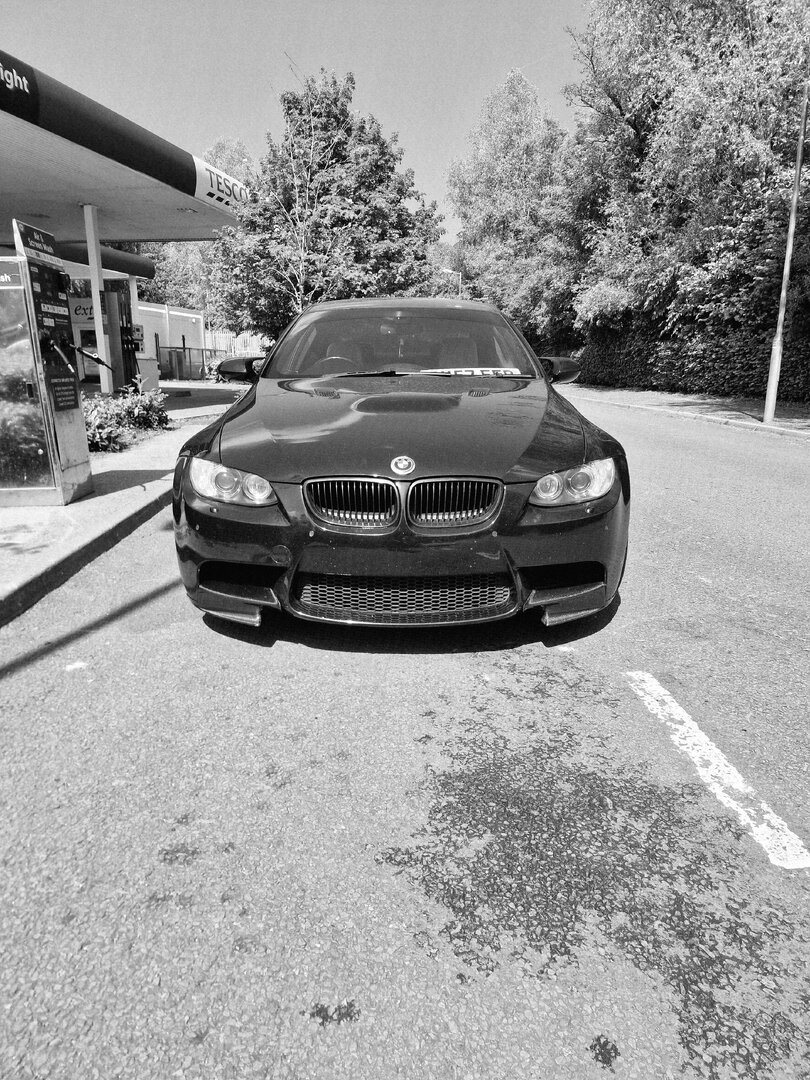
The X5 was in for routine servicing the past few days, so I pulled the M3 out for family duties. Let’s just say THE WIFE was less than impressed! . I’d been neglecting the M3 while focusing on getting the FD into the 5.5s, so it was nice to reconnect with it. Honestly, the M3 really is a proper driver’s car. You can feel the M Division magic, the throttle pedal is so linear and predictable it feels like an extension of yourself. Performance is easy to extract and the response is instant. An Absolute masterpiece. The downside compared to the FD? It absolutely devours tires and brakes when you start pushing it. My FD lacks the throttle response and linearity compared to the NA v8...but at this point I am comparing apples and oranges...both are amazing and devour the twisties in their own way. The FD is definitely no slouch either, in its 450–500hp boost setting, it delivers power in the twisties the M3 could only dream of.
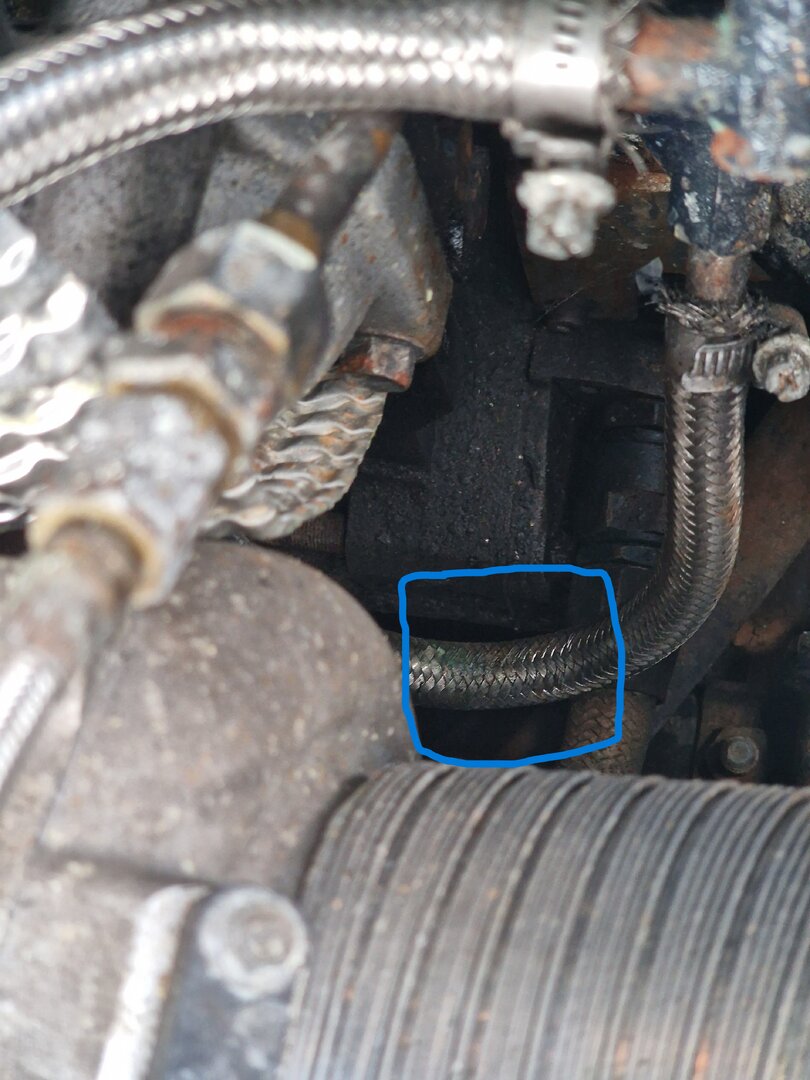
Back to the FD, I’ve done another ~25 runs in the 100–200 range, sitting consistently in the 5.5–5.6s. But something felt off… coolant temps were all over the place. My first thought was, “That’s it, the engine’s cooked after 450 runs.” I was ready to finally go Semi PP but unfortunately, I was wrong. I already suspected an issue with the cooling system. Initially I thought maybe the coolant seals had failed (or were starting to). So I got my mate Kev to take a look a few days ago. He pressurized the system with the engine off and found the culprit within minutes. The coolant line highlighted below from the engine to the turbo had two separate leaks. So that explains the erratic coolant temps and consistent loss of coolant. Anyways I'm glad this was found and so quickly.
So the next question is, how do I improve my current AN6 stainless rubber lines? Are PTFE/Teflon hoses the way to go?
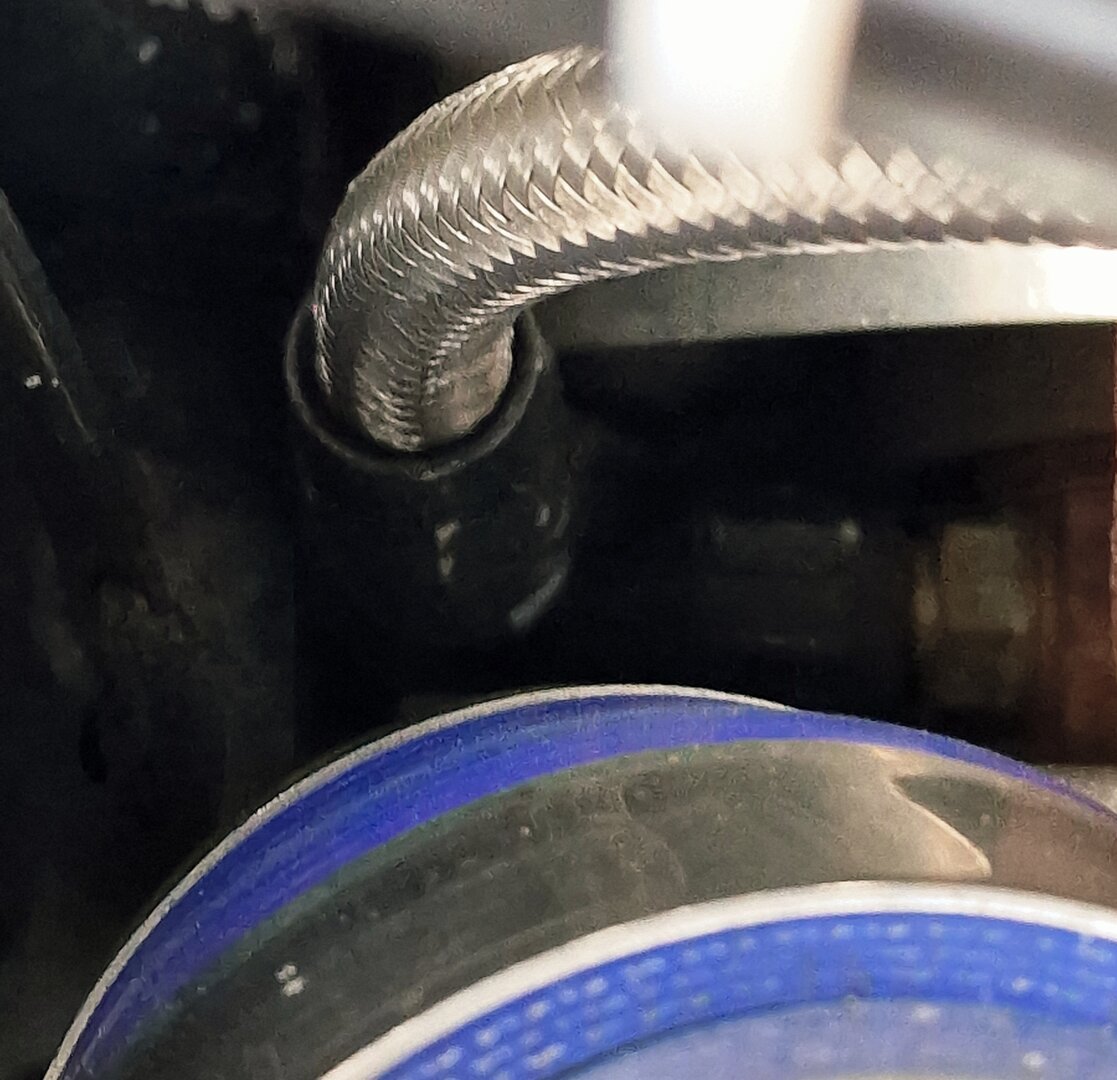
Some of you eagle-eyed folks may have noticed I’ve been running stainless rubber hoses with a jubilee clip on the engine… not exactly the prettiest solution. How can I clean this up without pulling the engine out?
What are track-spec FDs running with good reliability? Ideally, I’d like a proper fit-and-forget solution. To be fair, these coolant lines have been on since 2020, have survived around 450+ heat cycles, and seen a lot of track abuse, so I’m not overly concerned that they’ve finally given up. But I’d definitely appreciate some input on how to make these coolant lines better going forward.
At both sides of the turbo, I’m using the OEM Garrett-supplied setup M14 x 1.50 to -6AN fittings with 90° AN6 hose ends. That part looks spot on, unlike the jubilee connectors on the engine side.
I can't beleive you run stainless braided hose with worm clamps. That defeats the entire purpose of braided hose. Just go back to regular rubber. Or do braided hose properly.
Thanks and I've ordered PTFE lines to replace the rubber braided hoses. Spoke to Tim and he's had stainless rubber lines fail that were used for coolant, oil and fuel recently. However, they had been in use for over 5 years in various rotary builds. What we've noticed is the connections haven't failed...its the rubber hoses that have perished and become leaky.
The issue I now have is its a bit of a faff trying to remove the coolant housing just to drill and tap to have an6 fittings. I have looked into some an6 quick connectors...so fingers crossed they work. Welcome your thoughts on how you do yours?
Alright everyone, After a short time away and wondering if this time I cooked the engine, it seems attention to detail paid off as I was noticing small amounts of coolant loss and suspected a coolant leak. The culprit was indeed a sneaky coolant leak from a hose between the turbo and the engine. It was a pain, but the rotary heart is now beating strong and leak-free once again. Crisis averted! The small things matter!!
The Solution AN6 PTFE nylon braided lines with Heat protection fire sleeve to help it live a bit longer than the stainless rubber line.
New Gear Acquired: RACEONLY 4BAR MAP Sensor! While I was in there, I upgraded the old 3 bar link sensor to a shiny new Race Only 4-Bar MAP Sensor. An essential upgrade to keep this party going! Nice one Omar and much appreciated buddy!
Translation: We're not just running, we're hunting! I've got the mapping capacity to push this build. I'm talking about getting into the 32-35 PSI territory (or wherever the power gains stop making sense on the 100-200 KPH sprint!). The quest for peak performance has officially resumed!
The Weather Gods Have Spoken And on top of everything, you know what else is back? Boost Weather! The cool, crisp air is officially here, and the IATs are dropping. We all know what that means: denser air, more effective intercooling, and sweet, sweet power.
there's certainly nothing wrong w your new MAP sensor but just as a piece of info for others that are currently looking at their MAP sensor options...
Raceonly 4 BAR is $236 USD.
IMO, there is a better option:
if you check the Honeywell box your next decision will be what to do w the $154.01 you saved.
since the sensor reads absolute you simply go to one of the 8 Math Channels and have the ECU subtract Barometric pressure to get to gauge pressure.
you can see mine on the firewall behind the TB.
looking further right, you will see a blast from the past... 2003. a GM 3 BAR MAP sensor. part of my Alkycontrol system. 100% Meth as AI for over 20 years. the wonderful system will be going in the recycling bin when i get the time as my ECU can replace all of the functions. no more discrete AI system.
i will also be recycling my Dakota Digital speed module. when i switched to my Tremec Magnum F 6 speed i needed some digital conversion to produce speed and gear ID. if i would have looked more carefully at my ecu, i would have quickly realized that any one of my 10 Digital Channels could do the conversion so bye bye box.
i assume many other modern ECUs offer similar options. i believe your Fury has 8 Math Channels.
.
Last edited by Howard Coleman CPR; Oct 11, 2025 at 09:05 AM.
there's certainly nothing wrong w your new MAP sensor but just as a piece of info for others that are currently looking at their MAP sensor options...
Raceonly 4 BAR is $236 USD.
IMO, there is a better option:
if you check the Honeywell box your next decision will be what to do w the $154.01 you saved.
since the sensor reads absolute you simply go to one of the 8 Math Channels and have the ECU subtract Barometric pressure to get to gauge pressure.
you can see mine on the firewall behind the TB.
looking further right, you will see a blast from the past... 2003. a GM 3 BAR MAP sensor. part of my Alkycontrol system. 100% Meth as AI for over 20 years. the wonderful system will be going in the recycling bin when i get the time as my ECU can replace all of the functions. no more discrete AI system.
i will also be recycling my Dakota Digital speed module. when i switched to my Tremec Magnum F 6 speed i needed some digital conversion to produce speed and gear ID. if i would have looked more carefully at my ecu, i would have quickly realized that any one of my 10 Digital Channels could do the conversion so bye bye box.
i assume many other modern ECUs offer similar options. i believe your Fury has 8 Math Channels.
.
Good info on the sensors and thanks. Saving by going with the Honeywell box makes a lot sense but I'd say to each their own. Personally I prefer the race only sensor because of subjective looks and its a plug and play option with easy calibration.
A lot of the newer ECUs really do pack in more than people realize. By the way, your engine bay is looking great clean, purposeful, and everything looks thoughtfully laid out. Is that your G40 1150? have you seen the new Gen 2 stuff.
14 psi baseline test successful and all systems ready. I'm on holiday for a couple weeks, but the hunt is on. I'll book dyno time to measure power, though power levels dont matter if the car doesn't perform in real world.
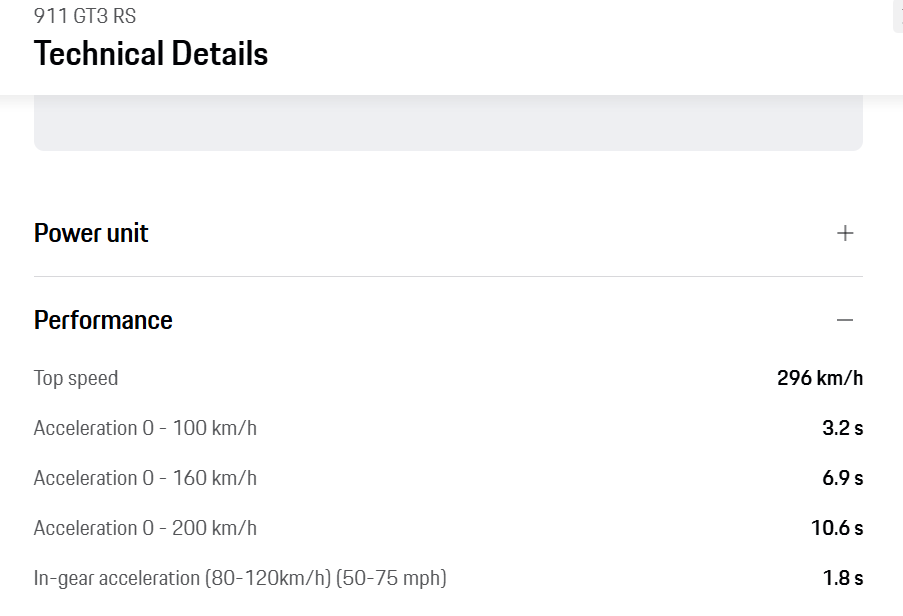
I like to benchmark my baseline low-boost tune against the Porsche 992 GT3 RS—not strictly for power output, but for its real-world acceleration. From there, I focus on dialing in the chassis to manage that performance in the corners.
Right now, my 100–200 times are about 0.5–0.6 seconds slower than the GT3 RS, and my 50–75 mph pulls are also around half a second off. It’s a useful benchmark, since the 992 GT3 offers one of the best modern balances of power and handling.
I'm not a million miles off so a couple of tweaks and i'll be there. Then the hunt is on to try and go supersonic on high boost!
Unless you’re planning to run 30+ psig boost, the Gen2 G-series turbos aren’t going to help much. They’re maybe better suited for piston engines and they’re expensive. I recently bought a NITB Gen1 G40 supercore for $1,600 + tax shipped from a vendor.
(sorry missed the label, the top map is the G40-900)
if you want to venture above 500 rwhp the Garrett G40-900 is my favorite turbo. it features everyone's favorite inducer size... 62.mm. so super spool. there is a beast lurking on the back end of the compressor wheel. say hello to an 88 mm exducer. . the area relationship between the inducer and exducer is expressed as Trim. the G40-900 is on the lowest end of the Trim range at 51. my G40-1150 has the same 88 mm exducer but a 71 mm inducer. Trim, at 65, is the other end and favors top end efficiency. both feature more modern aero than you know who.
backing up these wheels is the same high flow turbine wheel with a 4 inch exit.
Garrett recently released the G Series II. i think they better tread cautiously when marketing the G2s as they fit in only a tiny segment of the market.
there is no free lunch. lots is given up to get the 30+ psi airflow. for my purposes and my engine customers i will take a hard pass on G2. i wonder how many need 30+ boost with either G40 when i am making over 650 at 23 psi. i will opt for mid range efficiency.
take a look at the comparative efficiency islands, yuch.
the G40-900 has an 80% top number and the island is significant. the G40-1000s 79% island is a sand spit.
i always look at where the islands are and their width.
80% efficiency G40-900 from 48 to 57 pounds G40-1000 no island
78% efficiency: G40-900 is from 42.5 to 64 G40-1000 from 62 to 66
76% efficiency G40-900 from 39 to 69 G40-1000 49 to 69
74% efficiency G40-900 from 37 to 72 G40-1000 46-72
Last edited by Howard Coleman CPR; Oct 13, 2025 at 12:20 PM.
The weather’s been awful with constant rain, so I haven’t had much chance to test the G35 at 30–32 psi. I suspect it’s close to its limit now. Also, really looking forward to trying the G40 900 with the new manifold and all the upgrades!
Remind me again what your 3rd gear rpm is around the 100 kph mark? Because with a 1.19 vb housing it may need rolling antilag just to get out of bed. 😅
Sure, it provides the lowest emap possible, but for only 600 whp that’s going to be a lot of energy slipping by out the tailpipe. Can’t recall if you have a speed sensor on it, because it will be very easy to blow out past the recommended turbo shaft rpm limit i.e., just like Rob Dahm did with only a 1.06 divT4 (700+ whp).
It will only take that for so long before the comp wheel reshapes it’s girlish figure and intimately introduces itself to the inner housing surface. The actual surge limit is way out to the right beyond the indicated rpm limit on the G-series turbos.
.
I don’t have a GPS speed sensor connected to the ECU, so I’m not sure about the exact RPM at 100 km/h — I’d guess around 5,000–5,500 RPM. I’m running a 1.19 T4 housing (non–v-band). From what I remember, Omar mentioned it should come on around 4,500 RPM, while the v-band versions tend to be laggier, only building decent boost around 6,000 RPM.
I’ll be fitting a speed sensor on the G40 soon, and GPS wheel speed sensor so I’ll have even more data then. Not sure exactly what to expect yet, but it’s going on soon — just need a couple more runs on the G35 before it’s done.
That was for the G35. The G40 uses a T4 with a matching T4 twin-pulse manifold. Hopefully, it’ll pair well with the Turblown UIM and be a bit more efficient than the current G35 V-band setup running an old cast HKS manifold haha!
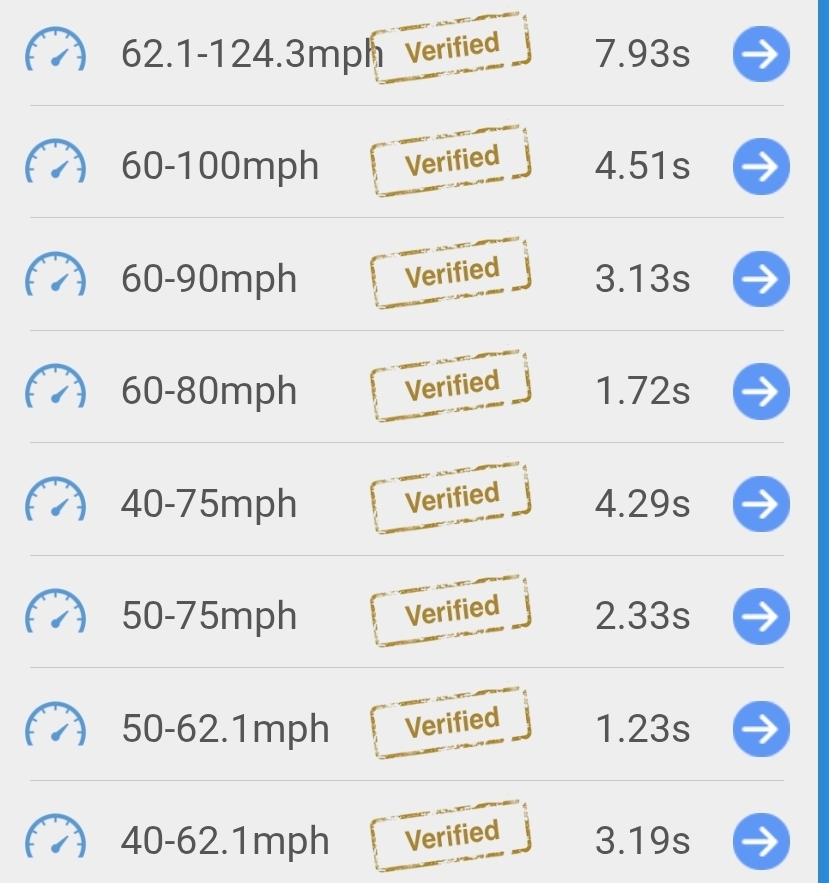
The weather’s been awful lately, so I haven’t had a proper chance to get back out in the RX7. Managed a few short runs in the M3 during some damp, cold patches but with almost no traction, I wasn’t about to risk pushing 30+ psi in the RX7 when even the heavier, lower-powered M3 was struggling to hook up.
Good numbers for a E92 M3 considering conditions were not ideal. However, if my RX7 ran these numbers at low boost - I'd be throwing the draggy and my RX7 in the river!
On a related note, curious what everyone’s running for engine oil and premix on high-boost, high-power 13Bs? Always interested to see what’s working. Anyone know what Mazda's race teams were using?
Engine: 13B Streetport Turbo: BW 362 @ 1.2 bar Power: ~450 hp WMI: Water/meth injection Brakes: KSport front, stock rear Chassis: Fully caged, 1100 kg Suspension: Öhlins DFV (11 kg) Tyres: Nankang CRS
Result: The fastest FD RX-7 in the world with a 7:23 BTG at the Nürburgring—yes, with a passenger.
This is one of the most underrated, modestly-spec’d FD builds out there and proof that you don’t need wild power or exotic parts to chase down supercars in 2025. A simple, achievable setup delivering truly insane real-world results.
Kosta isn’t just a fast driver; he’s a Porsche GT3/RS instructor at Spa, so this car is absolutely in the right hands. With a bit more refinement, he might just be the first FD owner ever to crack a sub-7 at the Green Hell.
You're welcome. What are your thoughts on setup refinements to get closer to the sub 7 mark?
I think if he loses the passenger it should push him closer to the 7.10 BTG without any setup changes and I also wonder if a set of fresh Michelin Cup 2 R or Dunlop Direzza 03G might help with traction out of corners.
Another solid UK result and this one’s for the stock-twins crowd, and it’s a seriously respectable run that adds a new name to the RX-7 Leaderboard.
Ryan – RX-7 FD3S
OEM manual
Non-seq stock twins @ 12 psi
OEM stock-port engine
366 hp on 99 RON
WMI: No
Time: 11.37 sec
Great showing for a stock-twins setup!
Unlike me Ryan’s been out testing 0–60 on his FD, and he’s pulled off a seriously impressive 4.36s on the street using Michelin Pilot Sport 4 tyres, Nice work!
Ryans PB 1/4 mile time is 12.78 at 102mph.
Updated Leaderboard.
Great to see a new stock-twin owner sharing their data and experiences. Nice work, Ryan and excellent result for a non-sequential stock-twins FD, and that 0–60 time on street tyres is seriously impressive. You’ve definitely inspired me to test mine as well!
Hit 27 psi in this perfect boost weather, but I underestimated how hard it is to get heat into Michelin Cup 2s. Even after 2–3 miles of warming them up, the rear broke traction almost instantly during my PB attempt—pretty sketchy. I’ll probably switch to a more cold-friendly street tire like the Pilot Sport 5 for the next runs.
The car just needs to hook and shift cleanly and I’m confident a low-5s 100–200 is there without touching the tune. I managed a 5.58 in the summer heat, so shaving a few tenths now should be doable.
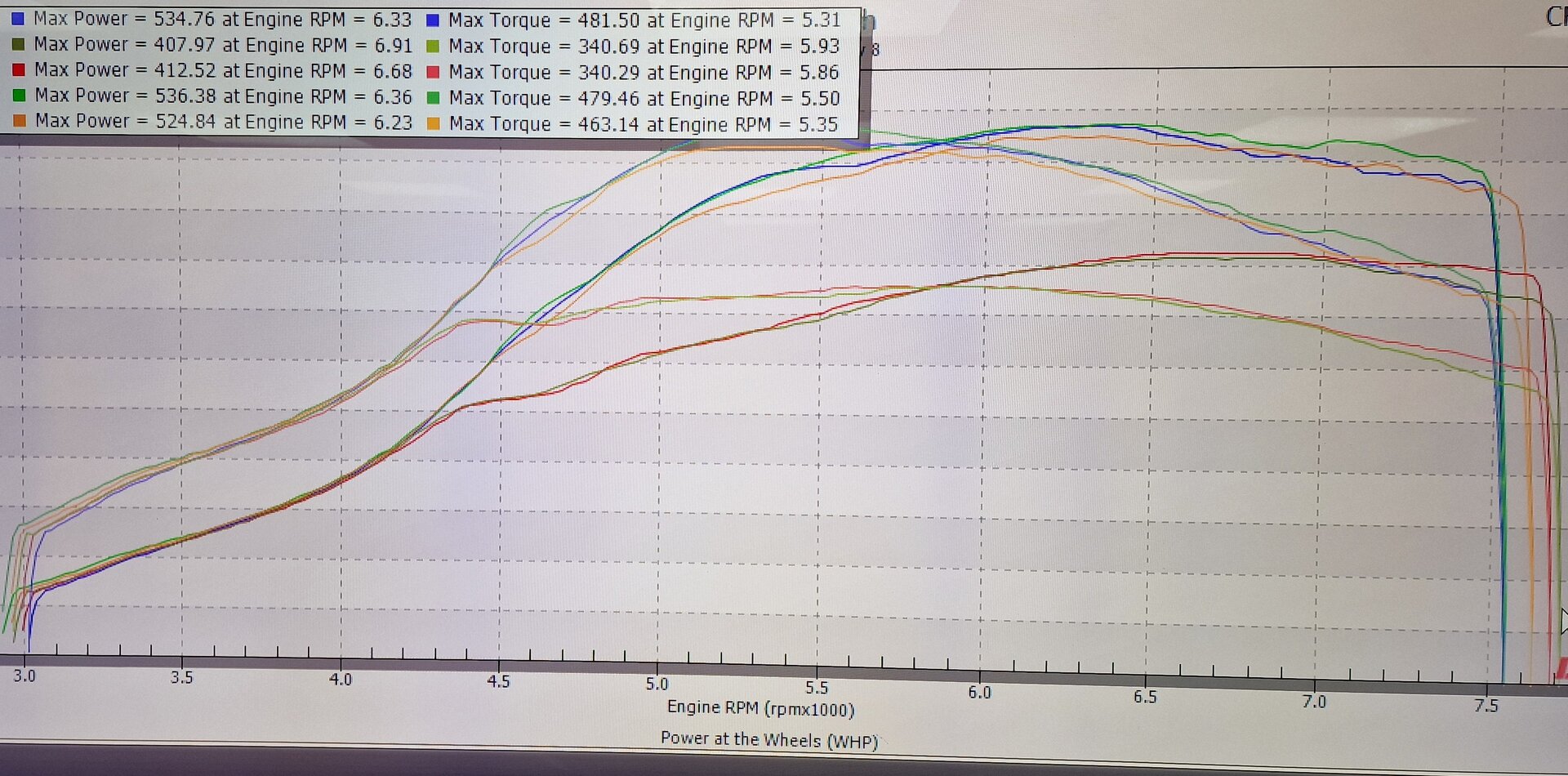
Dyno session is booked for Friday, so I’m hoping to get some numbers at 30 psi on pump fuel with WMI. That should give a good idea for what a modern street-ported G35 1050 setup can realistically achieve. Watch this space and pray for me!
In fairness, the day started off rocky as my car battery was flat, and I wasn’t sure it would even have enough juice to get going or make it to the dyno booking on time, and as it happens in pure rotary fashion I turned up late. Thankfully, the shop was flexible and still fit me in. Once on the dyno, everything went smoothly, and I was able to complete all the runs without any issues.
I must have had 14-15 pulls at high boost to figure out what the engine wanted fueling/afr/timing wise.
High Boost Peak: 30psi
536.4 whp / 481.5 wtq
≈617 hp / 554 lb-ft (engine, 13% loss)
When I pushed past 30 psi the power and torque started dropping off to the 520rwhp range, so I backed off. The boost settled at 29–30 psi and power and torque went right back to around the 535 rwhp and 480 lb-ft. Not bad at all for a baby G35 and a street port on pump gas with WMI.
The setup isn’t the most efficient and has a lot of restrictions, but it performs reliably and consistently on the street and track, and I’m hoping to get a few Dragy runs in soon and hopefully a couple with flat shift.
Garrett G35-1050 (v-band, 1.21 A/R)
13B Streetport balanced and studded
HKS cast T4 manifold with v-band adapter
Full 4" downpipe and exhaust
Stock upper intake manifold
Haltech IGN coils
4× 2200cc Bosch injectors
2× ASNU 1500cc secondary injectors
2026 Efficiency Mods
Garrett G40-900 (1.19 A/R)
1.5" schedule T4 twie high boost pulls next week.n-pulse exhaust manifold or will the Turblown v2 exhaust mani be a better choice for response and flow?
Turblown upper intake manifold
The dyno shop Garage Whifbitz should send me higher quality dyno sheets and videos of the high boost runs.



 . I’d been neglecting the M3 while focusing on getting the FD into the 5.5s, so it was nice to reconnect with it. Honestly, the M3 really is a proper driver’s car. You can feel the M Division magic, the throttle pedal is so linear and predictable it feels like an extension of yourself. Performance is easy to extract and the response is instant. An Absolute masterpiece. The downside compared to the FD? It absolutely devours tires and brakes when you start pushing it. My FD lacks the throttle response and linearity compared to the NA v8...but at this point I am comparing apples and oranges...both are amazing and devour the twisties in their own way. The FD is definitely no slouch either, in its 450–500hp boost setting, it delivers power in the twisties the M3 could only dream of.