


G35 1050 vs G42 1200 on a 13B - Best Choice for 600hp?


Unless you can get ~40psi and taper back running close to choke the whole time I think even most manuals with a quick shift will probably have more effective average power with a shift than starting from 400hp? Not many people will actually run to 10,5000rpm either. I'd want a 2 piece shaft with centre roller bearing to be doing that.
I did 15000 on the oem assembly multiple times(It wasn't intentional but it went there a couple of times)
I have a few turbo combos that go 10,500-11000 all the time on OEM shaft and bearings
And I have yet to see a fast h pattern car that doesn't have some noisey as **** gear set yet

There's always the more affordable E&J front and rear bearing supports before going all out on a 2pc center bearing e-shaft.
I run the front which is a fairly simple drop-in. The rear requires the rear counter balance sent to e&j for modification.
I run the front which is a fairly simple drop-in. The rear requires the rear counter balance sent to e&j for modification.


I think 50 years or rotary racing shows us rotaries are much more reliable with rpm than boost.
Now, when you try to combine the two IDK. Dynamite with a laser beam.
I think you are right.
My response was to j9fd3s.
as in a large turbo accelerating from 400rwhp to 800rwhp in 1 gear will be faster than a small turbo accelerating from 400rwhp to 400rwhp in 1 gear (especially if you can load turbos so transient response isnt a factor).
Now, when you try to combine the two IDK. Dynamite with a laser beam.
Slides
...I think even most manuals with a quick shift will probably have more effective average power with a shift than starting from 400hp?
...I think even most manuals with a quick shift will probably have more effective average power with a shift than starting from 400hp?
My response was to j9fd3s.
as in a large turbo accelerating from 400rwhp to 800rwhp in 1 gear will be faster than a small turbo accelerating from 400rwhp to 400rwhp in 1 gear (especially if you can load turbos so transient response isnt a factor).

Thread Starter
Senior Member


Joined: Jun 2010
Posts: 492
Likes: 246
From: Instagram - Copyninja_FD
In my testing with the stock H pattern, I found that holding a gear longer, as long as there’s traction, consistently resulted in faster times—even if I was just revving for the sake of it. The only time shifting didn’t matter was when a shift was unavoidable.
For example, Mark held 3rd gear to 10k rpm for his semi-pp, completing the 100-200 km/h in the high 5-second range. If he had shifted to 4th to reach the 200 km/h trap speed, he would’ve been slower by 0.3-0.5 seconds, depending on how quickly the big turbo spooled back up.
There’s no doubt that a ZF8 or a DCT will be consistently faster in real-world street use, especially when compared to H-pattern dog boxes, minus the NVH.
For example, Mark held 3rd gear to 10k rpm for his semi-pp, completing the 100-200 km/h in the high 5-second range. If he had shifted to 4th to reach the 200 km/h trap speed, he would’ve been slower by 0.3-0.5 seconds, depending on how quickly the big turbo spooled back up.
There’s no doubt that a ZF8 or a DCT will be consistently faster in real-world street use, especially when compared to H-pattern dog boxes, minus the NVH.
Arrogant Wankeler
Joined: Nov 2006
Posts: 1,012
Likes: 233
From: Hunter Valley NSW Australia
Kissing high RPM at infinitesimally low duty cycles because you don't have a downshift lockout set up correctly =/= high duty cycle circuit racing/multi-purpose car setup. I know there were a significant number of old NA setups running to 10,500 or 11,000rpm in street/occasional drag cars but I'm not aware of any all OEM internal setups running consistent high rpm on load for even back to back standing mile type events with decent boost on top of engine speed load, let alone circuit or sprint stuff with longevity?
If that's not right that's great, I'd love to stretch legs on a lightened and balanced assembly with a high rpm biased intake manifold down the track.
If that's not right that's great, I'd love to stretch legs on a lightened and balanced assembly with a high rpm biased intake manifold down the track.
Kissing high RPM at infinitesimally low duty cycles because you don't have a downshift lockout set up correctly =/= high duty cycle circuit racing/multi-purpose car setup. I know there were a significant number of old NA setups running to 10,500 or 11,000rpm in street/occasional drag cars but I'm not aware of any all OEM internal setups running consistent high rpm on load for even back to back standing mile type events with decent boost on top of engine speed load, let alone circuit or sprint stuff with longevity?
If that's not right that's great, I'd love to stretch legs on a lightened and balanced assembly with a high rpm biased intake manifold down the track.
If that's not right that's great, I'd love to stretch legs on a lightened and balanced assembly with a high rpm biased intake manifold down the track.
One of the WTAC cars I look after sees 10-10.5 on some corners as he prefers to stretch its legs vs having to shift
That particular assembly is not even balanced, it's 100% OEM FD assembly with side cut rotors. Thats a turbo car as well, makes around 700HP. Not n/a
All the drag cars that have issues with the OEM mazda crank are not wrecking them from "wobble" from high rpm or even power for that matter. The shafts are breaking under tyre shake and just some more food for thought, those same cars break the Billet Shafts(Xtreme and precision) in those conditions as well. The additional centre bearing definitely helps in those tyre shake scenarios.

Thread Starter
Senior Member
Joined: Jun 2010
Posts: 492
Likes: 246
From: Instagram - Copyninja_FD
It’s been nearly 7 months since I last saw or drove the FD and now we’re back, and the fun begins! Until I break something! 
The FD's has been ready since early February, but I only managed to pick it up a few days ago. Definitely worth the wait, and initial testing has been promising.
What’s new?
These are all the photos Tim took during the fuel system build. The setup includes:
I didn’t waste any time and jumped straight into tuning. Since there’s a dyno near Tim’s shop, it made sense to book it and start dialing in the injectors with a solid base tune to 14psi boost. I was honestly worried about controlling such large injectors, but everything went surprisingly smoothly.


And yep, that’s Tim in the background looking like the mad scientist from Back to the Future!

Laptop always close when tuning the FD RX-7 and a fire extinguisher or two on standby, just in case things get a little too spicy! After all, we are testing a brand-new fuel system!
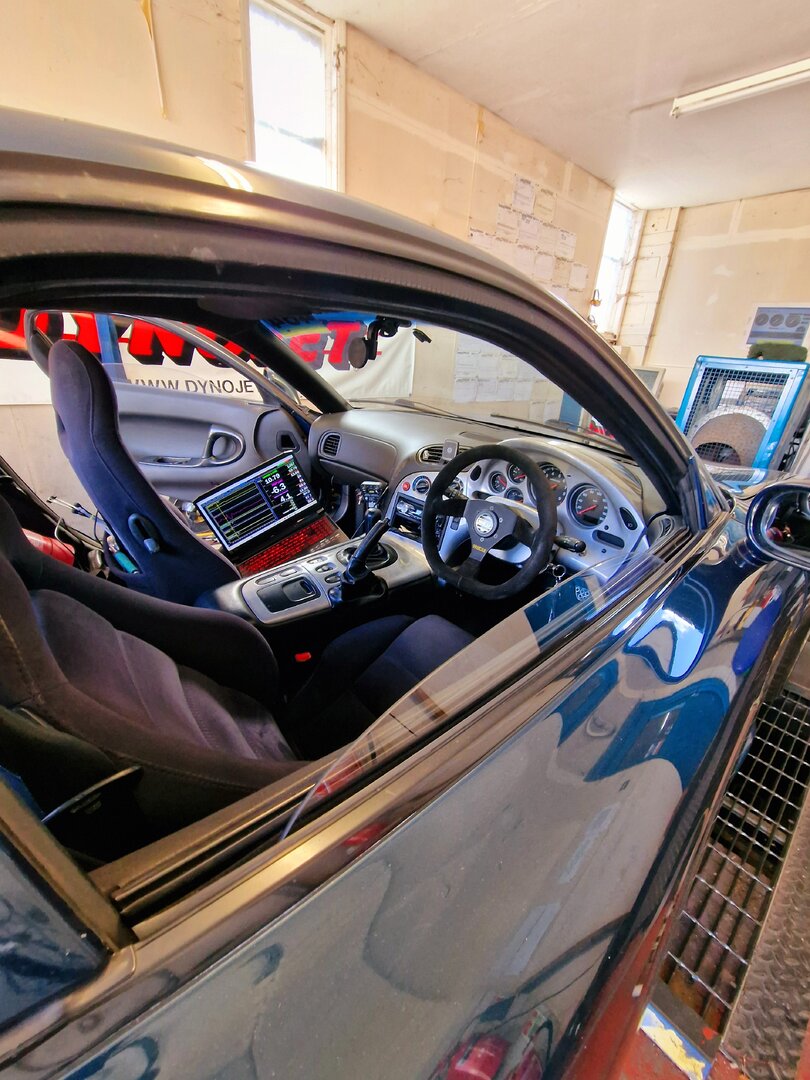
Strapped in and ready for action!

The first hurdle was getting a clean RPM signal on the dyno. Normally, it’s a quick job, just tap into the FD’s leading or trailing coil lead—but after 15 minutes with no luck, we found the issue: a faulty signal cable. Once the dyno operator swapped it out for a new one, we were good to go. Dyno day was almost over before it even started!

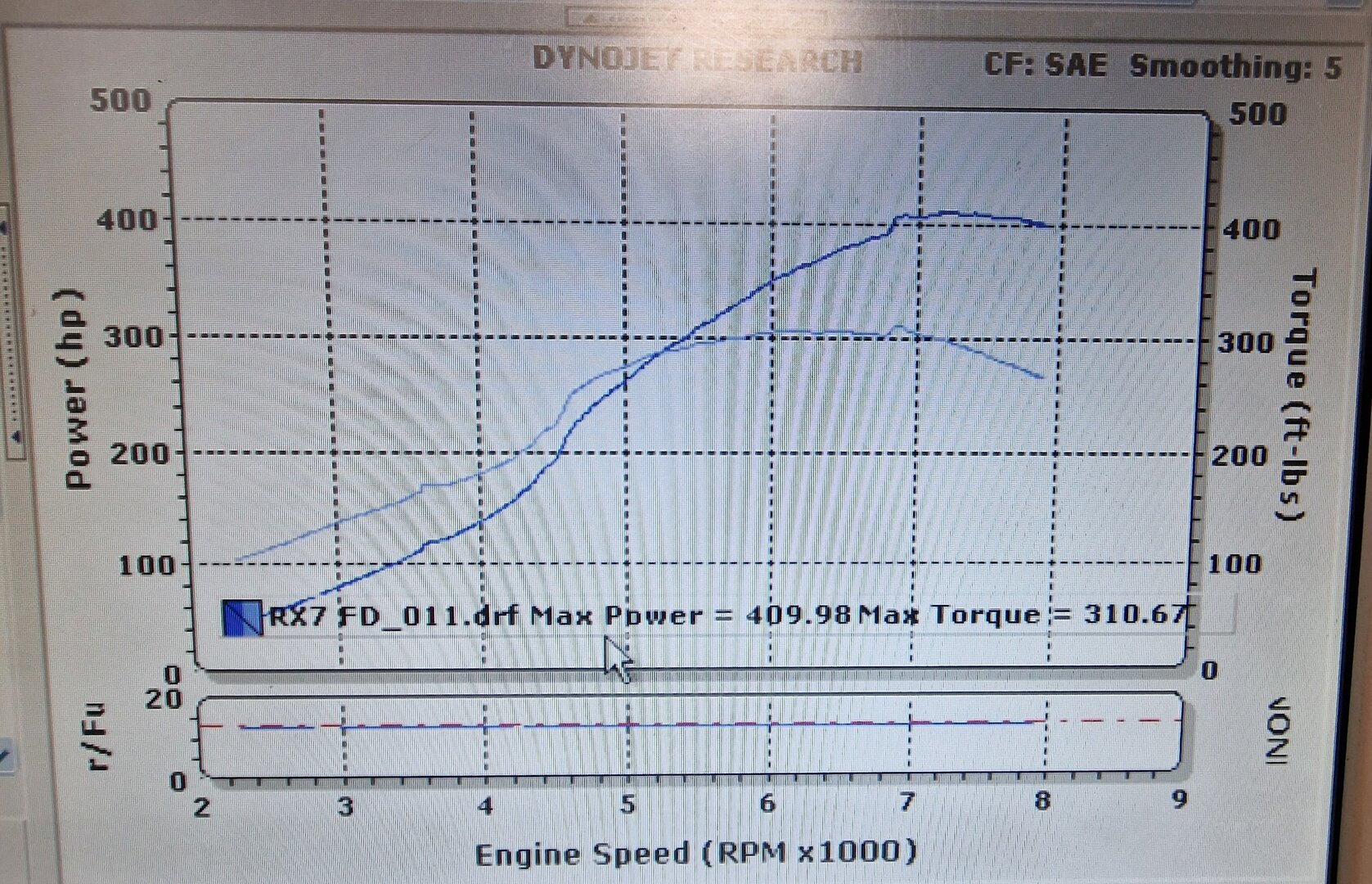
It took a couple of hours to dial in the injectors, idle, and cruise tune, then bring it up to 14psi as a solid starting point. Just as things were getting interesting, we ran out of dyno time. With another hour, I would've pushed it to 26–30psi. The dyno chart shows a solid powerband from 4400rpm to 8000rpm, though ideally, I would've liked to push the redline to 8500rpm to check volumetric efficiency. The tune isn't fully optimized yet, so I’ll refine it on the road and do a few 100-200km/h runs to compare how this 14psi stacks up against previous 14psi runs. Ideally, I want the times to be consistent, ensuring similar 100-200 times under equal conditions.
The ATS Carbon 1.5-way LSD is a beast under power, but like any mechanical LSD, it adds some drama with clunks and clatters during low-speed turns and reversing. It’s got that extra excitement and theater, making it a great upgrade especially since I'm aiming for 2bar boost soon!

Picked up the FD with some new bits and bobs, went to dyno, tuned it, and drove home - mission successful!
The FD's has been ready since early February, but I only managed to pick it up a few days ago. Definitely worth the wait, and initial testing has been promising.
What’s new?
- Fuel system – Fully upgraded with AN8 lines and ready for all the boost.
- Drivetrain – ATS Carbon 1.5-way LSD paired with a 4.44 final drive from an RX-8.
- Transmission – Swapped in an OEM low mileage 5-speed manual after the original box failed on track.
These are all the photos Tim took during the fuel system build. The setup includes:
- 2x 1500cc primary ASNU injectors
- 4x 2200cc secondary Bosch injectors
- AN-8 PTFE E85-compatible lines throughout
- 2x Walbro 450 fuel pumps
- Speeding fuel filter rated for 1500hp (well above my target, so plenty of headroom)
I didn’t waste any time and jumped straight into tuning. Since there’s a dyno near Tim’s shop, it made sense to book it and start dialing in the injectors with a solid base tune to 14psi boost. I was honestly worried about controlling such large injectors, but everything went surprisingly smoothly.
And yep, that’s Tim in the background looking like the mad scientist from Back to the Future!
Laptop always close when tuning the FD RX-7 and a fire extinguisher or two on standby, just in case things get a little too spicy! After all, we are testing a brand-new fuel system!
Strapped in and ready for action!
The first hurdle was getting a clean RPM signal on the dyno. Normally, it’s a quick job, just tap into the FD’s leading or trailing coil lead—but after 15 minutes with no luck, we found the issue: a faulty signal cable. Once the dyno operator swapped it out for a new one, we were good to go. Dyno day was almost over before it even started!
It took a couple of hours to dial in the injectors, idle, and cruise tune, then bring it up to 14psi as a solid starting point. Just as things were getting interesting, we ran out of dyno time. With another hour, I would've pushed it to 26–30psi. The dyno chart shows a solid powerband from 4400rpm to 8000rpm, though ideally, I would've liked to push the redline to 8500rpm to check volumetric efficiency. The tune isn't fully optimized yet, so I’ll refine it on the road and do a few 100-200km/h runs to compare how this 14psi stacks up against previous 14psi runs. Ideally, I want the times to be consistent, ensuring similar 100-200 times under equal conditions.
The ATS Carbon 1.5-way LSD is a beast under power, but like any mechanical LSD, it adds some drama with clunks and clatters during low-speed turns and reversing. It’s got that extra excitement and theater, making it a great upgrade especially since I'm aiming for 2bar boost soon!
Picked up the FD with some new bits and bobs, went to dyno, tuned it, and drove home - mission successful!
Thread Starter
Senior Member
Joined: Jun 2010
Posts: 492
Likes: 246
From: Instagram - Copyninja_FD
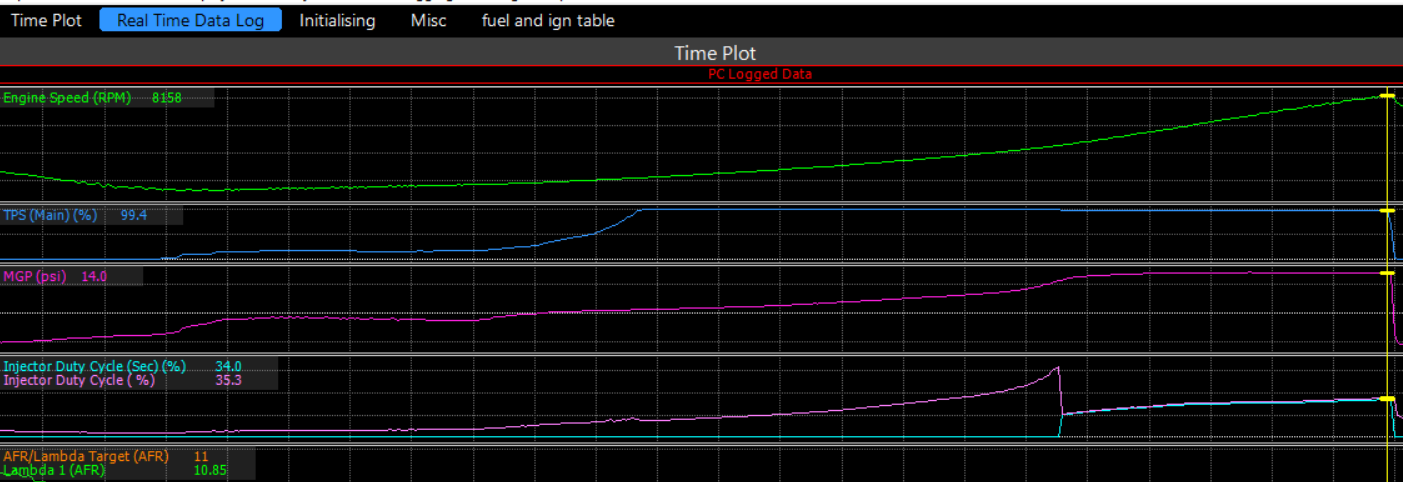
Injector duty cycle is now down to 35%, nearly half of what it was with the previous fuel system at similar boost so there's plenty of headroom to safely raise boost to 2 bar or 29psi (the current limit of my 3bar MAP sensor).
The new tune is running 14 psi, making 410 hp and 310 lb-ft. The dyno operator claims that's wheel horsepower, but I suspect it's not the case. I'll confirm soon with a Dragy 100–200 km/h run.
The new 500hp 2025 Porsche GT3 manual, weighing around 1,550 kg with driver and equipped with a highly efficient engine and gearbox, does 100–200 km/h in the low 7s. It's the only manual to lap the Nürburgring in under 7 minutes. An FD RX-7 with similar power and ~200 kg less weight should manage 100–200 km/h in the mid-6s. I'll tune my low-boost setup to a true 500 hp for real-world use at 6.5s range, and if all goes well, step it up to 29 psi.
The new tune is running 14 psi, making 410 hp and 310 lb-ft. The dyno operator claims that's wheel horsepower, but I suspect it's not the case. I'll confirm soon with a Dragy 100–200 km/h run.
The new 500hp 2025 Porsche GT3 manual, weighing around 1,550 kg with driver and equipped with a highly efficient engine and gearbox, does 100–200 km/h in the low 7s. It's the only manual to lap the Nürburgring in under 7 minutes. An FD RX-7 with similar power and ~200 kg less weight should manage 100–200 km/h in the mid-6s. I'll tune my low-boost setup to a true 500 hp for real-world use at 6.5s range, and if all goes well, step it up to 29 psi.
Last edited by rx7srbad; Apr 17, 2025 at 08:56 PM.
Thread Starter
Senior Member
Joined: Jun 2010
Posts: 492
Likes: 246
From: Instagram - Copyninja_FD
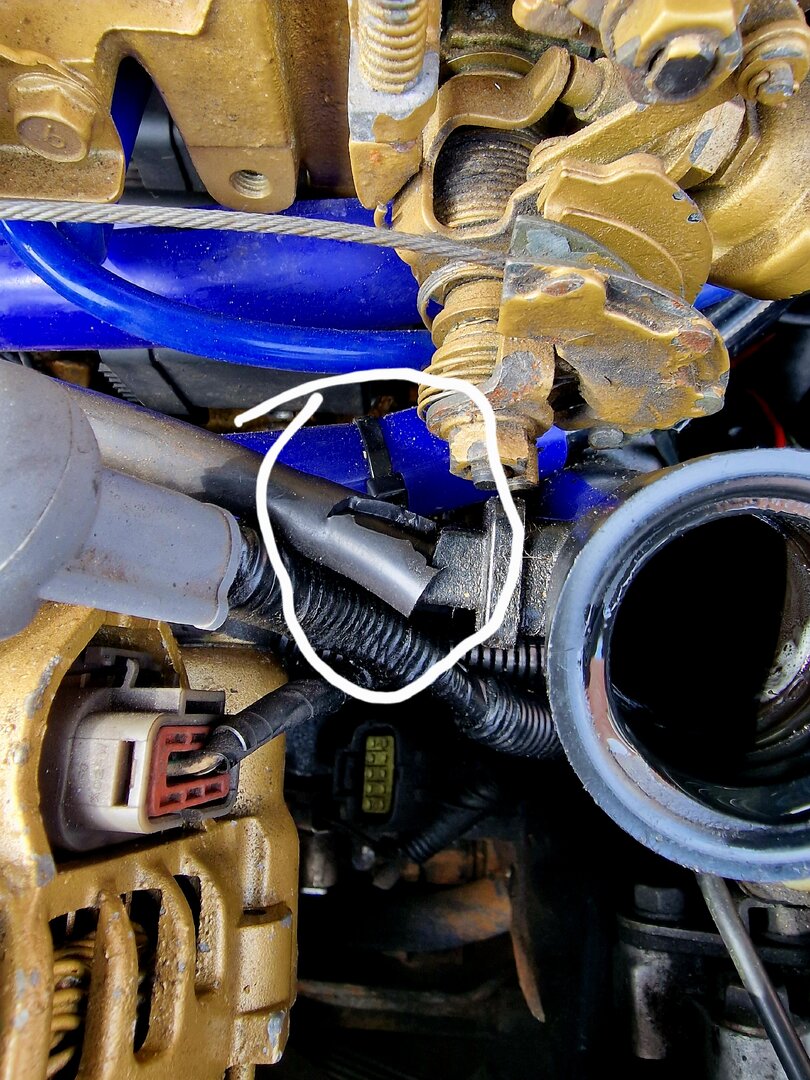
A few days after dyno day, I checked the engine to see how much oil it had consumed and noticed a significant oil leak around the oil top-up tank and dipstick area. After a quick inspection, I found the line leading to the external oil catch can had split.
Fixed!!!

This could have ended very badly!
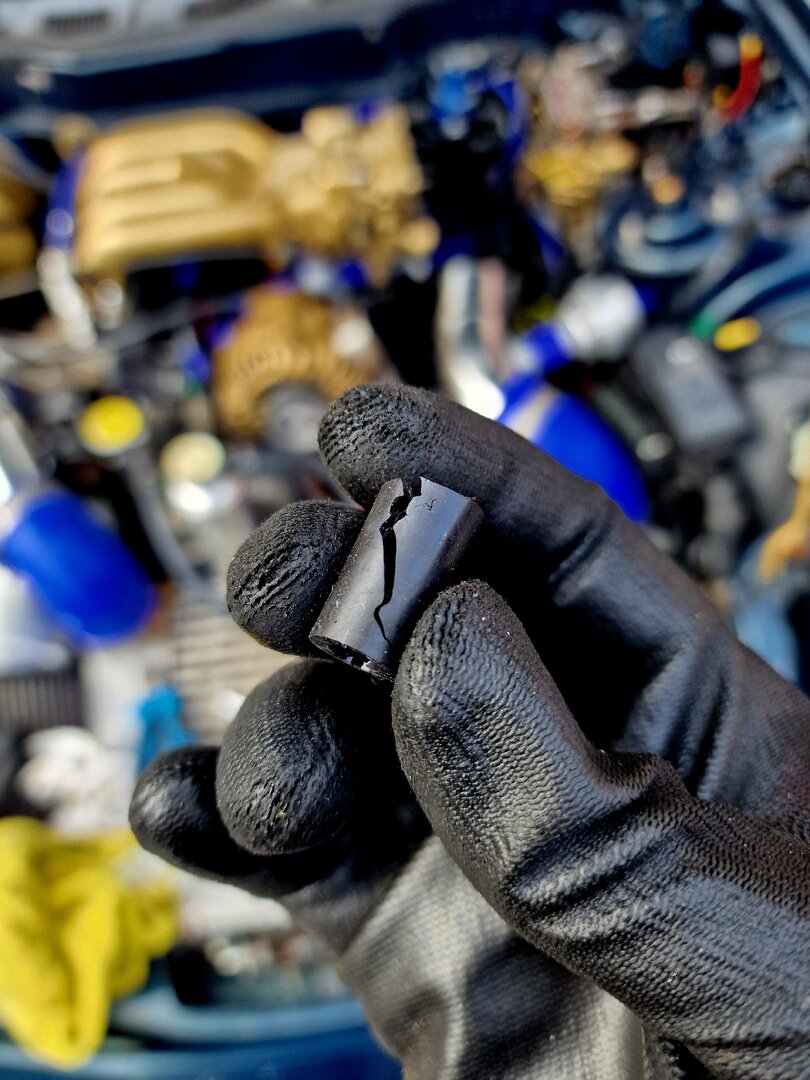
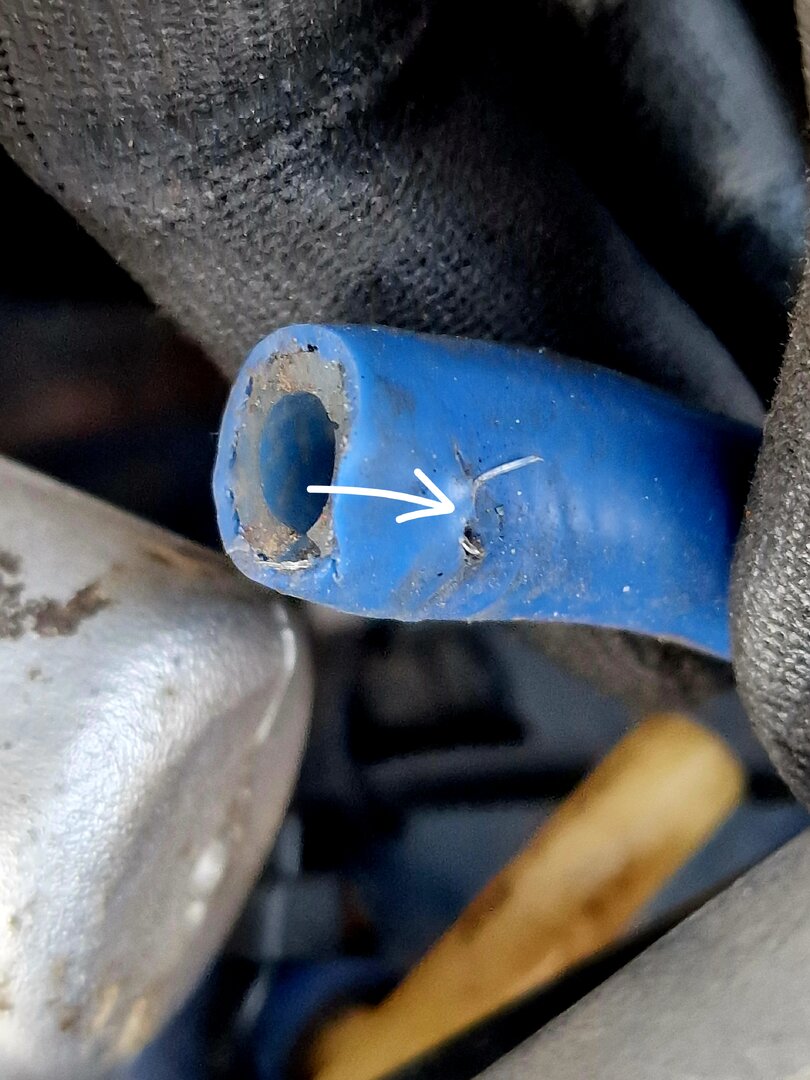
I attempted some 100–200 km/h pulls to establish a baseline for performance and to make sure everything was functioning correctly. Right away, I noticed the car felt sluggish, and the logs confirmed a boost leak. Boost was building very slowly, response was laggy, and when it did build, it only reached around 11–12 psi. As a result, the 100–200 km/h times were poor, around 9.5 seconds. I began searching for the cause of the leak and quickly found the issue.

The hose was completely split through, causing a major boost leak.
Fixed!!!

While I was there, I decided to replace the spark plugs as well. As expected, the engine is running rich. The plugs installed are NGK 10s. The carbon buildup suggests rich running conditions. The color is very dark (dry black), which points toward excessive fuel (rich mixture) rather than oil fouling (which often looks wetter or shinier). Overall happy and what I expected to see.

Using Denso 34 which are the same as NGK 11s on the trailing side. The color (brownish-black) suggests rich combustion but no oil fouling it’s mostly dry soot. I dont see signs of overheating (no white porcelain, no melted electrodes), and no major physical damage.

My plug read interpretation -

The FD is back together after the repairs. To ensure safety, I've slightly increased the fuel mixture. This precaution was taken because the past boost leak could have forced the turbo to work harder to maintain pressure. With the leak sealed, there's a risk the turbo might now produce excessive boost (overboost), and the added fuel helps protect the engine in that scenario.

To clear my mind and reset, I took a short break from working on the FD and went for a drive in my M3. My friend came along too. I admit these S65 NA V8s are absolute screamers!
I'm 13B for life, but some V8 fun on the side is nice (as long as it's not in an FD, haha!). A main chick and side chick seems acceptable in this scenario!

The FD is now fueled and ready for some 100-200km/h acceleration runs. It's currently on a very conservative tune, running at 14psi of boost, which I estimate puts it around the low 400hp mark which was also the same per the dyno around 410hp. My goal for these pulls is to achieve a time in the low 8-second range. If it hits that target, it will be a great sign of strong engine health and confirm that the boost leaks have been successfully fixed.

Fixed!!!
This could have ended very badly!
I attempted some 100–200 km/h pulls to establish a baseline for performance and to make sure everything was functioning correctly. Right away, I noticed the car felt sluggish, and the logs confirmed a boost leak. Boost was building very slowly, response was laggy, and when it did build, it only reached around 11–12 psi. As a result, the 100–200 km/h times were poor, around 9.5 seconds. I began searching for the cause of the leak and quickly found the issue.
The hose was completely split through, causing a major boost leak.
Fixed!!!
While I was there, I decided to replace the spark plugs as well. As expected, the engine is running rich. The plugs installed are NGK 10s. The carbon buildup suggests rich running conditions. The color is very dark (dry black), which points toward excessive fuel (rich mixture) rather than oil fouling (which often looks wetter or shinier). Overall happy and what I expected to see.
Using Denso 34 which are the same as NGK 11s on the trailing side. The color (brownish-black) suggests rich combustion but no oil fouling it’s mostly dry soot. I dont see signs of overheating (no white porcelain, no melted electrodes), and no major physical damage.
My plug read interpretation -
- The engine is running rich, but the trailing plugs are less affected than the leading plugs, which is typical in a rotary because the leading plugs fire first and are responsible for primary combustion, trailing plugs assist later in the cycle.
- The TR plug is a bit cleaner than TF, suggesting slight variation in AFR's between front and rear rotor behavior, again not unusual, but worth noting. So I may need to tweak rear rotor balance although i think this may not be necessary as the Leading front and rear plugs look even.
The FD is back together after the repairs. To ensure safety, I've slightly increased the fuel mixture. This precaution was taken because the past boost leak could have forced the turbo to work harder to maintain pressure. With the leak sealed, there's a risk the turbo might now produce excessive boost (overboost), and the added fuel helps protect the engine in that scenario.
To clear my mind and reset, I took a short break from working on the FD and went for a drive in my M3. My friend came along too. I admit these S65 NA V8s are absolute screamers!
I'm 13B for life, but some V8 fun on the side is nice (as long as it's not in an FD, haha!). A main chick and side chick seems acceptable in this scenario!
The FD is now fueled and ready for some 100-200km/h acceleration runs. It's currently on a very conservative tune, running at 14psi of boost, which I estimate puts it around the low 400hp mark which was also the same per the dyno around 410hp. My goal for these pulls is to achieve a time in the low 8-second range. If it hits that target, it will be a great sign of strong engine health and confirm that the boost leaks have been successfully fixed.
Thread Starter
Senior Member
Joined: Jun 2010
Posts: 492
Likes: 246
From: Instagram - Copyninja_FD
Changing fuel injectors on my setup required a full retune of the fuel map; simply adjusting deadtimes and pulsewidths wasn't sufficient. I had to start from scratch to properly calibrate the new 4x Bosch 2200cc secondaries and their staging with the 2x Asnu 1500cc primaries.
As it had been nearly 7 months since my last run, it took a few runs to get accustomed to their intensity again. I'd forgotten just how "scary" they can be! However, after those initial runs, my confidence in the FD returned. My first recorded run for the 100-200 km/h test resulted in a time of 8.4 seconds.
The results from the first run revealed two main issues
1. A slow gear shift ("granny shift"), I was nervous about the used OEM box.
2. Excessively rich acceleration fueling between shifts. While not immediately obvious during the run, the Draggy report showed a lack of responsiveness and power. Checking the data logs confirmed the overly rich accel fueling was the cause of this "laziness." The IDC hit 53% for a very brief moment.
The second run improved significantly, clocking in at 8.07 seconds, which is a step in the right direction.
However, there's still room for major improvement, particularly in the fuel enrichment settings for quicker response during gear changes and lower IDC between these changes. I believe there's another 0.3 to 0.4 seconds of performance to be gained by refining the transient fueling and improving my shifting speed, my muscle memory hasn't kicked in yet! Additionally, further overall tune optimization could potentially shave off another 0.1 to 0.2 seconds. Ideally, it would be great to get 14 to 15psi to run close to a mid 7s range 100-200km/h.
This concludes the initial testing session for the new fuel system. As is typical with any new build, I encountered a few minor "teething issues," but overall, it's been a solid start and heading in the right direction.
My plan now is to gain full confidence in the fuel system's reliability at base 14 to 16 psi boost levels. Once I have a thorough understanding of how the new fueling setup behaves consistently, I'll step up to the higher boost levels of 28-29 psi and see how it goes.

Thread Starter
Senior Member
Joined: Jun 2010
Posts: 492
Likes: 246
From: Instagram - Copyninja_FD
Good eye and It was one of the first things i noticed. Compression is nearly the same since engine was built in 2020 and no signs of any damage. Paid close attention to any changes in engine noises, performance and completed 4 100-200km/h pulls since changing the plugs. Also checked both sides of the turbo and all seems well. It is strange and worrying to say the least but its still going well

Joined: Oct 2001
Posts: 6,279
Likes: 728
From: Florence, Alabama
post your accel sens table settings pls.
while the plug pic isn't super clear it does appear you have lost some porcelain in your front lead plug. are you G5 or G4X? which Link... Extreme or?
let's see some knock logs. what fuel have you been using? is it "winter" blend
while the plug pic isn't super clear it does appear you have lost some porcelain in your front lead plug. are you G5 or G4X? which Link... Extreme or?
let's see some knock logs. what fuel have you been using? is it "winter" blend
Thread Starter
Senior Member
Joined: Jun 2010
Posts: 492
Likes: 246
From: Instagram - Copyninja_FD
post your accel sens table settings pls.
while the plug pic isn't super clear it does appear you have lost some porcelain in your front lead plug. are you G5 or G4X? which Link... Extreme or?
let's see some knock logs. what fuel have you been using? is it "winter" blend
while the plug pic isn't super clear it does appear you have lost some porcelain in your front lead plug. are you G5 or G4X? which Link... Extreme or?
let's see some knock logs. what fuel have you been using? is it "winter" blend

I'm using a Link G4X ECU but control it through the newer Link G5 software, which I find works significantly better than the G4X software.
I don’t have any knock logs, as I’m not running a knock sensor. The fuel setup consists of Tesco 99 RON (UK) pump fuel with a 100:1 premix ratio of fully synthetic 2 stroke, along with around 1/4 to 1/2 bottle of NF Super Street Octane Booster per full tank: NF Octane Booster.
In my experience your missing porcelain won't be ignition related based on your timing map. It will be fuel mixture related. It also indicates you have one rotor running hotter than the other

Curious how you're saying that it's not timing related as I haven't seen a map posted - though I may be blind - tis a long thread. I do agree that looks like a hotter rotor though.
Ive also experimented with timing a lot and its never resulted in a missing porcelain, anytime I have had it happen its been as a result of lean fuel mixture on that rotor. Quickly identified if you do a plug read post dyno pull.
Thread Starter
Senior Member
Joined: Jun 2010
Posts: 492
Likes: 246
From: Instagram - Copyninja_FD
His shared his timing numbers with me in discussion.
I've also experimented with timing a lot and its never resulted in a missing porcelain, anytime I have had it happen its been as a result of lean fuel mixture on that rotor. Quickly identified if you do a plug read post dyno pull.
I've also experimented with timing a lot and its never resulted in a missing porcelain, anytime I have had it happen its been as a result of lean fuel mixture on that rotor. Quickly identified if you do a plug read post dyno pull.
I also did an oil change recently and checked for any signs of damage related to the missing porcelain from the spark plug. Thankfully, there was no metal particles on the magnetic sump plug, no apex seals or any other metallic debris and the oil itself looked clean. I’ve since completed six more 100–200 km/h runs while refining the accel fuel settings with no issues. My assumption is that the porcelain either melted back due to heat or possibly dislodged during plug removal, rather than breaking off inside the engine. Those NGK R7420-10 plugs were around a year old and had been through about 80 100-200 pulls and two track days. In hindsight, I should have replaced them after each track day or by the time I hit 40 runs.
Thread Starter
Senior Member
Joined: Jun 2010
Posts: 492
Likes: 246
From: Instagram - Copyninja_FD
Things have gotten pretty eventful since my last post. I recently welcomed my first child, who now takes up all of my time and attention. While I’ve been fully occupied with dad duties, a mate of mine came over to give both the M3 and the RX-7 a maintenance wash. I didn’t get a chance to take any photos myself, but Ben was kind enough to snap a few and send them over.


The FD’s paintwork isn’t flawless, but it proudly wears the battle scars from countless track days and the relentless acceleration it was built to handle. One day, I’d love to give it a fresh respray in OEM Montego Blue with an OEM+ twist by adding a more pronounced emerald green color that pops alive in the sunlight, accented by a subtle gold fleck in the paint that can only truly be appreciated in person. Then go back to the OEM monty blue when the sun goes away.

I noticed my battery voltage had dropped to 13.7 volts, whereas it usually stays around 14.2 volts. To find the cause, I started with the obvious: the battery terminals. I found that they weren’t clamping tightly and had deteriorated over time, preventing a solid connection. I replaced them with heavy-duty terminals that fit extremely tight on the battery posts, with no play at all, yet are still easy to remove if needed. After making this change, my battery voltage is now back up to 14.2 volts.

I’ve been finding it tough to focus on 100–200 tuning and increasing boost lately. Whenever I do get some free time, I’m usually too tired to properly concentrate, and that’s definitely not the right mindset for chasing performance. I’ll get there in a few weeks once the newborn settles into more of a routine.
The FD’s paintwork isn’t flawless, but it proudly wears the battle scars from countless track days and the relentless acceleration it was built to handle. One day, I’d love to give it a fresh respray in OEM Montego Blue with an OEM+ twist by adding a more pronounced emerald green color that pops alive in the sunlight, accented by a subtle gold fleck in the paint that can only truly be appreciated in person. Then go back to the OEM monty blue when the sun goes away.
I noticed my battery voltage had dropped to 13.7 volts, whereas it usually stays around 14.2 volts. To find the cause, I started with the obvious: the battery terminals. I found that they weren’t clamping tightly and had deteriorated over time, preventing a solid connection. I replaced them with heavy-duty terminals that fit extremely tight on the battery posts, with no play at all, yet are still easy to remove if needed. After making this change, my battery voltage is now back up to 14.2 volts.
I’ve been finding it tough to focus on 100–200 tuning and increasing boost lately. Whenever I do get some free time, I’m usually too tired to properly concentrate, and that’s definitely not the right mindset for chasing performance. I’ll get there in a few weeks once the newborn settles into more of a routine.
I’ve been reviewing the AFR targets and, in my opinion, they’re on the richer side rather than lean. That said, I understand the root of the issue, especially with the Link G4X ECU. I’ve been working through accel fuel tuning after switching to new injectors. With the previous setup, there was little to no lean out between primary and secondary injector staging, even during transient throttle inputs. However, the new secondary injectors are a bit slower to respond, which caused a lean condition during acceleration. As a result, the ECU’s lean out safety triggered twice during wide open throttle 100–200 km/h pulls, specifically during the 3rd to 4th gear shift. I’d go WOT in 3rd, shift into 4th while staying WOT, and due to the accel fuel not being properly dialed in, there was a 5-6% discrepancy between the AFR/Lambda target and the actual reading. This triggered the ECU’s adaptive ignition cut, which is designed to prevent lean running for more than 0.6 seconds. I’ve mostly sorted the issue now, although accel fueling is currently a bit too rich now. I’m in the process of fine-tuning the transient fuel settings to get the balance right for gear shifts and throttle transitions. Not quite sure how this works on other modern ECU's like the Haltech. I also think this is where most 13bs will blow up severe imbalance between rotors and transient throttle hits which creates lean conditions before AFR reaches equilibrium and their target which is quite normal in 13bs.
I also did an oil change recently and checked for any signs of damage related to the missing porcelain from the spark plug. Thankfully, there was no metal particles on the magnetic sump plug, no apex seals or any other metallic debris and the oil itself looked clean. I’ve since completed six more 100–200 km/h runs while refining the accel fuel settings with no issues. My assumption is that the porcelain either melted back due to heat or possibly dislodged during plug removal, rather than breaking off inside the engine. Those NGK R7420-10 plugs were around a year old and had been through about 80 100-200 pulls and two track days. In hindsight, I should have replaced them after each track day or by the time I hit 40 runs.
I also did an oil change recently and checked for any signs of damage related to the missing porcelain from the spark plug. Thankfully, there was no metal particles on the magnetic sump plug, no apex seals or any other metallic debris and the oil itself looked clean. I’ve since completed six more 100–200 km/h runs while refining the accel fuel settings with no issues. My assumption is that the porcelain either melted back due to heat or possibly dislodged during plug removal, rather than breaking off inside the engine. Those NGK R7420-10 plugs were around a year old and had been through about 80 100-200 pulls and two track days. In hindsight, I should have replaced them after each track day or by the time I hit 40 runs.
Thread Starter
Senior Member
Joined: Jun 2010
Posts: 492
Likes: 246
From: Instagram - Copyninja_FD
While anything is possible, transient events are not long enough to damage porcelain. If the porcelain is missing on the front rotor that rotor is lean. Doesn't matter what the numbers say, plugs over ride anything else. I would be adding 1% on the front rotor(based on your labelling of plugs), putting some new plugs in, doing a pull and removing them for inspection.
Thread Starter
Senior Member
Joined: Jun 2010
Posts: 492
Likes: 246
From: Instagram - Copyninja_FD
I took the FD out for a quick 20-minute session, and it felt significantly better. The car is finally starting to feel alive, especially under load. The acceleration feels much better in 3rd now and 4th is running a bit rich top end.

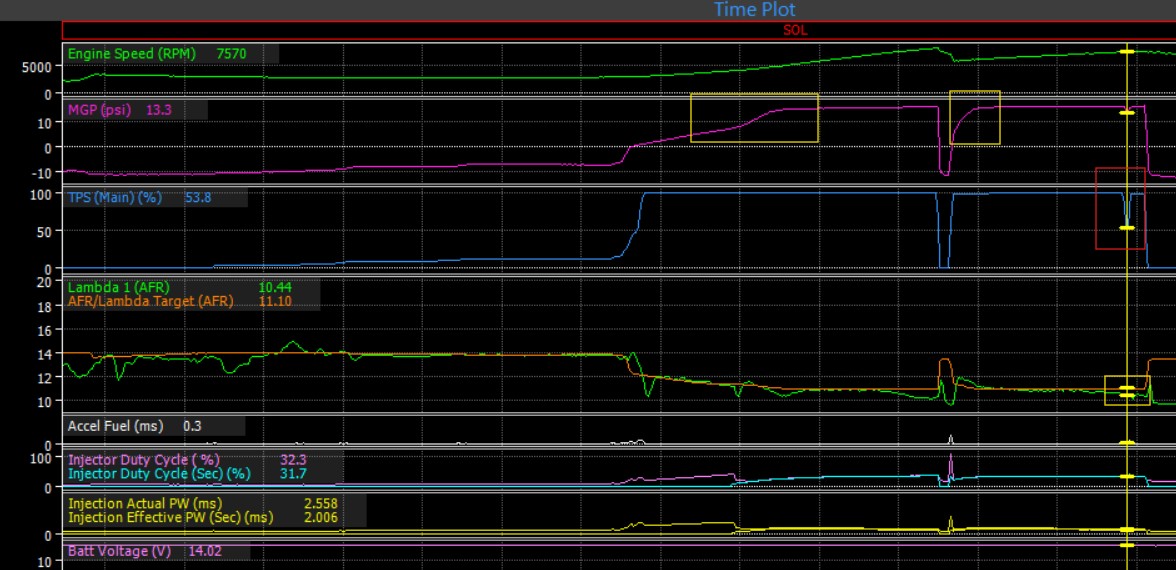
After reviewing the logs, I've identified a few key areas to focus on:
Overall, things are looking very promising and moving in the right direction. Once low boost is fully dialed in to the high 6 to low 7s range, scaling up to 26–29 psi should be much more straightforward and more importantly enjoyable.
In summary, the dyno map at 14psi ran a 8.4s and a few tweaks later its running at 8s which is a significant improvement. 410hp sounds about right for this level.
After reviewing the logs, I've identified a few key areas to focus on:
- Boost Delivery & Traction: With the ATS 1.5-way carbon diff providing noticeably more traction. I will start dialing in the boost earlier. The priority will be to bring boost in sooner while keeping the delivery smooth and linear to maintain control for street use.
- Transient Fueling (Unexpected Insight): During the pull, I unintentionally lifted off the throttle in 4th gear and then got back on the power, which cost me about 0.2 seconds. Surprisingly, this revealed a strong point: the transient fueling in this region felt excellent. So there’s minimal adjustment needed here and this area is nearly dialed.
- 3rd to 4th Gear Acceleration Fueling: I’ll continue refining the accel fueling transition from 3rd to 4th gear. The goal is to keep the primary injector duty cycle below 50% while also regaining some turbo response and snappiness. This should help both drivability, efficiency and overall transient response between gear changes in general.
Overall, things are looking very promising and moving in the right direction. Once low boost is fully dialed in to the high 6 to low 7s range, scaling up to 26–29 psi should be much more straightforward and more importantly enjoyable.
In summary, the dyno map at 14psi ran a 8.4s and a few tweaks later its running at 8s which is a significant improvement. 410hp sounds about right for this level.
Last edited by rx7srbad; May 9, 2025 at 07:21 PM.