


rebuilding with new housings


Thread Starter
adiabaticly inefficient

Joined: Aug 2001
Posts: 386
Likes: 0
From: nw houston,TX or w. hollywood,CA
rebuilding with new housings
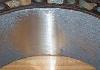
ok,i got my housings in.the surface that the apex seal runs on seems to be coated in something resembling lead.do i just assemble the rebuild with the coating on the surface or am i supposed to remove it somehow?im using RA apex seals if than means anything.....
thanx,
aaron
thanx,
aaron
WingmaN
Joined: Aug 2002
Posts: 4,324
Likes: 0
From: Fort Worth Texas
That is graphite based sprayed with some kind of seal. It burns off fairly fast and all I can figure is that it is only to help for first time start up by making it easier for the apex seals to seal.



Joined: Mar 2001
Posts: 31,857
Likes: 3,243
From: https://www2.mazda.com/en/100th/
i'm thinking thats just what the chome looks like when its new, when it gets all shiny is when the pores have been worn off. a new rotor housing will absorb oil like a sponge, an oil one wont


WingmaN
Joined: Aug 2002
Posts: 4,324
Likes: 0
From: Fort Worth Texas
I did some looking back on some notes from my resurfacing housings project. Marc Wiese had wrote this and it is in the archive of rx7@rx7-world.net list on Yahoo. You have to log on to get to it http://autos.groups.yahoo.com/group/Rx-7/message/4486 but I will put the text at the bottom of this post. It is a baked on graphite and it is covered in the Jack K
Yamaguchi and John Dinkel "RX-7" book.
From: "Marc Wiese" <cardmarc@m...>
Date: Thu Oct 3, 2002 1:10 pm
Subject: (rx7) [3]Apex seal fracture....and other minutia on engine improvements.....
Although I have never heard this mentioned before, the apex seal tip
edges where they intersect the flat faces of the late model rew rotors
are hardened after the grove is cut in the factory. Milling them out
from 2mm to 3 mm may eliminate the edge surface hardening and lead to
cracking of the grove edges. This was adopted from the S-2 racing series
engine development. Not sure if this process was done on any earlier
engines, FWIW.........
Also I cannot recall an instance where the racing rotaries in the
factory program ever used 3mm seals. They used a bunch of different apex
seal materials and arrangements, tho.....
Here is another interesting factoid; the steel cast-in insert on the
housings is called SIP (Sheet-metal Insert Process) and after it is in,
the metal is plated with a porous chrome plating process called
MCP-Micro Channel Plating (which seems to me very similar to chrome
channel plating used in aircraft cylinders sometimes) for lubrication
purposes. This begs the question-Why not send them out to be replated
with channel chrome at a cylinder shop if they are scratched or worn? In
any case, then the surface was sprayed with Teflon (to assist bedding in
of the apex seals) on the 2nd gen turbo, but that coating was switched
to baked carbon graphite in the REW 3rd gen engines. A few other
sophisticated improvements were made in the 3rd gen engines (eliminating
rotor lean at high power output [a new million dollar tool was bought to
machine the parts to the new clearances], rotor bearing oil supply,
upping the oil pressure by 60%, Hitachi HT-12s with 9 blades instead of
10 on turbine, etc).
Lest you think I just know all this minutia off the top of my head, you
too can read all about it in the very professional book "RX7" by Jack K
Yamaguchi and John Dinkel (a real great book for rx7 3rd gen owners,
which focuses on the evolutionary development of the 3rd gen from the
other gens, with lots of tech details and background info) that I got
for free (Ha) by buying so many FD parts from a Mazda dealership in
Houston.
Marc Wiese
Yamaguchi and John Dinkel "RX-7" book.
From: "Marc Wiese" <cardmarc@m...>
Date: Thu Oct 3, 2002 1:10 pm
Subject: (rx7) [3]Apex seal fracture....and other minutia on engine improvements.....
Although I have never heard this mentioned before, the apex seal tip
edges where they intersect the flat faces of the late model rew rotors
are hardened after the grove is cut in the factory. Milling them out
from 2mm to 3 mm may eliminate the edge surface hardening and lead to
cracking of the grove edges. This was adopted from the S-2 racing series
engine development. Not sure if this process was done on any earlier
engines, FWIW.........
Also I cannot recall an instance where the racing rotaries in the
factory program ever used 3mm seals. They used a bunch of different apex
seal materials and arrangements, tho.....
Here is another interesting factoid; the steel cast-in insert on the
housings is called SIP (Sheet-metal Insert Process) and after it is in,
the metal is plated with a porous chrome plating process called
MCP-Micro Channel Plating (which seems to me very similar to chrome
channel plating used in aircraft cylinders sometimes) for lubrication
purposes. This begs the question-Why not send them out to be replated
with channel chrome at a cylinder shop if they are scratched or worn? In
any case, then the surface was sprayed with Teflon (to assist bedding in
of the apex seals) on the 2nd gen turbo, but that coating was switched
to baked carbon graphite in the REW 3rd gen engines. A few other
sophisticated improvements were made in the 3rd gen engines (eliminating
rotor lean at high power output [a new million dollar tool was bought to
machine the parts to the new clearances], rotor bearing oil supply,
upping the oil pressure by 60%, Hitachi HT-12s with 9 blades instead of
10 on turbine, etc).
Lest you think I just know all this minutia off the top of my head, you
too can read all about it in the very professional book "RX7" by Jack K
Yamaguchi and John Dinkel (a real great book for rx7 3rd gen owners,
which focuses on the evolutionary development of the 3rd gen from the
other gens, with lots of tech details and background info) that I got
for free (Ha) by buying so many FD parts from a Mazda dealership in
Houston.
Marc Wiese

Thread
Thread Starter
Forum
Replies
Last Post
[For Sale] Scratch & Dent, Used, and Open-Box Sale!
SakeBomb Garage
Vendor Classifieds
5
Aug 9, 2018 05:54 PM