


changing intake opening and closing on a turbo engine for NA use


Thread Starter

Joined: Aug 2001
Posts: 15,725
Likes: 91
From: Near Seattle
changing intake opening and closing on a turbo engine for NA use
Hey guys, this is my first '86+ engine and it has different primary and secondary ports. Up to this point I've only ever built '85 and older 12As and 4 port 13Bs which all have the same size intakes except for some NO intermediates, which are the same size as GSL-SE and S4 NA primaries, but were carbed. I've driven a carbed engine with an NO plate and let's just say the supposed better low RPM torque out of these things is a bit dubious. You're better off with a Y plate and its standard FB 12A sized ports. 
I've gotten great results from street ports all the way down to stock timing with smoothed edges. I've found 74 spec ports to be wonderful for street driving where you give up a little bit of low end but gain a nice midrange bump in power. I could go into more details but I won't.
Instead I'll paste something from Paul Yaw about port timing. Please note these are general and don't encompass every option (but there is enough info to figure out what 74 spec ports are).
Port Timing
IO = Intake opens
IC = Intake closes
EO = Exhaust opens
EC = Exhaust closes
US Model First Generation RX-7
IO 32° ATDC
IC 40° ABDC
EO 75° BBDC
EC 38° ATDC
European Model First Generation RX-7
IO 32° ATDC
IC 50° ABDC
EO 75° BBDC
EC 48° ATDC
First and Second Generation 6-Port 13B
Primary intake (Part throttle/cruise)
IO 32° ATDC
IC 40° ABDC
Secondary intake (Part to full throttle)
IO 32° ATDC
IC 30° ABDC
Auxiliary high speed ports (Full throttle above approximately 4000 rpm)
IO 45° ATDC
IC 70° ABDC
EO 71° BBDC
EC 48° ATDC
Second and Third Generation Turbo 13B
IO 32° ATDC
IC 50° ABDC
EO 71° BBDC
EC 48° ATDC
Racing Beat "Street Port"
IO 25° ATDC
IC 60° ABDC
EO 84° BBDC
EC 48° ATDC
Racing Beat "J-Bridge Port"
IO 115° BTDC
IC 72° ABDC
EO 88° BBDC
EC 57° ATDC
Mazda Factory Peripheral Port
IO 86° BTDC
IC 75° ABDC
EO 73° BBDC
EC 65° ATDC
I've gotten great results from street ports all the way down to stock timing with smoothed edges. I've found 74 spec ports to be wonderful for street driving where you give up a little bit of low end but gain a nice midrange bump in power. I could go into more details but I won't.
Instead I'll paste something from Paul Yaw about port timing. Please note these are general and don't encompass every option (but there is enough info to figure out what 74 spec ports are).
Port Timing
IO = Intake opens
IC = Intake closes
EO = Exhaust opens
EC = Exhaust closes
US Model First Generation RX-7
IO 32° ATDC
IC 40° ABDC
EO 75° BBDC
EC 38° ATDC
European Model First Generation RX-7
IO 32° ATDC
IC 50° ABDC
EO 75° BBDC
EC 48° ATDC
First and Second Generation 6-Port 13B
Primary intake (Part throttle/cruise)
IO 32° ATDC
IC 40° ABDC
Secondary intake (Part to full throttle)
IO 32° ATDC
IC 30° ABDC
Auxiliary high speed ports (Full throttle above approximately 4000 rpm)
IO 45° ATDC
IC 70° ABDC
EO 71° BBDC
EC 48° ATDC
Second and Third Generation Turbo 13B
IO 32° ATDC
IC 50° ABDC
EO 71° BBDC
EC 48° ATDC
Racing Beat "Street Port"
IO 25° ATDC
IC 60° ABDC
EO 84° BBDC
EC 48° ATDC
Racing Beat "J-Bridge Port"
IO 115° BTDC
IC 72° ABDC
EO 88° BBDC
EC 57° ATDC
Mazda Factory Peripheral Port
IO 86° BTDC
IC 75° ABDC
EO 73° BBDC
EC 65° ATDC
Thread Starter
Joined: Aug 2001
Posts: 15,725
Likes: 91
From: Near Seattle
Here is what I've been able to piece together from above based on observations of intake and exhaust port timing.
North American REPU 3B 13B
IO 32° ATDC
IC 50° ABDC
EO 75° BBDC
EC 38° ATDC
So, why all the attention to 74 ports when the title of this thread is for changing the port timing on a turbo engine for NA use?
Doing some template comparisons on a 20B end plate recently, I made an interesting discovery that those so called wonderful huge practically streetported secondary ports that everyone salivates over were the same as good old classic 74 ports. Only difference was down at the very bottom at its narrowest point, but the same exact opening and closing timings as far as I could determine with a paper template. What gives?
Well they are stock after all (they're not streetports lol). They were meant for a heavy luxo-cruiser and to drive a turbo from mid to high RPM. Well, two turbos. I'll get to the weird primaries in a minute.
I've been able to determine the port timings of a 20B secondaries and exhaut based on the list above:
20B Turbo
IO 32° ATDC
IC 50° ABDC
EO 71° BBDC
EC 48° ATDC
same as 2nd and 3rd gen turbo engines. Honestly the bigger ah-ha moment was discovering the secondaries were basically the same as 74 spec.
North American REPU 3B 13B
IO 32° ATDC
IC 50° ABDC
EO 75° BBDC
EC 38° ATDC
So, why all the attention to 74 ports when the title of this thread is for changing the port timing on a turbo engine for NA use?
Doing some template comparisons on a 20B end plate recently, I made an interesting discovery that those so called wonderful huge practically streetported secondary ports that everyone salivates over were the same as good old classic 74 ports. Only difference was down at the very bottom at its narrowest point, but the same exact opening and closing timings as far as I could determine with a paper template. What gives?
Well they are stock after all (they're not streetports lol). They were meant for a heavy luxo-cruiser and to drive a turbo from mid to high RPM. Well, two turbos. I'll get to the weird primaries in a minute.
I've been able to determine the port timings of a 20B secondaries and exhaut based on the list above:
20B Turbo
IO 32° ATDC
IC 50° ABDC
EO 71° BBDC
EC 48° ATDC
same as 2nd and 3rd gen turbo engines. Honestly the bigger ah-ha moment was discovering the secondaries were basically the same as 74 spec.
Thread Starter
Joined: Aug 2001
Posts: 15,725
Likes: 91
From: Near Seattle
So we've determined the secondaries are 74 spec. This means I can go ahead and port them a little both directions and be just fine as long as the water jacket is kept intact. Ok. I can open them a little sooner, like the RB "streetport" at or near 25° ATDC and still be safe because I've done it before and the side seals survived. I can delay the closing up to probably 60° ABDC as long as I keep an eye, well a finger, on the water jacket behind the port, and because it's a high RPM only kind of port, it won't hurt low end and idle quality. By the time the TB opens the secondary butterflies and the secondary injectors fire, there will already be incoming air at sufficient velocity so it won't went out too badly, if at all. This also means I can port the runners a little and smooth (polish) them like all those BDC port jobs you see.
One question about the ACV ports. Am I supposed to fill them since I'm not running an air pump? I've got quicksteel and but could get some devcon if that's what you guys tend to use. I've found quicksteel to work very well in the ACV ports on old school engines just below the intermediate ports.
One question about the ACV ports. Am I supposed to fill them since I'm not running an air pump? I've got quicksteel and but could get some devcon if that's what you guys tend to use. I've found quicksteel to work very well in the ACV ports on old school engines just below the intermediate ports.
Thread Starter
Joined: Aug 2001
Posts: 15,725
Likes: 91
From: Near Seattle
Exhaust ports. 20B and 13B-RE engines have funky exhaust sleeve that allow air pump air in or out (can't remember, maybe it's both). They're an interesting piece of engineering with a welded on section to bring exhaust gasses up from a tube at the lower corner of the port, connecting fromt he ACV cavity of the side plate, then routes it up and around tot he top of the sleeve where it pumps into the clsoing edge of the exhaust port, so there is some exhaust gas dilution into each incoming air-fuel mixture awaiting ignition. Is that right? j9fd3s says the Cosmo engines run better when you feed them fresh air from the air pump instead of exhaust gasses but I digress because I dont' have a Cosmo air pump (my engine didn't come with one) and it's getting FD sleeves (same as T2 I'm sure).
The little emissions tube in the lower corner of the exhaust port needs to be removed. Can it be tapped out? Or ground down?
On to the port timing. Once the new sleeves are in place, I'll been told by Army of One to port up and down until you get to the sleeves. That's just a few degrees in either direction. Others have said they're already pretty huge and don't need any port work. From what I've doner before on old schools, if the port opens at 71°, that's early enough, but because it's NA, you can allow some overlap so you delay the closing for a little bit. Not as far as 57° for the RB J-bridge above, but maybe more like 53°. Interesting the RB streetport recommends just 48°, which the 20B and other FC/FD come with stock...
Hmm, well just a couple of degrees up and down, like Army of One suggests, sounds like a good idea, but only if I streetport the intakes as well.
The little emissions tube in the lower corner of the exhaust port needs to be removed. Can it be tapped out? Or ground down?
On to the port timing. Once the new sleeves are in place, I'll been told by Army of One to port up and down until you get to the sleeves. That's just a few degrees in either direction. Others have said they're already pretty huge and don't need any port work. From what I've doner before on old schools, if the port opens at 71°, that's early enough, but because it's NA, you can allow some overlap so you delay the closing for a little bit. Not as far as 57° for the RB J-bridge above, but maybe more like 53°. Interesting the RB streetport recommends just 48°, which the 20B and other FC/FD come with stock...
Hmm, well just a couple of degrees up and down, like Army of One suggests, sounds like a good idea, but only if I streetport the intakes as well.
Thread Starter
Joined: Aug 2001
Posts: 15,725
Likes: 91
From: Near Seattle
Speaking of intakes, I haven't talked about the primary ports yet. This is where I'm having the most trouble. It seams the 20B has a straight closing edge when compared with the bottom of the plate where the oil pan bolts up. It is not at an angle like the secondaries or an FD primary/74 spec etc. Very weird. Looks like Mazda's intention was to gradually close this primary port instead of the abrupt closing of all their pother ports, when compared with the side seal as it closes. This could go well to explain why the primaries of a 20B, and I'm assuming the 13B-RE, are shaped so funny, and have such a long port next to the oil seal track. It hugs it for quite some distance up the side. Its low end is very good stock, but runs out of breath way too soon.
Here's some pics so you can see what I'm talking about. As you can see a couple opf them are ported. I wonder how early I can open and how late I can close and still retain some driveability and idle quality. Remember the injectors are needing some velocity.
Here's some pics so you can see what I'm talking about. As you can see a couple opf them are ported. I wonder how early I can open and how late I can close and still retain some driveability and idle quality. Remember the injectors are needing some velocity.
Thread Starter
Joined: Aug 2001
Posts: 15,725
Likes: 91
From: Near Seattle
Lynn E. Hanover usually recommends keeping closing timing stock but likes to open early. Now I have several templates here that could let me open my 20B primaries anywhere from FD spec, to 74 spec (same as secondary), all they way to RB streetport spec, but then I run into possible side seal issues, not to mention possible idle problems.
How far can I go? How far can I really go and still keep a 900 RPM idle? It will be fuel infected with a Megasquirt so there is some tuneability beyond a carb.
Exhaust will be a 2" primary header of thickwall .120" RB mild tube, collected into a correct angle 30° collector then into a 3" ID (yes, ID, not OD which will be 3.25" thickwall .120") tube then into an RB 3" universal presilencer, then 3" OD the rest of the way.
Power goals are 300HP and 200 torque.
I'll do the TB mod after break in. The port runners in the engine will be smoothed and or polished (whichever is recommended). I'll leave the intake manifold alone for now, but should look into media honing or whatever it's called where something is blasted through an intake manifold to polish it on the inside. Can't recall what it's called.
How far can I go? How far can I really go and still keep a 900 RPM idle? It will be fuel infected with a Megasquirt so there is some tuneability beyond a carb.
Exhaust will be a 2" primary header of thickwall .120" RB mild tube, collected into a correct angle 30° collector then into a 3" ID (yes, ID, not OD which will be 3.25" thickwall .120") tube then into an RB 3" universal presilencer, then 3" OD the rest of the way.
Power goals are 300HP and 200 torque.
I'll do the TB mod after break in. The port runners in the engine will be smoothed and or polished (whichever is recommended). I'll leave the intake manifold alone for now, but should look into media honing or whatever it's called where something is blasted through an intake manifold to polish it on the inside. Can't recall what it's called.
Thread Starter
Joined: Aug 2001
Posts: 15,725
Likes: 91
From: Near Seattle
I think that covers it. Oh wait there is one more pic I'd like to upload. This primary port looks to open quite early and they also gave it a really nice angle so it closes abruptly like all the others. Should I do this port on mine? Will it still idle? What do you think?
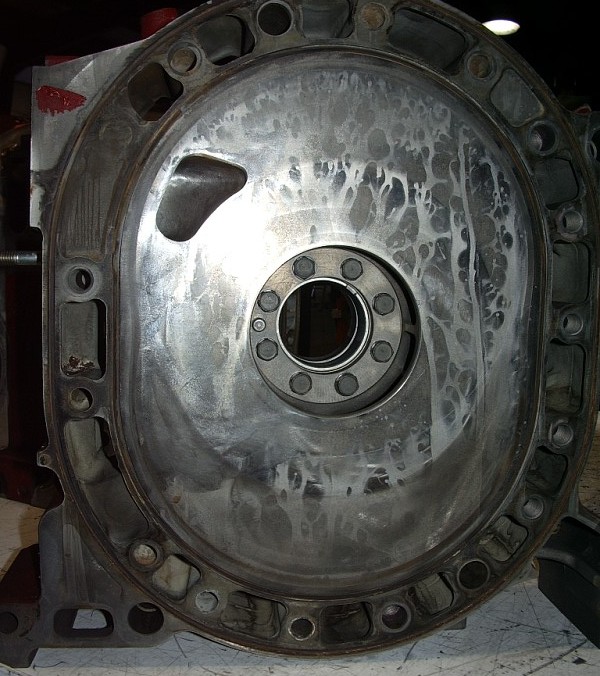
This pic is found at rotaryengineillustrated.com, probably originally by Blake Qualley. He also recommended opening early. Maybe there is something to it?
Ok I'll bottom line it for you guys. How early and late can I open up a primary and still keep an idle for the street? Give it to me in pics or as a degree ATDC. Thank you very much.
This pic is found at rotaryengineillustrated.com, probably originally by Blake Qualley. He also recommended opening early. Maybe there is something to it?
Ok I'll bottom line it for you guys. How early and late can I open up a primary and still keep an idle for the street? Give it to me in pics or as a degree ATDC. Thank you very much.
Trending Topics


Joined: Mar 2001
Posts: 31,851
Likes: 3,239
From: https://www2.mazda.com/en/100th/
per the cosmo new model training book, the port timing is
p open 58 BTDC
s open 32 BTDC
they both close @ 50 ABDC
exhaust opens @75 and closes at 48.
stock idle speed is 695-745 rpm, random numbers i know...
p open 58 BTDC
s open 32 BTDC
they both close @ 50 ABDC
exhaust opens @75 and closes at 48.
stock idle speed is 695-745 rpm, random numbers i know...
Thread Starter
Joined: Aug 2001
Posts: 15,725
Likes: 91
From: Near Seattle
I just found this piece of the puzzle. It clearly lists the differences between US-spec 12A and GSL-SE exhaust ports. 
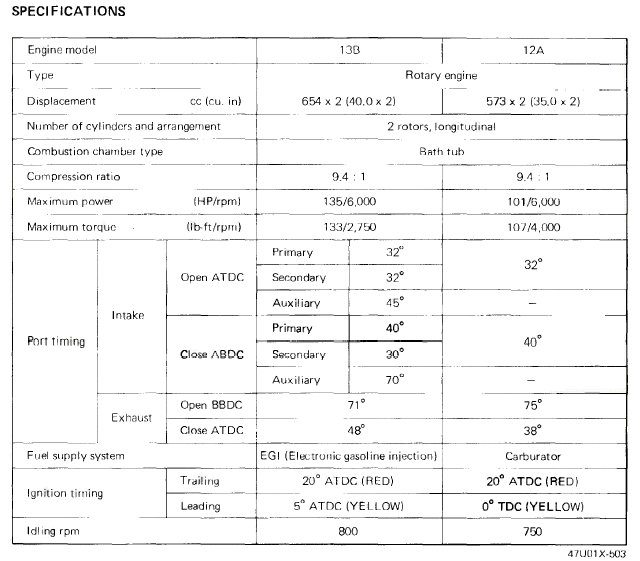
75 and 48 are correct on the 20B, FC and FD because they open at US-spec 12A and close at GSL-SE.
The Paul Yaw information of exhaust opening at 71° listed above is WRONG!
75 and 48 are correct on the 20B, FC and FD because they open at US-spec 12A and close at GSL-SE.
The Paul Yaw information of exhaust opening at 71° listed above is WRONG!
Thread Starter
Joined: Aug 2001
Posts: 15,725
Likes: 91
From: Near Seattle
Thanks.
I sent a PM to that gtorx7 guy about his miraculous NA 20B that exceeded 300 HP and 200 torque below 8k (that'd be perfect for my setup) but he hasn't responded yet. From what I can remember of a previous conversation, he did say his ports weren't super huge or extreme. He just said they were a bit larger than stock. What that translates to in my mind is maybe only 60° intake closing time like a typical RB streetport, which honestly isn't all that much bigger looking than 74 spec when you've been porting it, oh sorry 50° as a stock 20B already comes with. There, I'm minimizing it. I'm still thinking with Y plates on the brain which close at 40° stock.
He never mentioned whether his intake ports opened any sooner than stock, but I have a feeling they do. Especially the super late opening primaries... He had to change the opening of these things. Had to.
He didn't talk about his exhaust as far as I can remember, but I think it was assumed they'd be opened slightly. Makes sense. I've done huger exhaust ports in some R5 housings before; they're the sleeveless type and can be opened as large as T2 if not larger.
Ok guys, today is the day for porting. Any useful tips before I begin?
I sent a PM to that gtorx7 guy about his miraculous NA 20B that exceeded 300 HP and 200 torque below 8k (that'd be perfect for my setup) but he hasn't responded yet. From what I can remember of a previous conversation, he did say his ports weren't super huge or extreme. He just said they were a bit larger than stock. What that translates to in my mind is maybe only 60° intake closing time like a typical RB streetport, which honestly isn't all that much bigger looking than 74 spec when you've been porting it, oh sorry 50° as a stock 20B already comes with. There, I'm minimizing it.
I'm still thinking with Y plates on the brain which close at 40° stock. He never mentioned whether his intake ports opened any sooner than stock, but I have a feeling they do.
Especially the super late opening primaries... He had to change the opening of these things. Had to.He didn't talk about his exhaust as far as I can remember, but I think it was assumed they'd be opened slightly. Makes sense. I've done huger exhaust ports in some R5 housings before; they're the sleeveless type and can be opened as large as T2 if not larger.
Ok guys, today is the day for porting. Any useful tips before I begin?

Old [Sch|F]ool


Joined: May 2001
Posts: 12,876
Likes: 575
From: Cleveland, Ohio, USA
It's a Series 4 6-port with no sleeves. The powerband isn't peaky like most streetports. It doesn't have the characteristic 5500rpm torque surge, it's much more linear. You can tell that the power is biased mainly toward the high end (it's a 6-port after all) but it's not switchlike.
It's been a long time since I drove my desleeved GSL-SE engine, but I remember even that one came on like a lightswitch.
Ports open at 10.9mm from the coolant seal land, ports close as stock as possible while still laying in a nice port bevel and seal-friendly closing edge. Fuel injector pulsewidth suggests about 175hp.
Thread Starter
Joined: Aug 2001
Posts: 15,725
Likes: 91
From: Near Seattle
Thanks peejay. Did you change the closing timing of your primary ports at all?
Early opening for you too, huh? Seems most places I've looked lately suggest early opening really is an excellent way to eek out a little more oomph for your rotary. I can dig it!
I remembered about some more pics just now. These are of gto's 240 HP 13B-RE in his 1st gen. Looks like he added a bit of a bevel at the bottom just in case the engine is turned backwards, so the side seals are protected. Good idea! https://www.rx7club.com/showpost.php...&postcount=108
Hey peejay, when you say your ports open 10.9mm from the coolant seal land, are you talking about where the edge begins if measuring from port opening directly across to where the iron drops down into the coolant seal groove? Well, it's not exactly a groove but a machined channel... lol.
I just measured the practice scribe lines I made in some marker ink yesterday and I got a consistant 13.3mm opening edge measured from the coolant seal using the method described above. Wow, 10.9 is quite a bit earlier opening. How is your idle quality?
I suppose I could open mine sooner than 13.3mm... What are your thoughts?
As for closing timing, I'd like to close them all at the same time. I'm going to call it a mild streetport, as was my intention to port it mild from the beginning. Now that I've had a little study time, it still is the right choice. I'd estimate the actual number to be between 50° and 60° ABDC. Not sure yet. Any loss of low end torque is less concerning since it's got three instead of two.
Early opening for you too, huh? Seems most places I've looked lately suggest early opening really is an excellent way to eek out a little more oomph for your rotary. I can dig it!
I remembered about some more pics just now. These are of gto's 240 HP 13B-RE in his 1st gen. Looks like he added a bit of a bevel at the bottom just in case the engine is turned backwards, so the side seals are protected. Good idea! https://www.rx7club.com/showpost.php...&postcount=108
Hey peejay, when you say your ports open 10.9mm from the coolant seal land, are you talking about where the edge begins if measuring from port opening directly across to where the iron drops down into the coolant seal groove? Well, it's not exactly a groove but a machined channel... lol.
I just measured the practice scribe lines I made in some marker ink yesterday and I got a consistant 13.3mm opening edge measured from the coolant seal using the method described above. Wow, 10.9 is quite a bit earlier opening. How is your idle quality?
I suppose I could open mine sooner than 13.3mm... What are your thoughts?
As for closing timing, I'd like to close them all at the same time. I'm going to call it a mild streetport, as was my intention to port it mild from the beginning. Now that I've had a little study time, it still is the right choice. I'd estimate the actual number to be between 50° and 60° ABDC. Not sure yet. Any loss of low end torque is less concerning since it's got three instead of two.
Thread Starter
Joined: Aug 2001
Posts: 15,725
Likes: 91
From: Near Seattle
Rice Racing opens his at 10.8mm, I just found out while searching the nopistons porting faq.
Tough decision. It's apart. I could do it. But I've never done it before. Not sure what to expect.
Tough decision. It's apart. I could do it. But I've never done it before. Not sure what to expect.

BDC Motorsports

Joined: Jun 2002
Posts: 3,667
Likes: 6
From: Grand Prairie, TX
Be careful cutting into that opening edge closest to the inner water jacket o-ring. That's the bad guy that can potentially yield the leading edge of a side seal riding out of the groove ever-so-slightly and smacking into the closing edge of the port at that top, inner corner.
B
B
Thread Starter
Joined: Aug 2001
Posts: 15,725
Likes: 91
From: Near Seattle
Thanks for the advice. Yeah I've had success so far opening at 11.7mm from the coolant seal and adding a nice Ito style ramp to comfortably raise the side seal back up. These have all been 1st gen engines with their thick side seals.
I could go for my tried and true 11.7mm again, or venture into the unknown 10.9mm. There's really very little difference going from the stock secondary opening to 11.7mm. Then less than 1mm going to 10.9mm. Hmm...
I could go for my tried and true 11.7mm again, or venture into the unknown 10.9mm. There's really very little difference going from the stock secondary opening to 11.7mm. Then less than 1mm going to 10.9mm. Hmm...
Old [Sch|F]ool
Joined: May 2001
Posts: 12,876
Likes: 575
From: Cleveland, Ohio, USA
Be careful cutting into that opening edge closest to the inner water jacket o-ring. That's the bad guy that can potentially yield the leading edge of a side seal riding out of the groove ever-so-slightly and smacking into the closing edge of the port at that top, inner corner.
B
B
I make my closing edges very angled so the unsupported trailing end of the side seal doesn't smark into it flat, or worse, end-first. (This is really difficult to do with a 6-port! No wonder Mazda made the opening line so LATE for the aux ports)
Then I put a hefty bevel on it, including right on up to the opening line with a triangular file. The lack of a corner probably hurts flow a little, but I'll accept that.
Then I take a Roloc cookie and blend the bevel into the housing face.
Then I put a small bevel at the bottom of the port, in case the engine ever rotates backwards. (I like to roll engines backwards while doing an oil change, it's easier than removing the rear oil cooler line and blowing the cooler out with compressed air)
Overkill? Probably.
Old [Sch|F]ool
Joined: May 2001
Posts: 12,876
Likes: 575
From: Cleveland, Ohio, USA
You asked how late i closed them. As I said, I only opened up the closing side just enough to put a proper closing edge into them, and no more.
Thread Starter
Joined: Aug 2001
Posts: 15,725
Likes: 91
From: Near Seattle
Thanks man! This engine, being an '86+ has a lot less wear from strictly mileage than a comparable 1st gen engine (thank grid!) but there is enough there to see where the corner seals and side seals ride. It's helpful for seeing how the side seals smack into and bounce off of the hard 90° closing edge of the stock secondaries. Yikes!
Anyway I can see how a 10.9mm opening edge could work. Thanks for that!
I'm settling in on a closing edge that's a little later than stock. It's nominally at 4mm after the secondary closes (very mild) but I think I'll angle it slightly up at the outer edge to more closely follow the side seal's travel, instead of just a delayed stock shaped/angled edge. Makes sense.
Anyway I can see how a 10.9mm opening edge could work. Thanks for that!
I'm settling in on a closing edge that's a little later than stock. It's nominally at 4mm after the secondary closes (very mild) but I think I'll angle it slightly up at the outer edge to more closely follow the side seal's travel, instead of just a delayed stock shaped/angled edge. Makes sense.
Thread Starter
Joined: Aug 2001
Posts: 15,725
Likes: 91
From: Near Seattle
Ok, got it roughed in well enough to make a paper template.
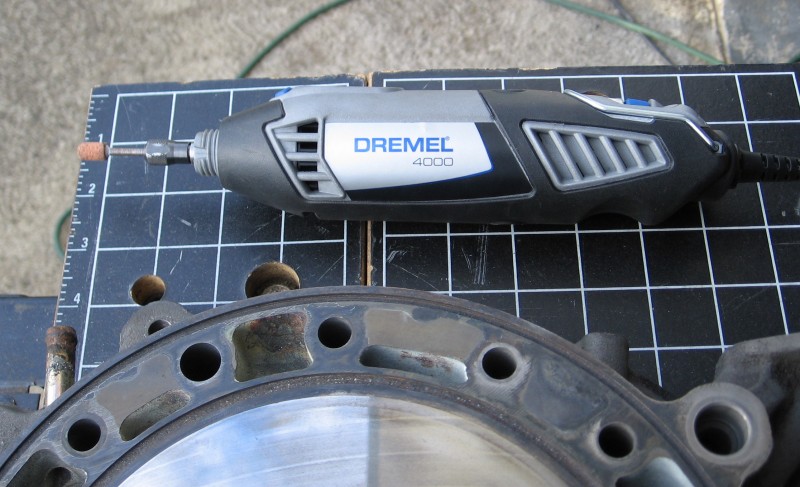
The opening edge is nominally at 10.9mm but with a small margin of error. We're talking from 10.87 to 10.93. Dude that's close enough for eyeballing it and my first time, and with a new Dremel 4000 that I'm still getting used to, I think (my old small one's speed control died so it's 100% full speed as soon as it's on... will look into it later). Good enough for a template.
The closing edge worked out well enough. I've done a lot more of those than opening edges. I used several methods to scribe it out including an aluminum ruler as a straight edge, the 20B's weird primary closing edge curve next to the oil seal track (so they'd match pri and sec), which turned out decent looking. The other curve, where the side seal will crash, was a copy of the 20B's secondary curve in that location. I just shifted it up and over several mm because the other templates I had looked like *** there. I'll add a nice ramp after I've made a new template.
Funny, that this almost from "scratch" (I was making a pun there, I think) scribing job wound up looking a lot like a mildish Ito or Race Racing style port without that being the goal. It just ended up looking that way based on the way I scribed it out.
I took a couple of pics during the process which I'll upload tonight. You can wait that long, can't you?
I still gotta do a primary as well...
The opening edge is nominally at 10.9mm but with a small margin of error. We're talking from 10.87 to 10.93. Dude that's close enough for eyeballing it and my first time, and with a new Dremel 4000 that I'm still getting used to, I think (my old small one's speed control died so it's 100% full speed as soon as it's on... will look into it later). Good enough for a template.
The closing edge worked out well enough. I've done a lot more of those than opening edges. I used several methods to scribe it out including an aluminum ruler as a straight edge, the 20B's weird primary closing edge curve next to the oil seal track (so they'd match pri and sec), which turned out decent looking. The other curve, where the side seal will crash, was a copy of the 20B's secondary curve in that location. I just shifted it up and over several mm because the other templates I had looked like *** there. I'll add a nice ramp after I've made a new template.
Funny, that this almost from "scratch" (I was making a pun there, I think) scribing job wound up looking a lot like a mildish Ito or Race Racing style port without that being the goal. It just ended up looking that way based on the way I scribed it out.
I took a couple of pics during the process which I'll upload tonight. You can wait that long, can't you?
I still gotta do a primary as well...
Thread Starter
Joined: Aug 2001
Posts: 15,725
Likes: 91
From: Near Seattle
The pictures, as promised.
Here you can see the opening line and the closing line scribed into ink from a sharpie.
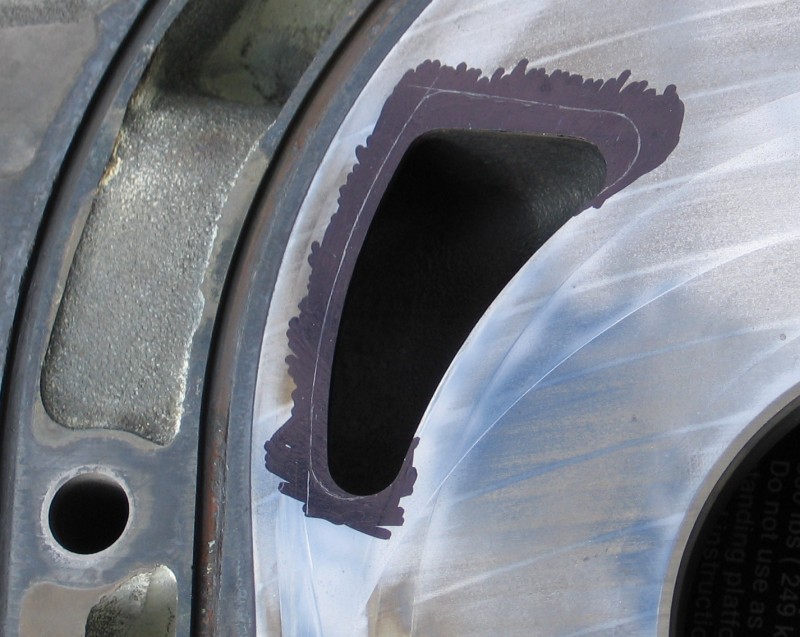
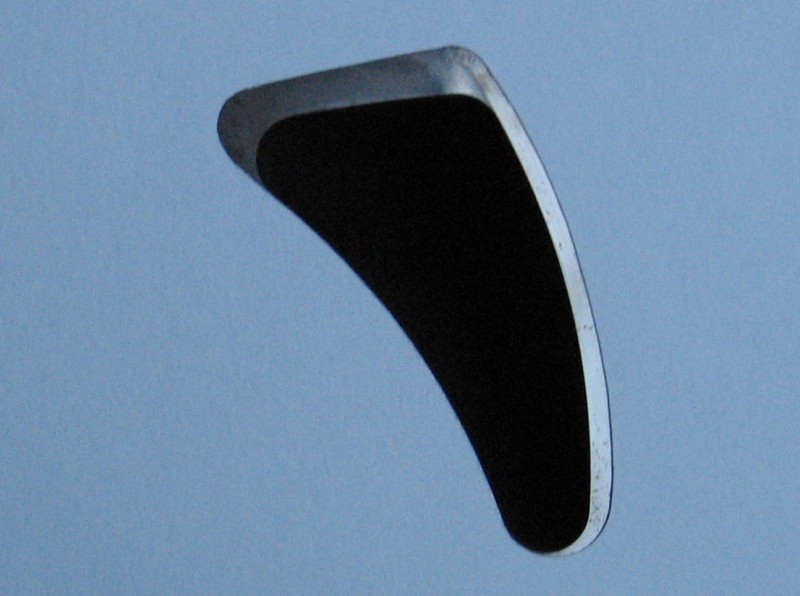
Roughed in. Still needs bevel work, which will delay closing another degree or so. This was just to make a template so they could all be equal. Finishing comes after they've all been rough cut like this.
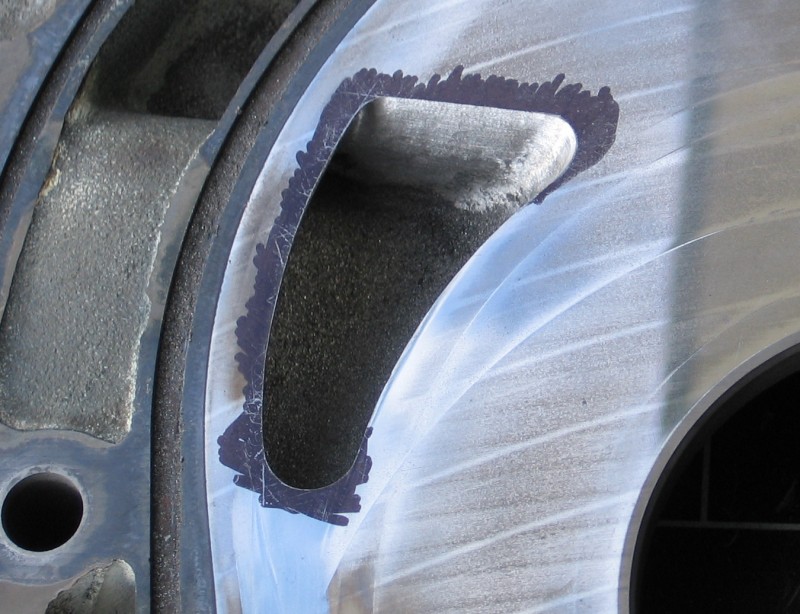
The new Dremel I got to use.
New template on stock secondary.
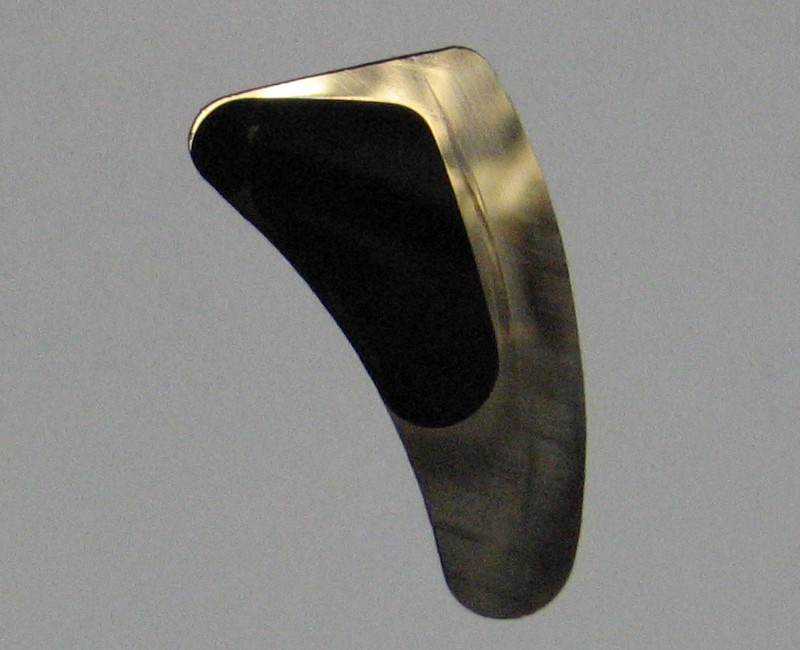
On stock primary. Notice the difference in closing edge angles. Kinda interesting.
With flash. Oh don't worry. I'm not going to port all the way down. I gotta make a template for the primary next.
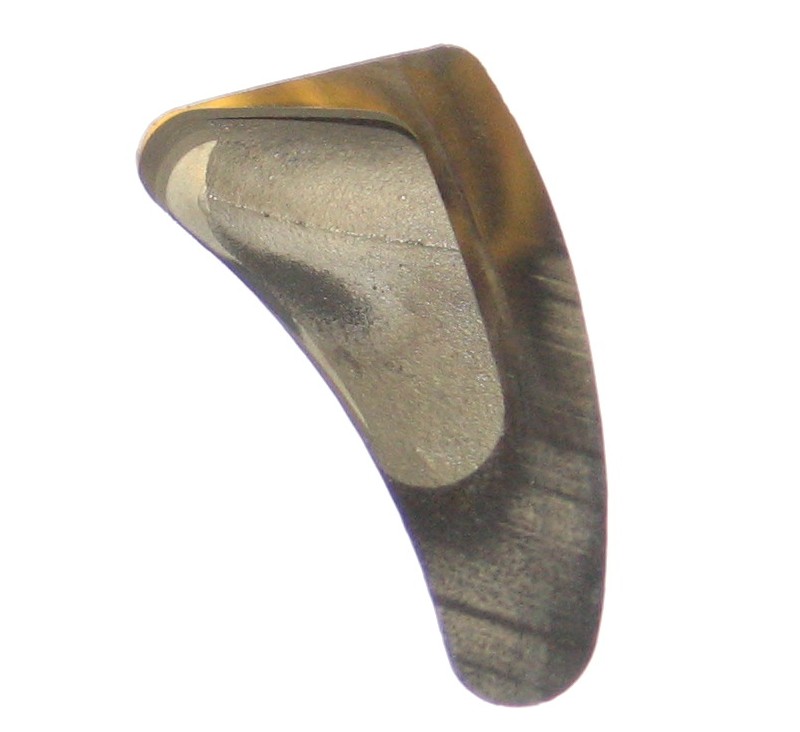
So what do you think? Good job? Or needs improvement?
Here you can see the opening line and the closing line scribed into ink from a sharpie.
Roughed in. Still needs bevel work, which will delay closing another degree or so. This was just to make a template so they could all be equal. Finishing comes after they've all been rough cut like this.
The new Dremel I got to use.
New template on stock secondary.
On stock primary. Notice the difference in closing edge angles. Kinda interesting.
With flash. Oh don't worry. I'm not going to port all the way down. I gotta make a template for the primary next.
So what do you think? Good job? Or needs improvement?
Thread Starter
Joined: Aug 2001
Posts: 15,725
Likes: 91
From: Near Seattle
Just scribed a primary yesterday.
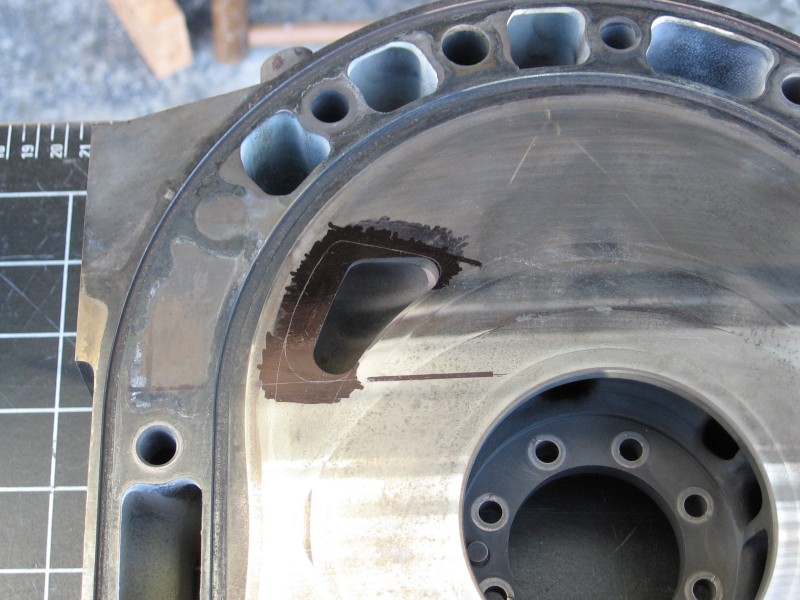
Close up detail. The upper part is from the ported secondary template. Lower section was right-brain artistic stuff. Is this really how they look before you start cutting? Looks really oddball to me.
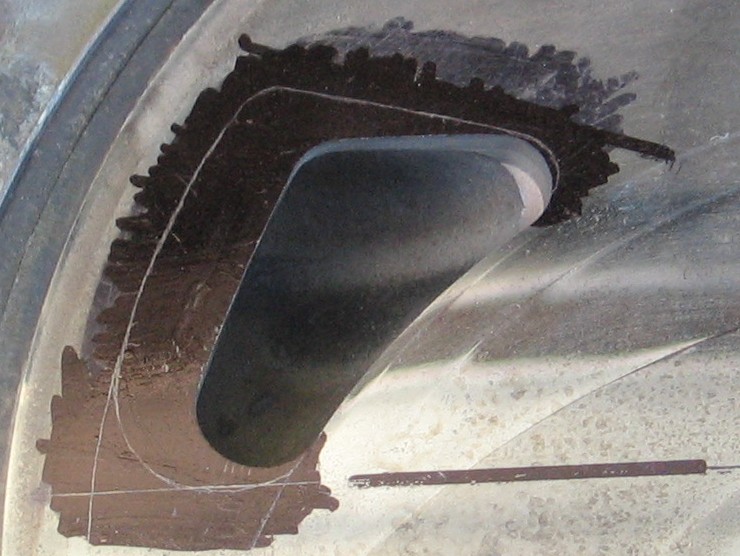
Later that evening. Sorry about the flash. This is a rough cut so I can make a template. How did it turn out? The mini opening scribe line is 10.9mm from the inner coolant seal edge. Something tells me to keep it at its current 11.something because it's a primary and I've already removed so much. Thoughts?
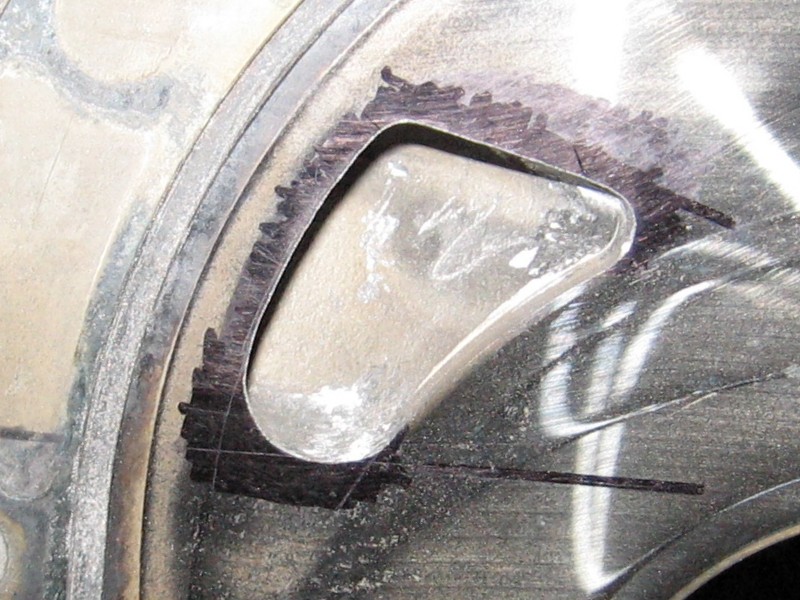
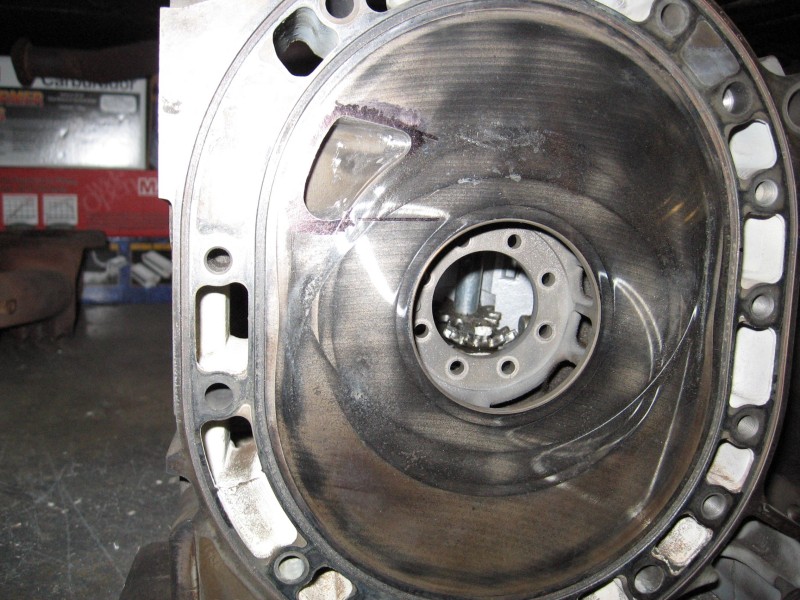
Check out how big it is compared to everything else. Hehehe. Kinda dwarfs the stat gear holder.
Close up detail. The upper part is from the ported secondary template. Lower section was right-brain artistic stuff. Is this really how they look before you start cutting? Looks really oddball to me.
Later that evening. Sorry about the flash. This is a rough cut so I can make a template. How did it turn out? The mini opening scribe line is 10.9mm from the inner coolant seal edge. Something tells me to keep it at its current 11.something because it's a primary and I've already removed so much. Thoughts?
Check out how big it is compared to everything else. Hehehe. Kinda dwarfs the stat gear holder.
Joined: Mar 2001
Posts: 31,851
Likes: 3,239
From: https://www2.mazda.com/en/100th/
port looks good! IMO if its at 11, i'd just leave it, that .1mm isn't gonna make more HP, and it looks good now, i'd actually leave the runners rough too...