


break in period? and engine oil weight?


Thread Starter
silicone filled

Joined: Dec 2009
Posts: 67
Likes: 0
From: Lost In Middle America, OH
break in period? and engine oil weight?
so i have heard many different theories on the proper way to break in a rotary engine, but i would like to hear some actual experiences. so if you wouldnt mind taking a few minutes of your time and posting the procedure you used, are using, or recommend. im sure i am not the only one wondering the best procedure. just for some info i will be running a large streetport on my 12a in my 85. also i would like to ask what engine oil weight to use. i know i will be running full synthetic so i dont want to start that debate. i was running mobil 1 15w-50 that engine had 234012 miles on it b4 the apex seals blew apart. thank in advanced my intelligent rotary fanatics.

breakin
so i have heard many different theories on the proper way to break in a rotary engine, but i would like to hear some actual experiences. so if you wouldnt mind taking a few minutes of your time and posting the procedure you used, are using, or recommend. im sure i am not the only one wondering the best procedure. just for some info i will be running a large streetport on my 12a in my 85. also i would like to ask what engine oil weight to use. i know i will be running full synthetic so i dont want to start that debate. i was running mobil 1 15w-50 that engine had 234012 miles on it b4 the apex seals blew apart. thank in advanced my intelligent rotary fanatics.
my new engine has 2800 miles on it now, runs perfectly and does not smoke.
I use 20w/50 casterol gtx, do not use a synthetic for breakin too slick for everything to seat properly, there needs to be some wear for things to seat properly.
proper breakin requires a lot of no lead foot time and easy driving, running the engine to full temp before driving, keeping the rpm's between 2k and 4k and not lugging the engine. after 500 miles you can start doing full throttle pulls to 6k but no buzzer pulls yet. oil change is done at 500 miles.
at 700 miles you can now drive it as you would every day, I run mine hard to the buzzer at least once a day to keep it clean. change the oil again at 1k miles.
break in is now complete.
Take it as you will but not abusing the engine early on is the best practice to ensure proper sealing of apex seals and oil control rings.


stayed under 4k for the first 1k miles. up to 6k for the next 500 to 1k miles. didn't go to redline til after 2500 to 3k miles. current mileage is around 80k or so, kinda lost track now. mods in my sig.

Junior Member
Joined: Dec 2008
Posts: 36
Likes: 0
From: australia
engine break in does not take thousands and thousands of miles, your wasting your time... a properly specd and clearanced motor doesnt need it, 90% will happen in the first few minutes, if something is incorrectly specd. your not preventing the inevitable. do a youtube search of how its done, on an engine dyno and replicate that it your car. it works for the people who know their ****.
load is good, don't drive like a baby as things wont seat properly. on the engine dyno its break in is short and sweet. i have zero bearing failure, improper tolerances, scoring nothing. nor have i seen any from a firm break in. however isee lots of rings that dont seat, seals that dont bed in on motors babied for extended periods of time.
i know its not the same but you get the idea
http://www.youtube.com/watch?v=26X_s28ilYs
load is good, don't drive like a baby as things wont seat properly. on the engine dyno its break in is short and sweet. i have zero bearing failure, improper tolerances, scoring nothing. nor have i seen any from a firm break in. however isee lots of rings that dont seat, seals that dont bed in on motors babied for extended periods of time.
i know its not the same but you get the idea
http://www.youtube.com/watch?v=26X_s28ilYs
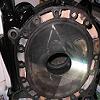
I broke my engine in using Castrol GTX 20W50.
For the first 30mins I wound the idle up to about 1200rpm and let the engine idle in my back yard. I did this so all the assembly oils and also the oil in my exhaust would burn off.
I then started driving it. It got 900kms / 600 miles of cruising with some full throttle / loaded up. That is say 50% throttle at 2500rpm etc etc.
By 900kms I was winding it out all the way (it was carby non turbo at the time). This was before I had even changed the initial oil. I feel a bit dumb about that but hey its still running mint 5 years later.
Note I used new bearings seals, metal oil seals, housings, basically the lot.
I guy I know stands by 5000 kms gentle bed in for rebuilds especially with new bearings. In context he builds 400+hp motors.
If I was to do it again I would probably still only give the motor 1000 kms / 625 miles below 3500rpm but I would change the oil 2 times inside that period to get all the run-in fillings out.
In context I will not build a motor that is not full of new and genuine parts and as such will always cost $3000 but should give a fast bed in.
For the first 30mins I wound the idle up to about 1200rpm and let the engine idle in my back yard. I did this so all the assembly oils and also the oil in my exhaust would burn off.
I then started driving it. It got 900kms / 600 miles of cruising with some full throttle / loaded up. That is say 50% throttle at 2500rpm etc etc.
By 900kms I was winding it out all the way (it was carby non turbo at the time). This was before I had even changed the initial oil. I feel a bit dumb about that but hey its still running mint 5 years later.
Note I used new bearings seals, metal oil seals, housings, basically the lot.
I guy I know stands by 5000 kms gentle bed in for rebuilds especially with new bearings. In context he builds 400+hp motors.
If I was to do it again I would probably still only give the motor 1000 kms / 625 miles below 3500rpm but I would change the oil 2 times inside that period to get all the run-in fillings out.
In context I will not build a motor that is not full of new and genuine parts and as such will always cost $3000 but should give a fast bed in.

engine break in does not take thousands and thousands of miles, your wasting your time... a properly specd and clearanced motor doesnt need it, 90% will happen in the first few minutes, if something is incorrectly specd. your not preventing the inevitable. do a youtube search of how its done, on an engine dyno and replicate that it your car. it works for the people who know their ****.
load is good, don't drive like a baby as things wont seat properly. on the engine dyno its break in is short and sweet. i have zero bearing failure, improper tolerances, scoring nothing. nor have i seen any from a firm break in. however isee lots of rings that dont seat, seals that dont bed in on motors babied for extended periods of time.
i know its not the same but you get the idea
http://www.youtube.com/watch?v=26X_s28ilYs
load is good, don't drive like a baby as things wont seat properly. on the engine dyno its break in is short and sweet. i have zero bearing failure, improper tolerances, scoring nothing. nor have i seen any from a firm break in. however isee lots of rings that dont seat, seals that dont bed in on motors babied for extended periods of time.
i know its not the same but you get the idea
http://www.youtube.com/watch?v=26X_s28ilYs
you are also right though in that babying the engine too much can lead to other issues, mainly carbon buildup which can hurt the engine in the longrun versus help it.
break-in really depends on the condition of the parts being used, used rotor housings with chrome peeling resulting in low compression should be run-in for longer before beating the snot out of it, especially in turbocharged applications. but people who claim that you need to change engine oil 5 times in 2000 miles on an engine with new bearings urk me...
a well built engine doesn't need much breakin time, a well toleranced motor actually only takes about 300 miles of moderate throttle revs to build FULL compression. the current motor in my TII was seeing full boost about 10 miles after the last assembly and it has gone about 65k miles now(i did replace the rotor housings at the time with ones with very good/clean surfaces). i have seen some worn engines with larger steps in the rotor housings from the seal boot gouging take up to 2500 or more miles to see full compression and the result was still not very desirable at less than 100psi(120-130psi is ideal).
after debating to myself the pros and cons of resurfacing rotor housings i decided the cons were beat by the pros and will help drastically in break-in period duration.
https://www.rx7club.com/vendor-classifieds-276/rotor-housing-resurfacing-services-957625/
so my opinion on the matter is, don't beat on an engine until the seals have lapped into the motor and this really is dependent on whether the motor is used with abused old parts or good new or near new ones.
weight of oil simply depends on the wear on the bearings, new bearings should be run with 10W-30 conventional oil in winter and 10W-40 in summer. engines using older more worn bearings should stick with 10W-40 in winter and 20W-50 in summer.
Last edited by RotaryEvolution; Jun 21, 2011 at 01:20 PM.

i've put 40 miles on an engine, then redlined 4th to about 130mph. this was a boosted block putting out about 240rwhp. The block lasted 16k miles until a overheat/coolant seal failure. everthing else in the block was still as good as the day i assembled it, and were once again reused for the next engine.
I don't go this extreame anymore, but 100-200 miles below 4k and redline happy after that is good practice, it really depends on what seals were replaced and what bearings were reused.
I don't go this extreame anymore, but 100-200 miles below 4k and redline happy after that is good practice, it really depends on what seals were replaced and what bearings were reused.
Trending Topics
i literally do about 30 minutes of idling and rev mixing to 4k during that period on my own personal engines then it's all bets off. i have never had any bearing failures or apex seals blow out for no reason placing blame on short break-in periods before. this applies to engines with excellent condition used parts, new parts and engines with higher mile used parts.
but of course i don't recommend this to my customers, because i'm the one who has to honor the warranty and there has to be a policy in place to protect myself.
you can usually tell how the engine seals are breaking in simply by how the engine reacts during idling. a fresh engine just started will have a hard time idling for about 10 minutes, after that you can let it idle on it's own. after about 30-40 minutes the idle is as solid as it ever will be generally speaking. because the seals have already lapped into the housings.
but of course i don't recommend this to my customers, because i'm the one who has to honor the warranty and there has to be a policy in place to protect myself.
you can usually tell how the engine seals are breaking in simply by how the engine reacts during idling. a fresh engine just started will have a hard time idling for about 10 minutes, after that you can let it idle on it's own. after about 30-40 minutes the idle is as solid as it ever will be generally speaking. because the seals have already lapped into the housings.
Last edited by RotaryEvolution; Jun 21, 2011 at 01:28 PM.
Junior Member
Joined: Dec 2008
Posts: 36
Likes: 0
From: australia
i literally do about 30 minutes of idling and rev mixing to 4k during that period on my own personal engines then it's all bets off. i have never had any bearing failures or apex seals blow out for no reason placing blame on short break-in periods before. this applies to engines with excellent condition used parts, new parts and engines with higher mile used parts.
but of course i don't recommend this to my customers, because i'm the one who has to honor the warranty and there has to be a policy in place to protect myself.
you can usually tell how the engine seals are breaking in simply by how the engine reacts during idling. a fresh engine just started will have a hard time idling for about 10 minutes, after that you can let it idle on it's own. after about 30-40 minutes the idle is as solid as it ever will be generally speaking. because the seals have already lapped into the housings.
but of course i don't recommend this to my customers, because i'm the one who has to honor the warranty and there has to be a policy in place to protect myself.
you can usually tell how the engine seals are breaking in simply by how the engine reacts during idling. a fresh engine just started will have a hard time idling for about 10 minutes, after that you can let it idle on it's own. after about 30-40 minutes the idle is as solid as it ever will be generally speaking. because the seals have already lapped into the housings.

a seal does bed much the same way that a ring does, it requires heat combustion pressure and friction to wear in, using some cheap **** dyno oil.
i dont like the argument that it has new bearings gota do 3 oil changes and 5000miles. if you check all your specs and clearance bearings correctly, not required! yes the bloke built a 400hp+ block, but it would have made that power about 4500mile earlier. (assuming it was specd correct)
i did a motor, all new everything, housings bearings the lot. did its hour and a bit run in and a few heat cycles... made 585hp

to add to that, i overheated it, sat it on rev cut ALOT, 2step on the street, generally flogging the *** off it. pulled it down when it was seeing 80psi allround after 10,000km and had warped apex seals from heat. bearings like new, nothing worn anywhere



Joined: Mar 2002
Posts: 1,621
Likes: 505
From: The Elysian Fields (Texas)
Mazda Engine Break-in Procedures...
Mazda has clear and concise break-in procedures (Mazda Comp Catalog p. TT-22-23), so deviate at your own risk:
RPM.......New Bearings.....Old Bearings.........New Bearings.....Old Bearing
1500......0.5....................----......................----....................----
2000......0.5....................0.5.............. ........----....................----
2500......0.5....................----......................----....................----
3000......0.5............. ......----.....................----.....................----
4000......1.0................... 0.5......................----.....................----
5000......1.0................... 0.5......................60......................----
6000......1.5....................0.5.............. ........60.....................25
6500......1.5....................0.5.............. ........----....................----
7000......----................... ----.....................60......................25
8000......----................... ----.....................60......................25
8500......----................... ----.....................60......................25
TOTAL.....7.0................... 2.5.....................300.....................00
.
I'll drink to that!
- ENGINE BREAK-IN PROCEDURES:
"A proper and careful break-in period for a newly rebuilt engine is extremely important. The break-in procedures listed on the following page may seem excessive. However, an engine that has been broken in properly will see more power across the engine’s rpm range and longer service life than a comparable engine that has not. If using the old bearings, please note the difference in hours and mileage requirements for the break-in period.When breaking in any engine (race or stock), use a low ash content, mineral-based racing oil (20 w or 30 w). After the break-in period, change to a mineral or synthetic racing oil (30 w or 40 w)."
- RACE ENGINE BREAK-IN PROCEDURES:
"Using a dynamometer for engine break-in is preferred. If you do not have access to a 'Dyno,' use the mileage break-in figures on the next page. The engine should first be run at idle for 30-45 minutes. During this time, be sure to check for leaks and keep an eye on the gauges. Ideally, for the first 100miles (depending on use of new or used bearings), avoid operating the engine above 5000 rpm or under heavy load.From 100-200 miles, gradually increase rpm, but never allow the engine to approach red line. Beyond 200 miles we recommend only short bursts of power approaching red line for 100 miles. At this point, change the break-in engine oil. The engine break-in period is now complete."
- TIME AND MILEAGE RECOMMENDATIONS:
RPM.......New Bearings.....Old Bearings.........New Bearings.....Old Bearing
1500......0.5....................----......................----....................----
2000......0.5....................0.5.............. ........----....................----
2500......0.5....................----......................----....................----
3000......0.5............. ......----.....................----.....................----
4000......1.0................... 0.5......................----.....................----
5000......1.0................... 0.5......................60......................----
6000......1.5....................0.5.............. ........60.....................25
6500......1.5....................0.5.............. ........----....................----
7000......----................... ----.....................60......................25
8000......----................... ----.....................60......................25
8500......----................... ----.....................60......................25
TOTAL.....7.0................... 2.5.....................300.....................00
.
I'll drink to that!
mazda's recommendations are overly thorough. bearing failures in these engines are so very rare that the only 2 that i have actually seen were from engines that lost ALL lubrication due to ripped/ruptured oil cooler lines.
engines that had short break-ins, generally abused the **** out of or 200k mile engines all had bearings that had plenty of life to spare.
this is in hundreds of engines, not a small %.
engines that had short break-ins, generally abused the **** out of or 200k mile engines all had bearings that had plenty of life to spare.
this is in hundreds of engines, not a small %.

Can Post Only in New Member Section
Joined: May 2014
Posts: 4
Likes: 0
From: United Kingdom
Just had an engine rebuilt and I have been told to avoid full throttle and going above 4000rpm for 500 miles, then gradually increase this over the next 500 miles.
The suspense is killing me, especially as it came with a new exhaust, and a street port.
I've done 350 miles so far.
Anyone want a free taxi service or anything delivering?
The suspense is killing me, especially as it came with a new exhaust, and a street port.
I've done 350 miles so far.
Anyone want a free taxi service or anything delivering?



i know its not the same but you get the idea
http://www.youtube.com/watch?v=26X_s28ilYs
http://www.youtube.com/watch?v=26X_s28ilYs
Last edited by jkstill; Jan 11, 2020 at 10:15 AM. Reason: included url

Thread
Thread Starter
Forum
Replies
Last Post
JUGGAKNOTZZ
3rd Generation Specific (1993-2002)
26
Aug 24, 2006 09:18 PM
EatRiceDontDriveIt
2nd Generation Specific (1986-1992)
10
Jul 16, 2003 09:35 PM
