


Simplifying vacuum lines


Thread Starter
Junior Member
Joined: Mar 2007
Posts: 47
Likes: 0
From: fl
Simplifying vacuum lines
From: http://www.carforums.net/cf-rx7.php
Just a quick update: After putting the vehicle together and having idle problems and low vacuum, we decided to rip it back down to the block and inspect for problems. We found several vacuum lines that were already ripped (poor quality tubing) and a wiring harness connector that was mangled. Now we are waiting on a few replacement parts and doing a vacuum line simplification process in the mean time. The diagram for the original factory vacuum diagram is below (65 lines) and then pictured to the right is the simplified version. Should make it much easier to find / trace vacuum problems.
http://www.carforums.net/images/proj...e_diagram2.jpg
http://www.carforums.net/images/proj...simplified.jpg
anybody want to explain the significance and pros and cons of this?
Just a quick update: After putting the vehicle together and having idle problems and low vacuum, we decided to rip it back down to the block and inspect for problems. We found several vacuum lines that were already ripped (poor quality tubing) and a wiring harness connector that was mangled. Now we are waiting on a few replacement parts and doing a vacuum line simplification process in the mean time. The diagram for the original factory vacuum diagram is below (65 lines) and then pictured to the right is the simplified version. Should make it much easier to find / trace vacuum problems.
http://www.carforums.net/images/proj...e_diagram2.jpg
http://www.carforums.net/images/proj...simplified.jpg
anybody want to explain the significance and pros and cons of this?


From: http://www.carforums.net/cf-rx7.php
Just a quick update: After putting the vehicle together and having idle problems and low vacuum, we decided to rip it back down to the block and inspect for problems. We found several vacuum lines that were already ripped (poor quality tubing) and a wiring harness connector that was mangled. Now we are waiting on a few replacement parts and doing a vacuum line simplification process in the mean time. The diagram for the original factory vacuum diagram is below (65 lines) and then pictured to the right is the simplified version. Should make it much easier to find / trace vacuum problems.
http://www.carforums.net/images/proj...e_diagram2.jpg
http://www.carforums.net/images/proj...simplified.jpg
anybody want to explain the significance and pros and cons of this?
Just a quick update: After putting the vehicle together and having idle problems and low vacuum, we decided to rip it back down to the block and inspect for problems. We found several vacuum lines that were already ripped (poor quality tubing) and a wiring harness connector that was mangled. Now we are waiting on a few replacement parts and doing a vacuum line simplification process in the mean time. The diagram for the original factory vacuum diagram is below (65 lines) and then pictured to the right is the simplified version. Should make it much easier to find / trace vacuum problems.
http://www.carforums.net/images/proj...e_diagram2.jpg
http://www.carforums.net/images/proj...simplified.jpg
anybody want to explain the significance and pros and cons of this?
1. Removes emissions
2. Reduces the number of vacuum lines.
Basically, for #2, it just changes the source for some of the solenoids. IMO, it's pointless. Unless you truly understand the sequential system, all it will do is confuse you and make troubleshooting problems later much more difficult.
You can remove the emission components without doing the "simplification".

i converted my turbos to nonsequential, and i'm going to attempt going back to sequential...
anybody have any ideas on what i could use for the vacuum and pressure chambers? do i really need them or can i just couple the lines that go into them?
anybody have any ideas on what i could use for the vacuum and pressure chambers? do i really need them or can i just couple the lines that go into them?

Trending Topics



Joined: May 2005
Posts: 3,243
Likes: 42
From: Kennewick, Washington
The simplification of the tubes is something that should be done only if you have a deep understanding of what each vacuum line does and why, and when, and what the symptoms would be if it leaked.
otherwise, just stick with the way the factory did it and just get new hoses.
otherwise, just stick with the way the factory did it and just get new hoses.

Senior Member

Joined: Jul 2006
Posts: 582
Likes: 0
From: Stow, Ohio
im about to do this also. go from my non-seq back to sequential. just need 5 or 6 solenoids, some vac line, and a few electrical connectrs to solder in place and follow the diagram above. I'll either get some used vac/pressure chambers or weld some nice looking ones together.
Joined: May 2005
Posts: 3,243
Likes: 42
From: Kennewick, Washington
im about to do this also. go from my non-seq back to sequential. just need 5 or 6 solenoids, some vac line, and a few electrical connectrs to solder in place and follow the diagram above. I'll either get some used vac/pressure chambers or weld some nice looking ones together.
Hmmm, that gives me a good idea for relocating them.... hmmm....
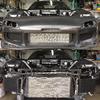

I did the simplified vacuum set up and i love the simplicity. Allowed me to clean up underneath and route the vacuum lines the way i wanted them. I would recommend this to anyone who wants to get to know there car a little better.
Chris
Chris
Senior Member
Joined: Jul 2006
Posts: 582
Likes: 0
From: Stow, Ohio
I think i will put the solenoids on a rack that i'll weld up and attach to the original points on the top of the block. Maybe just 2 flat aluminum pieces, one top one bottom, bolted thru between the solenoids. want to keep it neat, right now I like seeing the blue and silver paint on the new block

Thread
Thread Starter
Forum
Replies
Last Post
Jeff20B
1st Generation Specific (1979-1985)
73
Sep 16, 2018 07:16 PM
Nosferatu
2nd Generation Specific (1986-1992)
7
Sep 5, 2015 02:13 PM
