


How do FD fires happen?


Thread Starter
Senior Member

Joined: Sep 2006
Posts: 448
Likes: 0
From: San Diego
How do FD fires happen?
Because I was screwed over I no longer trust the things I learned from my previous mechanic. I was told that FD engine fires are usually caused by crappy plastic fuel pulse regulators. Is this true? Is there a place I can get a better/metal one?
Thanks
Jamie
Thanks
Jamie





Joined: Jul 2003
Posts: 4,678
Likes: 97
From: Bay Area, CA
There are no aftermarket FPDs, though some FPRs allow you to run without an FPD. Best bet is to replace them every 50k miles or so - unless you run an aftermarket FPR.
Rotary Freak

Joined: Oct 2001
Posts: 1,887
Likes: 1
From: Carmel, NY
 mazda calls it the fuel pulsation dampner and it does leak! I know of at least 2 fds that have had this problem.
 I cant remember the name of the place and perhaps someone on here knows the shop. Its in CT, mainly DSMs but they work on other cars...kinda like RC Eng. They had a replacement you could use on the primary rail(but needed fittings)
the other obvious reason is a crappy aftermarket fuel system install, all it takes is a leak and the rest is a smouldering pile of melted FD.
Joined: Aug 2002
Posts: 4,152
Likes: 0
From: Pittsburg, KS.
They sale aftermarket FPD and I have one if you're interested.

Trending Topics


Thread Starter
Senior Member
Joined: Sep 2006
Posts: 448
Likes: 0
From: San Diego
I am interested. Could I get some more info on it?
If anyone has anymore information to share I would love more info on this subject. Specific parts/where to get them and how they work/why would be great as well.
Thanks!
If anyone has anymore information to share I would love more info on this subject. Specific parts/where to get them and how they work/why would be great as well.
Thanks!
Thread Starter
Senior Member
Joined: Sep 2006
Posts: 448
Likes: 0
From: San Diego


There are a couple of major sources:
Fuel Pulsation Damper (which is a metal thing with a rubber diaphragm inside). This needs replaced every 60-100k or else the rubber dries out and leak and puke fuel on the back hot side of your engine block. Eliminating it is not necessary - replacing it works well too.
The stock fuel injectors occasionally go bad and leak fuel out the top, collecting on the engine block and leaking in the same area.
Coolant leaks in theory can cause fires but it's nowhere near as common as the fuel leaks.
Dave
Fuel Pulsation Damper (which is a metal thing with a rubber diaphragm inside). This needs replaced every 60-100k or else the rubber dries out and leak and puke fuel on the back hot side of your engine block. Eliminating it is not necessary - replacing it works well too.
The stock fuel injectors occasionally go bad and leak fuel out the top, collecting on the engine block and leaking in the same area.
Coolant leaks in theory can cause fires but it's nowhere near as common as the fuel leaks.
Dave

this is what you want: http://www.injector.com/fueldampers.php

My FPD went when I was stuck in traffic, I shut it down before a fire started. Smelt like gas so bad .
Another item to add to this is old wire harness's. When or if you have replaced your stock one you will see what all those heat cycles do to the wires. When I saw my old one I was suprised it had not caused a fire by then.
On another note I have a 5 pound Halon fire extinguisher in my FD. Those tiny chemical ones wont do squat if your FD catches fire.
Another item to add to this is old wire harness's. When or if you have replaced your stock one you will see what all those heat cycles do to the wires. When I saw my old one I was suprised it had not caused a fire by then.
On another note I have a 5 pound Halon fire extinguisher in my FD. Those tiny chemical ones wont do squat if your FD catches fire.

VV That's mine VV
Joined: Jan 2007
Posts: 583
Likes: 0
From: Chapel Hill, NC
Usually, but not always, you get some warning of the FPD going. You get a fuel smell on start up (this is how I noticed mine) or you can smell it under the hood after driving. Rule is - if you smell raw fuel and its not coming from the exhaust (for those pig rich or mp guys), don't drive your car until you get it figured out!
A lot of people eliminate the FPD when they move to an aftermarket FPR since many aftermarket FPRs have integrated damping (eg. aeromotive).
A lot of people eliminate the FPD when they move to an aftermarket FPR since many aftermarket FPRs have integrated damping (eg. aeromotive).
Joined: Aug 2002
Posts: 4,152
Likes: 0
From: Pittsburg, KS.
http://www.injector.com/fueldampers.php

There is a writeup here:
https://www.rx7club.com/3rd-generation-specific-1993-2002-16/fpd-not-fpd-357704/
using an aftermarket FPD with the stock rail. IMO, I would just go with a new stock unit but aftermarket is an option depending on how much work you want to put in it.
https://www.rx7club.com/3rd-generation-specific-1993-2002-16/fpd-not-fpd-357704/
using an aftermarket FPD with the stock rail. IMO, I would just go with a new stock unit but aftermarket is an option depending on how much work you want to put in it.

Banzai Racing has a quick write up on their site for removing the FPD:
http://www.banzai-racing.com/
(Go to the "how to" section)
http://www.banzai-racing.com/
(Go to the "how to" section)

Another source of leaks was the original primary to secondary rail connecting hose. The original has the hose and banjo fitting help on with clamps. It became a common failure point. Mazda remedied this issue with the fuel recall which consisted of a replacement hose with the ends crimped on. I am currently working on a 93 r1 that never had this recall performed and plan to fix it.
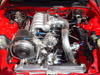
Another source of leaks was the original primary to secondary rail connecting hose. The original has the hose and banjo fitting help on with clamps. It became a common failure point. Mazda remedied this issue with the fuel recall which consisted of a replacement hose with the ends crimped on. I am currently working on a 93 r1 that never had this recall performed and plan to fix it.

Full Member
Joined: May 2007
Posts: 211
Likes: 0
From: Vancouver/Yokohama
Fires can also be caused by coolant leaks. The other day I was doing some testing and I started seeing steam/smoke from under the hood. I stopped right away and took a look, turns out the past owner had moved a small hose clamp from the back of the engine about an inch past the metal nub from the back of the UIM. When the engine got hot the hose expanded and started spraying coolant everywhere. Could have been bad if I had not caught that in time.
Split / leaking coolant hoses are dangerous.
Always have a fire extinguisher in your car!
Golden post of 2008 so far. Everyone with a high performance car should have a good sized fire extinguisher inside it. It will save you every time.
Fires can also be caused by coolant leaks. The other day I was doing some testing and I started seeing steam/smoke from under the hood. I stopped right away and took a look, turns out the past owner had moved a small hose clamp from the back of the engine about an inch past the metal nub from the back of the UIM. When the engine got hot the hose expanded and started spraying coolant everywhere. Could have been bad if I had not caught that in time.
Split / leaking coolant hoses are dangerous.
Always have a fire extinguisher in your car!
Fires can also be caused by coolant leaks. The other day I was doing some testing and I started seeing steam/smoke from under the hood. I stopped right away and took a look, turns out the past owner had moved a small hose clamp from the back of the engine about an inch past the metal nub from the back of the UIM. When the engine got hot the hose expanded and started spraying coolant everywhere. Could have been bad if I had not caught that in time.
Split / leaking coolant hoses are dangerous.
Always have a fire extinguisher in your car!


Thread
Thread Starter
Forum
Replies
Last Post
LongDuck
1st Generation Specific (1979-1985)
12
Oct 7, 2015 08:12 PM