When you click on links to various merchants on this site and make a purchase, this can result in this site earning a commission. Affiliate programs and affiliations include, but are not limited to, the eBay Partner Network.
I know this is a subject that’s been covered quite frequently, I’m just wondering if anyone can offer me some insight into whether or not my symptoms are indicative of a bad oil pressure sender, or if there may potentially be another issue that I should look into.
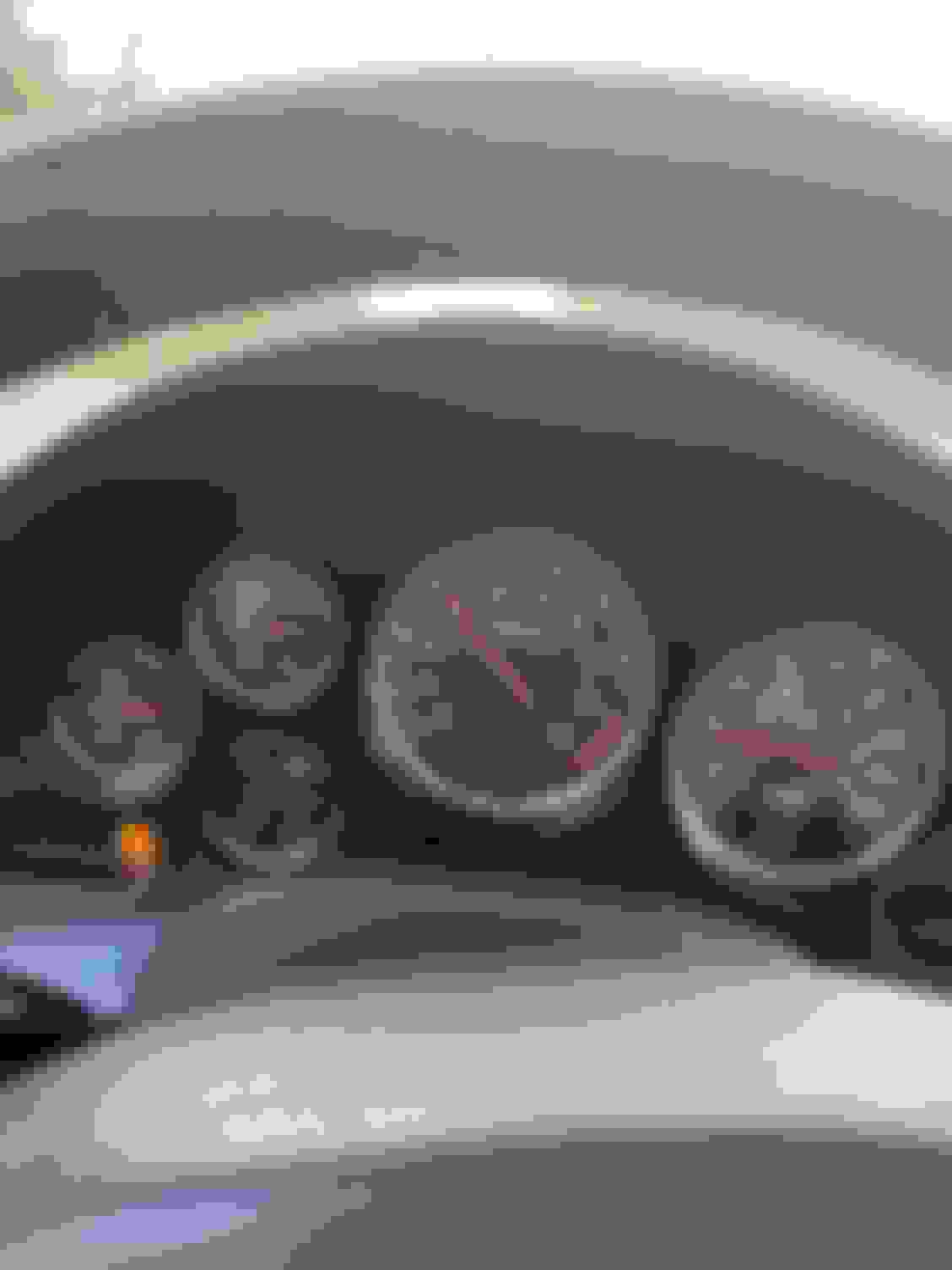
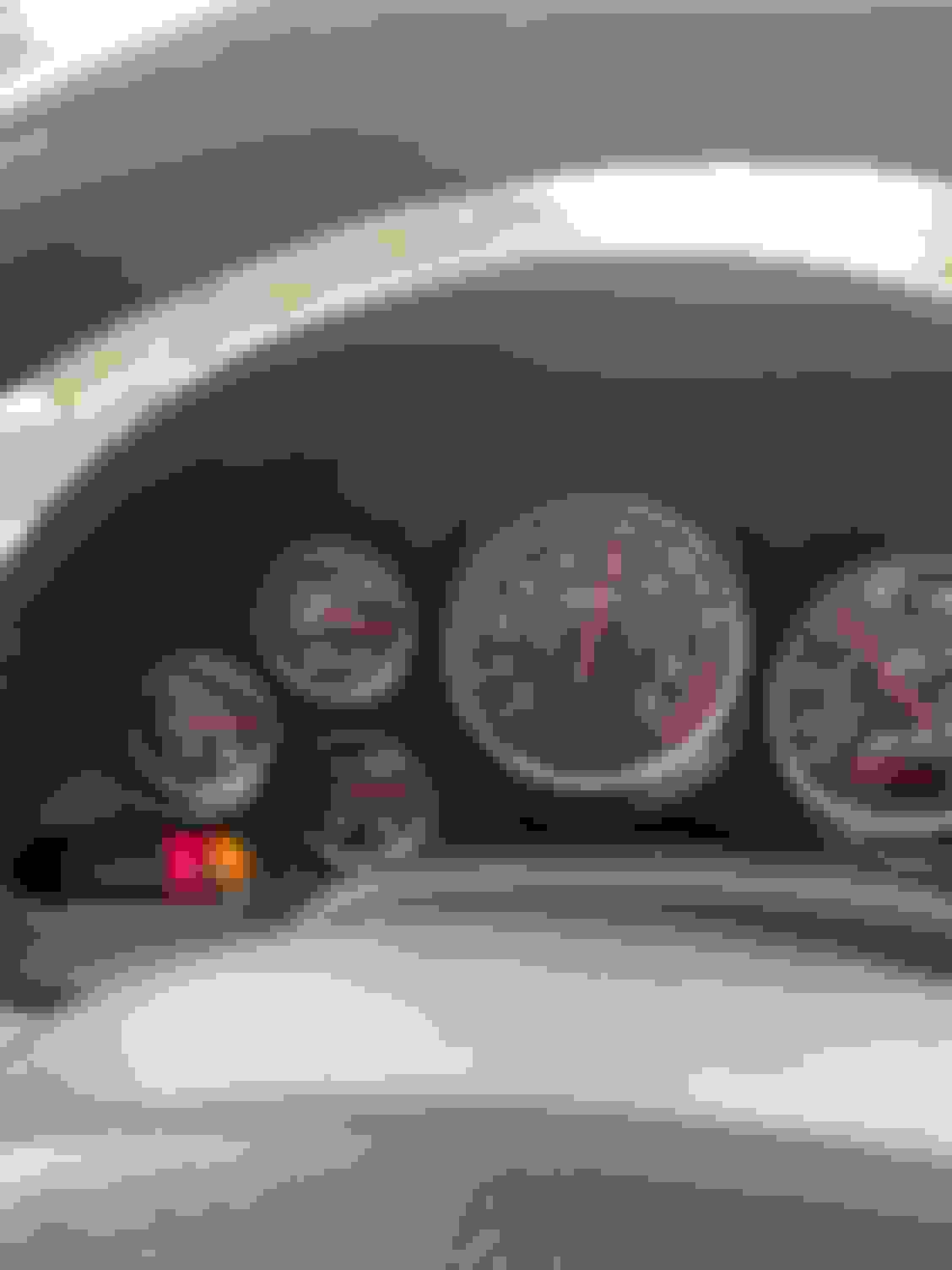
As my car heats up to full operating temp, the oil pressure displayed on the gauge seems to drop lower and lower at given RPMs. I took some pictures to show what I mean.
Notes:
This is on a fresh oil change, so dilution shouldn’t be the cause of my issues.
Running 20W-50
Mazda reman engine with about 15k
Pictures will be posted in the following order:
Cold start idle
Idle after 5min of driving
3k rpm after 5min of driving
4.5k rpm after 5min of driving
3k rpm after 10-15min of driving
Idle after 10-15min of driving
5k rpm after 10-15min of driving
The oil pressure gauge also flickers at idle. I’m unable to link a video, but after it’s warmed up and it’s idling, the needle will sort of flicker and jump around near 0psi
CEL code is 06 for vehicle speed sensor
I know the stock oil pressure sender isn’t particularly reliable, so again, I’m just wondering if anyone can offer some insight on whether this is indicative of that going bad on me. Thanks in advance! Cold start idle Idle after 5min of driving 3k rpm after 5min of driving 4.5k rpm after 5min of driving 3k rpm after 10-15min of driving Idle after 10-15min of driving 5k rpm after 10-15min of driving
It takes more than 10-15 minutes for the engine oil to reach full operating temperature even though the water temp gauge is at normal. However, oil does get thinner as it warms up so it is normal for the pressure to be lower at a given RPM when oil is hot vs. cold.
Anyhow, what you describe is most likely due to a faulty oil pressure sensor. I'm about to replace mine for the second time with less than 60,000 miles on the car. The 1994 Body Electrical Troubleshooting Manual at page C1-17 specs the sensor’s resistance at “over 74 ohms” with engine stopped. My first sensor, removed from the car in 2001, measured 1,365 ohms. The new one in the box was 79.1 ohms. The sketchy one currently in the car was 97.4 ohms. If your engine is stock, at hot idle, the sensor should be 43 ohms equivalent to 30 psi, give or take 2 needle’s widths.
Last edited by Retserof; Oct 15, 2021 at 07:43 AM.
I understand that the oil is more viscous when it’s cold, but the FSM states 50 psi minimum at 3k rpm and 30psi at idle. I tried to clean the contacts on my pressure sender, and it didn’t change how the gauge behaved. My chassis has 76k on it, and I don’t know that the sender has ever been replaced
ignore the factory gauge entirely. its in no way a reliable means of indicating anything. if oil pressure is something you want to monitor then add an independent gauge. using the factory gauge to do anything will result in a negative net gain because you will be out time and effort with no resolution.
I don't trust the original factory gauge/sensor combo on my car. After mine started showing dangerous low numbers also, I added a Banzai Racing oil pedestal and an aftermarket 0-150psig stainless pressure sensor connected to my AEM ECU. The new sensor shows that pressure is OK on my car regardless of temperature, at least for now. The ECU can be configured to flash a warning light or limit RPM if oil pressure goes too low, and I don't need to watch it myself.
I don't know if the problem is in the old factory sensor or the gauge or the wiring. The factory sensor has just a single wire, so it's relying on the sensor body to ground to the engine 'block' and then the wires connecting the engine ground to the chassis and then the wires connecting the chassis ground to the dash. It's not a good setup for accuracy; the important sensors like MAP or TPS or Coolant/Air Temperature have their own ground wires to avoid relying on engine-to-chassis connections for ground.
Yes.... ultimately its crap. So much so, mazda deleted it themselves in the later model in favor of a boost gauge. This is the definitive answer as to how useful it is.
Thanks for all the advice. From all the threads I’ve read, I’ve deduced that the factory gauge isn’t accurate and shouldn’t be trusted, however for my own peace of mind, I don’t think I can simply just ignore it hahaha.
Last night, I tried to check the resistance of the sensor by probing the connector with the lead on my multimeter and grounding it. I didn’t get a reading that way, I’m not sure if that was the correct procedure to test it or not.
This happens for time to time. Way I see it you have a few options. You can add another gauge, buy a new sender that will do it again down the road ( it will last a while ) or simple remove the sensor you have, spray some brake clean inside the pressure port of the sensor and blow it out with compressed air. I can’t tell you how many times I’ve cleaned them. The orifice inside the pressure port is extremely small and has a tendency to gunk up. My favorite is when it reads zero pressure while sitting at a stoplight, gets me every time. Good luck!
Set your multimeter to measure Ohms. Connect one lead to the oil pressure sender's contact and the other lead to a ground (the engine) or the body of the sender itself if it is out of the car. If your multimeter is not auto-ranging, you might have to switch its Ohm range setting so that it displays correctly. From page C1-17 of Mazda's 1994 Body Electrical Troubleshooting Manual:
Thanks so much for providing that. That’s the same procedure that I followed, and I tried every Ohm range, but I still wasn’t getting a reading. Key in the on position, lead probe touching the oil sender contact and ground probe touching the negative terminal of the battery. I will try again, though, perhaps I missed something
The factory sender is, hands down, the #1 culprit of this problem.
What I would do -
- Pull current sender and clean the hole inside the sender where the oil goes into with brake cleaner thoroughly. See if that helps, some people have just had some sort of blockage in there and this helped.
- Get a new sender, they aren't too pricey (I think $80?). I put a new sender in my car 12 years ago and it still works perfectly.
Really, oil pressure isn't that critical to monitor on a rotary. Typically on a new engine you want to verify that you have proper pressure and the engine is healthy - once that's done you never really need it, but it is good to have that gauge working on the dash.
You should typically have about 30psi at idle at 60psi at 3000 RPM, if you have around that your oil pressure is fine.
There are things on a new engine that can be screwed up that can lead to bad oil pressure, but once it's all good it rarely has problems down the road. Rotaries have VERY robust oil pumps that will put out good pressure even if they are scored and messed up.
The failure in the sender many times is the sweeping arm that changes resistance with pressure, this builds up corrosion/resistance and you get the flaky readings at idle when warm.
Thanks so much for all the helpful replies. When I get home this weekend, I’ll pull the sending unit out, and try to clean it, and see if that yields any results. But it’s good to know that fd oil pumps don’t typically have issues making good oil pressure. Since the engine was a reman, I don’t really see one of the seals being the cause of low oil pressure, but who knows.
It’s also worth mentioning that the flickering on the gauge at idle started within the last few weeks. I’ve had the suspicion that the sender was on its way out, but I wanted to get the opinion of people more knowledgeable than myself. Thanks again for all the helpful replies! I’ll update once I get the sending unit cleaned and reinstalled!
This has already been said but here it is again: Honestly if the gauge moves, you're fine. If it doesn't and your car hasn't shat gold (bearing) dust everywhere you're still fine but put some sort of tester to confirm anyway.
FWIW, the way the OP's gauge performs is very close to that of my OE one (I use 10w-40). The FSM states 50# @ 3K hot, so...
Also I've read that if one has 10# per 1K RPM, that's fine. That's my 2 cents and worth every penny.
FWIW, the way the OP's gauge performs is very close to that of my OE one (I use 10w-40). The FSM states 50# @ 3K hot, so...
Also I've read that if one has 10# per 1K RPM, that's fine. That's my 2 cents and worth every penny.
Your OE one is broken . SUPER SUPER common problem, most every FD I've seen has had a bad sender, the original ones sucked.
I put my new one in when I got my car in 2004 and haven't had a problem since. Perfect readings.
Thanks so much for all the helpful replies. When I get home this weekend, I’ll pull the sending unit out, and try to clean it, and see if that yields any results. But it’s good to know that fd oil pumps don’t typically have issues making good oil pressure. Since the engine was a reman, I don’t really see one of the seals being the cause of low oil pressure, but who knows.
It’s also worth mentioning that the flickering on the gauge at idle started within the last few weeks. I’ve had the suspicion that the sender was on its way out, but I wanted to get the opinion of people more knowledgeable than myself. Thanks again for all the helpful replies! I’ll update once I get the sending unit cleaned and reinstalled!
The 1st time my sender crapped out, I bought a new OE one (didn't know back then they could be cleaned). I've cleaned the orifice in that one twice since and it's still working >10 years later.















 . SUPER SUPER common problem, most every FD I've seen has had a bad sender, the original ones sucked.