


v mount setup pics


Full Member
Joined: Aug 2007
Posts: 228
Likes: 0
From: Arizona
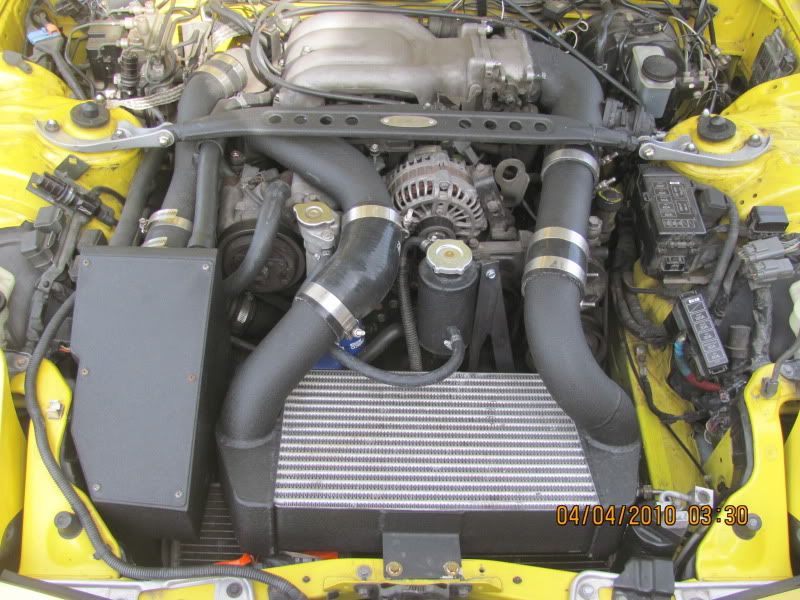
 TO give an idea on size, notice the size of the cold side pipe exiting the intercooler


I spy an RE:worx kit ^_^
I disagree, completely. I have the same kit as Ash and it's phenominal! There is very little pressure loss and the cooling is incredible (solid water temps, air temps stay 10 degrees above ambient) and there is really no need for ducting since there is NO ROOM for it!
I can, and have, pushed 17-18psi through my BNRs all day long without a raise in intake/water temps while using this kit.

I can, and have, pushed 17-18psi through my BNRs all day long without a raise in intake/water temps while using this kit.



Bump this thread.
I would like to know more about Vmount setups with the radiator on TOP. Pictures, issues, pros, cons. I have the following thoughts.
1. Traffic intercooler heat soak would be a NON-issue with such a setup. When the radiator unit is on the bottom, like most vmounts, the heat still rises (basic physics) even with the fans on. This sends heat to the IC. This would NOT happen if radiator is on the top.
2. Keeping the radiator away from the road surface and related hazards to avoid damage and cooling system failure is a good thing.
3. Longer intake pipes are not good for boost response, but they wouldn't be any worse than a FMIC.
4. The radiator size might be an issue. How high can the radiator can be raised until interference with other components becomes an issue?
5. Maintaining the general OE radiator orientation (heat blows up) means that you should be able to use factory components more easily.
6. This setup would benefit best from a vented hood with shroud to direct radiator air away from other engine components (same with any setup I suppose)
Here is the only example I have seen in this thread and it certainly look impressive.
I would like to know more about Vmount setups with the radiator on TOP. Pictures, issues, pros, cons. I have the following thoughts.
1. Traffic intercooler heat soak would be a NON-issue with such a setup. When the radiator unit is on the bottom, like most vmounts, the heat still rises (basic physics) even with the fans on. This sends heat to the IC. This would NOT happen if radiator is on the top.
2. Keeping the radiator away from the road surface and related hazards to avoid damage and cooling system failure is a good thing.
3. Longer intake pipes are not good for boost response, but they wouldn't be any worse than a FMIC.
4. The radiator size might be an issue. How high can the radiator can be raised until interference with other components becomes an issue?
5. Maintaining the general OE radiator orientation (heat blows up) means that you should be able to use factory components more easily.
6. This setup would benefit best from a vented hood with shroud to direct radiator air away from other engine components (same with any setup I suppose)
Here is the only example I have seen in this thread and it certainly look impressive.


here is what i came up with for 200 bux ... 3" in/out intercooler
2.75 ( sock IN ) ... 3" OUT ... greddy elbow grinded to the 3"mark plus i eliminated soem 90 deg. turnse out of the stock design ...
[IMG]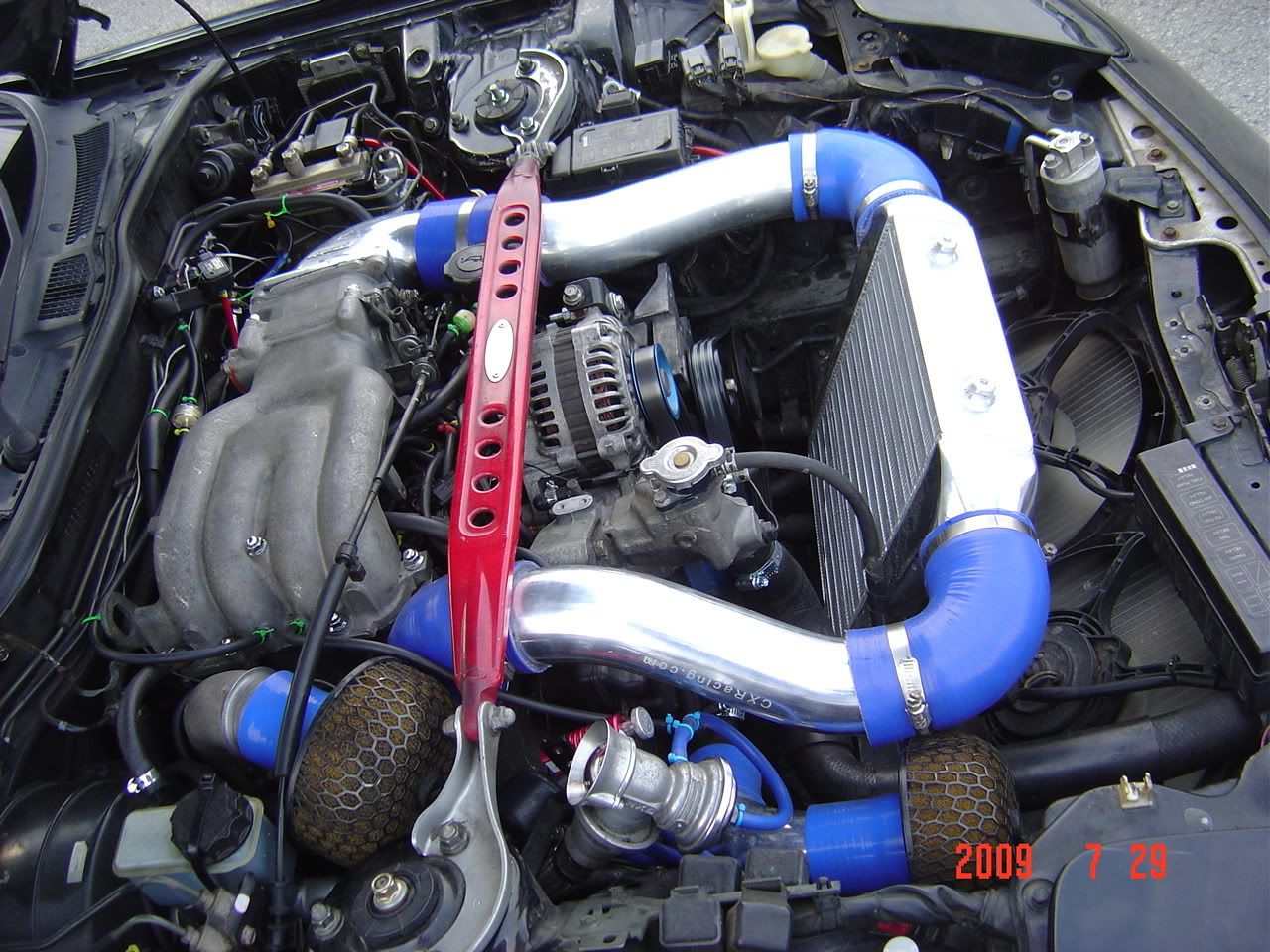 [/IMG]
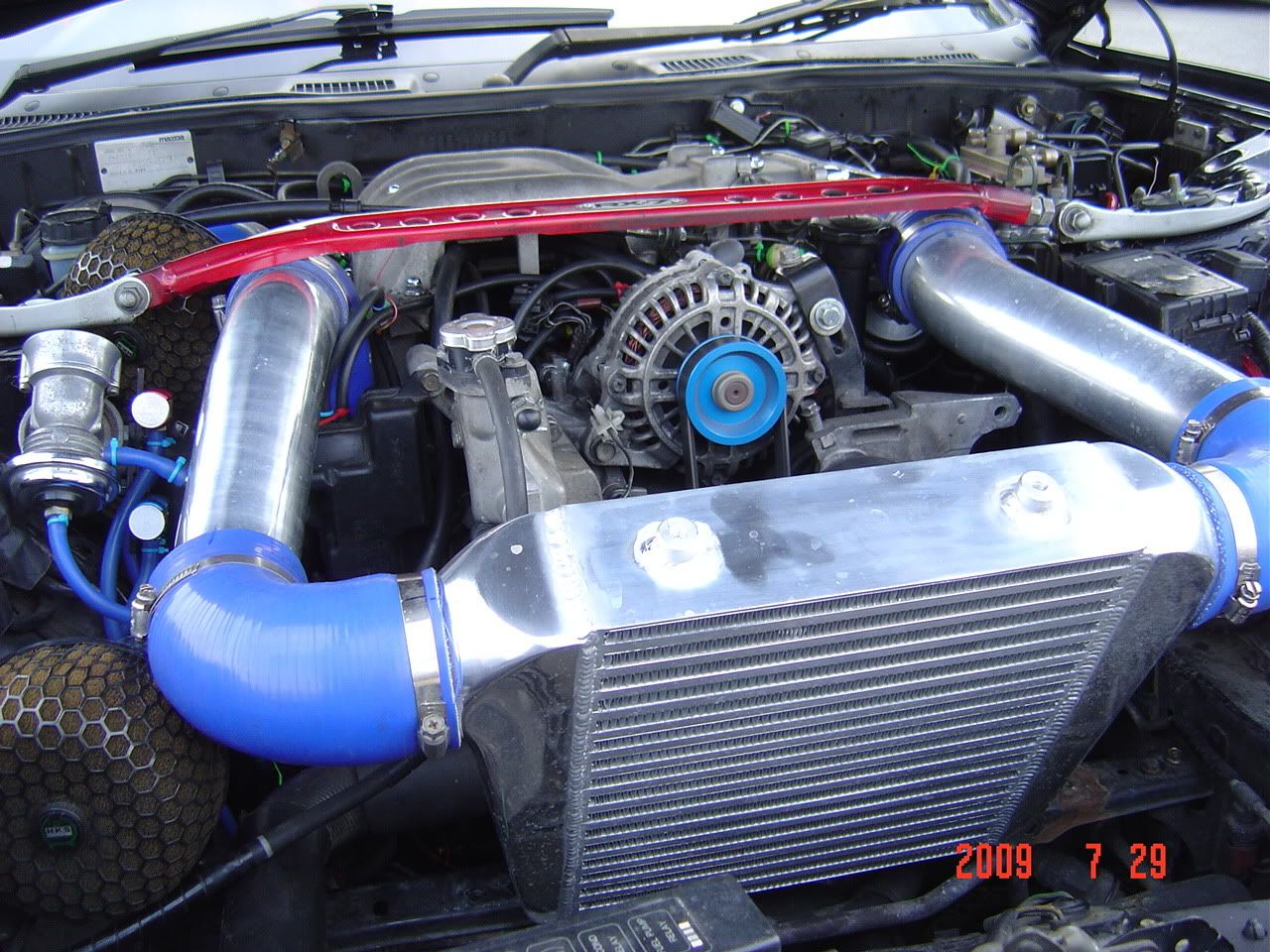
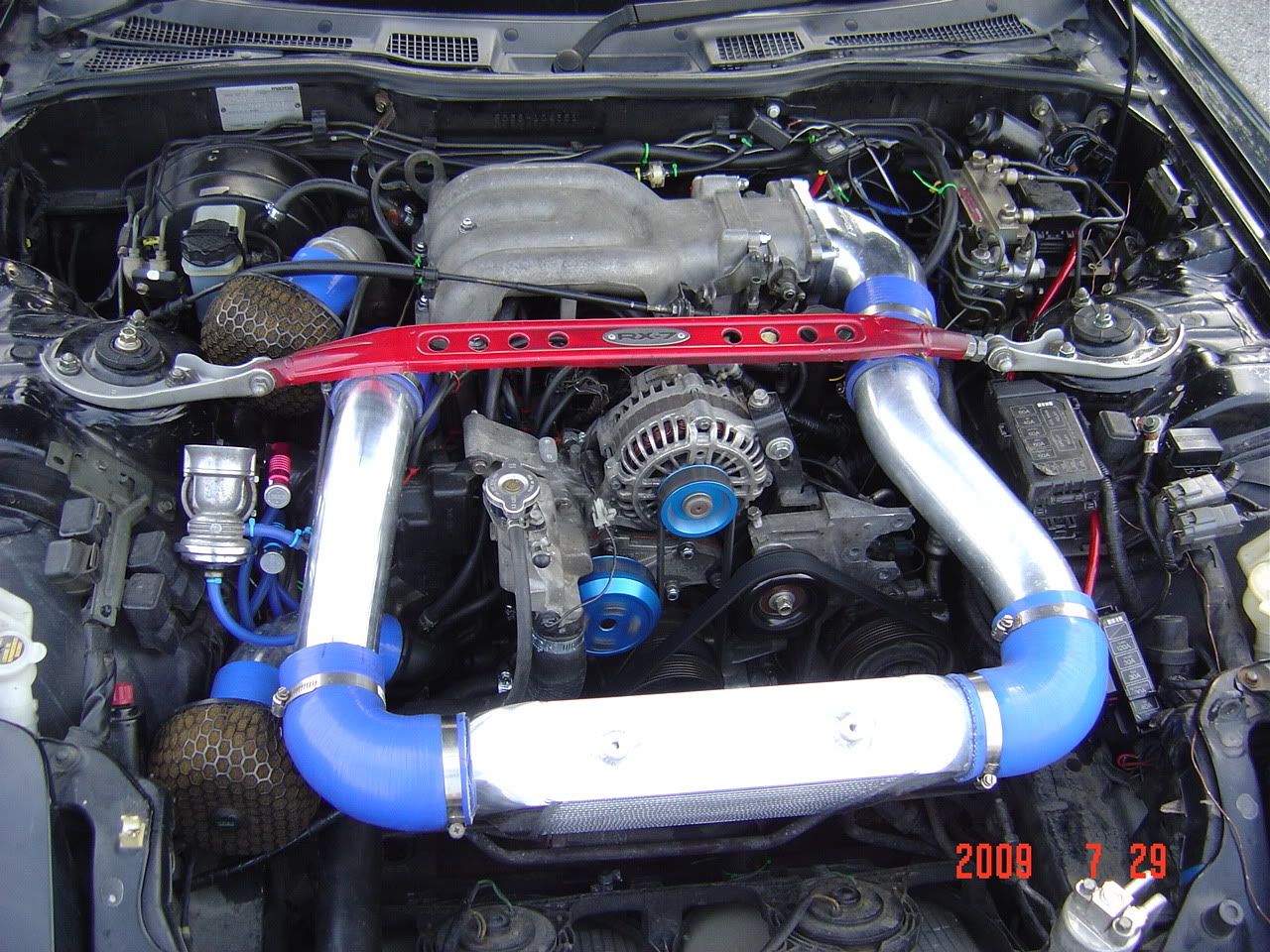
no time to do the ducting . maybe over the winter
2.75 ( sock IN ) ... 3" OUT ... greddy elbow grinded to the 3"mark plus i eliminated soem 90 deg. turnse out of the stock design ...
[IMG]
[/IMG]no time to do the ducting . maybe over the winter





for a stock-mount setup you MUST HAVE DUCTING! without ducting, that thing is going to heatsoak within 5 minutes of driving. it's pointless without ducting.
Bump this thread.
I would like to know more about Vmount setups with the radiator on TOP. Pictures, issues, pros, cons. I have the following thoughts.
1. Traffic intercooler heat soak would be a NON-issue with such a setup. When the radiator unit is on the bottom, like most vmounts, the heat still rises (basic physics) even with the fans on. This sends heat to the IC. This would NOT happen if radiator is on the top.
2. Keeping the radiator away from the road surface and related hazards to avoid damage and cooling system failure is a good thing.
3. Longer intake pipes are not good for boost response, but they wouldn't be any worse than a FMIC.
4. The radiator size might be an issue. How high can the radiator can be raised until interference with other components becomes an issue?
5. Maintaining the general OE radiator orientation (heat blows up) means that you should be able to use factory components more easily.
6. This setup would benefit best from a vented hood with shroud to direct radiator air away from other engine components (same with any setup I suppose)
Here is the only example I have seen in this thread and it certainly look impressive.
I would like to know more about Vmount setups with the radiator on TOP. Pictures, issues, pros, cons. I have the following thoughts.
1. Traffic intercooler heat soak would be a NON-issue with such a setup. When the radiator unit is on the bottom, like most vmounts, the heat still rises (basic physics) even with the fans on. This sends heat to the IC. This would NOT happen if radiator is on the top.
2. Keeping the radiator away from the road surface and related hazards to avoid damage and cooling system failure is a good thing.
3. Longer intake pipes are not good for boost response, but they wouldn't be any worse than a FMIC.
4. The radiator size might be an issue. How high can the radiator can be raised until interference with other components becomes an issue?
5. Maintaining the general OE radiator orientation (heat blows up) means that you should be able to use factory components more easily.
6. This setup would benefit best from a vented hood with shroud to direct radiator air away from other engine components (same with any setup I suppose)
Here is the only example I have seen in this thread and it certainly look impressive.



DAMN!Nice

Joined: Jun 2008
Posts: 403
Likes: 2
From: Germany
Half right...
INGS+1 bumper
Intake is Knight-Sports Cold Air intake for V-Mount
here is a link:
http://www.neweraparts.com/Default.a...&ProductID=408
INGS+1 bumper
Intake is Knight-Sports Cold Air intake for V-Mount
here is a link:
http://www.neweraparts.com/Default.a...&ProductID=408
DAMN!Nice
Joined: Jun 2008
Posts: 403
Likes: 2
From: Germany
why are you bitching around here?? I know that he meant INGS+1 but maybe S1mpsons didn´t knew.
search in google "ING Rx-7"
and you´ll see why I corrected sp_amend...
not to show him that he is stupid, but to help s1mpsons to find it if he´ll search for it.


Bump this thread.
I would like to know more about Vmount setups with the radiator on TOP. Pictures, issues, pros, cons. I have the following thoughts.
1. Traffic intercooler heat soak would be a NON-issue with such a setup. When the radiator unit is on the bottom, like most vmounts, the heat still rises (basic physics) even with the fans on. This sends heat to the IC. This would NOT happen if radiator is on the top.
I would like to know more about Vmount setups with the radiator on TOP. Pictures, issues, pros, cons. I have the following thoughts.
1. Traffic intercooler heat soak would be a NON-issue with such a setup. When the radiator unit is on the bottom, like most vmounts, the heat still rises (basic physics) even with the fans on. This sends heat to the IC. This would NOT happen if radiator is on the top.
With the radiator on top, heat from the radiator is being blown up and into the engine bay increasing underhood temps and heat soak.
With the radiator on the bottom, heat from the radiator is being blown down and under the car. Especially if you vent the undertray.
From a real life testing standpoint, I vented the stock undertray by cutting some openings in it to better vent rad heat. This change alone resulted in a noticeable difference in AITs when stuck in traffic or slow speed situations.
Design the mounting system properly as Speed of Light did on his setup (which I use) and risk of road surface hazard is decreased significantly.
Search for pics of his mounting subframe on this and other threads for more info.
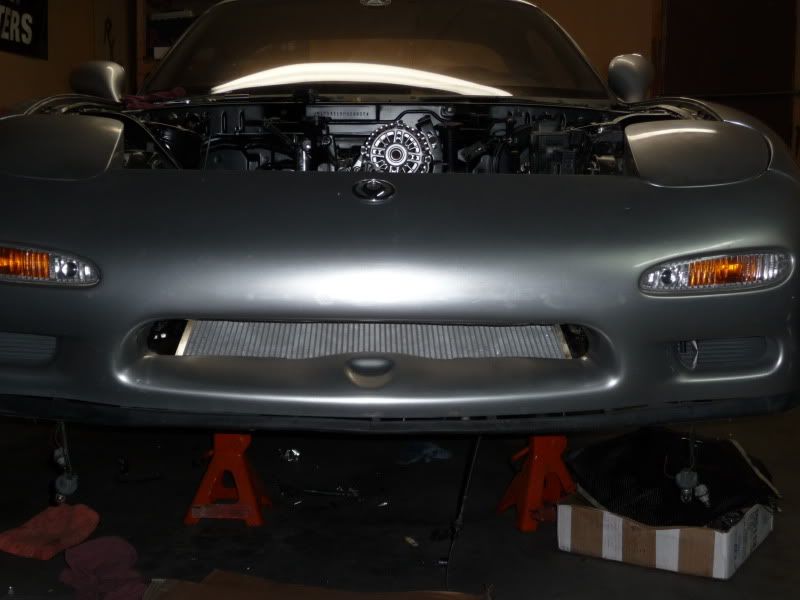
1. The IC piping is longer than with a 'standard' V-Mount setup
2. The IC core is almost parallel to the air flow. Air To Air cores work best when they are perpendicular to air flow. The more flatter or parallel it is mounted, the less efficient.
3. The Radiator core is also almost parallel to air flow also therefore less efficient.
You want to try and design the < shape to be as wide as possible to try and promote the best possible air flow and increase overall efficiency. Ducting can only help already efficient design. Ducting can help a marginal design work better but its not optimal IMO and experience.



Senior Member
Joined: Nov 2007
Posts: 343
Likes: 0
From: Australia
maximum radiator angle while keeping it well above the tow hooks for safety and very close ducting:

maximum angle for intercooler to allow most flow through the 4.5" thick core. and still plenty of room for a nice cold air intake thats fed from the front bumper opening:
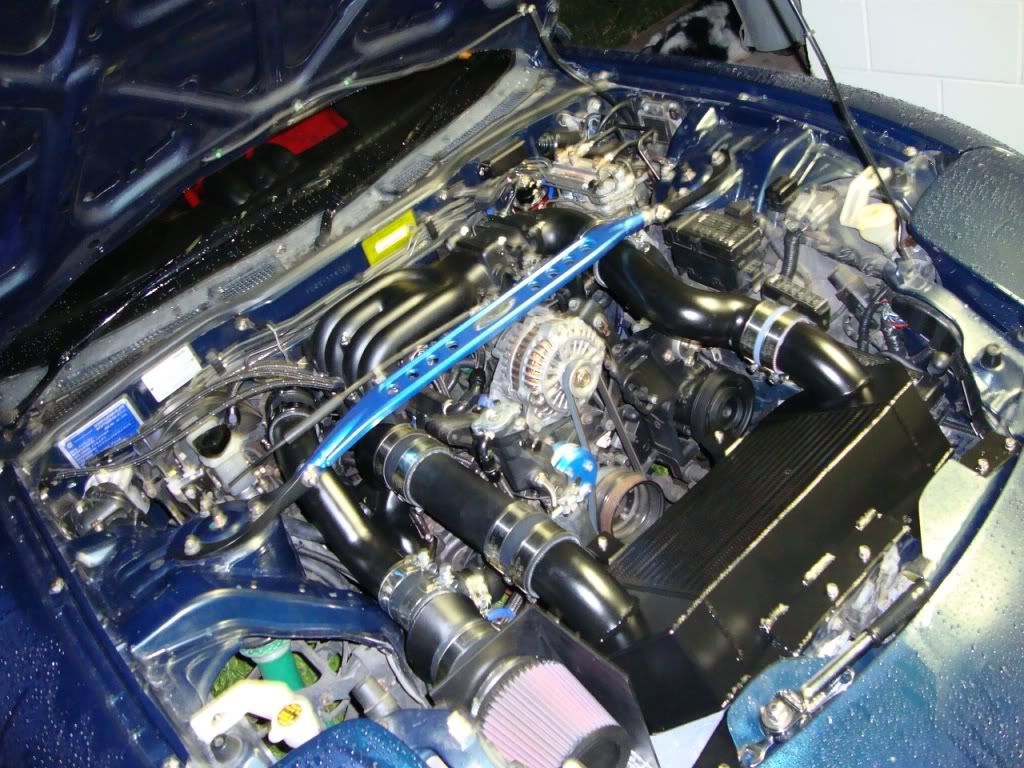
and even with a stock hood i still see IATs of 35-40* while cruising (still running in tho so cant boost it yet)
Brad.
maximum angle for intercooler to allow most flow through the 4.5" thick core. and still plenty of room for a nice cold air intake thats fed from the front bumper opening:
and even with a stock hood i still see IATs of 35-40* while cruising (still running in tho so cant boost it yet)
Brad.

Senior Member
Joined: Nov 2007
Posts: 343
Likes: 0
From: Australia
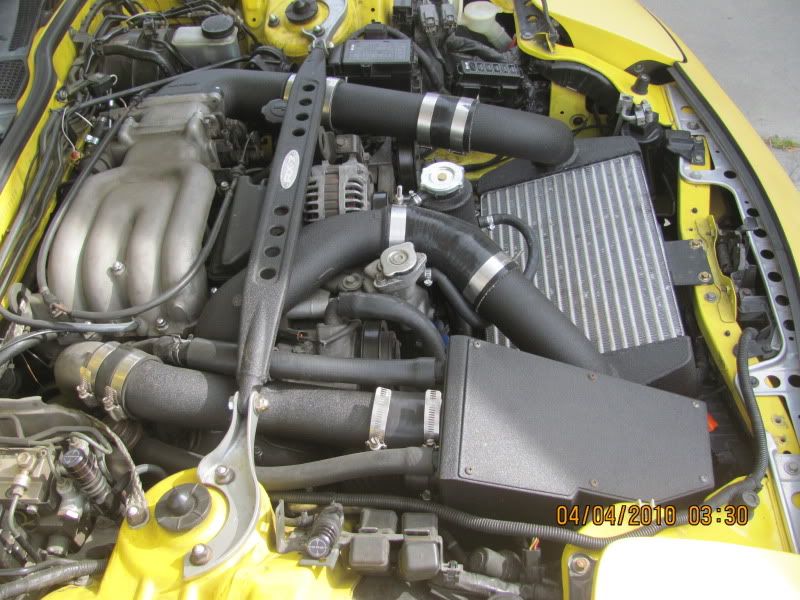
penguin: i love the wrinkle finish, is it hard to keep clean? i know my satin black is a massive pita to keep dust and **** off.... partly due to having one gaurd liner missing but still, is it easy enough to keep clean?
Brad.
Brad.