


Tired of hearing that rotary engines are unreliable


Tired of hearing that rotary engines are unreliable
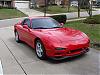
Hello my rotard friends. I created this thread because I am tired of reading or seeing videos claiming that the rotary engine in the rx7 Fd is unreliable. I have own a 93 rx7 Fd since 1998 and daily drove it until 2005 on its original engine. In 2005 the person who was painting my car took it for a joy ride with low fuel and blew my engine. The car was rebuilt in 2016 and is pushing 426whp at 15 psi without a problem. My build is posted here as 93 rx7 improving a great sports car. With that said I also own a 12 challenger srt8 6 speed and a 05 pathfinder le. The 05 pathfinder had to have the timing chain guides replaced at 130k which cost me 2200 bucks. My 2012 challenger srt8 had to have all the valves replaced and a cam at 51k and the cost was 3700 bucks. My argument is that a rotary engine that is built well, tuned well and maintained well can also last. I just dont understand why the rx7 Fd has gotten such a bad reputation and I am tired of hearing the B.S.


So much of it is left over from the 90's when no one had any idea how to tune the engine. This was before the PowerFC existed, people were trying the chipped ECU's and the PFS PMC which was a mess at best. Or trying to squirt more fuel in with rigged in extra injectors, bumped up fuel pressure, you name it.
Not to mention wide band O2 sensors were out of the reach of most anyone, the only options were tens of thousands of dollars.
People would go for power, pop an engine, try something else, pop another engine, etc. Adam Sawautari was going through multiple engines a season drag racing.
The PowerFC and the Datalogit changed all that but the damage was done.
Also, there are a lot of failures in a piston engine that are bad but don't involve a whole rebuild - blown head gasket, broken timing belts or guides, etc. If you look at any automotive enthusiast group that is pushing power you will see a trail of broken engines. But, to be fair, many piston engines can take some detonation before major damage happens, a few good knocks is many times all it takes on a rotary.
Dale
Not to mention wide band O2 sensors were out of the reach of most anyone, the only options were tens of thousands of dollars.
People would go for power, pop an engine, try something else, pop another engine, etc. Adam Sawautari was going through multiple engines a season drag racing.
The PowerFC and the Datalogit changed all that but the damage was done.
Also, there are a lot of failures in a piston engine that are bad but don't involve a whole rebuild - blown head gasket, broken timing belts or guides, etc. If you look at any automotive enthusiast group that is pushing power you will see a trail of broken engines. But, to be fair, many piston engines can take some detonation before major damage happens, a few good knocks is many times all it takes on a rotary.
Dale

So much of it is left over from the 90's when no one had any idea how to tune the engine. This was before the PowerFC existed, people were trying the chipped ECU's and the PFS PMC which was a mess at best. Or trying to squirt more fuel in with rigged in extra injectors, bumped up fuel pressure, you name it.
Not to mention wide band O2 sensors were out of the reach of most anyone, the only options were tens of thousands of dollars.
People would go for power, pop an engine, try something else, pop another engine, etc. Adam Sawautari was going through multiple engines a season drag racing.
The PowerFC and the Datalogit changed all that but the damage was done.
Also, there are a lot of failures in a piston engine that are bad but don't involve a whole rebuild - blown head gasket, broken timing belts or guides, etc. If you look at any automotive enthusiast group that is pushing power you will see a trail of broken engines. But, to be fair, many piston engines can take some detonation before major damage happens, a few good knocks is many times all it takes on a rotary.
Dale
Not to mention wide band O2 sensors were out of the reach of most anyone, the only options were tens of thousands of dollars.
People would go for power, pop an engine, try something else, pop another engine, etc. Adam Sawautari was going through multiple engines a season drag racing.
The PowerFC and the Datalogit changed all that but the damage was done.
Also, there are a lot of failures in a piston engine that are bad but don't involve a whole rebuild - blown head gasket, broken timing belts or guides, etc. If you look at any automotive enthusiast group that is pushing power you will see a trail of broken engines. But, to be fair, many piston engines can take some detonation before major damage happens, a few good knocks is many times all it takes on a rotary.
Dale


Love your build and that red color you ended up with. Agree about reliability of a rotary as long as you build it properly, tune and maintain it properly, and manage your expectations. Interesting comparisons to your other piston engine cars. The Nissan is kind of surprising that it gave you trouble, but the Dodge, ahem, well, that is a Chrysler product so we may just have to leave it at that if you like their stuff, lol.
Love your build and that red color you ended up with. Agree about reliability of a rotary as long as you build it properly, tune and maintain it properly, and manage your expectations. Interesting comparisons to your other piston engine cars. The Nissan is kind of surprising that it gave you trouble, but the Dodge, ahem, well, that is a Chrysler product so we may just have to leave it at that if you like their stuff, lol.

People just want to reinforce what they think they know. I go to a lot of car meets and one of the most pervasive questions is "how many engines have you gone through?". I always hate to admit it, but I've had to replace one in my ownership. I always say, it was an oil pump failure! Not rotary specific! It could happen to any car! Nobody really cares about that though. To them, the answer is just "Engine failure! That's rotary life, man! Haha!". It's not that different than the political spectrum unfortunately, once people find a tidbit of information that supports what they believe, the supporting facts are no longer relevant.
I swear though, if I hear the phrase "Rotary Life" in regards to unreliability from a piston-owner just one more time I'm going to go ape haha!
I swear though, if I hear the phrase "Rotary Life" in regards to unreliability from a piston-owner just one more time I'm going to go ape haha!

It's all about people's preconceptions. Psychology is a funny thing because people will put up with the craziest reliability problems in piston engines without batting an eye.
I remember when I was a full service tech... seems like every month we had several VW's 1.8T turning into boat anchors left and right when the timing chain (it had a chain AND a belt - idiots) tensioner died. Then they'd turn around and buy another VW
Mini vacuum pumps dying and taking the engine with it.
Timing chain issues that cost $1000's to fix.
Porsche's IMS failures.
I remember when I was a full service tech... seems like every month we had several VW's 1.8T turning into boat anchors left and right when the timing chain (it had a chain AND a belt - idiots) tensioner died. Then they'd turn around and buy another VW
Mini vacuum pumps dying and taking the engine with it.
Timing chain issues that cost $1000's to fix.
Porsche's IMS failures.
Trending Topics

A lot of the misconception comes from the early days when tuning technology wasn't what it is today and the fact that you can make good power relatively cheap. Cheap and reliable do not go together and unfortunately there are still people doing things cheap today carrying on the stigma that they are not reliable.


I hear the same stuff about the renesis in the RX8.
To me part of it is that they both had a lot of engine issues initially due to either recalls from Mazda (the OMP system on the S1 8s) or people just having no idea how to take care of the engine on the car.
Not to mention the complexity of the FDs turbo system and all that even though complicated vacuum systems don't really have anything to do with the rotary.
I think the other part of it (at least to me) isn't so much reliability as longevity. Objectively a well cared for rotary probably won't last as long as a well cared for generic piston motor. Like almost no one is putting 200k+ miles on a RX7 or RX8 without needing an engine rebuild or replacement that's just a fact of ownership.
To me part of it is that they both had a lot of engine issues initially due to either recalls from Mazda (the OMP system on the S1 8s) or people just having no idea how to take care of the engine on the car.
Not to mention the complexity of the FDs turbo system and all that even though complicated vacuum systems don't really have anything to do with the rotary.
I think the other part of it (at least to me) isn't so much reliability as longevity. Objectively a well cared for rotary probably won't last as long as a well cared for generic piston motor. Like almost no one is putting 200k+ miles on a RX7 or RX8 without needing an engine rebuild or replacement that's just a fact of ownership.

It all depends on what you compare it to. Compared to a 1993 Honda Civic, well the amount of maintenance and life span of the engine and cost of parts is worse. Very little went wrong on those EG Civics in stock form (except maybe distributor related parts). Compared to a Ferrari 355 from that era, the FD is reliable and cheap to own.
Even then, compare to a modern family car that usually doesn't need any major service until 100k miles or more. And of course EV's, if well designed, need almost no maintenance or repairs for a long time.
Even then, compare to a modern family car that usually doesn't need any major service until 100k miles or more. And of course EV's, if well designed, need almost no maintenance or repairs for a long time.

I think the other part of it (at least to me) isn't so much reliability as longevity. Objectively a well cared for rotary probably won't last as long as a well cared for generic piston motor. Like almost no one is putting 200k+ miles on a RX7 or RX8 without needing an engine rebuild or replacement that's just a fact of ownership.


Joined: Mar 2001
Posts: 31,838
Likes: 3,234
From: https://www2.mazda.com/en/100th/
i think there is a double standard with the rotary vs piston thing too. i got a 1992 miata a few years ago, and since it had 120k on it, i did the 120k service, and the timing belt and water pump. the radiator was bad, so i did that too, along with all of the water hoses. the brakes had just been done, but i had to change a caliper, the top (its 4th!), clutch slave, engine mounts, some suspension work, and a good cleaning.
i didn't do anything that wasn't normal, but i've had more than half the car apart. somehow that is fine, but when you need to do the same thing on a rotary car its unreliable?
i didn't do anything that wasn't normal, but i've had more than half the car apart. somehow that is fine, but when you need to do the same thing on a rotary car its unreliable?

Rotary Fan


Joined: Jul 2008
Posts: 229
Likes: 37
From: Festus, Missouri
Hello my rotard friends. I created this thread because I am tired of reading or seeing videos claiming that the rotary engine in the rx7 Fd is unreliable. I have own a 93 rx7 Fd since 1998 and daily drove it until 2005 on its original engine. In 2005 the person who was painting my car took it for a joy ride with low fuel and blew my engine. The car was rebuilt in 2016 and is pushing 426whp at 15 psi without a problem. My build is posted here as 93 rx7 improving a great sports car. With that said I also own a 12 challenger srt8 6 speed and a 05 pathfinder le. The 05 pathfinder had to have the timing chain guides replaced at 130k which cost me 2200 bucks. My 2012 challenger srt8 had to have all the valves replaced and a cam at 51k and the cost was 3700 bucks. My argument is that a rotary engine that is built well, tuned well and maintained well can also last. I just dont understand why the rx7 Fd has gotten such a bad reputation and I am tired of hearing the B.S.
I discovered the carburetor was the problem all along. Rebuilding the carb. would have been all that was needed. Had I been paying attention to the forum content, I would have saved a bunch of time and money.
I did change out the spark ignition for electronic which made an improvement in addition to the carb. rebuild. It is back to bein a reliable automobile.
^That's generally true for turbocharged rotaries, but among the FB's and N/A FC's it was not too uncommon to see examples that went beyond 200K miles with nothing more than good maintenance. I used to own an '85 GSL-SE that I bought new and used as a daily driver for many years - had well over 180K miles on the clock and was running strong before an inattentive SUV driving moron totaled it. Kept it completely stock and maintained it myself - never needed to open the keg.
I guess to lean into the extreme, there aren't a lot of 1M mile piston engine running around, but I can't imagine there has ever been a 1M mile rotary.
All that said my 8 is my daily driver. Besides some negligent damage caused by the previous owner (somehow in under 18k miles!) I have had no issues with it. I live more in fear of the iffy OEM clutch pedal snapping than I do anything about the engine.
One other thing maybe is that when a rotary does have a major problem, it goes pretty spectacularly. Overheating damages piston motors too, but in my experience you can get away with it a few times. A rotary overheats and you're really not having a good day.
I do know I have subjected modular Ford engines to things that would absolutely wreck either of my rotaries and I have seen so many things come through service centers that a rotary wouldn't tolerate either (I knew a guy that never changed his oil over 4 years of owning his Tacoma. Like he returned the lease with the same oil it came with!). So a huge part of the reputation is also a people problem


That's fair. I have an 8 and a FD so I am not really as familiar with the FB and FCs. But I would have to imagine to the layman that those being the last two production rotaries probably means they control a lot of the narrative.
I guess to lean into the extreme, there aren't a lot of 1M mile piston engine running around, but I can't imagine there has ever been a 1M mile rotary.
All that said my 8 is my daily driver. Besides some negligent damage caused by the previous owner (somehow in under 18k miles!) I have had no issues with it. I live more in fear of the iffy OEM clutch pedal snapping than I do anything about the engine.
One other thing maybe is that when a rotary does have a major problem, it goes pretty spectacularly. Overheating damages piston motors too, but in my experience you can get away with it a few times. A rotary overheats and you're really not having a good day.
I do know I have subjected modular Ford engines to things that would absolutely wreck either of my rotaries and I have seen so many things come through service centers that a rotary wouldn't tolerate either (I knew a guy that never changed his oil over 4 years of owning his Tacoma. Like he returned the lease with the same oil it came with!). So a huge part of the reputation is also a people problem
I guess to lean into the extreme, there aren't a lot of 1M mile piston engine running around, but I can't imagine there has ever been a 1M mile rotary.
All that said my 8 is my daily driver. Besides some negligent damage caused by the previous owner (somehow in under 18k miles!) I have had no issues with it. I live more in fear of the iffy OEM clutch pedal snapping than I do anything about the engine.
One other thing maybe is that when a rotary does have a major problem, it goes pretty spectacularly. Overheating damages piston motors too, but in my experience you can get away with it a few times. A rotary overheats and you're really not having a good day.
I do know I have subjected modular Ford engines to things that would absolutely wreck either of my rotaries and I have seen so many things come through service centers that a rotary wouldn't tolerate either (I knew a guy that never changed his oil over 4 years of owning his Tacoma. Like he returned the lease with the same oil it came with!). So a huge part of the reputation is also a people problem
Joined: Mar 2001
Posts: 31,838
Likes: 3,234
From: https://www2.mazda.com/en/100th/
I do know I have subjected modular Ford engines to things that would absolutely wreck either of my rotaries and I have seen so many things come through service centers that a rotary wouldn't tolerate either (I knew a guy that never changed his oil over 4 years of owning his Tacoma. Like he returned the lease with the same oil it came with!). So a huge part of the reputation is also a people problem
the even funnier part is that with the Rx8, we had a lengthy diagnostic process (which every engine passed!), but with the piston engine, replacing the engine was step 2. (step 1 was a spark plug and coil, step 2 was engine)
we had customers that didn't change oil either, the funny one was a silver Mazda 3, and the guy was so embarrassed that he bought another silver Mazda 3 so the neighbors wouldn't know!
Mazda did screw up/cheap out things on the RX-8 that has caused engine longevity issues there. I just picked up an RX-8 that I'm making into a daily driver and I rebuilt the engine myself. 135,000 miles on the original engine.
RX-8's didn't have as good of a chrome surface on the rotor housings, they recommended a very thin oil (5w20 or something) and they see a lot of bearing problems, the side exhaust ports are hell on the side seals, apex seals are shorter and don't have as much material....there's a number of things that they goofed up on. Some of it may have been due to emissions/fuel economy, some looks like they cheaped out.
The engine I went through had 5 broken corner seals and 1 broken side seal. Also the apex seals were very worn, about 1/3 of the total height of the seal gone.
Thing that sucks with the RX-8 is they are worth so little now a blown engine basically totals them out. There will be VERY few left in 10 years or so. They are cool cars and fun to drive.
Dale
RX-8's didn't have as good of a chrome surface on the rotor housings, they recommended a very thin oil (5w20 or something) and they see a lot of bearing problems, the side exhaust ports are hell on the side seals, apex seals are shorter and don't have as much material....there's a number of things that they goofed up on. Some of it may have been due to emissions/fuel economy, some looks like they cheaped out.
The engine I went through had 5 broken corner seals and 1 broken side seal. Also the apex seals were very worn, about 1/3 of the total height of the seal gone.
Thing that sucks with the RX-8 is they are worth so little now a blown engine basically totals them out. There will be VERY few left in 10 years or so. They are cool cars and fun to drive.
Dale
Joined: Mar 2001
Posts: 31,838
Likes: 3,234
From: https://www2.mazda.com/en/100th/
This is a little off topic, but if you read the Rx8 book, the Rx8 had a really tortured development. They started with some neat prototypes, and end with a sketch on a napkin, and then there is a Ford guy in the middle...
Mazda had a ~210hp sideport engine in a miata in like 1992 or something
Mazda had a ~210hp sideport engine in a miata in like 1992 or something
 . Real shame the RX-01 didn't come to fruition, that was a pretty cool design.

Honestly it is because the internet is full of morons that just parrot what they have heard in the past. And this is without any first hand knowledge nor practical experience and yet they act like they are an authority. Seriously, pick any topic that you are an expert on and I guarantee that you are bound to find at least one moron who thinks he knows better than you.

Honestly it is because the internet is full of morons that just parrot what they have heard in the past. And this is without any first hand knowledge nor practical experience and they act like they are an authority. Seriously, pick any topic that you are an expert on and I guarantee that you are bound to find one moron who thinks he knows better than you.
Joined: Mar 2001
Posts: 31,838
Likes: 3,234
From: https://www2.mazda.com/en/100th/
Joined: Mar 2001
Posts: 31,838
Likes: 3,234
From: https://www2.mazda.com/en/100th/
The Mazda engineers realized right away that the peripheral exhaust port engine would have a tough time meeting the coming emissions standards (maybe within budget?), so they started working on the Rx8 style side port engine really early, like 1989 or something, and by 1993 they had a 210hp side port engine in an NA Miata as the fun demo car.
When the "bubble" economy popped in the early 90's Mazda was hurting, and it was decided that Ford up the ownership stake and send a guy to run Mazda, he arrived January 1st 1996.
Part of Fords management was to cancel everything and fire the R&D department, and cost cutting made some sense in 1996, but Mazda recovered faster than projected and by 1999 the Ford guy realized that there were no new cars in the pipeline (this seems to be typical of Ford, in 1987 the Taurus was world class, but they were still selling the same thing in 2007!). Mazda has two prototype/show cars, one was the fun 200lbs sports car, and the other a mini limo thing, with the suicide doors. There was only budget for one car, so what he did was have the Mazda guys put both together.
Then they ended up with the Rx8, which was a car that nobody really wanted, and they weren't sure how to sell (although it did ok, 266,000 globally). Additionally there was a big last minute push to get the Rx8 to make more power and get better mileage, and that seems to have affected reliability.
Obviously there is more to it than that, but a follow up to the Rx8 has been really difficult, we've seen the patents, and it looks like they have tried a LOT of stuff.
But if the Rx8 was a car that people wanted (220hp 2000lbs...) then there would have unquestionably been a follow up car.
Thoughts?
by 1999 the Ford guy realized that there were no new cars in the pipeline
Then they ended up with the Rx8, which was a car that nobody really wanted
That said, I like the car. I liked the car the first time I saw it. Considering it launched in 2004 I think it was an absolutely amazing vehicle.
Sit in a 2004 "Premium" Mustang that Ford spat out, and then sit in the 2004 GT RX8. If you didn't know better you'd think the Mustang was from the 80s in comparison. The styling, safety features, and interior IMO hold up still today in 2020 and I think that's really a testament to the car.
Is it heavy? Yeah.
Is it fast by today's standards? No.
Was it fast by 2004's standard? Kinda.
Is the fuel efficiency great? No, but TBH its comparable to the V8 muscle cars of the time.
That said, It's a great driver. I'd much rather take my 8 on a 20 hour road trip than my 7 (and I really wouldn't complain about taking my 7 in the first place).
Mazda knocked it out of the park with a rotary GT car that is right there with the Miata in handling and performance. I think the real issue is just that people wanted another twin turbo RX7 instead.
Obviously there is more to it than that, but a follow up to the Rx8 has been really difficult, we've seen the patents, and it looks like they have tried a LOT of stuff.
But if the Rx8 was a car that people wanted (220hp 2000lbs...) then there would have unquestionably been a follow up car.
Thoughts?
But if the Rx8 was a car that people wanted (220hp 2000lbs...) then there would have unquestionably been a follow up car.
Thoughts?
I think there have been lots of plays and improvements on the rotary over the years, and I absolutely believe Mazda could produce a rotary vehicle that would pass fuel economy and emissions goals in the US. However like the RX8 I don't think it would necessarily be the rotary that rotary fans want to see. You'd likely be looking at a hybrid drivetrain using electric down low and rotary power up top, and in all likelihood it would not have a manual transmission option or be any lighter than the RX8 was.
I also doubt they would be able to find a way to split cost on the development like OEMs have for other modern sports cars (Toyota + Subaru for the 86, Toyota + BMW for the Supra, Mazda + Fiat for the Miata/Fiata, etc)
Last edited by SpinningDorito; Oct 14, 2020 at 12:05 PM.

Don't worry about what people think. Stereotypes are unfortunately part of the auto-enthusiast world.
I'm sure Honda people are sick of being called ricers, Camaro owners being told they have mullets and tow their house, and Corvette guys being called retirees in jorts.
Hell, there are rotary people who cling to beliefs like rotaries get banned in racing because they're too fast.
There's a conspiracy theory that when Ford had a controlling stake in Mazda they didn't want them making a car that would compete with the Mustang. I don't believe that.
I think the real reason there's no low power, lightweight rotary car is Mazda doesn't want another sports coupe competing with the MX-5. When the MX-5 debuted, the rotary had to go upmarket.
I'm sure Honda people are sick of being called ricers, Camaro owners being told they have mullets and tow their house, and Corvette guys being called retirees in jorts.
Hell, there are rotary people who cling to beliefs like rotaries get banned in racing because they're too fast.
There's a conspiracy theory that when Ford had a controlling stake in Mazda they didn't want them making a car that would compete with the Mustang. I don't believe that.
I think the real reason there's no low power, lightweight rotary car is Mazda doesn't want another sports coupe competing with the MX-5. When the MX-5 debuted, the rotary had to go upmarket.

