When you click on links to various merchants on this site and make a purchase, this can result in this site earning a commission. Affiliate programs and affiliations include, but are not limited to, the eBay Partner Network.
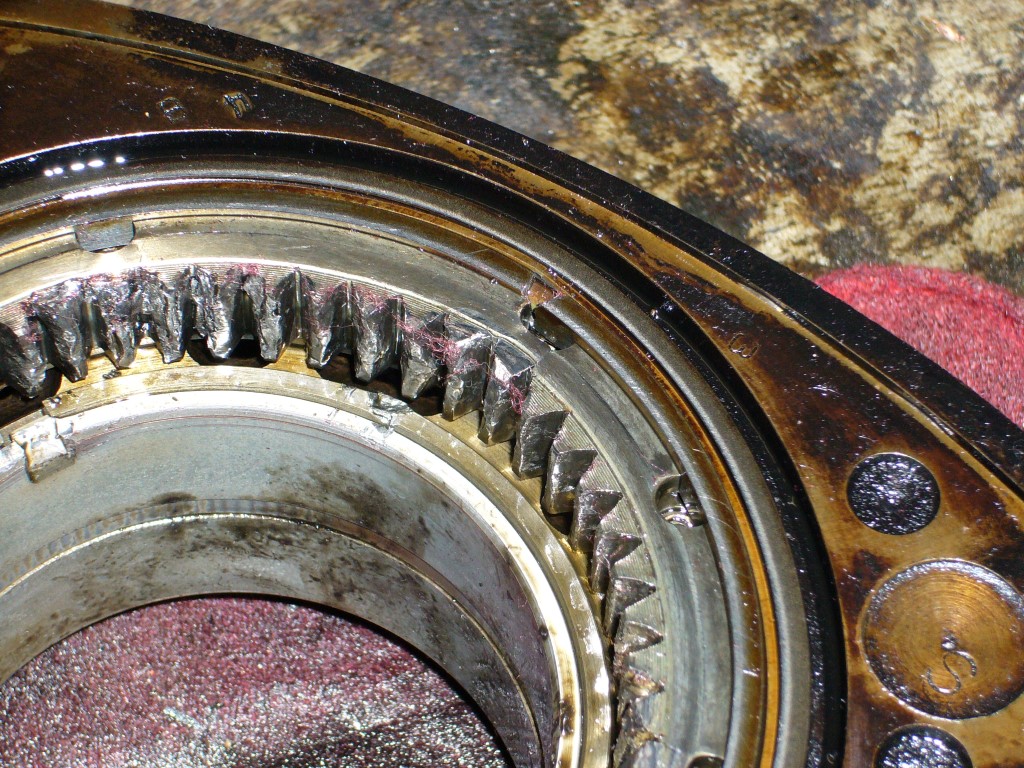
Well during the process of parts inspection I found some weird bearing wear on the main bearing. The rotor bearings are evenly worn.
I was wondering if anyone could give me some input. One rotor bearing is slightly spun but is tight in the rotor. I have yet to check the runout of the eshaft but im sure that it out due to the bearing wear just curious to get some input. Also the eshaft rotor journals have slight wear on the bearing riding surface and a slight ridge were the oil grove in on the bearing. this motor ran fine with 80psi of oil pressure and just cracked the rear iron.
It's hard to tell from the picture about the eccentric shaft. If it is smooth, then it's going to be fine most likely. Best check with a micrometer to make sure it meets minimum dimensions and is at least mostly round. If there is bearing material on the shaft, that can be removed carefully with a Scotch Brite pad. A bit of scratching around the oil groove area is fine.
Just because the bearing is tight in the rotor, doesn't mean that it hasn't spun. It doesn't appear that they spun though. The engine was definitely starved of oil to those bearings though. All are trashed at this point. Check your E-Shaft closely, but you can pick up a good used one for cheap, or buy a new RX-8 E-Shaft and stat gears and modify them for use in the engine. With a RX-8 E-Shaft, the whole rotating assembly will need to be balanced. The benefit to the RX-8 shaft is the hardened stat gears and the multi-window bearings.
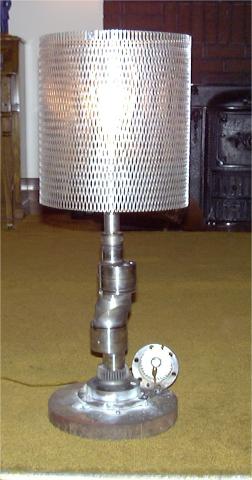
I like the lamp! I have new eshaft and new bearings that are going into the motor. Do you think that the main bearing wear could be from engine housing deflection? Thanks for all the help!
housing deflection? there is engine twisting, which breaks the engine and mashes rotor tips but it does not cause bearing wear like that. that was caused by foreign debris or lacking lubrication as stated.
Sorry for the confusion, housing deflection I'm which causes the rear iron to break. But anyways I have new eshaft, bearings, rear iron and a new housing for this motor build. I pretty sure that it broke the rear iron from knocking. I changed the oil and filter prior to when I cracked the rear iron (only made it 3 laps in on the track). I pulled the filter and it's clear. It may just be a mystery but Thank you all for the input.
no mystery, when you broke the iron you lost oil pressure, which cooked the bearings. it only takes a few moments and depends on how high you're revving and how bad the crack is. it could have been worse though.
i had an RX8 that had a teenage female owner who obviously ran the car low on oil and then topped it off before bringing it home and failed to mention it to her father.
the rotor bearing was half gone and flopping around in the oil galley of the rotor, the e-shaft was spinning on where the bearing should have been in the rotor. it was one of about 3 rotaries i ever heard with a rotor knock, but it ran.
i knew the engine was toast when i heard it in their driveway but i wasn't quite prepared for that, half the motor went into the scrap pile even though it ran "okay" aside from that teeth clenching noise and didn't even burn oil.
rather surprising how much abuse they really can endure and still manage to keep going.
Last edited by RotaryEvolution; Jan 12, 2016 at 09:59 PM.
Just because the bearing is tight in the rotor, doesn't mean that it hasn't spun. It doesn't appear that they spun though. The engine was definitely starved of oil to those bearings though. All are trashed at this point. Check your E-Shaft closely, but you can pick up a good used one for cheap, or buy a new RX-8 E-Shaft and stat gears and modify them for use in the engine. With a RX-8 E-Shaft, the whole rotating assembly will need to be balanced. The benefit to the RX-8 shaft is the hardened stat gears and the multi-window bearings.
Sorry for the confusion, housing deflection I'm which causes the rear iron to break. But anyways I have new eshaft, bearings, rear iron and a new housing for this motor build. I pretty sure that it broke the rear iron from knocking. I changed the oil and filter prior to when I cracked the rear iron (only made it 3 laps in on the track). I pulled the filter and it's clear. It may just be a mystery but Thank you all for the input.
I don't know how high your rpm is at the track, but if more than 8500 your housings need to be modified, anyway I recomend you to use 93 stationary gears which they are design to lock the bearing by a locking screw, resurface your e-shaft within tolerance and if is good use racing bearings mazda has a few, your eshaft has to be straight sometimes they flex make sure is straight.
i knew the engine was toast when i heard it in their driveway but i wasn't quite prepared for that, half the motor went into the scrap pile even though it ran "okay" aside from that teeth clenching noise and didn't even burn oil.
rather surprising how much abuse they really can endure and still manage to keep going.
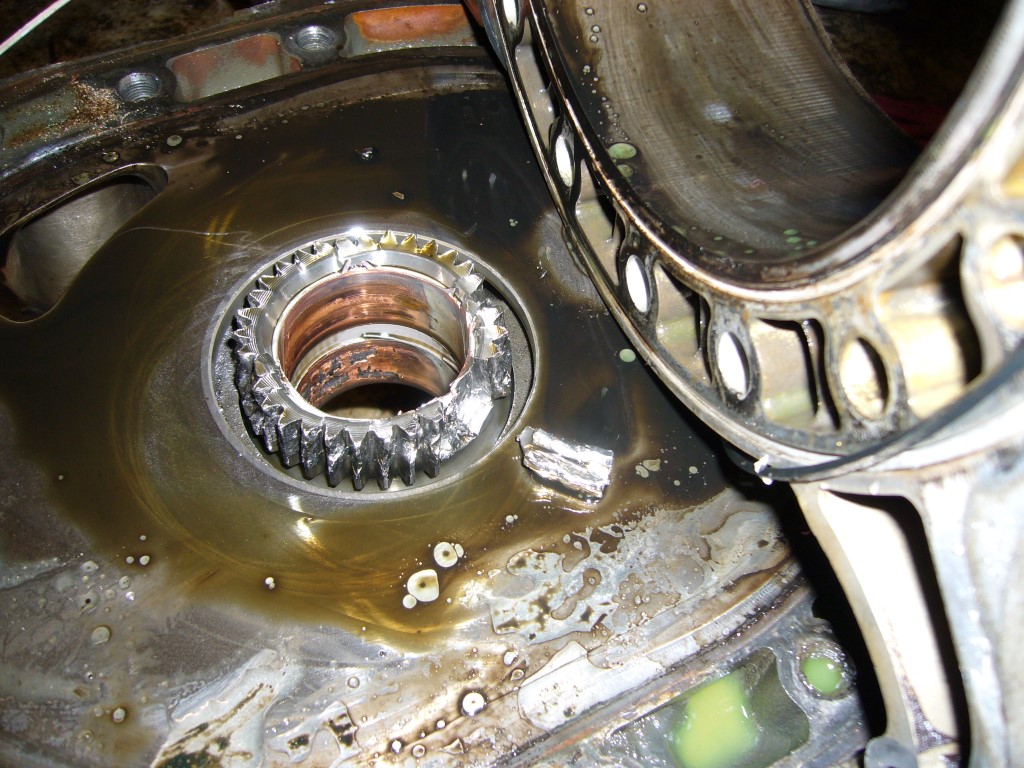
Heh, sounds a little like the situation that caused this:
It was track driven, presumably low on oil, then driven home several hundred miles. Upon arrival it just "stopped running and made a noise. Would not crank".
Heh, sounds a little like the situation that caused this:
It was track driven, presumably low on oil, then driven home several hundred miles. Upon arrival it just "stopped running and made a noise. Would not crank".
Yep. Sounds about right.
How the F is the babbit intact and brand new looking on that rotor bearing but yet the main bearing is trashed like that? The rotor bearing is gettings its oil from the main bearing, I don't understand.
How the F is the babbit intact and brand new looking on that rotor bearing but yet the main bearing is trashed like that? The rotor bearing is gettings its oil from the main bearing, I don't understand.
Well, it was probably more due to excessive RPM than oil starvation. 12A, so non-hardened stationary gears. They don't like sustained 8,000 RPM track use. Oil starvation was incidental once the stationary started to deform.