


loosing coolant, no sweet smell in exaust, no boiling, wheres it going?

Thread Starter
I "lost" my emissions....

Joined: Apr 2005
Posts: 1,764
Likes: 6
From: lillington, nc
loosing coolant, no sweet smell in exaust, no boiling, wheres it going?
i dont know where its going its not going out of the exaust, not boiling over, i see no leaks smell no coolant, no exaust smell in overflow? any ideas?
btw the stuff is about 90% water but still smells like coolant so id smell it.
any thoughts
btw the stuff is about 90% water but still smells like coolant so id smell it.
any thoughts

done any coolant seal tests/checks? Even though its not burning it enough to smell it, it may be eating just a touch, enough that its drown out by pure rotary exhaust rank...
How much are you losing after say 500kms?
How much are you losing after say 500kms?

Gig a Giddy Go

Joined: Apr 2006
Posts: 348
Likes: 0
From: louisiana
umm i though u were supposed to put more coolant than water because isnt it when water reaches the engine it hits bolling point than evaporate i could be wrong but im pretty sure the collant actually helps the water from doing this im not to sure so check up on that





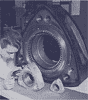
its prolly eating the coolant as you drive little by little..its prolly the coolant seals going out on the engine..nice pic dreyko..i wanna see what **** that huge rotor went in..
:AA:
:AA:
Trending Topics

Junior Member
Joined: Oct 2002
Posts: 27
Likes: 0
From: Orange County CA
I had a small but noticeable loss of coolant for about 6-8 months before the engine coolant seals failed. Upon disassembly of the engine there were small cracks in a coolant passage. There was no descernible odor in the exhaust and the overflow bottle and coolant was clean. You are about to have a failed coolant seal. or two. I would start saving your money if you plan on keeping the car. Pressure testing the coolant system would reveal this also.
With regards to what ratio of water to ethylene glycol (anti-freeze, coolant, whatever); water conducts heat better that EG. This is all related to the surface tension of the liquids. Products such as Redline's Water Wetter and Royal Purple's Purple Ice reduce the surface tension of the liquid solution. Another common household product that reduces surface tension is SOAP. But I would NOT recommend you put Dawn dish liquid into your radiator. If you read the warning labels on these products you will see they are eye irritants.
Coolant has a higher surface tension than water. Use the least amount of coolant possible but keep in mind that you need to lubricate your water pump. Be sure to use a product that says it will lubricate your water pump. In southern California, we routinely run pure distilled water with a bottle of Water Wetter on our race cars. This is because we know we will not need the anti-freeze properties of ethylene glycol.
With regards to stevie1020's comment, a properly functioning coolant system is ALWAYS in a liquid state. As coolant flows into the hottest part of the engine, right next to the exhaust portion, it picks up heat. The liquid is then pumped away to the radiator where the airflow cools the liquid to a lower temp, ready for another loop through system. As you increase the heat load, the boiling point of the liquid is reached. But since it is a closed system, the overall pressure of the system will increase. Correspondingly, with any increase in pressure there will be a higher boiling temperature of the liquid. This higher temp capacity of your liquid coolant allows the system to transfer more heat from the engine to the radiator. The pressure cap will provide relief when the system pressure gets too high, thus saving your radiator and rubber hoses from blowing up. The expanding liquid ends up in your coolant overflow bottle.
Anything you add to the water will raise its boiling point, but the real increase in heat transfer capacity in a cooling system is based on how much pressure it is designed for and how quickly it can take on and reject heat.
With regards to what ratio of water to ethylene glycol (anti-freeze, coolant, whatever); water conducts heat better that EG. This is all related to the surface tension of the liquids. Products such as Redline's Water Wetter and Royal Purple's Purple Ice reduce the surface tension of the liquid solution. Another common household product that reduces surface tension is SOAP. But I would NOT recommend you put Dawn dish liquid into your radiator. If you read the warning labels on these products you will see they are eye irritants.
Coolant has a higher surface tension than water. Use the least amount of coolant possible but keep in mind that you need to lubricate your water pump. Be sure to use a product that says it will lubricate your water pump. In southern California, we routinely run pure distilled water with a bottle of Water Wetter on our race cars. This is because we know we will not need the anti-freeze properties of ethylene glycol.
With regards to stevie1020's comment, a properly functioning coolant system is ALWAYS in a liquid state. As coolant flows into the hottest part of the engine, right next to the exhaust portion, it picks up heat. The liquid is then pumped away to the radiator where the airflow cools the liquid to a lower temp, ready for another loop through system. As you increase the heat load, the boiling point of the liquid is reached. But since it is a closed system, the overall pressure of the system will increase. Correspondingly, with any increase in pressure there will be a higher boiling temperature of the liquid. This higher temp capacity of your liquid coolant allows the system to transfer more heat from the engine to the radiator. The pressure cap will provide relief when the system pressure gets too high, thus saving your radiator and rubber hoses from blowing up. The expanding liquid ends up in your coolant overflow bottle.
Anything you add to the water will raise its boiling point, but the real increase in heat transfer capacity in a cooling system is based on how much pressure it is designed for and how quickly it can take on and reject heat.

Thread
Thread Starter
Forum
Replies
Last Post
ls1swap
3rd Generation Specific (1993-2002)
17
Jun 3, 2024 03:25 PM