


Injector port holes question (w/visual aid)


Thread Starter
irritating nuisance
iTrader: (1)
Joined: Dec 2010
Posts: 252
Likes: 3
From: Central PA
 Injector port holes question (w/visual aid)
I just pulled the injectors from my SE to get sent for cleaning. After removing them I peeked into the injector ports and noticed that there is a perforated plate in each port... I was expecting them to be unobstructed and open, but I've no experience with injectors.
Looking down in they look like this:
(Remember SE so only 2 injectors)
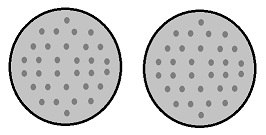
In my unqualified opinion this perforated plate would only seem to reduce the atomization of fuel that the injectors are providing and restrict flow.
Can somebody give me a clue?
Looking down in they look like this:
(Remember SE so only 2 injectors)
In my unqualified opinion this perforated plate would only seem to reduce the atomization of fuel that the injectors are providing and restrict flow.
Can somebody give me a clue?

Junior Member
Joined: Apr 2012
Posts: 40
Likes: 0
From: Florida
Those are actually plastic inserts that have o-rings on them. You should replace them while the injectors are out (the o-rings). I don't think you can run without them, since the injectors seat against them. Not sure about atomization patterns with/without them. Mazda wanted that pattern, so I kept it.


I am not an expert in fuel injection but do have some thoughts about what you're looking at.
Early fuel injection was more concerned with spraying fuel in the *right* amount at the *right* time...the spray pattern and how the fuel mixed with the air was a secondary concern.
The diffuser you see is a post-injector method of modifying the spray pattern, something not possible for the early injector to do by itself.
Also, remember to factor in the airflow below that diffuser plate...it's not like the fuel hits the plate and then dribbles through the small holes, the airflow is actively pulling fuel into itself, the holes help keep it atomized.
I've not done it (although I'm sure somebody has), but I wonder how the car would run if those parts were deleted and the injectors just ran bare.
I would guess that high RPM operation would be less affected than idle/part throttle situations, which would get significantly worse.
Early fuel injection was more concerned with spraying fuel in the *right* amount at the *right* time...the spray pattern and how the fuel mixed with the air was a secondary concern.
The diffuser you see is a post-injector method of modifying the spray pattern, something not possible for the early injector to do by itself.
Also, remember to factor in the airflow below that diffuser plate...it's not like the fuel hits the plate and then dribbles through the small holes, the airflow is actively pulling fuel into itself, the holes help keep it atomized.
I've not done it (although I'm sure somebody has), but I wonder how the car would run if those parts were deleted and the injectors just ran bare.
I would guess that high RPM operation would be less affected than idle/part throttle situations, which would get significantly worse.



Joined: Mar 2001
Posts: 31,857
Likes: 3,243
From: https://www2.mazda.com/en/100th/
yes you should change the O rings. i'm not sure exactly how those diffusers work, Clokker is probably right, at high rpm it probably doesn't matter, but idle/low speed you'll want em.
to test em you'd need to almost build like a plexiglass port and put the diffuser and injector in there
to test em you'd need to almost build like a plexiglass port and put the diffuser and injector in there


Joined: Oct 2003
Posts: 11,576
Likes: 27
From: Morristown, TN (east of Knoxville)
IMO they are placed there to overcome the deficiencies of 80's technology injectors which didn't have great atomization and were also aimed at the port runner floor and not at the port itself. If you just sprayed the injector with no plate underneath much of the fuel would lay in the bottom of the port runner and dribble into the chamber from the sides. By making the injectors spray onto a plate, the fuel is somewhat directed in the right way toward the port opening and does not cling to the bottom of the runner as much.
IMO if you were to use some newer injectors with a more efficient spray pattern, and if you could aim them more toward the port opening itself, you could do away with the diffusers. Mazda did both with the rx8 engines.
I do believe that you can run without the diffusers in the secondary positions on the 2nd gen engines, because by the time they are activated there is enough air velocity to carry the fuel charge evenly through the manifold and into the chambers. But at idle air velocity is very low and you could easily get the puddling effect I described above, so that is probably the main reason they are placed below the primaries.
Also in most cases they are better left alone than messed with in an attempt to replace the o-rings, unless you are doing a rebuild on the block. You are almost definitely going to break them, you'll have difficulty fishing the pieces out of the port so that they don't go into the block, and you'll have to pay about 100 bucks for new replacements.
IMO if you were to use some newer injectors with a more efficient spray pattern, and if you could aim them more toward the port opening itself, you could do away with the diffusers. Mazda did both with the rx8 engines.
I do believe that you can run without the diffusers in the secondary positions on the 2nd gen engines, because by the time they are activated there is enough air velocity to carry the fuel charge evenly through the manifold and into the chambers. But at idle air velocity is very low and you could easily get the puddling effect I described above, so that is probably the main reason they are placed below the primaries.
Also in most cases they are better left alone than messed with in an attempt to replace the o-rings, unless you are doing a rebuild on the block. You are almost definitely going to break them, you'll have difficulty fishing the pieces out of the port so that they don't go into the block, and you'll have to pay about 100 bucks for new replacements.



Trending Topics
Thread Starter
irritating nuisance
iTrader: (1)
Joined: Dec 2010
Posts: 252
Likes: 3
From: Central PA
Thanks guys... They looked like they were shiny metal and part of the port itself, but it was cold and late so I didn't spend too much time looking at them.
You're all saying similar things and since I now know they're called "diffusers" it all seems to jive. They look to be in good shape and really clean (unlike the injectors themselves) so I don't think I'm gonna do anything to them aside from a quick hit with carb cleaner and blowing them out with some canned air before reinstalling the injectors once they come back.
I'll take another look next time I'm out in the garage and see exactly how they interface with the port. If it looks like I can safely get them out I might give it a try to better inspect the port runner.
Thanks!!!
You're all saying similar things and since I now know they're called "diffusers" it all seems to jive. They look to be in good shape and really clean (unlike the injectors themselves) so I don't think I'm gonna do anything to them aside from a quick hit with carb cleaner and blowing them out with some canned air before reinstalling the injectors once they come back.
I'll take another look next time I'm out in the garage and see exactly how they interface with the port. If it looks like I can safely get them out I might give it a try to better inspect the port runner.
Thanks!!!


Thread
Thread Starter
Forum
Replies
Last Post