


Well i guess its time for an update. Mazda has made a few new engines


Thread Starter
advanced novice

Joined: Aug 2006
Posts: 1,073
Likes: 1
From: clarksville tn
Well i guess its time for an update. Mazda has made a few new engines
The Mazda Wankel engines (a type of rotary combustion engine) comprise a family of car engines derived from experiments in the early 1960s by Felix Wankel, a German engineer. Over the years, displacement has been increased and turbocharging has been added.
Wankel engines can be classified by their geometric size in terms of radius (rotor center to tip distance, also the median stator radius) and depth (rotor thickness), and offset (crank throw, eccentricity, also 1/4 the difference between stator's major and minor axes). These metrics function similarly to the bore and stroke measurements of a piston engine. Displacement is 3√3radius•offset•depth, multiplied with the number of rotors (note that this only counts a single face of each rotor as the entire rotor's displacement, and is of course incorrect as there are three faces, equivalent to three piston faces, per rotor, i.e. equivalent to a three cylinder radial piston motor per rotor). Nearly all Mazda production Wankel engines share a single rotor radius, 105 mm (4.1 in), with a 15 mm (0.6 in) crankshaft offset. The only engine to diverge from this formula was the rare 13A, which used a 120 mm (4.7 in) rotor radius and 17.5 mm (0.7 in) crankshaft offset.
Mazda rotary engines have a reputation for being relatively small and powerful at the expense of poor fuel efficiency. They started to become popular with kit car builders, hot rodders and in light aircraft because of their light weight, compact size, and tuning potential stemming from their inherently high power-to-weight ratio - as is true to all Wankel-type engines, but Mazda is the only company which put them into serial production[citation needed].
Currently[when?], the engine is produced only for single seater racing[citation needed], with the one-make Star Mazda Championship being contested with a Wankel engine.
•
Displacement
This section needs additional citations for verification. (October 2012)
When Wankel engines became common place in motor sport events, this created the problem of correcting the representation of each engine's displacement as provided by the manufacturer, for the benefit of competition. Rather than force the majority of participants (driving piston engine cars) to half their quoted displacement (likely resulting in confusion), most racing organizations simply decided to double the quoted displacement of Wankel engines.[1] For calculating taxes in Japan, the displacement of Wankel engines is defined as the equivalent of 1.5 times the nominal displacement, so the 1308 cc 13B engines are taxed as 1962 cc. Whereas the actual displacement is 3924cc if all cycles are counted during the 1080 degrees of crankshaft rotation. If a comparison to piston engines and the "accepted" norm must be made and "accepted" norm being a 4 stroke piston engine. All cylinders have completed their cycles within 720 degrees of crankshaft rotation, no matter if its a 4 cylinder, 6 cylinder or a V10. Since the 1080 degrees or 3 revolutions of the rotary crankshaft is 50% greater than the 4 stroke engine i.e. travelled 50% more distance, the 3924cc should be divided by 1.5 to bring it in line with the "accepted" 720 degrees or 2 crankshaft revolutions giving an engine displacement of 2616cc. This formula also works for two stroke engines where the cylinders have completed their cycles within 360 degrees of crankshaft rotation, the displacement would be doubled to bring it in line with the 720 degrees of crankshaft rotation of the four stroke cousin.
40A
Mazda's first prototype Wankel was the 40A, a single-rotor engine very much like the NSU KKM400. Although never produced in volume, the 40A was a valuable testbed for Mazda engineers, and quickly demonstrated two serious challenges[citation needed] to the feasibility of the design: "chatter marks" in the housing, and heavy oil consumption. The chatter marks, nicknamed "devil's fingernails"[citation needed], were caused by the tip-seal vibrating at its natural frequency. The oil consumption problem was addressed with heat-resistant rubber oil seals at the sides of the rotors. This early engine had a rotor radius of 90 mm (3.5 in), an offset of 14 mm (0.6 in), and a depth of 59 mm (2.3 in).
L8A
The very first Mazda Cosmo prototype used a 798 cc L8A two-rotor Wankel. The engine and car were both shown at the 1963 Tokyo Motor Show. Hollow cast iron apex seals reduced vibration by changing their resonance frequency and thus eliminated chatter marks. It used dry-sump lubrication. Rotor radius was up from the 40A to 98 mm (3.9 in), but depth dropped to 56 mm (2.2 in).
One-, three-, and four-rotor derivatives of the L8A were also created for experimentation[citation needed].
10A
The 10A series was Mazda's first production Wankel, appearing in 1965. It was a two-rotor design, with each displacing 491 cc for a total of 982 cc. These engine featured the mainstream rotor dimensions with a 60 mm (2.4 in) depth.
The rotor housing was made of sand-cast aluminum plated with chrome, while the aluminum sides were sprayed with molten carbon steel for strength. Cast iron was used for the rotors themselves, and their eccentric shafts were of expensive chrome-molybdenum steel[citation needed]. The addition of aluminum/carbon apex seals addressed the chatter mark problem.
0810
The first 10A engine was the 0810, used in the Series I Cosmo from May, 1965 through July, 1968. These cars, and their revolutionary engine, were often called L10A models. Gross output was 110 hp (82 kW) at 7000 rpm and 130 Nm (96 lb•ft) at 3500 rpm, but both numbers were probably optimistic.
The 10A featured twin side intake ports per rotor, each fed by a one of four carburetor barrels. Only one port per rotor was used under low loads for added fuel economy. A single peripheral exhaust port routed hot gas through the coolest parts of the housing, and engine coolant flowed axially rather than the radial flow used by NSU. A bit of oil was mixed with the intake charge for lubrication.
The 0810 was modified for the racing Cosmos used at Nürburgring. These engines had both side- and peripheral-located intake ports switched with a butterfly valve for low- and high-RPM use (respectively)
Applications:
• 1965–1968 Mazda Cosmo Series I/L10A
0813
The improved 0813 engine appeared in July, 1968 in the Series II/L10B Cosmo. Its construction was very similar to the 0810.
Japanese-spec gross output was 100 hp (75 kW) at 7000 rpm and 133 Nm (98 lb•ft) at 3500 rpm. The use of less-expensive components raised the weight of the engine from 102 kg (224 lb) to 122 kg (268 lb).
Applications:
• 1968–1973 Mazda R100/Familia Rotary
0866
The final member of the 10A family was the 1971 0866. This variant featured a cast-iron thermal reactor to reduce exhaust emissions and re-tuned exhaust ports. The die-cast rotor housing was now coated with a new process: The new Transplant Coating Process (TCP) featured sprayed-on steel which is then coated with chrome. Gross output was 105 hp (78 kW) at 7000 rpm and 135 Nm (99.5 lb•ft) at 3500 rpm.
Applications:
• 1972–1974 Mazda RX-3 (Japan-spec)
13A
The 13A was designed especially for all wheel drive applications[citation needed]. It had two 655 cc rotors for a total of 1310 cc. This was the only production Mazda Wankel with different rotor dimensions: Radius was 120 mm (4.7 in) and offset was 17.5 mm (0.7 in), but depth remained the same as the 10A at 60 mm (2.4 in). Another major difference from the previous engines was the integrated water-cooled oil cooler.
The 13A was used only in the 1969–1972 R130 Luce, where it produced 126 hp (94 kW) and 172 Nm (126 lb•ft). This was the end of the line for this engine design: the next Luce was rear wheel drive and Mazda never again made a front wheel drive rotary vehicle.
Applications:
• 1970–1972 Mazda R130
12A
The 12A is an "elongated" version of the 10A — the rotor radius was the same, but the depth was increased by 10 mm (0.4 in) to 70 mm (2.8 in). Each of its two rotors displaced 573 cc for a total of 1146 cc. The 12A series was produced for 15 years, from May 1970 through 1985. In 1974, a 12A became the first engine built outside of western Europe or the U.S to finish the 24 hours of Le Mans.
In 1974, a new process was used to harden the rotor housing. The Sheet-metal Insert Process (SIP) used a sheet of steel much like a conventional piston engine cylinder liner with a chrome plated surface. The side housing coating was also changed to eliminate the troublesome sprayed metal. The new "REST" process created such a strong housing, the old carbon seals could be abandoned in favor of conventional cast iron.
Early 12A engines also feature a thermal reactor, similar to the 0866 10A, and some use an exhaust port insert to reduce exhaust noise. A lean-burn version was introduced in 1979 (in Japan) and 1980 (in America) which substituted a more-conventional catalytic converter for this "afterburner". A major modification of the 12A architecture was the 6PI which featured variable induction ports.
Applications:
• 1970–1972 Mazda R100
• 1970–1974 Mazda RX-2, 130 hp (97 kW) and 156 Nm (115 lb•ft)
• 1972–1974 Mazda RX-3 (Japan), 110 hp (82 kW) and 135 Nm (100 lb•ft)
• 1972–1974 Mazda RX-4
• 1972–1980 Mazda Luce
• 1978–1979 Mazda RX-7, 100 hp (75 kW)
• Lean-burn
o 1979–1985 Mazda RX-7 (Japan)
o 1980–1985 Mazda RX-7 (USA)
• 6PI
o 1981–1985 Mazda Luce
o 1981–1985 Mazda Cosmo
Turbo
Turbocharged 12A installed in Mazda Cosmo
The ultimate 12A engine was the turbocharged and fuel injected engine used in the Japan-spec HB series Cosmo, Luce,[2] and SA series RX-7.[3] In 1982 a 12A turbo powered Cosmo coupe was officially the fastest production car in Japan[citation needed]. It featured "semi-direct injection" into both rotors at once. A passive knock sensor was used to eliminate knocking, and later models featured a specially-designed smaller and lighter "Impact Turbo" which was tweaked for the unique exhaust signature of the Wankel engine for a 5 horsepower increase.[3] The engine continued until 1989 in the HB Cosmo series but by that stage it had grown a reputation as a thirsty engine.
• Original output is 160 PS (120 kW) at 6,500 rpm, and 226 N•m (167 lb•ft) at 4,000 rpm.[2]
• Impact Turbo output is 165 PS (121 kW) at 6,000 rpm, and 231 Nm (170 lb•ft) at 4,000 rpm.
Applications:
• 1982–1989 Mazda Cosmo
• 1982–1985 Mazda Luce
• 1984–1985 Mazda RX-7
12B
The 12B was a short lived engine that was produced for the Mazda RX-2, and the RX-3. It had increased reliability from previous series, and it introduced a single distributor. This was the beginning of the single distributor rotary engines, before that, the 12A and 10A were both twin distributor wankels. The improved 12B was quietly introduced in 1974.
Applications:
• 1974–1978 Mazda RX-2
• 1974–1978 Mazda RX-3
13B
Wankel rotors of 13B
The 13B is the most widely produced engine. It was the basis for all future Mazda Wankel engines, and was produced for over 30 years. The 13B has no relation to the 13A. Instead, it is a lengthened version of the 12A, having 80 mm (3.1 in) thick rotors. Each rotor had a displacement of 654 cc, for a total of 1308 cc displacement in the engine.
In the United States, the 13B was available from 1974 through 1978 and was then retired until the 1984 RX-7 GSL-SE. It disappeared from the US market again in 1995, when the last US-spec RX-7s were sold. The engine was continually used in Japan from 1972's Mazda Luce/RX-4 through 2002's RX-7.
AP
The 13B was designed with both high performance and low emissions in mind. Early vehicles using this engine used the AP name.
Applications:
• 1975–1980 Mazda Cosmo AP
• 1974–1977 Mazda Rotary Pickup
• 1975–1977 Mazda Roadpacer
• 1973–1978 Mazda RX-4
• 1975–1980 RX-5
13B-RESI
A tuned intake manifold was used in a Wankel engine for the first time with the 13B-RESI. RESI = Rotary Engine Super Injection. The so-called Dynamic Effect Intake featured a two-level intake box which derived a supercharger-like effect from the Helmholtz resonance of the opening and closing intake ports. The RESI engine also featured Bosch L-Jetronic fuel injection. Output was much improved at 135 hp (101 kW) and 180 N•m (133 lb•ft).
Applications:
• 1984–1985 Mazda HB Luce
• 1984–1985 Mazda HB Cosmo
• 1984–1985 Mazda FB RX-7 GSL-SE
13B-DEI
Like the 12A-SIP, the second-generation RX-7 bowed with a variable-intake system. Dubbed DEI, the engine features both the 6PI and DEI systems, as well as four-injector electronic fuel injection. Total output is up to 146 hp (109 kW) at 6500 rpm and 187 N•m (138 lb•ft) at 3500 rpm.
The 13B-T was turbocharged in 1986. It features the newer four-injector fuel injection of the 6PI engine, but lacks that engine's eponymous variable intake system and 6PI. Mazda went back to the 4 port intake design similar to what was used in the 74-78 13B. In '86-'88 engines the twin-scroll turbocharger is fed using a two-stage mechanically actuated valve, however on '89-'91 engines a better turbo design was used with a divided manifold powering the twin-scroll configuration. For engines manufactured between '86-'88 output is rated at 185 hp (138 kW) at 6500 rpm and 248 N•m (183 lb•ft) at 3500 rpm.
Applications:
• 1986–1988 Mazda FC3S S4 RX-7, 146 hp (108 kW)
• 1989–1991 Mazda FC3S S5 RX-7, 160 hp (119 kW)
Applications:
• 1986–1991 Mazda HC Luce Turbo-II, 185 hp (138 kW)
• 1986–1988 Mazda FC3S S4 Turbo RX-7 Turbo-II, 185 hp (138 kW)
• 1989–1991 Mazda FC3S S5 Turbo RX-7 Turbo-II, 200 hp (147 kW)
13B-RE
The 13B-RE from the JC Cosmo series was a similar motor to the 13BREW but had a few key difference's namely it being endowed with the largest side ports of any later model rotary engine.
Compared to the twin turbos fitted to the 13B-REW on the FD RX-7, these sequential turbos received a large (HT-15) primary with a smaller (HT-10) secondary turbo. Injector sizes = 550cc PRI + SEC.
Approximately 5000 13B-RE optioned JC Cosmos were sold making this engine almost as hard to source as its rarer 20B-REW big-brother.[citation needed].
Applications:
• 1990–1995 Eunos Cosmo, 235 hp (176 kW; 238 PS)
13B-REW
A twin-turbocharged version of the 13B, the 13B-REW, became famous for its high output and low weight[citation needed]. The twin Hitachi HT-12 turbos were operated sequentially, with the primary providing boost until 4,500 rpm, and the secondary coming online afterwards. Output eventually reached, and may have exceeded[citation needed], Japan's unofficial maximum of 280 DIN hp (206 kW) for the final revision used in the series 8 Mazda RX-7.
Applications:
• 1992–1995 Mazda RX-7, 255 hp (190 kW)
• 1996–1998 Mazda RX-7, 265 hp (197 kW)
• 1999–2002 Mazda RX-7, 280 hp (206 kW)
20B
Eunos Cosmo engine at the Mazda Museum
Rotary Engine 20B
In Le Mans racing, the first three-rotor engine used in the 757 was named the 13G.
The main difference between the 13G and 20B is that the 13G uses a factory peripheral intake port (used for racing) and the 20B (Three Rotor Engine) uses side intake ports.
It was renamed 20B after Mazda's naming convention for the 767 in November 1987.
The three-rotor 20B-REW was only used in the 1990-1995 Eunos Cosmo. It was the world's first volume production twin-turbo setup featured in both 13B-REW & 20B-REW form. It displaced 1962 cc (three 654 cc rotors) and used 0.7-bar (70 kPa) of turbo pressure to produce 300 horsepower (224 kW) and 407 newton metres (300 lbf•ft). A version of the 20B known as the "R20B RENESIS 3 Rotor Engine" was built by Racing Beat in the U.S.A for the Mazda Furai concept car which was released on 27 December 2007. The engine was designed to run on E100 ethanol fuel.[citation needed]
13J
The first Mazda racing four-rotor engine was the 13J-M used in the 1988 and 1989 (13J-MM with two step induction pipe) 767 Le Mans Group C racers.[4] This motor was poorly designed[citation needed], and was replaced by the 26B.
R26B
The most prominent 4-rotor engine from Mazda, the 26B, was used exclusively for various Mazda-built sports prototype cars (including the 767 and 787B) in replacement of the older 13J. In 1991 the 26B-powered Mazda 787B became the first Japanese car and the first car with anything other than a reciprocating piston engine to win the 24 Hours of Le Mans race outright. As of 2012, it is still so far the only car to hold these distinctions. The 26B engine displaced 2622 cc and developed 700 hp (522 kW) at 9000 rpm. The engine design utilizes peripheral intake ports, continually variable geometry intakes, and an additional (third) spark plug per rotor.
13B-MSP Renesis
Production Mazda Renesis in the Mazda Museum
The Renesis engine – also 13B-MSP (Multi-Side Port) – which first appeared in production in the 2003 Mazda RX-8, is an evolution of the previous 13B. It was designed to reduce exhaust emission and improve fuel economy, which were two of the most recurrent drawbacks of rotary engines. It is naturally aspirated, unlike its predecessors from the 13B range, and therefore less powerful than Mazda RX-7's twin-turbocharged 13B-REW (280 hp).
The Renesis design features two major changes from its predecessors. First, the exhaust ports are not peripheral but are located on the side of the housing, which eliminates overlap and allows redesign of the intake port area. This produced noticeably more power thanks to an increased effective compression ratio. Secondly, the rotors are sealed differently through the use of redesigned side seals, low-height apex seals and the addition of a second cut-off ring.
These and other innovative technologies[citation needed] allow the Renesis to achieve 49% higher output and reduced fuel consumption and emissions (the RX-8 meets LEV-II[citation needed]). The Renesis won International Engine of the Year[citation needed] and Best New Engine[citation needed] awards 2003 and also holds the "2.5 to 3 liter" (note that the engine is designated as a 1.3 liter by Mazda) size award[citation needed] for 2003 and 2004, where it is considered a 2.6 L engine.[5][6] Finally, it was on the Ward's 10 Best Engines list for 2004 and 2005[citation needed].
The Renesis has also been adapted for a dual-fuel use, allowing it to run on gasoline or hydrogen.[7][8]
All the Mazda rotary engines have been praised because of their light weight[citation needed]. The unmodified 13B-MSP Renesis Engine has a weight of 122 kg (247 lbs), including all standard attachments (except airbox), but without engine fluids (such as coolant, oil, etc.).
16X
Mazda Taiki
Also known as the Renesis (2), made its first and only appearance in the Mazda Taiki concept car at the 2007 Tokyo Auto Show, but has not been seen since. It featured a lengthened stroke, reduced width rotor housing, direct injection, and aluminum side housings.[9] The 16X Renesis rotary engine is said to be capable of up to 300 hp.
Sales
Outdated annual Mazda Wankel "rotary" engine sales without RX-8 and without industry engines (data source: Ward's AutoNews)
Mazda was fully committed to the Wankel engine just as the energy crisis of the 1970s struck. The company had all but eliminated piston engines from its products in 1974, a decision that nearly led to the company's collapse[citation needed]. A switch to a three-prong approach (piston-gasoline, piston-Diesel, and Wankel) for the 1980s relegated the Wankel to sports car use (in the RX-7 and Cosmo), severely limiting production volume. But the company had continued production continually since the mid-1960s, and was the only maker of Wankel-powered cars when (the RX-8) was discontinued from production in August 2011.
Though not reflected in the graph at right, the RX-8 was a higher-volume car than its predecessors. Sales of the RX-8 peaked in 2004 at 23,690, but continued to decline through 2011, when less than 1000 were produced. [10]
On November 16, 2011, Mazda CEO, Takashi Yamanouchi, announced that the company is still committed to producing the rotary engine, saying, "So long as I remain involved with this company... there will be a rotary engine offering or multiple offerings in the lineup." [11]
Currently[when?], the engine is produced for SCCA Formula Mazda, and its professional Indy Racing League LLC dba INDYCAR sanctioned Star Mazda Championship[citation needed].
See also
• Wankel engine
• Mazda engines
References
1. ^ "Rotary vs. Piston Engine Equivalency". Driving Sports. 2008-12-06. Driving Sports | Car reviews, motorsports and official site for the TV series.. Retrieved 2010-10-15.
2. ^ a b Büschi, Hans-Ulrich, ed. (March 10, 1983) (in German/French). Automobil Revue '83. 78. Berne, Switzerland: Hallwag, AG. p. 363. ISBN 3-444-06065-3.
3. ^ a b Dieudonne, Pierre (1983-12-15). "Ballade Japonaise: à la découverte des Mazda Turbo [Japanese ballad: Discovering the Mazda Turbos]" (in French). Le Moniteur de l'Automobile (Brussels, Belgium: Editions Auto-Magazine) 34 (784): 43-44.
4. ^ "Mazda Wankel". Der-wankelmotor.de. Die Mazda Motorentypen nach System Wankel. Retrieved 2010-10-15.
5. ^ "For the purpose of displacement equivalency, either the rotary engine total displacement needs to be doubled or the piston engine total displacement needs to be halved. (...) we say that a 1.3 liter rotary has equivalent displacement of 2.6 liters." Source: Driving Sports | Car reviews, motorsports and official site for the TV series.
6. ^ In several countries where a car tax is based on cylinder displacement, rotary engines are taxed according to this displacement equivalency rule. You pay the same tax for a 2,6L piston engine as for a 1,3L rotary engine.
7. ^ "Mazda RX-8 Renesis hydrogen". Hydrogencarsnow.com. Mazda RX-8 RE Renesis Review. Retrieved 2010-10-15.
8. ^ "Mazda 5 / Premacy Hydrogen RE Hybrid Minivan". Hydrogencarsnow.com. Mazda 5 Premacy Hydrogen RE Hybrid Minivan Review. Retrieved 2010-10-15.
9. ^ "Next Generation RENESIS (Rotary Engine 16X)". Mazda Motor Corporation. MAZDA:16X | The Rotary Engine. Retrieved 2010-11-05.
10. ^ Lienert, Anita (2011-08-23). "Mazda RX-8 Ceases Production". Insideline.com. Mazda RX-8 Ceases Production. Retrieved 2012-01-27.
11. ^ By Matt Davis RSS feed. "Mazda CEO charts how to reach 2 percent of world market, rotary engine far from dead". Autoblog.com. Mazda CEO charts how to reach 2 percent of world market, rotary engine far from dead. Retrieved 2012-01-27.
• Yamaguchi, Jack K. (1985). The New Mazda RX-7 and Mazda Rotary Engine Sports Cars. St. Martin's Press, New York. ISBN 0-312-69456-3.
• Jan P. Norbye (1973). "Watch out for Mazda!". Automobile Quarterly XI.1: 50–61.
Read more: Mazda Wankel engine: Information from Answers.com
enjoy!!
Wankel engines can be classified by their geometric size in terms of radius (rotor center to tip distance, also the median stator radius) and depth (rotor thickness), and offset (crank throw, eccentricity, also 1/4 the difference between stator's major and minor axes). These metrics function similarly to the bore and stroke measurements of a piston engine. Displacement is 3√3radius•offset•depth, multiplied with the number of rotors (note that this only counts a single face of each rotor as the entire rotor's displacement, and is of course incorrect as there are three faces, equivalent to three piston faces, per rotor, i.e. equivalent to a three cylinder radial piston motor per rotor). Nearly all Mazda production Wankel engines share a single rotor radius, 105 mm (4.1 in), with a 15 mm (0.6 in) crankshaft offset. The only engine to diverge from this formula was the rare 13A, which used a 120 mm (4.7 in) rotor radius and 17.5 mm (0.7 in) crankshaft offset.
Mazda rotary engines have a reputation for being relatively small and powerful at the expense of poor fuel efficiency. They started to become popular with kit car builders, hot rodders and in light aircraft because of their light weight, compact size, and tuning potential stemming from their inherently high power-to-weight ratio - as is true to all Wankel-type engines, but Mazda is the only company which put them into serial production[citation needed].
Currently[when?], the engine is produced only for single seater racing[citation needed], with the one-make Star Mazda Championship being contested with a Wankel engine.
•
Displacement
This section needs additional citations for verification. (October 2012)
When Wankel engines became common place in motor sport events, this created the problem of correcting the representation of each engine's displacement as provided by the manufacturer, for the benefit of competition. Rather than force the majority of participants (driving piston engine cars) to half their quoted displacement (likely resulting in confusion), most racing organizations simply decided to double the quoted displacement of Wankel engines.[1] For calculating taxes in Japan, the displacement of Wankel engines is defined as the equivalent of 1.5 times the nominal displacement, so the 1308 cc 13B engines are taxed as 1962 cc. Whereas the actual displacement is 3924cc if all cycles are counted during the 1080 degrees of crankshaft rotation. If a comparison to piston engines and the "accepted" norm must be made and "accepted" norm being a 4 stroke piston engine. All cylinders have completed their cycles within 720 degrees of crankshaft rotation, no matter if its a 4 cylinder, 6 cylinder or a V10. Since the 1080 degrees or 3 revolutions of the rotary crankshaft is 50% greater than the 4 stroke engine i.e. travelled 50% more distance, the 3924cc should be divided by 1.5 to bring it in line with the "accepted" 720 degrees or 2 crankshaft revolutions giving an engine displacement of 2616cc. This formula also works for two stroke engines where the cylinders have completed their cycles within 360 degrees of crankshaft rotation, the displacement would be doubled to bring it in line with the 720 degrees of crankshaft rotation of the four stroke cousin.
40A
Mazda's first prototype Wankel was the 40A, a single-rotor engine very much like the NSU KKM400. Although never produced in volume, the 40A was a valuable testbed for Mazda engineers, and quickly demonstrated two serious challenges[citation needed] to the feasibility of the design: "chatter marks" in the housing, and heavy oil consumption. The chatter marks, nicknamed "devil's fingernails"[citation needed], were caused by the tip-seal vibrating at its natural frequency. The oil consumption problem was addressed with heat-resistant rubber oil seals at the sides of the rotors. This early engine had a rotor radius of 90 mm (3.5 in), an offset of 14 mm (0.6 in), and a depth of 59 mm (2.3 in).
L8A
The very first Mazda Cosmo prototype used a 798 cc L8A two-rotor Wankel. The engine and car were both shown at the 1963 Tokyo Motor Show. Hollow cast iron apex seals reduced vibration by changing their resonance frequency and thus eliminated chatter marks. It used dry-sump lubrication. Rotor radius was up from the 40A to 98 mm (3.9 in), but depth dropped to 56 mm (2.2 in).
One-, three-, and four-rotor derivatives of the L8A were also created for experimentation[citation needed].
10A
The 10A series was Mazda's first production Wankel, appearing in 1965. It was a two-rotor design, with each displacing 491 cc for a total of 982 cc. These engine featured the mainstream rotor dimensions with a 60 mm (2.4 in) depth.
The rotor housing was made of sand-cast aluminum plated with chrome, while the aluminum sides were sprayed with molten carbon steel for strength. Cast iron was used for the rotors themselves, and their eccentric shafts were of expensive chrome-molybdenum steel[citation needed]. The addition of aluminum/carbon apex seals addressed the chatter mark problem.
0810
The first 10A engine was the 0810, used in the Series I Cosmo from May, 1965 through July, 1968. These cars, and their revolutionary engine, were often called L10A models. Gross output was 110 hp (82 kW) at 7000 rpm and 130 Nm (96 lb•ft) at 3500 rpm, but both numbers were probably optimistic.
The 10A featured twin side intake ports per rotor, each fed by a one of four carburetor barrels. Only one port per rotor was used under low loads for added fuel economy. A single peripheral exhaust port routed hot gas through the coolest parts of the housing, and engine coolant flowed axially rather than the radial flow used by NSU. A bit of oil was mixed with the intake charge for lubrication.
The 0810 was modified for the racing Cosmos used at Nürburgring. These engines had both side- and peripheral-located intake ports switched with a butterfly valve for low- and high-RPM use (respectively)
Applications:
• 1965–1968 Mazda Cosmo Series I/L10A
0813
The improved 0813 engine appeared in July, 1968 in the Series II/L10B Cosmo. Its construction was very similar to the 0810.
Japanese-spec gross output was 100 hp (75 kW) at 7000 rpm and 133 Nm (98 lb•ft) at 3500 rpm. The use of less-expensive components raised the weight of the engine from 102 kg (224 lb) to 122 kg (268 lb).
Applications:
• 1968–1973 Mazda R100/Familia Rotary
0866
The final member of the 10A family was the 1971 0866. This variant featured a cast-iron thermal reactor to reduce exhaust emissions and re-tuned exhaust ports. The die-cast rotor housing was now coated with a new process: The new Transplant Coating Process (TCP) featured sprayed-on steel which is then coated with chrome. Gross output was 105 hp (78 kW) at 7000 rpm and 135 Nm (99.5 lb•ft) at 3500 rpm.
Applications:
• 1972–1974 Mazda RX-3 (Japan-spec)
13A
The 13A was designed especially for all wheel drive applications[citation needed]. It had two 655 cc rotors for a total of 1310 cc. This was the only production Mazda Wankel with different rotor dimensions: Radius was 120 mm (4.7 in) and offset was 17.5 mm (0.7 in), but depth remained the same as the 10A at 60 mm (2.4 in). Another major difference from the previous engines was the integrated water-cooled oil cooler.
The 13A was used only in the 1969–1972 R130 Luce, where it produced 126 hp (94 kW) and 172 Nm (126 lb•ft). This was the end of the line for this engine design: the next Luce was rear wheel drive and Mazda never again made a front wheel drive rotary vehicle.
Applications:
• 1970–1972 Mazda R130
12A
The 12A is an "elongated" version of the 10A — the rotor radius was the same, but the depth was increased by 10 mm (0.4 in) to 70 mm (2.8 in). Each of its two rotors displaced 573 cc for a total of 1146 cc. The 12A series was produced for 15 years, from May 1970 through 1985. In 1974, a 12A became the first engine built outside of western Europe or the U.S to finish the 24 hours of Le Mans.
In 1974, a new process was used to harden the rotor housing. The Sheet-metal Insert Process (SIP) used a sheet of steel much like a conventional piston engine cylinder liner with a chrome plated surface. The side housing coating was also changed to eliminate the troublesome sprayed metal. The new "REST" process created such a strong housing, the old carbon seals could be abandoned in favor of conventional cast iron.
Early 12A engines also feature a thermal reactor, similar to the 0866 10A, and some use an exhaust port insert to reduce exhaust noise. A lean-burn version was introduced in 1979 (in Japan) and 1980 (in America) which substituted a more-conventional catalytic converter for this "afterburner". A major modification of the 12A architecture was the 6PI which featured variable induction ports.
Applications:
• 1970–1972 Mazda R100
• 1970–1974 Mazda RX-2, 130 hp (97 kW) and 156 Nm (115 lb•ft)
• 1972–1974 Mazda RX-3 (Japan), 110 hp (82 kW) and 135 Nm (100 lb•ft)
• 1972–1974 Mazda RX-4
• 1972–1980 Mazda Luce
• 1978–1979 Mazda RX-7, 100 hp (75 kW)
• Lean-burn
o 1979–1985 Mazda RX-7 (Japan)
o 1980–1985 Mazda RX-7 (USA)
• 6PI
o 1981–1985 Mazda Luce
o 1981–1985 Mazda Cosmo
Turbo
Turbocharged 12A installed in Mazda Cosmo
The ultimate 12A engine was the turbocharged and fuel injected engine used in the Japan-spec HB series Cosmo, Luce,[2] and SA series RX-7.[3] In 1982 a 12A turbo powered Cosmo coupe was officially the fastest production car in Japan[citation needed]. It featured "semi-direct injection" into both rotors at once. A passive knock sensor was used to eliminate knocking, and later models featured a specially-designed smaller and lighter "Impact Turbo" which was tweaked for the unique exhaust signature of the Wankel engine for a 5 horsepower increase.[3] The engine continued until 1989 in the HB Cosmo series but by that stage it had grown a reputation as a thirsty engine.
• Original output is 160 PS (120 kW) at 6,500 rpm, and 226 N•m (167 lb•ft) at 4,000 rpm.[2]
• Impact Turbo output is 165 PS (121 kW) at 6,000 rpm, and 231 Nm (170 lb•ft) at 4,000 rpm.
Applications:
• 1982–1989 Mazda Cosmo
• 1982–1985 Mazda Luce
• 1984–1985 Mazda RX-7
12B
The 12B was a short lived engine that was produced for the Mazda RX-2, and the RX-3. It had increased reliability from previous series, and it introduced a single distributor. This was the beginning of the single distributor rotary engines, before that, the 12A and 10A were both twin distributor wankels. The improved 12B was quietly introduced in 1974.
Applications:
• 1974–1978 Mazda RX-2
• 1974–1978 Mazda RX-3
13B
Wankel rotors of 13B
The 13B is the most widely produced engine. It was the basis for all future Mazda Wankel engines, and was produced for over 30 years. The 13B has no relation to the 13A. Instead, it is a lengthened version of the 12A, having 80 mm (3.1 in) thick rotors. Each rotor had a displacement of 654 cc, for a total of 1308 cc displacement in the engine.
In the United States, the 13B was available from 1974 through 1978 and was then retired until the 1984 RX-7 GSL-SE. It disappeared from the US market again in 1995, when the last US-spec RX-7s were sold. The engine was continually used in Japan from 1972's Mazda Luce/RX-4 through 2002's RX-7.
AP
The 13B was designed with both high performance and low emissions in mind. Early vehicles using this engine used the AP name.
Applications:
• 1975–1980 Mazda Cosmo AP
• 1974–1977 Mazda Rotary Pickup
• 1975–1977 Mazda Roadpacer
• 1973–1978 Mazda RX-4
• 1975–1980 RX-5
13B-RESI
A tuned intake manifold was used in a Wankel engine for the first time with the 13B-RESI. RESI = Rotary Engine Super Injection. The so-called Dynamic Effect Intake featured a two-level intake box which derived a supercharger-like effect from the Helmholtz resonance of the opening and closing intake ports. The RESI engine also featured Bosch L-Jetronic fuel injection. Output was much improved at 135 hp (101 kW) and 180 N•m (133 lb•ft).
Applications:
• 1984–1985 Mazda HB Luce
• 1984–1985 Mazda HB Cosmo
• 1984–1985 Mazda FB RX-7 GSL-SE
13B-DEI
Like the 12A-SIP, the second-generation RX-7 bowed with a variable-intake system. Dubbed DEI, the engine features both the 6PI and DEI systems, as well as four-injector electronic fuel injection. Total output is up to 146 hp (109 kW) at 6500 rpm and 187 N•m (138 lb•ft) at 3500 rpm.
The 13B-T was turbocharged in 1986. It features the newer four-injector fuel injection of the 6PI engine, but lacks that engine's eponymous variable intake system and 6PI. Mazda went back to the 4 port intake design similar to what was used in the 74-78 13B. In '86-'88 engines the twin-scroll turbocharger is fed using a two-stage mechanically actuated valve, however on '89-'91 engines a better turbo design was used with a divided manifold powering the twin-scroll configuration. For engines manufactured between '86-'88 output is rated at 185 hp (138 kW) at 6500 rpm and 248 N•m (183 lb•ft) at 3500 rpm.
Applications:
• 1986–1988 Mazda FC3S S4 RX-7, 146 hp (108 kW)
• 1989–1991 Mazda FC3S S5 RX-7, 160 hp (119 kW)
Applications:
• 1986–1991 Mazda HC Luce Turbo-II, 185 hp (138 kW)
• 1986–1988 Mazda FC3S S4 Turbo RX-7 Turbo-II, 185 hp (138 kW)
• 1989–1991 Mazda FC3S S5 Turbo RX-7 Turbo-II, 200 hp (147 kW)
13B-RE
The 13B-RE from the JC Cosmo series was a similar motor to the 13BREW but had a few key difference's namely it being endowed with the largest side ports of any later model rotary engine.
Compared to the twin turbos fitted to the 13B-REW on the FD RX-7, these sequential turbos received a large (HT-15) primary with a smaller (HT-10) secondary turbo. Injector sizes = 550cc PRI + SEC.
Approximately 5000 13B-RE optioned JC Cosmos were sold making this engine almost as hard to source as its rarer 20B-REW big-brother.[citation needed].
Applications:
• 1990–1995 Eunos Cosmo, 235 hp (176 kW; 238 PS)
13B-REW
A twin-turbocharged version of the 13B, the 13B-REW, became famous for its high output and low weight[citation needed]. The twin Hitachi HT-12 turbos were operated sequentially, with the primary providing boost until 4,500 rpm, and the secondary coming online afterwards. Output eventually reached, and may have exceeded[citation needed], Japan's unofficial maximum of 280 DIN hp (206 kW) for the final revision used in the series 8 Mazda RX-7.
Applications:
• 1992–1995 Mazda RX-7, 255 hp (190 kW)
• 1996–1998 Mazda RX-7, 265 hp (197 kW)
• 1999–2002 Mazda RX-7, 280 hp (206 kW)
20B
Eunos Cosmo engine at the Mazda Museum
Rotary Engine 20B
In Le Mans racing, the first three-rotor engine used in the 757 was named the 13G.
The main difference between the 13G and 20B is that the 13G uses a factory peripheral intake port (used for racing) and the 20B (Three Rotor Engine) uses side intake ports.
It was renamed 20B after Mazda's naming convention for the 767 in November 1987.
The three-rotor 20B-REW was only used in the 1990-1995 Eunos Cosmo. It was the world's first volume production twin-turbo setup featured in both 13B-REW & 20B-REW form. It displaced 1962 cc (three 654 cc rotors) and used 0.7-bar (70 kPa) of turbo pressure to produce 300 horsepower (224 kW) and 407 newton metres (300 lbf•ft). A version of the 20B known as the "R20B RENESIS 3 Rotor Engine" was built by Racing Beat in the U.S.A for the Mazda Furai concept car which was released on 27 December 2007. The engine was designed to run on E100 ethanol fuel.[citation needed]
13J
The first Mazda racing four-rotor engine was the 13J-M used in the 1988 and 1989 (13J-MM with two step induction pipe) 767 Le Mans Group C racers.[4] This motor was poorly designed[citation needed], and was replaced by the 26B.
R26B
The most prominent 4-rotor engine from Mazda, the 26B, was used exclusively for various Mazda-built sports prototype cars (including the 767 and 787B) in replacement of the older 13J. In 1991 the 26B-powered Mazda 787B became the first Japanese car and the first car with anything other than a reciprocating piston engine to win the 24 Hours of Le Mans race outright. As of 2012, it is still so far the only car to hold these distinctions. The 26B engine displaced 2622 cc and developed 700 hp (522 kW) at 9000 rpm. The engine design utilizes peripheral intake ports, continually variable geometry intakes, and an additional (third) spark plug per rotor.
13B-MSP Renesis
Production Mazda Renesis in the Mazda Museum
The Renesis engine – also 13B-MSP (Multi-Side Port) – which first appeared in production in the 2003 Mazda RX-8, is an evolution of the previous 13B. It was designed to reduce exhaust emission and improve fuel economy, which were two of the most recurrent drawbacks of rotary engines. It is naturally aspirated, unlike its predecessors from the 13B range, and therefore less powerful than Mazda RX-7's twin-turbocharged 13B-REW (280 hp).
The Renesis design features two major changes from its predecessors. First, the exhaust ports are not peripheral but are located on the side of the housing, which eliminates overlap and allows redesign of the intake port area. This produced noticeably more power thanks to an increased effective compression ratio. Secondly, the rotors are sealed differently through the use of redesigned side seals, low-height apex seals and the addition of a second cut-off ring.
These and other innovative technologies[citation needed] allow the Renesis to achieve 49% higher output and reduced fuel consumption and emissions (the RX-8 meets LEV-II[citation needed]). The Renesis won International Engine of the Year[citation needed] and Best New Engine[citation needed] awards 2003 and also holds the "2.5 to 3 liter" (note that the engine is designated as a 1.3 liter by Mazda) size award[citation needed] for 2003 and 2004, where it is considered a 2.6 L engine.[5][6] Finally, it was on the Ward's 10 Best Engines list for 2004 and 2005[citation needed].
The Renesis has also been adapted for a dual-fuel use, allowing it to run on gasoline or hydrogen.[7][8]
All the Mazda rotary engines have been praised because of their light weight[citation needed]. The unmodified 13B-MSP Renesis Engine has a weight of 122 kg (247 lbs), including all standard attachments (except airbox), but without engine fluids (such as coolant, oil, etc.).
16X
Mazda Taiki
Also known as the Renesis (2), made its first and only appearance in the Mazda Taiki concept car at the 2007 Tokyo Auto Show, but has not been seen since. It featured a lengthened stroke, reduced width rotor housing, direct injection, and aluminum side housings.[9] The 16X Renesis rotary engine is said to be capable of up to 300 hp.
Sales
Outdated annual Mazda Wankel "rotary" engine sales without RX-8 and without industry engines (data source: Ward's AutoNews)
Mazda was fully committed to the Wankel engine just as the energy crisis of the 1970s struck. The company had all but eliminated piston engines from its products in 1974, a decision that nearly led to the company's collapse[citation needed]. A switch to a three-prong approach (piston-gasoline, piston-Diesel, and Wankel) for the 1980s relegated the Wankel to sports car use (in the RX-7 and Cosmo), severely limiting production volume. But the company had continued production continually since the mid-1960s, and was the only maker of Wankel-powered cars when (the RX-8) was discontinued from production in August 2011.
Though not reflected in the graph at right, the RX-8 was a higher-volume car than its predecessors. Sales of the RX-8 peaked in 2004 at 23,690, but continued to decline through 2011, when less than 1000 were produced. [10]
On November 16, 2011, Mazda CEO, Takashi Yamanouchi, announced that the company is still committed to producing the rotary engine, saying, "So long as I remain involved with this company... there will be a rotary engine offering or multiple offerings in the lineup." [11]
Currently[when?], the engine is produced for SCCA Formula Mazda, and its professional Indy Racing League LLC dba INDYCAR sanctioned Star Mazda Championship[citation needed].
See also
• Wankel engine
• Mazda engines
References
1. ^ "Rotary vs. Piston Engine Equivalency". Driving Sports. 2008-12-06. Driving Sports | Car reviews, motorsports and official site for the TV series.. Retrieved 2010-10-15.
2. ^ a b Büschi, Hans-Ulrich, ed. (March 10, 1983) (in German/French). Automobil Revue '83. 78. Berne, Switzerland: Hallwag, AG. p. 363. ISBN 3-444-06065-3.
3. ^ a b Dieudonne, Pierre (1983-12-15). "Ballade Japonaise: à la découverte des Mazda Turbo [Japanese ballad: Discovering the Mazda Turbos]" (in French). Le Moniteur de l'Automobile (Brussels, Belgium: Editions Auto-Magazine) 34 (784): 43-44.
4. ^ "Mazda Wankel". Der-wankelmotor.de. Die Mazda Motorentypen nach System Wankel. Retrieved 2010-10-15.
5. ^ "For the purpose of displacement equivalency, either the rotary engine total displacement needs to be doubled or the piston engine total displacement needs to be halved. (...) we say that a 1.3 liter rotary has equivalent displacement of 2.6 liters." Source: Driving Sports | Car reviews, motorsports and official site for the TV series.
6. ^ In several countries where a car tax is based on cylinder displacement, rotary engines are taxed according to this displacement equivalency rule. You pay the same tax for a 2,6L piston engine as for a 1,3L rotary engine.
7. ^ "Mazda RX-8 Renesis hydrogen". Hydrogencarsnow.com. Mazda RX-8 RE Renesis Review. Retrieved 2010-10-15.
8. ^ "Mazda 5 / Premacy Hydrogen RE Hybrid Minivan". Hydrogencarsnow.com. Mazda 5 Premacy Hydrogen RE Hybrid Minivan Review. Retrieved 2010-10-15.
9. ^ "Next Generation RENESIS (Rotary Engine 16X)". Mazda Motor Corporation. MAZDA:16X | The Rotary Engine. Retrieved 2010-11-05.
10. ^ Lienert, Anita (2011-08-23). "Mazda RX-8 Ceases Production". Insideline.com. Mazda RX-8 Ceases Production. Retrieved 2012-01-27.
11. ^ By Matt Davis RSS feed. "Mazda CEO charts how to reach 2 percent of world market, rotary engine far from dead". Autoblog.com. Mazda CEO charts how to reach 2 percent of world market, rotary engine far from dead. Retrieved 2012-01-27.
• Yamaguchi, Jack K. (1985). The New Mazda RX-7 and Mazda Rotary Engine Sports Cars. St. Martin's Press, New York. ISBN 0-312-69456-3.
• Jan P. Norbye (1973). "Watch out for Mazda!". Automobile Quarterly XI.1: 50–61.
Read more: Mazda Wankel engine: Information from Answers.com
enjoy!!

I googled the 16x and the first page was Mazda.com/mazdaspirit or something like that but it has everything about it accompanied with a neato little power point. apparently its supposed to have 300hp na and a turbo may be added but may be restricted to the jdm and edm. I read that somewhere else. Supposed to be hella torquey too.
Thread Starter
advanced novice
Joined: Aug 2006
Posts: 1,073
Likes: 1
From: clarksville tn
well ive seen all of those but there was an rx8 special edition that they supposedly put this engine in. I've also seen the hydrogen 13b or 13x with the direct injection system that they are going to put into the 16x. but as for exact dimentions on either of them.

Full Member


Joined: Aug 2012
Posts: 126
Likes: 8
From: Whangarei
i read somewhere that they were looking at using one as a generator for an electric car? (can't find source now) seemed a bit odd though, surely no rotary is going to be happy grinding away as a generator? cant imagine they'd want it revving particularly high
Trending Topics


Joined: Aug 2011
Posts: 3,078
Likes: 42
From: Cambridge, Minnesota
Awesome references, good idea to put it all together!
I read the same article, I think it was on the new RX-7 (or similarly-named Mazda Rotary coupe to be released in 2017) that was put on Facebook by either the club here or another rotary FB group.. Interesting that the head engineer is the one saying to leave an engine NA and not appeal to the kids who just want a car with a turbo, he seemed more into the driving experience and wanted to get people to buy the car because of its soul, not its turbo.
Awesome references, good idea to put it all together!
I gotta say I would take a 300hp NA over a 300hp turbo any day!!!

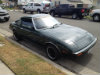
wouldn't mind retrofitting one into my car
shame there's not enough demand for them where they could do what GM does with the emissions compliant E-ROD crate
i think it would be popular, 300hp in our cars without the issue of smogging it....
hey, a kid can dream :P
shame there's not enough demand for them where they could do what GM does with the emissions compliant E-ROD crate
i think it would be popular, 300hp in our cars without the issue of smogging it....
hey, a kid can dream :P



first of all, let me thank you for posting this. i haven't read it word for word just, but i have skimmed it and found a lot of information that i never had. speaking for myself, your time is appreciated greatly. cheers, brother. 
i'm guessing this would explain the ambiguity that has plagued me about the 10A because i've read that they were all peripheral intake engines (i can't remember where, but it was a long time ago) and ever since then, i've been a bit confused because every photo i've seen of a Cosmo's engine bay, and the one 10A i've seen in real life showed that they were side intake. however, these Nurburgring cars referenced here were apparently semi-peripheral engines. i find this exciting as well as enlightening.
i'm guessing this would explain the ambiguity that has plagued me about the 10A because i've read that they were all peripheral intake engines (i can't remember where, but it was a long time ago) and ever since then, i've been a bit confused because every photo i've seen of a Cosmo's engine bay, and the one 10A i've seen in real life showed that they were side intake. however, these Nurburgring cars referenced here were apparently semi-peripheral engines. i find this exciting as well as enlightening.


Joined: Mar 2001
Posts: 31,851
Likes: 3,239
From: https://www2.mazda.com/en/100th/
the rotary is ideal for a stationary engine, because its smaller, lighter, smoother and since the RPM is constant, it can be made more efficient than a piston engine.
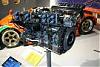
carb whisperer

Joined: Jan 2008
Posts: 1,485
Likes: 4
From: Greenfield, Ohio

Full Member
Joined: Aug 2012
Posts: 126
Likes: 8
From: Whangarei
Mazda has some rotary generator project, i believe its just a stock Rx8 engine, and they have it running @2000rpm.
the rotary is ideal for a stationary engine, because its smaller, lighter, smoother and since the RPM is constant, it can be made more efficient than a piston engine.
the rotary is ideal for a stationary engine, because its smaller, lighter, smoother and since the RPM is constant, it can be made more efficient than a piston engine.
Joined: Mar 2001
Posts: 31,851
Likes: 3,239
From: https://www2.mazda.com/en/100th/
i would picture them eventually building an engine that is more dedicated, but if someone asked me to do it, i'd just run the one we were making right now
Audi A1 E-Tron

Thread
Thread Starter
Forum
Replies
Last Post
trickster
2nd Generation Specific (1986-1992)
25
Jul 1, 2023 04:40 PM
stickmantijuana
Engine Management Forum
11
Nov 9, 2015 01:15 PM
KAL797
Test Area 51
0
Aug 11, 2015 03:47 PM
