When you click on links to various merchants on this site and make a purchase, this can result in this site earning a commission. Affiliate programs and affiliations include, but are not limited to, the eBay Partner Network.
I am using the factory shop manual, section 4B, item 5 ENGINE STALLS IN COLD CONDITION (page 4B-19, for anyone with their own playbook).
My question is, at this point, simply this: can the initial steps of a diagnosis be skipped (considered not applicable) if they are common to the diagnosis of a condition the car does not exhibit? In other words, the first three steps in diagnosing my condition (cold stalling) are common to the first three steps of ENGINE STALLS IN NORMAL OPERATING TEMPERATURE; however, my car idles perfectly once up to normal operating temperature. Therefore, could the first three steps (or ‘conditions we are trying to eliminate as a cause’, if you will) be considered non-factors, and therefore unnecessary to perform?
Mostly I am curious since I am currently without a timing light.
Not sure I understand your question, so I'll explain how the FSM works when diagnosing problems;
The Section "4B" describes the trouble-shooting steps. Each of the sub-sections "4" vs. "5" describe common problems that can occur, along with the Remedy for that common-cause problem.
In your examples shown above, the "4" of Stalling when Hot is different than "5" Stalls when Cold. So, when troubleshooting stalling when cold, you can ignore 4 and focus on 5. Makes sense?
Kudo's for posting pics of the FSM, by the way - nice work.
Sorry, that doesn't answer my question. The question regards skipping steps of a diagnosis for a problem I DO have because those steps are common to a problem I do NOT have.
Let me put it another way: if ignition timing is the issue, logic suggests, based on the shop manual diagnosis procedure, that the car would stall when it is both cold AND up to temperature, because as the first step in the diagnosis, it suggests that bad ignition timing will cause the car to stall under both conditions.
Basically, I am asking if my logic is correct.
Last edited by 73JPS; Aug 28, 2019 at 01:44 PM.
Reason: repeated words
Follow the diagnostic tree,it may seem tedious,unnecessary and not pertinent to your exact issue. Often vehicles have more than one problem that combine to cause presenting symptoms and going thru the tests as listed is a logical,efficient way of eliminating a part or a system as cause.
You may find something,like ignition timing is not exactly what it should be and may not be the cause of your issue,but adjusting it to spec improves overall performance,mileage.You wouldn't know that if you didn't check it. When it comes to diagnostics-don't assume anything or guess a part is defective,prove it out.Replacing parts to "try" and see if this fixes problem is expensive and usually ends up in good parts being replaced. This practice is the 1st step in chasing your tail and frustration that goes with it.
Post your exact problems,when they occur,is your car all original? These things will help us help you. For example,an engine that stalls when warm,needs looking into1st as that condition will present at some point in cold start running condition.
It is best to establish a baseline with known good parts such as distributor cap,rotor,plugs,wires,air and fuel filters. Any one of these parts not up to spec,can be a contributing factor in a driveability complaint(more than 1 problem causing issue). Along with being certain or replacing tuneup components as age and condition are unknown,going thru basic tuneup regimen of checking,adjusting base ignition timing,checking centrifugal advance and last vacuum advance for proper operation and adjusting carburetor idle mixture and speed are the best way to begin a diagnostic process and can sometimes uncover something that needs attention that may or may not contribute to problem you're chasing.
Follow the diagnostic tree,it may seem tedious,unnecessary and not pertinent to your exact issue. Often vehicles have more than one problem that combine to cause presenting symptoms and going thru the tests as listed is a logical,efficient way of eliminating a part or a system as cause.
You may find something,like ignition timing is not exactly what it should be and may not be the cause of your issue,but adjusting it to spec improves overall performance,mileage.You wouldn't know that if you didn't check it. When it comes to diagnostics-don't assume anything or guess a part is defective,prove it out.Replacing parts to "try" and see if this fixes problem is expensive and usually ends up in good parts being replaced. This practice is the 1st step in chasing your tail and frustration that goes with it.
Post your exact problems,when they occur,is your car all original? These things will help us help you. For example,an engine that stalls when warm,needs looking into1st as that condition will present at some point in cold start running condition.
It is best to establish a baseline with known good parts such as distributor cap,rotor,plugs,wires,air and fuel filters. Any one of these parts not up to spec,can be a contributing factor in a driveability complaint(more than 1 problem causing issue). Along with being certain or replacing tuneup components as age and condition are unknown,going thru basic tuneup regimen of checking,adjusting base ignition timing,checking centrifugal advance and last vacuum advance for proper operation and adjusting carburetor idle mixture and speed are the best way to begin a diagnostic process and can sometimes uncover something that needs attention that may or may not contribute to problem you're chasing.
Thank you for your excellent, considered response.
In this instance I didn’t post anything specific regarding my problem because I haven’t even started the process of diagnosing the issue. My question was really more of a philosophical “I wonder if” sort of nature than anything too serious, and it was more motivated by the idea of “my timing light hasn’t arrived from Amazon yet, I wonder if I can skip step 1 (because, based on logic, that diagnostic step is common to another issue I do not have) and get this show on the road without hurting the integrity of the overall process too badly”.
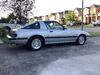
FWIW, the car is an excellently maintained 1984 GSL-SE in fully stock condition. I just acquired the car out of province, flew out to pick it up, and promptly drove it 3600 km home without incident. Well, one incident: some rough roads tore an exhaust hanger and she developed an exhaust gasket leak, but that’s it. I’m just waiting for the gasket to come in and that will be replaced as soon as it does. She idles a little low when the A/C is off (about 600 RPM indicated) and only stalls when cold (within the first one to two minutes after start). Again, I haven’t even started to address the issue yet, but if I have any problems solving it I will certainly post more.
Ok,you have an SE. That wasn't stipulated in original post far as i know. FI models will need different direction for diagnosis. For now we'll "assume"your base timing is correct. Look at the holdown bolt for distributor and the slot in dist base,if the bolt is @ midway in slot your ignition timing is close to correct. What was mentioned about the baseline stuff in last post still applies.
From a couple of your statements it sounds as if some of your idle control functions are out of adjustment.The FI systems on these cars are very reliable even after all these years.
Couple questions:
When you were driving car home what was warm idle speed and warm idle speed with AC on?
When you start car cold,does it idle up to @ 1500-2000 rpm and stall? Can you keep it running by feathering the throttle?
The FI system is very susceptible to air leaks. Pull air filter and make sure no critters have made a home there. Look closely at air intake hose that goes from air filter housing to throttle body for splits/cracks. Is the crossover hose on top of dynamic chamber that goes fron throttle body to BACV valve in place with no visible signs of splitiing/cracking?
Coolant temperature sensors can be problematic as they age,the wires coming out of them corrode and break. This is a primary sensor that tells ecu if engine is cold,warm and everything in between and is one of the ways ecu commands injectors to give a specific amount of fuel.
A multimeter is a necessity for diagnosing things on this car as is a test light and a hand vacuum pump,and a vacuum gauge if hand. pump doesn't have one
Important to begin diagnostics with a fully charged battery,results you get in testing is predicated on that.
I'll mention here that the -SE cold startup procedure includes pressing the accelerator all the way to the floor ONCE, and the releasing it, then crank until start.
This sets the Throttle Body Rods onto the Cold Idle Cam for the Throttle Body to effect a choke function until the engine warms up, and will result in a high idle during the warm-up cycle. There's an ECU controlled air / fuel management function which operates for the first 1 minute of cold start operation, and then defaults to the Thermowax Pellet and Cold Start mechanism to determine when the engine has finished warm-up, then returns to normal throttle operation. Inside the Throttle Body are 2 extra butterfly valves which function as chokes, and operate according to vacuum pressure provided by the Thermowax Pellet - a device designed to receive coolant from the back of the Water Pump to determine engine temperature. Once the engine & coolant is up to temp, the Thermowax Pellet melts, returning the choke butterfly valves to passive mode, letting more air in.
Glad that you have the FSM in-hand as it will make learning about the car and keeping it on the road that much easier,



 Troubleshooting Question: Stalls When Cold
 ).
).


