When you click on links to various merchants on this site and make a purchase, this can result in this site earning a commission. Affiliate programs and affiliations include, but are not limited to, the eBay Partner Network.
There was a thread about it a whole back... from what I remember, it's the same design as something from the early 80s that was abandoned as being too fragile.
When installing the panhard bar the watts linkage is not needed anymore? Is that what you mean by drop the watts linkage? I havent seen a car with a panhard bar on it yet.
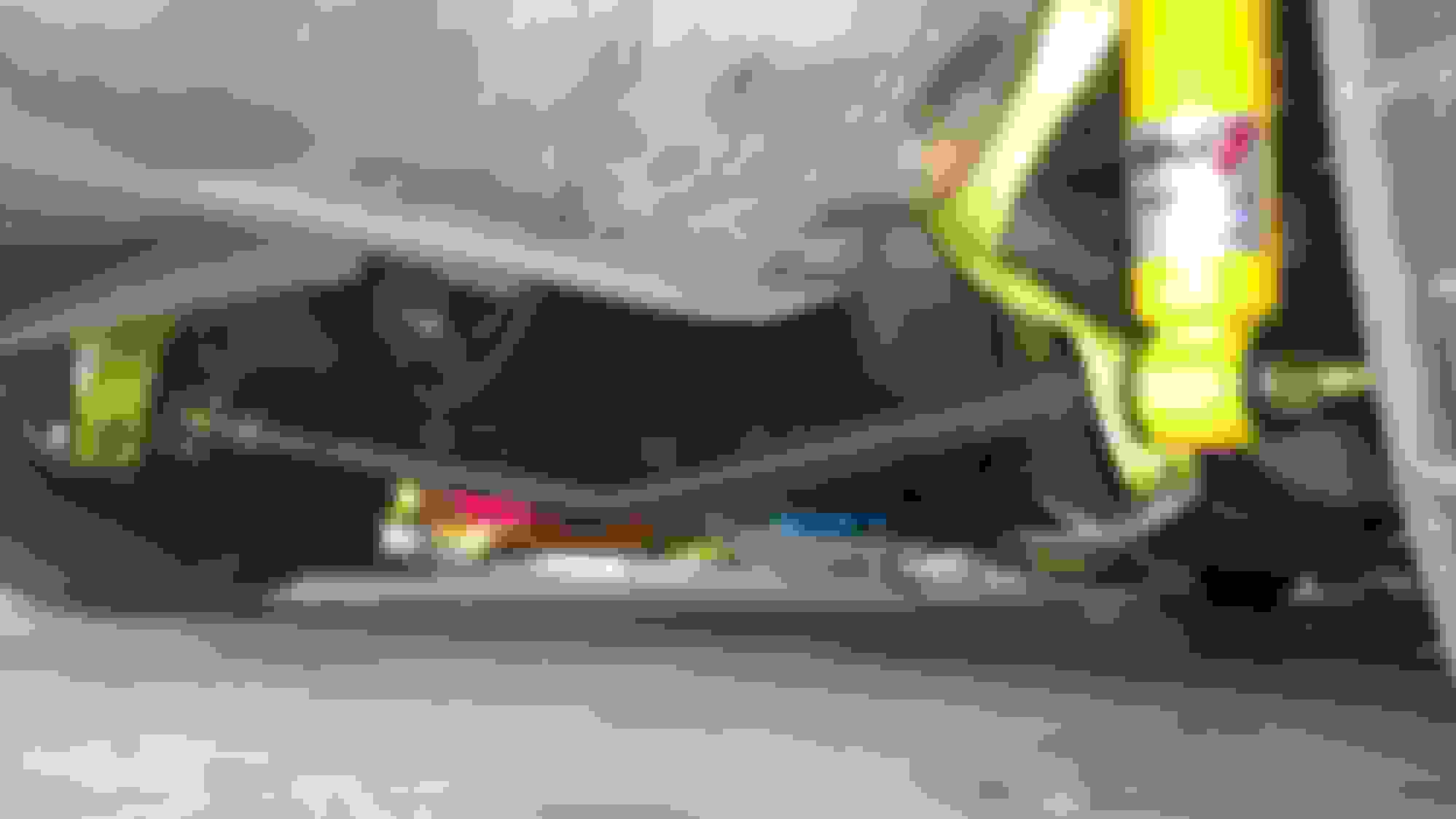
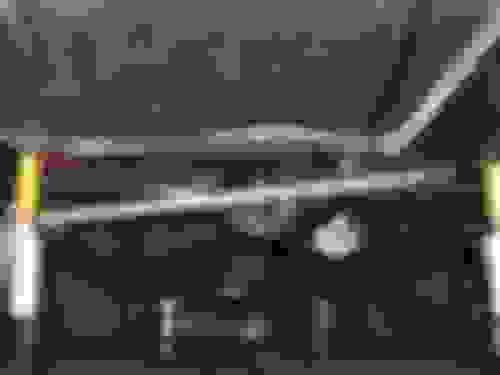
I have it installed. As mentioned the panhard runs from the lower watts link chassis point under the differential, and to the lower trailing arm on the axle. Install and adjustment were easy enough and I had heard it was an upgrade when lowering the rear. I haven't noticed any deformation or anything but I only us the car for daily driving and monthly autocross events. One problem with it running under the axle is that when the rear hangs the bar contacts the third member and hits when the axle is articulated either direction. Also the mounting points are offset front to rear so I don't know if that causes any sort of rear stear since it has a conical travel.
I have it installed. As mentioned the panhard runs from the lower watts link chassis point under the differential, and to the lower trailing arm on the axle. Install and adjustment were easy enough and I had heard it was an upgrade when lowering the rear. I haven't noticed any deformation or anything but I only us the car for daily driving and monthly autocross events. One problem with it running under the axle is that when the rear hangs the bar contacts the third member and hits when the axle is articulated either direction. Also the mounting points are offset front to rear so I don't know if that causes any sort of rear stear since it has a conical travel.
Do you have any pictures similar to the first picture posted but of how it looks bolted in looking into the passenger side?
With the panhard bar conversion no more rear sway bar?
That's really a separate discussion. For maximum rear grip, many drivers really soften up the rear and don't run a sway bar. That applies regardless of panhard vs watts.
I've been tracking my car on 300 treadwear tires (so not race slicks or even competitive autox tires). I found no sway bar caused too much understeer while the racing beat sway bar caused very light steering and occasional uncontrollable snap oversteer. I found a sweet spot going back to the factory rear sway bar and keeping the Racing Beat front bar. But that's with Racing Beat springs (considered soft by some people) on UHP street tires with the watts linkage. You really have to experiment to see what works best for you.
As far as the T3 panhard bar goes. I know lots of people switch to panhard but most will upgrade the mounting points and or create custom brackets. The T3 bar may drop right in, but that doesn't mean it's safe for high loads. I think it's also designed to work best with their upper and lower trailing arms and traction brackets and a specific ride height. If you don't throw the catalog at your rear end, you'll get mixed results. klptk mentioned contact with 3rd member, which could be because his car simply isn't low enough.
Also, when it comes to panhard vs watts, sway bar vs none, the real answers are likely out there at the track, not on the forum. Some guys who raced these cars have made it here, but T3 comes from a drifting culture...not autocross or road course. They aren't so much concerned about making grip in the rear as they are letting it go. I don't want to speak poorly of them, but if you want real answers...start looking at the cars that won races back in the day and what they were doing...
Even for drifting I wouldn't use the T3 panhard. There are extrodinary forces on the rear end when cornering and a panhard needs to be properly mounted to the chassis and rear axle.
Even for drifting I wouldn't use the T3 panhard. There are extrodinary forces on the rear end when cornering and a panhard needs to be properly mounted to the chassis and rear axle.
Quoted for truth.
We have run a custom made panhard for a few years and part of the setup is a diagonal brace running from the bottom of the passenger side mounting point up to the driver side frame rail.
The frame rail portion was butt welded to a plate that was then bolted through the frame rail.
The force through the panhard actually ripped the welded brace straight out from mounting plate.
re-welded, and it happened again!
Finally upgraded the mounting plate to 3/16" thick steel and welded in same thickness gussets.
I suppose the moral of the story is you have to mix a bit of "forum advice" with good old fashion trial and error. A panhard setup can produce great handling results, but it does have to be strong.
Ive talked to a couple of guys here in California that run the t3 panhard bar. They have been running the panhard bar for over 2 years with no issues at all, the cars are driven pretty hard too. They handle pretty good ive been on drives with them. Maybe T3 has the design down this time.
We have run a custom made panhard for a few years and part of the setup is a diagonal brace running from the bottom of the passenger side mounting point up to the driver side frame rail.
The frame rail portion was butt welded to a plate that was then bolted through the frame rail.
The force through the panhard actually ripped the welded brace straight out from mounting plate.
re-welded, and it happened again!
Finally upgraded the mounting plate to 3/16" thick steel and welded in same thickness gussets.
I suppose the moral of the story is you have to mix a bit of "forum advice" with good old fashion trial and error. A panhard setup can produce great handling results, but it does have to be strong.
I've noticed that a lot of fabricated panhard setups used a passenger side pivot point that is is several inches from the frame rail. Doesn't the extra leverage cause a lot more stress where it meets the frame vs the 1" that the t3 bar is at?
Ive talked to a couple of guys here in California that run the t3 panhard bar. They have been running the panhard bar for over 2 years with no issues at all, the cars are driven pretty hard too. They handle pretty good ive been on drives with them. Maybe T3 has the design down this time.
What kind of driving are they doing? Putting a few aggressive/spirited miles on a bad setup isn't going to reveal the issues. You gotta get up to track cornering g-forces and then hit some rough pavement to really stress the linkage and the available grip. You will not come close to that level of stress on the street no matter how hard you think you're driving.
I've poked around a number of IT7 and EP SCCA cars and almost all of them are running a triangulated Panhard similar to the photos above and a few below I snagged off an image search.
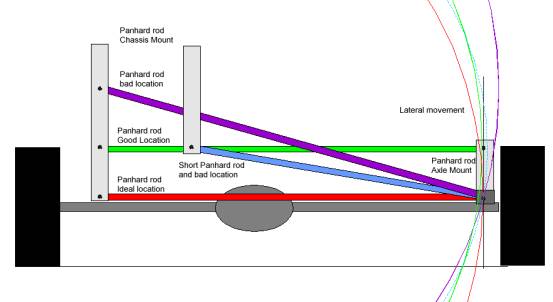
Aside from the safety and structural strength issues we were discussing, there is also the issue of roll center and travel arc. The way the T3 panhard mounts is not ideal. It isn't quite as bad as the worst configuration in this photo if you are fully stanced, but if you want some travel in your rear end you are working with an odd suspension arc without optimal handling characteristics.
Ground control
Ground control makes a panhard bar similar to t3 but looks like its made better. They are well known in road racing so its track tested. But im sure its not cheap.
The ones that have been used in Australian racing circles for many years are the same basic design as chuyler1 and mhr650 described.
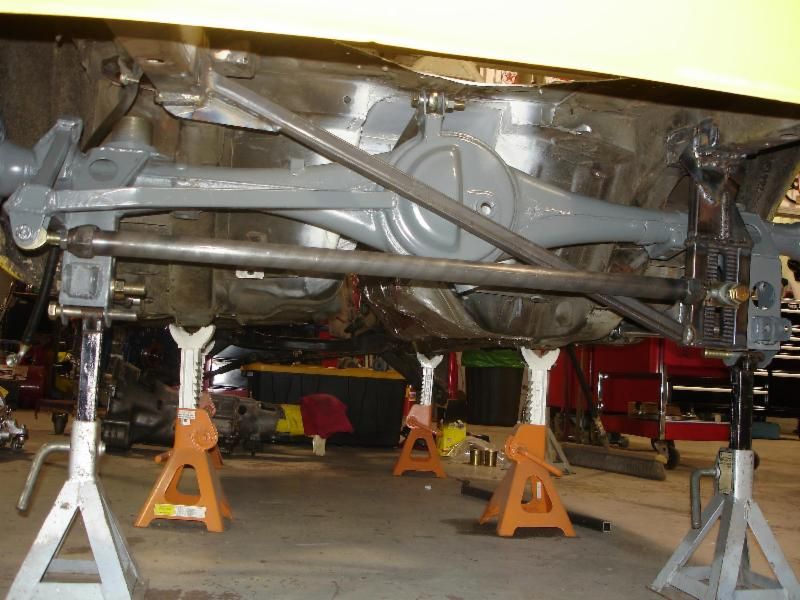
This is an example (same basic design as is being used on my car, although mine will likely have bushed ends for lower noise and perhaps some more adjustability):
Although you can't see it in the photo, it has the RH axle bracket on the RH chassis rail with a brace running diagonally back to the LH chassis rail.
Note that the above picture is on axle stands. When this particular car was sitting at ride height, the panhard sat perfectly horizontal.