When you click on links to various merchants on this site and make a purchase, this can result in this site earning a commission. Affiliate programs and affiliations include, but are not limited to, the eBay Partner Network.
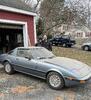
Vehicle is a 1985 GSL SE, 13b all stock (that I know of). 100k miles and was bought in December from the original owner after sitting unused since about 2008. I performed all the typical maintenance I could think of and got the car started, running, and driving great, except for an intermittent stumble and lack of power at higher rpm’s. Oiling and freeing up the 5/6 port actuators seemed to fix the problem at the time. After a few test drives, it was apparent that a bearing had failed in the transmission (whine in all gears except 4th). Transmission was removed and rebuilt locally, including 4 new bearings and a new 1/2 shift fork.
Thats the backstory
Yesterday I drove the vehicle to work and it seemed to run well. Again experienced the occasional miss or hesitation above 5k rpm, but otherwise perfectly driveable. Leaving work, the engine would buck and lose power almost immediately off idle. I limped about a mile before calling for a tow truck. While waiting, I swapped the leading and trailing coils and it did not seem to make a difference.
Suspecting a faulty TPS sensor, using a two light test rig I get no lights no matter how far I turn the adjusting screw in either direction. Resistance on the TPS connector is now set to 1000ohm at closed throttle (warm) and climbs linearly to 4300 as the throttle is opened.
Interestingly, the warning check lights no longer illuminate on the dash with the key in accessory. I believe they all lit up a month ago (unlikely all burned out at the same time).
Recent service includes:
Drain fuel tank and inspect
New fuel filter
New fuel hoses before and after fuel pump
New fuel tank level sending unit
New fuel pulsation damper at fuel rail
New spark plugs and wires (NGK)
New distributor cap and rotor
New battery and terminal connections
Cleaned ground at left shock tower
Cleaned ground at engine block under solenoids/throttle body and added a supplemental ground wire to battery negative
Replaced three fusible links, visually inspected all and tested for continuity, cleaned all connections
Added supplemental power from alternator to battery positive with inline 60a fuse
New KN panel filter in oem airbox
Lube and inspect throttle body (minor sticking on cold idle cam, THANKS longduck for the write ups)
New radiator and thermostat
New fan belts
New oil pressure sending unit
Replaced power steering fluid
Rebuilt transmission
New clutch
New clutch master and slave cylinder and hose
New brake master and flex hoses
Im sure there’s a few other odds and ends. Any help and guidance to continue troubleshooting would be very appreciated.
Last edited by syntaxV3; Apr 29, 2023 at 08:55 AM.
First off, welcome aboard! Congrats on doing all of this work to keep an SE on the road and making it an occasional DD, as well - that's a rite of passage that you trust the car enough to drive it regularly. Also, you've provided tons of into on what you've done recently, which is super-helpful. I'm going to start in on your initial complaint, and we can go from there; "...occasional miss or hesitation above 5k rpm".
This could be as simple as a bad Distro Cap or Rotor, and I had one from BAP one time that didn't have the cuts made for the contacts to be exposed and broke off the Rotor arms on the first attempted start. Take the Distributor out and inspect the contacts on the inside closely, then remove the Rotor and place it inside and make sure it clears everything. The fact that it started and drove fine indicates it's probably okay, but best to check. These parts should be replaced every 5-7 years dependent on corrosion on the terminals inside, and these can be cleaned up with a file for longer term use. The one on my SE is about 10yrs old and still going fine, but we have zero humidity here in the Sonoran Desert.
Next, with the Distributor Cap and Rotor out, you can see the metal cover plate form the Distributor, itself. Pull up on the spark plate and it will expose the vacuum advance mechanism, below. This may be what's hanging up at 5k RPM which is creating a stumble, as the vacuum advance pot on the side is sticking. The metal arms and actuators in there are very close together and should be cleaned out to allow them to move smoothly. Lastly, grease them lightly to avoid future corrosion, and apply vacuum to the tube for the actuator to be sure it moves freely. Don't over grease, just a light coating and some light oil will do. Also, check the vacuum tube to the actuator to be sure it's fresh and fits well on the Spider and actuator port. If it seems suspect, replace with silicone tubing of he same internal dimension. If the stumble occurs randomly at this high RPM, that may be the culprit, i.e., momentary vacuum drop-out which causes the vacuum advance to skip. This would not be evident at steady state throttle above 5k RPM, as the vacuum source from the Upper Intake manifold would be stable and high.
One other thing to check is your spark plug wires. Be sure that the metal contact clips are a tight fit to the plug, and that the screw on terminal on the plug is tightened down on the plug. Some dielectric grease on the boots and contacts will help avoid corrosion.
What did the old plugs look like when you replaced them? You're using Denso BR8EQ14, correct? These are the correct plug for SE. Take care,
First off, welcome aboard! Congrats on doing all of this work to keep an SE on the road and making it an occasional DD, as well - that's a rite of passage that you trust the car enough to drive it regularly. Also, you've provided tons of into on what you've done recently, which is super-helpful. I'm going to start in on your initial complaint, and we can go from there; "...occasional miss or hesitation above 5k rpm".
This could be as simple as a bad Distro Cap or Rotor, and I had one from BAP one time that didn't have the cuts made for the contacts to be exposed and broke off the Rotor arms on the first attempted start. Take the Distributor out and inspect the contacts on the inside closely, then remove the Rotor and place it inside and make sure it clears everything. The fact that it started and drove fine indicates it's probably okay, but best to check. These parts should be replaced every 5-7 years dependent on corrosion on the terminals inside, and these can be cleaned up with a file for longer term use. The one on my SE is about 10yrs old and still going fine, but we have zero humidity here in the Sonoran Desert.
Next, with the Distributor Cap and Rotor out, you can see the metal cover plate form the Distributor, itself. Pull up on the spark plate and it will expose the vacuum advance mechanism, below. This may be what's hanging up at 5k RPM which is creating a stumble, as the vacuum advance pot on the side is sticking. The metal arms and actuators in there are very close together and should be cleaned out to allow them to move smoothly. Lastly, grease them lightly to avoid future corrosion, and apply vacuum to the tube for the actuator to be sure it moves freely. Don't over grease, just a light coating and some light oil will do. Also, check the vacuum tube to the actuator to be sure it's fresh and fits well on the Spider and actuator port. If it seems suspect, replace with silicone tubing of he same internal dimension. If the stumble occurs randomly at this high RPM, that may be the culprit, i.e., momentary vacuum drop-out which causes the vacuum advance to skip. This would not be evident at steady state throttle above 5k RPM, as the vacuum source from the Upper Intake manifold would be stable and high.
One other thing to check is your spark plug wires. Be sure that the metal contact clips are a tight fit to the plug, and that the screw on terminal on the plug is tightened down on the plug. Some dielectric grease on the boots and contacts will help avoid corrosion.
What did the old plugs look like when you replaced them? You're using Denso BR8EQ14, correct? These are the correct plug for SE. Take care,
Thanks longduck! It’s a great car, when it runs.
I removed the distributor cap and rotor and everything appears in order. Rotor spins freely in the cap, no evidence of interference.
The leading vacuum advance appears to be working. Plates move freely and it pulls in with a hand vacuum pump applied. Hose is OK. Cleaned out a little crud with a q tip and applied light oil.
However, it appears a previous mechanic removed the hose on the trailing advance and capped both ends. Band aid fix?
I have not bothered checking or adjusting timing because the car ran ok. It looks like it’s adjusted all the way to one side?
Checked and double checked spark plug wires and connections. All are tight and have a dab of dielectric grease applied. Spark plug end-nipples are tight. Spark plugs are confirmed BR8EQ14
The old plugs were four prong NGK, but a different number but I forget what. They all appeared similar to each other, slightly ashy.
I will revise my previous complaint. The car now starts right up but idles rough. Revs freely up to about 6k. While driving, it will fall in its face under any load. While in neutral, holding the revs at any speed over 4k, when applying more throttle the engine literally falls on its face and rpm’s drop down and will stall if I keep the throttle open. Letting off the throttle will save it and it will rough idle. I have video showing this happen.
Any thoughts on the check lamps no longer working with the key in accessory? Or that the TPS check connector will not register 12v between leads in any position?
Last edited by syntaxV3; Apr 29, 2023 at 08:09 PM.
I just tried swapping the leading and trailing igniters, there was a small bit of corrosion on one connector on the leading plug. Cleaned both of them off with control cleaner.
It seems to have made a difference. Car starts and runs and no longer wants to stall under load. However it still breaks up at about 6k rpm (reving in neutral), loping between 3 and 5k with constant throttle position. While it’s breaking up the exhaust note turns nasty.
Not knowing much about the prior history, I'd move back to stock setup *reinstall the Trailing Vacuum Advance), and then check timing. It's possible somebody had to restab the Distributor assembly, and got it off by one tooth, which they then set timing as best they could by maxing out the adjustment on Leading Advance (*so it would run), and disconnected Trailing Advance vacuum to try and keep it in spec.
I'm betting you'll reattach Trailing Advance vacuum and find that the timing is off. At that point, getting the Distributor restabbed correctly is important if you want it to run well. Mazda set up Lead and Trailing Vacuum Advance because it helps the car to run well at all RPM and load. Go from there.
As to the Ignitor swap - these J109 Ignitors are known for being fairly bullet proof, but do occasionally fail. When they do, it's usually immediate and you lose spark on that circuit, but rarely they will fail with heat, i.e., work fine when first started, but after it warms up, the heat doesn't transfer well to the aluminum mounting base on the Distributor, and you gradually lose spark. This can be harder to find, but on an SE, if you lose Tachometer signal - you just lost Trailing Ignition. Swapping the Ignitors for position then helps determine which Ignitor is bad. Give that some thought against your symptoms and recent experience, and it may fit that you have one going out.
As to the Ignitor swap - these J109 Ignitors are known for being fairly bullet proof, but do occasionally fail. When they do, it's usually immediate and you lose spark on that circuit, but rarely they will fail with heat, i.e., work fine when first started, but after it warms up, the heat doesn't transfer well to the aluminum mounting base on the Distributor, and you gradually lose spark. This can be harder to find, but on an SE, if you lose Tachometer signal - you just lost Trailing Ignition. Swapping the Ignitors for position then helps determine which Ignitor is bad. Give that some thought against your symptoms and recent experience, and it may fit that you have one going out.
This afternoon I made up a test rig shown in the FSM and tested both igniters. They both lit up the light bulb. I applied some leftover CPU thermal paste I had handy to the back of them, maybe that will help keep them cool.
Restabbing the distributor and timing will go on the to-do list, but it feels like something larger is still going on, as the car was running great prior and I doubt the timing “slipped”.
Also checked the ECU per the manual, all circuits seemed ok except for “h- vent solenoid valve” which was 12.2v instead of the specified below 1.5v. I think that’s my problem circuit since I can’t get the test rig to light up either bulb at all.
Thanks for sharing your knowledge and experience longduck, I’m not giving up
Just tried adjusting the tps sensor using a voltmeter at the test port instead of the two bulb rig. Turning the adjusting screw, at one point the voltage went to 0.4v. I was able to find a spot that only one lead had 0.4v and the other side was 0. This position also resulted in the “h” circuit on the ecu registering 11.9 volts, still way out of spec. The tps now reads 1158ohms at warm closed throttle.
Started the car up and it ran great. Idle hunted just a little, but after it warmed up it settled right out at about 8 or 900 rpm. Took a test drive and it pulled hard at all rpm’s and varying throttle. No missing or stumbling
I’m stumped why the voltages are so far off from the fsm, and also still stumped about the dashboard warning lights all still not working. Maybe I’ll start a new thread for that issue.
Setting the TPS is more "art" than science. Sounds like you have yours set about perfectly. I use the Two-Light pigtail for setting and testing, and as you probably figured out, it's touchy. Just 1/8 turn of the adjuster is enough to throw it off, and then you should get in the habit of flipping the throttle plates open and closed so they reset on their own to the idle position. Otherwise, your tiny adjustments are hit or miss as the throttle plates move.
As to the ECU signals and resistance, the Vent and Vacuum Solenoid valves are part of the (abbreviated) rats nest which is very simplified on the SE compared to carbs on 12a. They're used to control the Bypass Air Control Valve (BACV) mounted to the DS of the RE-EGI airbox and adjusts idle speed moderately when AC or other vacuum variations are sensed by the intake or ECU inputs voltage to adjust. Given the low volume of vacuum or vent pressures these accommodate, I doubt they have much to do with your stated issues.
Great that the car is running well now at all loads and RPM. There's still something wonky with your timing, though.
Premature celebration. Went for a test drive tonight without touching ANYTHING, and the issue is back. Double checked the volts on the TPS check connector and they are now both about 0.2-0.4v each no matter where the adjustment screw is set. At this point I’m considering just throwing a $200+ new tps at it, even though I hate buying parts blindly and it still measure ohms appropriately.
As an electronic resistance device, they can be temperamental. Usually they cause steady state throttle issues, like you're jockeying the accelerator pedal when you're not. This is caused by the middle section of the carbon strip getting worn out and reading highly variable resistance to the ECU, which then tries to adjust things thinking you're either speeding up or slowing down - repeatedly and rapidly.
Sidenote: you don't have to quote me in every reply here. I know what I typed and it makes scrolling unnecessarily difficult for others! Good luck,
Got it. If there is a dead spot in the TPS, will the ECU think the throttle is closed and close the injectors as a "fuel cut" for emissions (FSM 4B-38)?
I haven't ignored your comments regarding the timing either. Tried checking last night, the timing marks are rusted/worn/wiped off from the inner pulley. I'm going to have to find TDC and refresh them. I also hooked up the trailing advance vacuum and did not notice any change.
Funny sidenote, I have a feeling a previous mechanic got frustrated and scratched off some key info on the underhood sticker related to timing and general settings. Maybe mad at the owner for taking it to different shops to try and get it running correctly?
Yes, if theres a dead spot in the carbon ribbon, the ECU will get a widely varying signal and try to adjust any number of things. Glad youre referring to the FSM, as the test procedures are all in there.
As to timing, who can say what a PO did to it, but I can offer this;
This should get you close, and again - the timing will be critical to getting the rest of the system working well, as long as it's OEM. On the timing marks, Mazda put paint on the Leading and Trailing reference points on the Eccentric Pulley, but the paint was over notches cut into the pulley. Feel around for TDC and I'll bet you can feel the notches, even if you can't see the paint.
Getting the SE to idle smoothly usually requires an old priest and a young priest, because the various sensors and signals are so old, they're either barely in-spec or way out-of-spec, which makes getting a rock steady idle difficult, at best. Many years ago, I settled upon an understanding that it would never idle as smoothly as when new, so I went with a RacingBeat aluminum 12lb flywheel and moved on with my life. As long as it doesn't die waiting at the light to change, I'm happy!
Thanks for that! I wonder if there’s a difference between N304 and N304B?
I was able to find the file marks on the pulley and dabbed a dot of nail polish on each one. Will report back once I’ve checked timing and installed the new TPS.
My 84SE was built at the factory in January, 1984. The (b) designation is for cars made after mid-year 1984, after which some small changes were made to production including changes to the transmission gear ratios. That's the only difference and would not affect Trailing or Leading timing setup.
It was a clogged up fuel filter from all the rust in the tank. Hooked up a pressure gauge on the fuel supply and it was a little low at idle, but dropped down to 10-15psi when it would stumble and miss.
I have a feeling I’ll be changing out the fuel filter quite a bit until I can drop the tank and get it boiled and lined.
While you're under there, it wouldn't hurt to pull the Fuel Feed Line off of the Fuel Pump, as well. There's a plastic screen cone filter in the Fuel Feed to the pump which could also get clogged up with stuff and have similar symptoms. Also, inspect the fuel lines throughout, as if they've never been changed, they could deteriorate from the inside and be causing all kinds of problems with your fuel injection, and the tank might be just fine.
Plus, SE Factory Fuel Filters are over $100 last time I checked... That could get expensive changing those out repeatedly.
Last edited by LongDuck; May 11, 2023 at 09:48 PM.
Cone filter is cleaned out from the pump inlet, did it at the same time. It was about 30% full of crud. I also bought an earls 100micron in-line filter I’m planning to add in between the tank and the pump.
Last time I put in a rockauto order they were wholesaling out filters for $3 each and I bought 5. Are they as good as oem? Probably not, but the first one did its job. I tapped it out on a paper towel and it was loaded with superfine rust
good advice on checking out the lines, I will be doing that. But I know the tank had some flakeys from sitting for some long. If I can find the pics from when I scoped it I’ll share.
Last edited by syntaxV3; May 11, 2023 at 10:03 PM.
It's possible that a 100micron fuel filter will create a restriction to flow; the factory cone screen filter at the inlet to the Fuel Pump looks more like a coarse filter to catch any big debris so it doesn't crash the pump by locking it up. Might consider testing fuel pressure after you install your micro filter and see that it's still in spec.
As there are only 2× Fuel Injectors in play, each with 680cc max rate flow (*low impedance type), any restriction in the fuel system will lead to lean running conditions. As you may know, running a rotary engine lean results in additional heat, and potential seal damage, especially at high RPM (*if you can even get it up there). On the upside, you'll improve gas mileage!
eriously, though - adding finer filters to the system is inviting trouble. The factory Fuel Pump is sized appropriately and lasts a VERY long time. I replaced mine at 221k miles as a troubleshooting step, and the new one (OEM) performed no better.