


Why no bumpsteer issues when changing ride height?


Thread Starter

Joined: Apr 2002
Posts: 6,719
Likes: 26
From: Midland Texas
Why no bumpsteer issues when changing ride height?
Ok as some of you know, I've installed a 20b into my Fd. I've heard all the horror stories about how moving the rack will create bumpsteer. That's why I choose to move my engine back so it keeps the rack in it's stock location.
What Pettit Racing does with the Banzai conversion is install a custom built subframe (which lowers the rack) and modifies/lowers the spindle arms to compensate for the rack repositioning. This supposedly eliminates any bumpsteer as it's designed to re-create the original steering tie rod end angles of the arm. What I'm having trouble understanding here is, how come you don't get the same bumpsteer when lowering your vehicle?
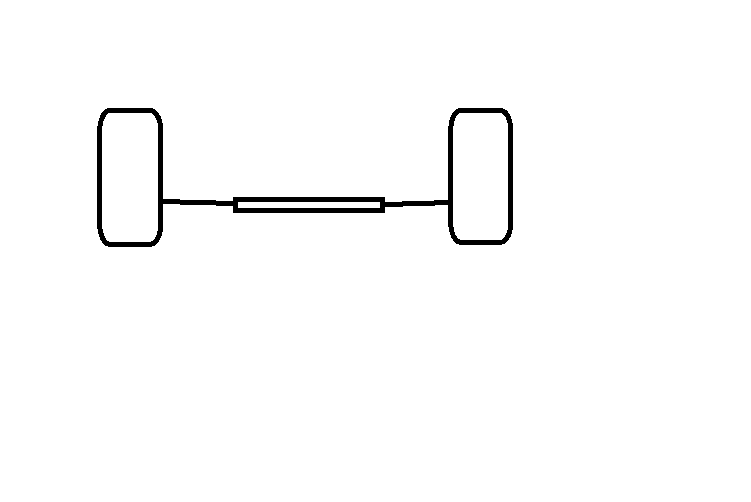
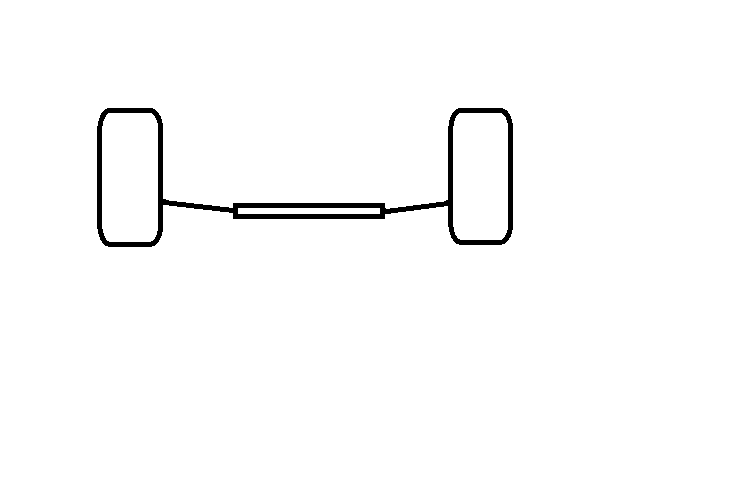
My fd still has stock suspension (for now) so I have about 2 1/2" of gap above my tires to the upper fender. I know that Howard Coleman recommends a ride height of 25" on lowered Fd's. Given that stock tire diameter is 25". That means I will have to lower my vehicle 2 1/2" to get to that desired ride height. Well since the rack is attached to the subframe and the subframe is attatched to the frame of the vehicle, the rack also will lower 2 1/2". This will completely change the angles of the tie rod ends. So how does this not created bumsteer?
Here are some Microsoft drawing pics to show for reference.
1st pic is stock height!
2nd pic is lowered height!
I've been recently curious about this because I'm about to purchase my 1st set of coilovers. I'm no suspension geometry expert so what am I missing here?
What Pettit Racing does with the Banzai conversion is install a custom built subframe (which lowers the rack) and modifies/lowers the spindle arms to compensate for the rack repositioning. This supposedly eliminates any bumpsteer as it's designed to re-create the original steering tie rod end angles of the arm. What I'm having trouble understanding here is, how come you don't get the same bumpsteer when lowering your vehicle?
My fd still has stock suspension (for now) so I have about 2 1/2" of gap above my tires to the upper fender. I know that Howard Coleman recommends a ride height of 25" on lowered Fd's. Given that stock tire diameter is 25". That means I will have to lower my vehicle 2 1/2" to get to that desired ride height. Well since the rack is attached to the subframe and the subframe is attatched to the frame of the vehicle, the rack also will lower 2 1/2". This will completely change the angles of the tie rod ends. So how does this not created bumsteer?
Here are some Microsoft drawing pics to show for reference.
1st pic is stock height!
2nd pic is lowered height!
I've been recently curious about this because I'm about to purchase my 1st set of coilovers. I'm no suspension geometry expert so what am I missing here?


Short answer: It does. That is why bumpsteer correction kits exist for most vehicles.
Technically, the car has bumpsteer from the factory, it just gets worse when you start changing the geometry of the suspension.
Unless you are an experienced driver, you may not notice the effects of bumpsteer while cornering. With power steering, involved, you dont get the through-the-wheel feedback, so you just get a but of understeer. Driving with a manual rack REALLY wakes you up to the effects and constant occurrence of bumpsteer.
Technically, the car has bumpsteer from the factory, it just gets worse when you start changing the geometry of the suspension.
Unless you are an experienced driver, you may not notice the effects of bumpsteer while cornering. With power steering, involved, you dont get the through-the-wheel feedback, so you just get a but of understeer. Driving with a manual rack REALLY wakes you up to the effects and constant occurrence of bumpsteer.

Short answer: It does. That is why bumpsteer correction kits exist for most vehicles.
Technically, the car has bumpsteer from the factory, it just gets worse when you start changing the geometry of the suspension.
Unless you are an experienced driver, you may not notice the effects of bumpsteer while cornering. With power steering, involved, you dont get the through-the-wheel feedback, so you just get a but of understeer. Driving with a manual rack REALLY wakes you up to the effects and constant occurrence of bumpsteer.
Technically, the car has bumpsteer from the factory, it just gets worse when you start changing the geometry of the suspension.
Unless you are an experienced driver, you may not notice the effects of bumpsteer while cornering. With power steering, involved, you dont get the through-the-wheel feedback, so you just get a but of understeer. Driving with a manual rack REALLY wakes you up to the effects and constant occurrence of bumpsteer.
Bumpsteer does not change when you lower your car because bumpsteer doesn't change just because you lower your steering rack. Bump steer changes (is introduced) when you lower your steering rack relative to your suspension arms.
Look directly at the front of your car, as in the diagram you've drawn, and add in the suspension arms. The upper and lower arms, as well as the steering rack tie rods, could all be traced along a straight line and those three lines meet at a single theoretical point, all rotate along an arc as the suspension moves, which is made about the same theoretical point. If you lower the car, the theoretical center point for those three lines is lowered, but if you lower just the steering rack, then only its center point of rotation is lowered. Now the steering rack rotates about a different arc than the suspension arms. This is what creates bump steer.
Edit: This borrowed pic should help. This is bump steer correctly accounted for when the steering rack is lowered. Notice that when the steering rack was lowered, the angle of the tie rod had to be adjusted to make its center point of rotation meet up with its previous center point of rotation (and that of the suspension arms)?

Thread Starter
Joined: Apr 2002
Posts: 6,719
Likes: 26
From: Midland Texas
Look directly at the front of your car, as in the diagram you've drawn, and add in the suspension arms. The upper and lower arms, as well as the steering rack tie rods, could all be traced along a straight line and those three lines meet at a single theoretical point, all rotate along an arc as the suspension moves, which is made about the same theoretical point. If you lower the car, the theoretical center point for those three lines is lowered, but if you lower just the steering rack, then only its center point of rotation is lowered. Now the steering rack rotates about a different arc than the suspension arms. This is what creates bump steer.
Whole sh*t that actually made since.
 Drawing really helps also! I would have never guessed it had anything to do with the suspension arms. So basically what Pettit Racing is doing by lower the spindles a the tie rod ends really isn't doing anything since the suspension arms are at the same original angles?
Whole sh*t that actually made since. Drawing really helps also! I would have never guessed it had anything to do with the suspension arms. So basically what Pettit Racing is doing by lower the spindles a the tie rod ends really isn't doing anything since the suspension arms are at the same original angles?
Drawing really helps also! I would have never guessed it had anything to do with the suspension arms. So basically what Pettit Racing is doing by lower the spindles a the tie rod ends really isn't doing anything since the suspension arms are at the same original angles?Now you lower the steering rack one inch, and you reconnect the tie rods to the spindles without any correction. Now, your upper and lower arms are still rotating about the original point (which is now 1" above the current steering rack's center), but your tie rods are WAY off that point. Since the tie rod ends connect to the spindle at the same point that they did before, but from a lower steering rack, they have to be angled upward toward the spindle, are now pointed at the ground towards the center of the car. If you added a 1" drop spindle, or a 1" taller tie rod end, then your tie rod would be horizontal again, pointing towards the center of the steering rack, however the arms are still pointed towards the center of the steering rack's original location. This means that to bring the tie rods to rotate about the same point as the control arms, the height of the bump steer correction tie rod or the "drop" of the bump steer correction spindle would need to be greater than the amount of drop that the steering rack experienced. A drawing would help, but that's too much work for me.




Yup... if you look, the steering tie rod is at very similar angle to the lower suspension arm, and it's pivot points are at similar points as well. Moving the rack moves *one* of those points, and thus you need to move the other to a similar relative point.


Trending Topics
Thread Starter
Joined: Apr 2002
Posts: 6,719
Likes: 26
From: Midland Texas
Now you lower the steering rack one inch, and you reconnect the tie rods to the spindles without any correction. Now, your upper and lower arms are still rotating about the original point (which is now 1" above the current steering rack's center), but your tie rods are WAY off that point. Since the tie rod ends connect to the spindle at the same point that they did before, but from a lower steering rack, they have to be angled upward toward the spindle, are now pointed at the ground towards the center of the car. If you added a 1" drop spindle, or a 1" taller tie rod end, then your tie rod would be horizontal again, pointing towards the center of the steering rack, however the arms are still pointed towards the center of the steering rack's original location. This means that to bring the tie rods to rotate about the same point as the control arms, the height of the bump steer correction tie rod or the "drop" of the bump steer correction spindle would need to be greater than the amount of drop that the steering rack experienced. A drawing would help, but that's too much work for me.
No drawing needed as I fully understand now. Thx!
Do you have a bumpsteer plot from a stock car? I've been meaning to do one after my experiences with tie-rod location adjustment. Maybe this will be the reason I have to go over to my friends shop and get it done already...

Lurking on thread near U

Joined: Dec 2008
Posts: 143
Likes: 0
From: Huntsville, Alabama
Hmmm, That drawing doesn't make sense. It makes sense alright, for my thunderbird, with upper and lower control arms...but our cars have struts. So is there a drawing out there explaining bump steer and its correction on a McPhearson strut setup? Or do I just not get it?

Thread Starter
Joined: Apr 2002
Posts: 6,719
Likes: 26
From: Midland Texas
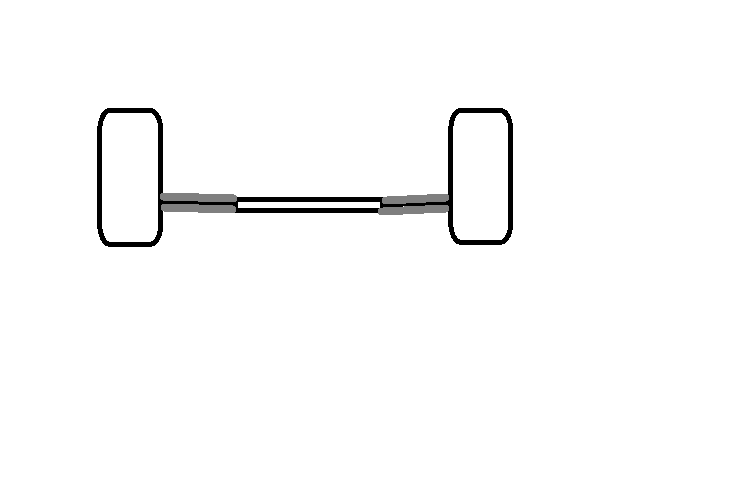
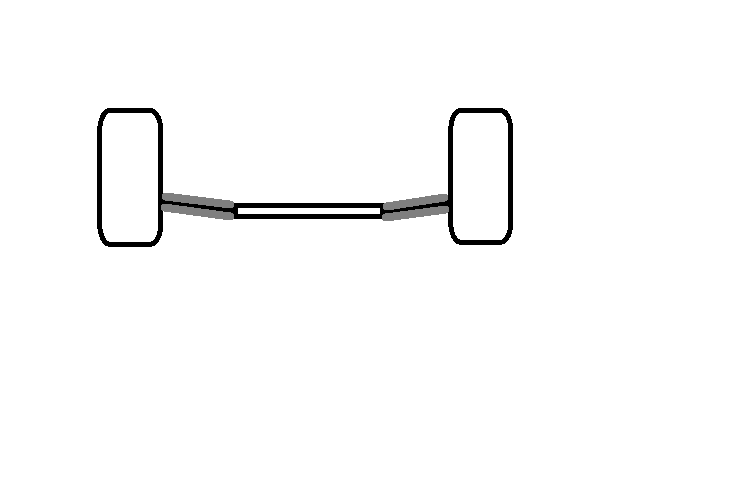
I was checking out my front suspension the other weak and I did notice that the inner portion of the lower control arm and steering inner tie rod are in the same location (height wise). I also noticed the same thing for the steering outer tie rods mounting point and the ball joint for the steering knuckle were the same height also. So in the Fd, the steering tie rods move exactly in the same angle as the lower control arm.
Thread Starter
Joined: Apr 2002
Posts: 6,719
Likes: 26
From: Midland Texas
Here's comparison pics:
Here I'm adding the grey lower control lower control arm for reference.
Stock height
Lowered height
Here is your average 20b subframe without modified spindles.
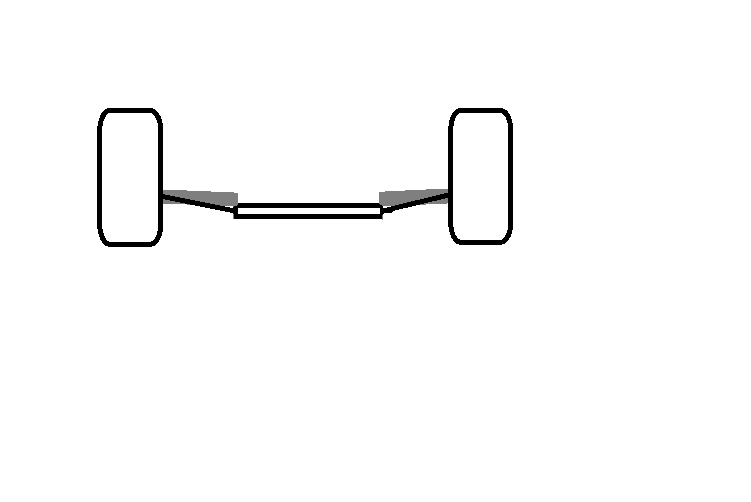
Same thing with modified spindle or bumpsteer correction kit.

Lastly here's one of the early 20b subframes with angled rack. This was designed this way to clear the frontal angled hump of the oil pan. Poor design in my opinion!
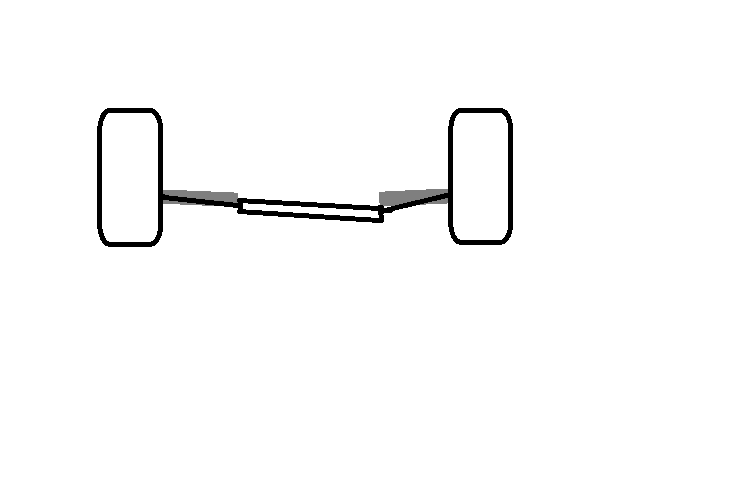
Here I'm adding the grey lower control lower control arm for reference.
Stock height
Lowered height
Here is your average 20b subframe without modified spindles.
Same thing with modified spindle or bumpsteer correction kit.
Lastly here's one of the early 20b subframes with angled rack. This was designed this way to clear the frontal angled hump of the oil pan. Poor design in my opinion!

Wrong wheel drive **D
Joined: Jul 2011
Posts: 67
Likes: 0
From: Hopeless Mills, NC
Although I completely agree with Troux I thought it was only dependent on tie rod angle, I did not know it also had to do with LCA/UCA angle also.
For the Cobalts we have steering rack spacers that correct this problem and do a great job which puts the tie rods at nearly a flat horizontal line and leaves the LCAs in the same angled position(we have McPherson struts up front too).
For the Cobalts we have steering rack spacers that correct this problem and do a great job which puts the tie rods at nearly a flat horizontal line and leaves the LCAs in the same angled position(we have McPherson struts up front too).

Thread
Thread Starter
Forum
Replies
Last Post
alphawolff
1st Generation Specific (1979-1985)
17
Nov 17, 2015 05:57 PM
