


separating fiction from reality... a couple of days on the DYNO




Joined: Mar 2001
Posts: 31,859
Likes: 3,243
From: https://www2.mazda.com/en/100th/
i just reskimmed the thread, and Howard actually deserves lots of respect for sharing not only the successes but the failures too. he could (should?) have done all this and THEN posted the thread with a bunch of shiny pics, and cool graphs and stuff.
he didn't though, and we've actually gotten a taste of how hard it is to build a high hp car
i couldn't help but notice that the 1st engine also has the same boost spikes in the data log.
he didn't though, and we've actually gotten a taste of how hard it is to build a high hp car
i couldn't help but notice that the 1st engine also has the same boost spikes in the data log.


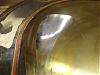
Thanks for posting the pics Howard, wow! Glad you are moving forward with the project. On a side note regarding ceramic apex seals, I wonder if they are all the same? I'm currently rebuilding a motor that had Ianetti Ceramics that broke due to detonation, there was almost no damage to the housings and the rotors were perfect. Below are some pics of the damage. The customer has the 3rd seal, it was a clean break.
Ianetti Ceramics...

Housing... (this was ported and built previously by another shop)

Anthony


I had a clean break down the middle due to lean detonation with my one piece NRS ceramics a few years back. Motor ran fine, didn't even know it was blown until we opened it up to switch to 2 piece.
thewird
thewird

I took a look through the data. It's not completely clear what happened due to limited information and sample rate. You were logging everything under the monitor window, which increases the amount of data available but decreases the number of samples per second. If you had chosen only "Advance" and "Aux" you might have gotten another 5-10 samples per second which could have helped. It's hard to say exactly how high the spark got, what the knock sensor reading was, what the actual spark and EGT were. Adding 5 more samples per second would be about a 50% increase in sample rate if you think about it. I displayed the same log with "Basic" and "Advance" rpm/timing/etc. Those are sampled at different times (Boost and PIM use different units but they both relate to manifold pressure). It's all a tradeoff though.
Basic:

Advance:

It's the same basic data, but you can see that sampling rates makes this whole thing a little murky because the spike happened fast.
It's hard to tell if the engine knocked. You have a very well-instrumented car for what you are doing, but all the really nice stuff is used by big-budget facilities. The ATI Vision system for example has a 20khz sample rate. That's literally 20,000 samples per second that can log combustion chamber pressure traces, crank and cam position, and injector current down to half a degree crank angle. It costs big, big dollars though. If we had combustion chamber pressure traces we could much more easily determine. I'm only saying that to point out that you are doing a good job with what you have, and you can't be expected to fully get to the bottom of this without data from a gazillion dollars worth of equipment.
Overboost Fuel Cut
If I could you a piece of advice, advice that a lot of people don't agree with, it's to put overboost fuel cut on your next engine. Some people feel that cutting fuel could be dangerous to the engine, based on the idea that lean = dangerous. I can tell you right now that basically every OEM uses fuel cut for overrev, overboost, traction control, or some combination thereof. The PFC's implementation of it isn't perfect, and I'm not saying that it is a panacea, but I think you would benefit from properly setting it up on your next engine. There's no way for sure to know if your overboost countermeasures in your map did the job (not enough timing retard? not fast enough?), and I'll admit there's no way to say 100% that setting up fuel cut could have saved your motor.
What I can offer you is 1) my personal anecdotal experience and 2) detailed information on how fuel cut is used in an actual OEM system. I use overboost fuel cut on my own car and it has protected my engine from boost spikes in the winter or boost control mistakes. I've probably hit it a few dozen times over the past three years that I've had it configured and it hasn't caused a noticeable problem.
Now, on most modern engine management systems the architecture is based on engine torque. To simplify: there is a calculated torque request from the accelerator pedal, a series of commands (air/fuel/spark) to generate that torque, and a calculated engine output torque used for feedback. I am going to use the Bosch Motronic ME7 system (late 90s VW etc, they are now on version 9) here but GM's and many other manufacturer's strategies are similar.

If the calculated output torque exceeds a torque limit, or calculated airflow/load/vehicle speed/engine speed or some other limitation is reached, the computer generates a torque reduction request. Torque reduction requests are also used during normal operation, such as during shifting of automatic transmissions or during cylinder deactivation on engines equipped with it.


The torque reduction request system figures out how much to reduce engine output torque and more importantly for this discussion, how fast to reduce it. For purposes of discussion, torque can be reduced, in order of slowest to fastest: wastegate position (for boosted engines), throttle position, ignition timing, and fuel cut (either selective cylinders or all cylinders).

I know that's a lot of stuff I'm throwing out here but basically what I'm saying is that fuel cut is the fastest-responding form of overboost protection (if it's configured right for the application). If the overboost was the root cause, proper fuel cut may have been the best countermeasure.
Basic:
Advance:
It's the same basic data, but you can see that sampling rates makes this whole thing a little murky because the spike happened fast.
It's hard to tell if the engine knocked. You have a very well-instrumented car for what you are doing, but all the really nice stuff is used by big-budget facilities. The ATI Vision system for example has a 20khz sample rate. That's literally 20,000 samples per second that can log combustion chamber pressure traces, crank and cam position, and injector current down to half a degree crank angle. It costs big, big dollars though. If we had combustion chamber pressure traces we could much more easily determine. I'm only saying that to point out that you are doing a good job with what you have, and you can't be expected to fully get to the bottom of this without data from a gazillion dollars worth of equipment.
Overboost Fuel Cut
If I could you a piece of advice, advice that a lot of people don't agree with, it's to put overboost fuel cut on your next engine. Some people feel that cutting fuel could be dangerous to the engine, based on the idea that lean = dangerous. I can tell you right now that basically every OEM uses fuel cut for overrev, overboost, traction control, or some combination thereof. The PFC's implementation of it isn't perfect, and I'm not saying that it is a panacea, but I think you would benefit from properly setting it up on your next engine. There's no way for sure to know if your overboost countermeasures in your map did the job (not enough timing retard? not fast enough?), and I'll admit there's no way to say 100% that setting up fuel cut could have saved your motor.
What I can offer you is 1) my personal anecdotal experience and 2) detailed information on how fuel cut is used in an actual OEM system. I use overboost fuel cut on my own car and it has protected my engine from boost spikes in the winter or boost control mistakes. I've probably hit it a few dozen times over the past three years that I've had it configured and it hasn't caused a noticeable problem.
Now, on most modern engine management systems the architecture is based on engine torque. To simplify: there is a calculated torque request from the accelerator pedal, a series of commands (air/fuel/spark) to generate that torque, and a calculated engine output torque used for feedback. I am going to use the Bosch Motronic ME7 system (late 90s VW etc, they are now on version 9) here but GM's and many other manufacturer's strategies are similar.
If the calculated output torque exceeds a torque limit, or calculated airflow/load/vehicle speed/engine speed or some other limitation is reached, the computer generates a torque reduction request. Torque reduction requests are also used during normal operation, such as during shifting of automatic transmissions or during cylinder deactivation on engines equipped with it.
The torque reduction request system figures out how much to reduce engine output torque and more importantly for this discussion, how fast to reduce it. For purposes of discussion, torque can be reduced, in order of slowest to fastest: wastegate position (for boosted engines), throttle position, ignition timing, and fuel cut (either selective cylinders or all cylinders).
I know that's a lot of stuff I'm throwing out here but basically what I'm saying is that fuel cut is the fastest-responding form of overboost protection (if it's configured right for the application). If the overboost was the root cause, proper fuel cut may have been the best countermeasure.


I run ID725's without diffusers, streetport and 3mm seals. 13.2 afr idle at 950rpm. Low speed driveability is good using Arghx's tip in settings. 35r with 17psi max boost and 315cc water coming on at 7psi.

I just cut the legs off my primary diffusers and put the top part back in for the seal for the 850s used as primary's, I don't want to have this problem in the future, luckily they never broke (although I did replace them a few years ago). And I don't have them in the secondary's.
Thanks for all the info.
Thanks for all the info.
This question may be a misunderstanding based on my EXTREME lack of knowledge in this particular area but as I'm putting an engine back together it is relevant.
If you don't have the diffusers on stock injectors, don't you run the risk (even if minimal) of a piece of the pintle cap entering the engine?
Happy to listen to experience and advice. Thank you.
If you don't have the diffusers on stock injectors, don't you run the risk (even if minimal) of a piece of the pintle cap entering the engine?
Happy to listen to experience and advice. Thank you.
When you remove the diffusers, you dont fully remove them, you just clip the bottom part which is what can possibly break. People running aftermarket top-feeds are fully removing them to install the injector spacers.
Also, the diffuser isn't part of the injector, the injector just sits on it. So nothing would fall fall in if it wasnt there except then the injector would be lower and/or not seat correctly.
thewird
Also, the diffuser isn't part of the injector, the injector just sits on it. So nothing would fall fall in if it wasnt there except then the injector would be lower and/or not seat correctly.
thewird
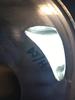
See picture below, these are my stock diffusers, I took the pic today after I cut the legs off the one and grinded it down flush. This is what you need to do if using stock injectors. There are no added risks of any kind, just make sure you put them back in correctly. Use a bolt (like a transmission or starter bolt or other long metric bolt with 14mm socket head on it, fits great) to screw into the old ones to pull them out, make sure not to break them, use oil to lube everything, and I used the bolt to place them back in, this part was tricky to get them seated correctly.
Joined: Mar 2001
Posts: 31,859
Likes: 3,243
From: https://www2.mazda.com/en/100th/
1. a high sample rate is important. there actually are some rules of thumb/back of the envelope calculations, but basically more is always better. you can filter the data in the software, but you cannot go the other way around.
2. the text books on the data acquisition subject are very thick.
3. the person who reviews the data needs to be impartial.
4. its tricky, but the subject that you're logging should be as simple and focused as possible. for example, we put position sensors on the shocks, so we could tune them based on the data, and this worked really well. when we put the steering angle, brake pressure and G force and TPS in there, we expected to be able to lay out the perfect lap, instead we found that since the track has width, you can't as different laps are actually different distances, so tommy may be faster than mario simply because he's traveling a shorter distance. the difference between driving on the inside and the outside at infineon is almost an 1/8th of a mile, so its a significant distance.
so good luck! we're using an AIM mychron, it was pretty sweet in 2007, but i think you can do something with more channels for similar $$


Joined: Mar 2001
Posts: 30,818
Likes: 656
From: FL-->NJ/NYC again!
See picture below, these are my stock diffusers, I took the pic today after I cut the legs off the one and grinded it down flush. This is what you need to do if using stock injectors. There are no added risks of any kind, just make sure you put them back in correctly. Use a bolt (like a transmission or starter bolt or other long metric bolt with 14mm socket head on it, fits great) to screw into the old ones to pull them out, make sure not to break them, use oil to lube everything, and I used the bolt to place them back in, this part was tricky to get them seated correctly.
When installing them, just use some WD40 to lube them up and they should slide right in, just make sure the bore is clean and you index the primaries correctly into the notches in the intermediate iron



See picture below, these are my stock diffusers, I took the pic today after I cut the legs off the one and grinded it down flush. This is what you need to do if using stock injectors. There are no added risks of any kind, just make sure you put them back in correctly. Use a bolt (like a transmission or starter bolt or other long metric bolt with 14mm socket head on it, fits great) to screw into the old ones to pull them out, make sure not to break them, use oil to lube everything, and I used the bolt to place them back in, this part was tricky to get them seated correctly.


I have followed this thread since the biginning. Let me first say thanks to howard for sharing. But howard i cant help but wonder why you are still using a powerFC..... They are great for what they are, and when they came out. But that was over a decade ago... I personally run haltechs in my 2 cars which is my preference. But i think you could seriously benefit from a new Platinum Sport 1000. After playing with the software for 5 minutes you will wonder why you have been going through the harassment of tuning the PFC. Just my 2cents....
I have followed this thread since the biginning. Let me first say thanks to howard for sharing. But howard i cant help but wonder why you are still using a powerFC..... They are great for what they are, and when they came out. But that was over a decade ago... I personally run haltechs in my 2 cars which is my preference. But i think you could seriously benefit from a new Platinum Sport 1000. After playing with the software for 5 minutes you will wonder why you have been going through the harassment of tuning the PFC. Just my 2cents....
Holy run on sentence lol.
thewird


Howard check out the Link G4 RX. You can upgrade to dual knock sensors. It has higher resolution and some really cool features, including plug and play for flexfuel sensors.

Why are you only concerned with logging knock Howard?
I should think there would be many other, much more important, values that would matter.
I for one would rather be able to log EGT and AFR over knock... Personally the ONLY reason I'm not swapping from a PFC to a better unit is because of money, and my lack of it right now, lol.
I should think there would be many other, much more important, values that would matter.
I for one would rather be able to log EGT and AFR over knock... Personally the ONLY reason I'm not swapping from a PFC to a better unit is because of money, and my lack of it right now, lol.