


...lost of bottom-end after going half bridge.

Thread Starter
Full Member
Joined: May 2003
Posts: 80
Likes: 0
From: durham nc
...lost of bottom-end after going half bridge.
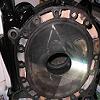
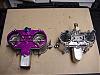
Ok guys. I tried a half bridge made from my already street ported irons. Car pulls really well up top(117mph in the 1/8th), but lost bottom-end. I was under the impression that I would pick up bottom-end. With my street port I was launching at 7k and the car launched hard and consistently. With the bridge, I have to launch at 8k and the car still bogs at times when I drop the clutch. I'm sure the motor picked up power because my fastest 1/8th with the street port was 112. I heard that I could lengthen the bridge and widen my powerband. Take a look at my port and tell me what can be done to pick up bottom-end.
Thanks in advance.
Here's a couple of launches with the streetport.
http://www.youtube.com/watch?v=w0sD63uirOE
http://www.youtube.com/watch?v=lg6tzjYFMZs
Thanks in advance.
Here's a couple of launches with the streetport.
http://www.youtube.com/watch?v=w0sD63uirOE
http://www.youtube.com/watch?v=lg6tzjYFMZs

Thread Starter
Full Member
Joined: May 2003
Posts: 80
Likes: 0
From: durham nc
I don't have to gain any bottom; but I do need enough to launch the car. Most people are claiming faster spool with the turbo bridgeports. That hasn't been the case with me. If the track is hooking; the car will not launch. I have been 1.41 60ft with the bridge; but that's only when I can spin the tires out the hole.

Old [Sch|F]ool


Joined: May 2001
Posts: 12,862
Likes: 569
From: Cleveland, Ohio, USA
...because people generally do?
I'm running N/A, but I noticed that the bridgey is much more sensitive to exhaust backpressure, so you may have to resize your turbo's hotside.
And it definitely was more sensitive to intake manifold length. To be truthful, it did run a lot less powerful with the T2 intake manifold. I modified a 6-port intake to fit the engine, and the low-end and midrange was crazy. Far better than the same manifold on a 6-port. The top-end power came back, too.
I'm running N/A, but I noticed that the bridgey is much more sensitive to exhaust backpressure, so you may have to resize your turbo's hotside.
And it definitely was more sensitive to intake manifold length. To be truthful, it did run a lot less powerful with the T2 intake manifold. I modified a 6-port intake to fit the engine, and the low-end and midrange was crazy. Far better than the same manifold on a 6-port. The top-end power came back, too.
I don't have to gain any bottom; but I do need enough to launch the car. Most people are claiming faster spool with the turbo bridgeports. That hasn't been the case with me. If the track is hooking; the car will not launch. I have been 1.41 60ft with the bridge; but that's only when I can spin the tires out the hole.
Old [Sch|F]ool
Joined: May 2001
Posts: 12,862
Likes: 569
From: Cleveland, Ohio, USA
The biggest problem isn't the fresh air blowing out the exhaust, it's the high exhaust pressure getting sucked up into the intake. So low exhaust backpressure is absolutely essential.
Originally Posted by peejay
Even if the intake pressure was higher than the exhaust pressure and would allow that to happen, it would still mean that you were scavenging the chamber out 100%, which by definition means you'll be seeing well over 100% VE since you'd be filling not only the swept volume but also the unswept volume with fresh charge. So the torque should be there.
Originally Posted by peejay
The biggest problem isn't the fresh air blowing out the exhaust, it's the high exhaust pressure getting sucked up into the intake. So low exhaust backpressure is absolutely essential.
Trending Topics
Senior Member
Joined: Feb 2003
Posts: 331
Likes: 0
From: SoCal
The last time I read about this car it was carburated Holley turbo. Just wondering if this is the same car. If it is do you have an open plenum ported manifold or is it a stock 4-barrel style intake Jaytech or Racing Beat.
What are your EGT temperatures like after a full pass?
Thanks
Albert
What are your EGT temperatures like after a full pass?
Thanks
Albert

The last time I read about this car it was carburated Holley turbo. Just wondering if this is the same car. If it is do you have an open plenum ported manifold or is it a stock 4-barrel style intake Jaytech or Racing Beat.
What are your EGT temperatures like after a full pass?
Thanks
Albert
What are your EGT temperatures like after a full pass?
Thanks
Albert

Thread Starter
Full Member
Joined: May 2003
Posts: 80
Likes: 0
From: durham nc
The last time I read about this car it was carburated Holley turbo. Just wondering if this is the same car. If it is do you have an open plenum ported manifold or is it a stock 4-barrel style intake Jaytech or Racing Beat.
What are your EGT temperatures like after a full pass?
Thanks
Albert
What are your EGT temperatures like after a full pass?
Thanks
Albert


awsome rolla dude..
sure dose pick up and go in that last vid..
were u bogging when trying to burn out when the last vid starts..?? whats up with the gangsta type commentator lol
sure dose pick up and go in that last vid..
were u bogging when trying to burn out when the last vid starts..?? whats up with the gangsta type commentator lol


Joined: Mar 2001
Posts: 31,835
Likes: 3,232
From: https://www2.mazda.com/en/100th/
the whole problem with a high overlap engine is that the exhaust always has higher pressure than the intake. this encourages the exhaust gasses to be sucked back into the next intake stroke.
take a minute and think about it. especially on a PP engine, where there is a really long overlap time and good FLOW between the ports
the whole problem goes away though if you had more pressure in the intake than the exhaust though....
take a minute and think about it. especially on a PP engine, where there is a really long overlap time and good FLOW between the ports
the whole problem goes away though if you had more pressure in the intake than the exhaust though....
Thread Starter
Full Member
Joined: May 2003
Posts: 80
Likes: 0
From: durham nc


Thread Starter
Full Member
Joined: May 2003
Posts: 80
Likes: 0
From: durham nc
rx72c
Did you take a look at my bridge? Do you think I should make the bridge the full length of the streetport? I read in one of your threads that this helps to spool the turbo.

Old [Sch|F]ool
Joined: May 2001
Posts: 12,862
Likes: 569
From: Cleveland, Ohio, USA
Sure. During the overlap period, the intake and exhaust ports are at opposite ends of the chamber. There's no direct communication like in a piston engine where the valves basically can shoot right into each other and bypass the chamber.
So if you ARE blowing intake right out the exhaust, the only way this is even possible is if you're blowing ALL of the residual exhaust gases out. So why would this be bad?
For something to chew on. 100% VE means you are moving exactly as much air as the engine's swept volume. So for a 13B, this means that you're moving 654cc of air volume (independent of pressure...) per rotor per revolution. However, the chamber isn't 654cc large, it's actually larger because of the clearance volume at TDC.
So even IF you are not pressurizing the chamber, and "blowing all the boost out the exhaust", you're still going to have VE well over 100%.
But then you also have to figure that once the exhaust port closes, you're not going to possibly blow anything out anymore. Basically, IF this was a possibility, it would be a GOOD one.
Low-RPM torque loss is generally more a factor of closing the ports too late, rather than having too much overlap.
So if you ARE blowing intake right out the exhaust, the only way this is even possible is if you're blowing ALL of the residual exhaust gases out. So why would this be bad?
For something to chew on. 100% VE means you are moving exactly as much air as the engine's swept volume. So for a 13B, this means that you're moving 654cc of air volume (independent of pressure...) per rotor per revolution. However, the chamber isn't 654cc large, it's actually larger because of the clearance volume at TDC.
So even IF you are not pressurizing the chamber, and "blowing all the boost out the exhaust", you're still going to have VE well over 100%.
But then you also have to figure that once the exhaust port closes, you're not going to possibly blow anything out anymore. Basically, IF this was a possibility, it would be a GOOD one.
Low-RPM torque loss is generally more a factor of closing the ports too late, rather than having too much overlap.
Senior Member
Joined: Feb 2003
Posts: 331
Likes: 0
From: SoCal
 I love Turbocharged 13B's but I am staying with ALL MOTOR
I have not abandoned the "ALL MOTOR" project. Staying with my P-Port Carburated setup. I just stopped in this section to lend a helping hand. The Drag Racing section has been dead so I wandered over to the other side for the evening.
Trying to wrap up my engine to get out and do some testing.
Albert
Sure. During the overlap period, the intake and exhaust ports are at opposite ends of the chamber. There's no direct communication like in a piston engine where the valves basically can shoot right into each other and bypass the chamber.
So if you ARE blowing intake right out the exhaust, the only way this is even possible is if you're blowing ALL of the residual exhaust gases out. So why would this be bad?
For something to chew on. 100% VE means you are moving exactly as much air as the engine's swept volume. So for a 13B, this means that you're moving 654cc of air volume (independent of pressure...) per rotor per revolution. However, the chamber isn't 654cc large, it's actually larger because of the clearance volume at TDC.
So even IF you are not pressurizing the chamber, and "blowing all the boost out the exhaust", you're still going to have VE well over 100%.
But then you also have to figure that once the exhaust port closes, you're not going to possibly blow anything out anymore. Basically, IF this was a possibility, it would be a GOOD one.
Low-RPM torque loss is generally more a factor of closing the ports too late, rather than having too much overlap.
So if you ARE blowing intake right out the exhaust, the only way this is even possible is if you're blowing ALL of the residual exhaust gases out. So why would this be bad?
For something to chew on. 100% VE means you are moving exactly as much air as the engine's swept volume. So for a 13B, this means that you're moving 654cc of air volume (independent of pressure...) per rotor per revolution. However, the chamber isn't 654cc large, it's actually larger because of the clearance volume at TDC.
So even IF you are not pressurizing the chamber, and "blowing all the boost out the exhaust", you're still going to have VE well over 100%.
But then you also have to figure that once the exhaust port closes, you're not going to possibly blow anything out anymore. Basically, IF this was a possibility, it would be a GOOD one.
Low-RPM torque loss is generally more a factor of closing the ports too late, rather than having too much overlap.
And I too agree loss of low end is certainly to do with late closing than early opening. One only needs to look at the things a VVTI engine does to get some appreciation for the compromises one needs to make.
Now to be fair is your early open an advantage in the top end? Why do VVTI engines delay open and delay close at high rpm instead of just delaying close?

Senior Member

Joined: Nov 2008
Posts: 357
Likes: 0
From: Czech republic
Because they can´t do any better? Its in camshaft, they have fixed duration. Early opening of intake ports is benefical in all engine speeds, with enough load. But still can be said, that early opening is benefical even in high engine speeds - extra duration.
 So go ahead do_eet
There are piston engines with valves actuated by other means than cam shafts. Honda VTEC is meant to be a step above Toyota VVTI.
Joined: Mar 2001
Posts: 31,835
Likes: 3,232
From: https://www2.mazda.com/en/100th/
Could you please go ahead and provide an SAE article modeling/ showing results of said improvements? I'm still a skeptic of early open being an advantage in top end, but I am very happy to be proven wrong So go ahead do_eet
There are piston engines with valves actuated by other means than cam shafts. Honda VTEC is meant to be a step above Toyota VVTI.
So go ahead do_eetThere are piston engines with valves actuated by other means than cam shafts. Honda VTEC is meant to be a step above Toyota VVTI.
http://en.wikipedia.org/wiki/VTEC
"This system uses two camshaft profiles..."
http://en.wikipedia.org/wiki/VANOS
"VANOS varies the timing of the valves by moving the position of the camshafts in relation to the drive gear"
there is no such thing as a piston engine with no camshaft, except maybe F1


Ok I see these threads all the time. What are we considering low end range?
Me I see it as this:
0-3k=Low
3-6k=Mid
6-9k=Top
Are we all on the same page here or does everyone else have different ranges?
For a turbo engine, I think some run less timming to get the turbo to spool faster in the low rpm ranges. This causes more burn in the exhaust to make the turbo spool faster. Actually I think this is what's done to spool large turbos faster in general. If you have a very low back pressure exhaust, the overlap of the bridge in the low range will also allow for some of the intake charge will be forced out the exhaust during this brief overlap period to furthure burn in the exhaust. This happens because there is more pressure in the intake than in the exhaust. I remember reading this somewhere not too long ago.