


Sanity Check of Build Plans


Thread Starter
Full Member

Joined: Jul 2011
Posts: 162
Likes: 5
From: Alberta Canada
Sanity Check of Build Plans
Hi All,
My R7 was being built by a much younger and cheaper version of myself about 10 years ago and although I got it driving there were many things that needed to be addressed. after a 10 year hiatus I'm back and I want to pick up with where I left off, although I'm now older, wiser, and with more budget to put into the car.
As its been 10 years, I'm learning what mods I have based on old posts and vague memory. Below is the list of mods that I am aware of:
I'm not asking you guys to do my research for me but any input is useful or even pointing me in the right direction.
My R7 was being built by a much younger and cheaper version of myself about 10 years ago and although I got it driving there were many things that needed to be addressed. after a 10 year hiatus I'm back and I want to pick up with where I left off, although I'm now older, wiser, and with more budget to put into the car.
As its been 10 years, I'm learning what mods I have based on old posts and vague memory. Below is the list of mods that I am aware of:
- Engine rebuilt about 8,000km ago by myself with a full Atkins kit
- EFR 8374 turbo
- Home build manifold based off the turblown original IWG EFR manifold by a younger me with little welding and fabrication experience
- Greddy front mount intercooler
- Upgraded rad, that has been stood more vertical from the stock position
- Second hand walbro 255 fuel pump
- Stock 550 primaries and second hand 1600ccish secondary's
- Power FC, I believe I borrowed a data logit and may not actually own one. Current tune is definitely not ideal
- I'm pretty sure that I deleted everything I could. Power steering, A/C, and any unnecessary engine devices
- Full 3.5" exhaust
- Battery relocated to trunk
- Suspension bushings (suspension rattles), I believe Superpro is the most common
- Pillow Ball bushings(suspension rattles)
- Chassis side fueling. Fuel pump, new relocated fuel filter and refresh all lines and clamps to the engine.
- Engine side fueling. Fuel rails, pressure regulator and fuel injectors that my 8374 won't outgrow
- Figuring out what a low boost setting looks like on the 8374 with a 3.5" exhaust and trying to get boost control and tune for that.
- Anything else that should be addressed that I'm not yet aware of.
I'm not asking you guys to do my research for me but any input is useful or even pointing me in the right direction.
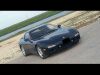


I guess the first real question that needs answered is: what is the goal/usage for the car? Track car; street car; street car with some track stuff?
I'd say, if the answer includes 'street car' in any capacity.....put the AC and PS back in. There is a big reason the JP3 AC retrofit kit is so popular right not....we are all 10 years older haha. I see you are in Alberta, so not as hot a climate as others, but still. Unless you are looking to build a dedicated track car, the extra weight/parasitic draw of the AC is going to be so subtle that there is really no drawback.
Along those lines, if it's a street car, look into non-polyurethane bushings. Either Mazda-Comp or even just replace with brand new OEM. Plenty of threads on here that discuss the differences, so you can read and decide that for yourself.
As for the WG boost on the EFR, your manifold design will ultimately dictate what your WG crack pressure will be, but I believe the chart from Borg Warner has the crack pressure of the 8374 IWG around 10~11 psi, and you can adjust that by moving the bolt a bit (remember, crack pressure isn't actual boost pressure).
Also, plenty of threads in this section and the single turbo section regarding the fueling questions, so you'll certainly be able to find enough info to make a well educated decision on your particular goals/setup.
Good luck! Always great to see others bringing these cars back from the dead!
I'd say, if the answer includes 'street car' in any capacity.....put the AC and PS back in. There is a big reason the JP3 AC retrofit kit is so popular right not....we are all 10 years older haha. I see you are in Alberta, so not as hot a climate as others, but still. Unless you are looking to build a dedicated track car, the extra weight/parasitic draw of the AC is going to be so subtle that there is really no drawback.
Along those lines, if it's a street car, look into non-polyurethane bushings. Either Mazda-Comp or even just replace with brand new OEM. Plenty of threads on here that discuss the differences, so you can read and decide that for yourself.
As for the WG boost on the EFR, your manifold design will ultimately dictate what your WG crack pressure will be, but I believe the chart from Borg Warner has the crack pressure of the 8374 IWG around 10~11 psi, and you can adjust that by moving the bolt a bit (remember, crack pressure isn't actual boost pressure).
Also, plenty of threads in this section and the single turbo section regarding the fueling questions, so you'll certainly be able to find enough info to make a well educated decision on your particular goals/setup.
Good luck! Always great to see others bringing these cars back from the dead!

Thread Starter
Full Member
Joined: Jul 2011
Posts: 162
Likes: 5
From: Alberta Canada
In my mind I have a staged build in mind. Stage 1 is what my plans in this thread cover. Essentially I just want to correct the things needed to get the car on the road and drivable, however I want to make sure all the things I upgrade are suitable for the future plans as well so that I don't end up redoing anything.
I'd say, if the answer includes 'street car' in any capacity.....put the AC and PS back in. There is a big reason the JP3 AC retrofit kit is so popular right not....we are all 10 years older haha. I see you are in Alberta, so not as hot a climate as others, but still. Unless you are looking to build a dedicated track car, the extra weight/parasitic draw of the AC is going to be so subtle that there is really no drawback.
As for the WG boost on the EFR, your manifold design will ultimately dictate what your WG crack pressure will be, but I believe the chart from Borg Warner has the crack pressure of the 8374 IWG around 10~11 psi, and you can adjust that by moving the bolt a bit (remember, crack pressure isn't actual boost pressure).
Also, plenty of threads in this section and the single turbo section regarding the fueling questions, so you'll certainly be able to find enough info to make a well educated decision on your particular goals/setup.
Good luck! Always great to see others bringing these cars back from the dead!
Good luck! Always great to see others bringing these cars back from the dead!


The focus would be to build the car with mainly track day usage in mind. That being said I also intend to maintain a reasonable level of street comfort and drivability whenever possible. So the eventual clutch will be thoughtfully chosen, interior will be maintained.
In my mind I have a staged build in mind. Stage 1 is what my plans in this thread cover. Essentially I just want to correct the things needed to get the car on the road and drivable, however I want to make sure all the things I upgrade are suitable for the future plans as well so that I don't end up redoing anything.
AC is very important in my mind, we still get regular 30 degree Celsius days and in our summer we get more sunlight hours up here than anywhere down south. With a black FD this is non ideal. That being said I have this correction in the later build plans. Mainly this is because I need to update the rad and intercooler to a V mount layout, so it doesn't make sense to deal with the AC until then.
I'll dig up the threads and do some more digging.
If I remember right the rotary just produces so much exhaust gases that the IWG can't keep up at low boost levels. I remember trying to configure the boost control as low as possible 10 years ago but then I would get creep as RPM's raised. Mainly the reason I don't want to crank up the boost pressure yet is to ensure the car is ready for increased power first. I know that the power level possible with the 8374 can start to put a lot of other systems near their failure point and I would rather address those points first and maybe rebuild the engine in a more robust fashion with some porting to better utilize the increased boost.
I'll start doing some digging, definitely takes longer to dig through and research everything then I remember. I'm gonna have to take notes as I go.
In my mind I have a staged build in mind. Stage 1 is what my plans in this thread cover. Essentially I just want to correct the things needed to get the car on the road and drivable, however I want to make sure all the things I upgrade are suitable for the future plans as well so that I don't end up redoing anything.
AC is very important in my mind, we still get regular 30 degree Celsius days and in our summer we get more sunlight hours up here than anywhere down south. With a black FD this is non ideal. That being said I have this correction in the later build plans. Mainly this is because I need to update the rad and intercooler to a V mount layout, so it doesn't make sense to deal with the AC until then.
I'll dig up the threads and do some more digging.
If I remember right the rotary just produces so much exhaust gases that the IWG can't keep up at low boost levels. I remember trying to configure the boost control as low as possible 10 years ago but then I would get creep as RPM's raised. Mainly the reason I don't want to crank up the boost pressure yet is to ensure the car is ready for increased power first. I know that the power level possible with the 8374 can start to put a lot of other systems near their failure point and I would rather address those points first and maybe rebuild the engine in a more robust fashion with some porting to better utilize the increased boost.
I'll start doing some digging, definitely takes longer to dig through and research everything then I remember. I'm gonna have to take notes as I go.
Thread Starter
Full Member
Joined: Jul 2011
Posts: 162
Likes: 5
From: Alberta Canada
Need to see more AB FDs out at tracks, it's lonely out there. If you're dealing with boost creep issues it may be a good idea to look at replacing the exhaust system with something more restrictive like a 3" with multiple silencers. The RMM sound regs are no longer draconian but they are still strict.
Some input:
- I never had any luck keeping engine cooling temps reasonable with a FMIC. Especially on track. Vmount intercooler and radiator setup is the most efficient setup.
- I did not like poly bushings on a street driven car. Was great for track but more NVH than I want in a street car.
- There are various threads in the Single Turbo section about the turbo you selected. Running "low" amounts of boost has been a challenge for some. Turblown is working on a new design which seems to be focused on addressing this issue.
- 3.5" dp to 3" exhaust is not restrictive at all. Expect difficulty controlling boost.
- Check out the new PFC Master product for tuning - https://www.rx7club.com/power-fc-for...aster-1167351/
Get it running. Then figure out what you want or need to adjust.
Good luck. Nice to see your user name around again.
- I never had any luck keeping engine cooling temps reasonable with a FMIC. Especially on track. Vmount intercooler and radiator setup is the most efficient setup.
- I did not like poly bushings on a street driven car. Was great for track but more NVH than I want in a street car.
- There are various threads in the Single Turbo section about the turbo you selected. Running "low" amounts of boost has been a challenge for some. Turblown is working on a new design which seems to be focused on addressing this issue.
- 3.5" dp to 3" exhaust is not restrictive at all. Expect difficulty controlling boost.
- Check out the new PFC Master product for tuning - https://www.rx7club.com/power-fc-for...aster-1167351/
Get it running. Then figure out what you want or need to adjust.
Good luck. Nice to see your user name around again.
Trending Topics
Thread Starter
Full Member
Joined: Jul 2011
Posts: 162
Likes: 5
From: Alberta Canada
I'm thinking the 525 Walbro hellcat pump. I'd like the radium in tank surge tank but needing to buy a second lift pump and the drop in surge tank is an extra 1000USD.
For simplicity sake I'll probably replace both the primary and secondary fuel rails and injectors all at once and just lose all the old stuff. I'm still not sure about injectors, I was looking at the JP3 Kit. How do the DeatschWerks injectors compare to the injector dynamics injectors. In the description they recommend the 700cc DW injectors as primaries for PFC users. Are the 1050's hard for the PFC to control for idle tuning?
If using all DW injectors it would be 700CC primaries with 2200CC secondary's.
ID's would be 1050's pared with 2600's and the cost would be about 400USD more
For simplicity sake I'll probably replace both the primary and secondary fuel rails and injectors all at once and just lose all the old stuff. I'm still not sure about injectors, I was looking at the JP3 Kit. How do the DeatschWerks injectors compare to the injector dynamics injectors. In the description they recommend the 700cc DW injectors as primaries for PFC users. Are the 1050's hard for the PFC to control for idle tuning?
If using all DW injectors it would be 700CC primaries with 2200CC secondary's.
ID's would be 1050's pared with 2600's and the cost would be about 400USD more
Thread Starter
Full Member
Joined: Jul 2011
Posts: 162
Likes: 5
From: Alberta Canada
My manifold likely doesn't flow as well as Turblowns cast one.. With my setup I believe the boost creep was about 10PSI or so. For track use I would like to have a low boost setting as an option.
I've seen Turblowns new turbine housing and I've thought about jumping on that and updating to his manifold in one go. I've been liking alot of the parts Turblown has come up with, many seem thoughtfully designed. Having the housing update would remove the boost creep issue and allow the ability to run a higher flow exhaust without increasing boost crep concerns.
Check out the new PFC Master product for tuning - https://www.rx7club.com/power-fc-for...aster-1167351/
You have driven with both then? I've read lots of comments saying they are basically the same. I'm not super committed to this, I just wanted to refresh them all at once and I know the poly bushings all come in one nice simple kit, this is probably something I just need to spend more time researching before making a decision.
Poly definitely sharpened the steering inputs and felt more precise on track but I wasn't tracking the car sufficiently to enjoy that benefit so I switched back to stock / Mazda Comp suspension bushings. I miss the sharp steering but it is more live-able with rubber bushings.
YMMV...
Also, the exhaust side poly bushing melted from heat...
I'm thinking the 525 Walbro hellcat pump. I'd like the radium in tank surge tank but needing to buy a second lift pump and the drop in surge tank is an extra 1000USD.
For simplicity sake I'll probably replace both the primary and secondary fuel rails and injectors all at once and just lose all the old stuff. I'm still not sure about injectors, I was looking at the JP3 Kit. How do the DeatschWerks injectors compare to the injector dynamics injectors. In the description they recommend the 700cc DW injectors as primaries for PFC users. Are the 1050's hard for the PFC to control for idle tuning?
If using all DW injectors it would be 700CC primaries with 2200CC secondary's.
ID's would be 1050's pared with 2600's and the cost would be about 400USD more
For simplicity sake I'll probably replace both the primary and secondary fuel rails and injectors all at once and just lose all the old stuff. I'm still not sure about injectors, I was looking at the JP3 Kit. How do the DeatschWerks injectors compare to the injector dynamics injectors. In the description they recommend the 700cc DW injectors as primaries for PFC users. Are the 1050's hard for the PFC to control for idle tuning?
If using all DW injectors it would be 700CC primaries with 2200CC secondary's.
ID's would be 1050's pared with 2600's and the cost would be about 400USD more
https://www.12voltpower.com/product/...yABEgL9yPD_BwE
https://www.bmotorsports.com/shop/pr...iABEgJxsPD_BwE
https://www.racetronix.biz/p/univers...4-way/bcws-001

Injectors are really your choice, you should consider sizing the injectors, pump, and fuel feed line for your desired power level and fuel type. Regarding the PFC, most folks suggest avoiding going over 7XXcc for primary injectors for better idle and low load control.
Thread Starter
Full Member
Joined: Jul 2011
Posts: 162
Likes: 5
From: Alberta Canada
The 525 is a high amperage pump, you'll need to plan to rewire and add a bulkhead connector to the OEM fuel hat to feed it as the amp draw will melt the stock bulkhead connection. The products below are good options.
https://www.12voltpower.com/product/...yABEgL9yPD_BwE
https://www.bmotorsports.com/shop/pr...iABEgJxsPD_BwE
https://www.racetronix.biz/p/univers...4-way/bcws-001
https://www.12voltpower.com/product/...yABEgL9yPD_BwE
https://www.bmotorsports.com/shop/pr...iABEgJxsPD_BwE
https://www.racetronix.biz/p/univers...4-way/bcws-001
Injectors are really your choice, you should consider sizing the injectors, pump, and fuel feed line for your desired power level and fuel type. Regarding the PFC, most folks suggest avoiding going over 7XXcc for primary injectors for better idle and low load control.

Thanks for the response, I was struggling to find much on specific details of the install so I created a thread. Walbro 525 Installation. I was aware that it was a higher amp draw pump, looks like it should draw around 18-20amps vs the 8-11amps of the Walbro 255, makes sense since its flowing twice the fuel. In my research I had read of people repining the stock connector to get around the increased amperage for the 450 series pump, wonder if that's still a feasible option over adding a new bulkhead. I'm fine with either option, the bulkhead you posted seems like a better option than some of the studs I've seen.


Joined: Mar 2001
Posts: 31,835
Likes: 3,233
From: https://www2.mazda.com/en/100th/
You have driven with both then? I've read lots of comments saying they are basically the same. I'm not super committed to this, I just wanted to refresh them all at once and I know the poly bushings all come in one nice simple kit, this is probably something I just need to spend more time researching before making a decision
Rubber pivots with zero friction, however there is a small spring rate
Poly doesn't have a spring rate, but it doesn't pivot as well, there can be a lot of friction.
Mazda also uses a lot of multi axis pivots, so like in the rear the arms move up and down and have to twist, rubber is good with this, Poly i'm not sure, it seems like it doesn't like it as much
anyways, i personally i want the least friction/binding, so i like rubber.
and if it was a single axis joint, or didn't move, like the steering rack, poly is better for that
EDIT: i guess the downside with rubber is that it deflects, so the pivot point of the arms would move around more, less accurate geometry.
Last edited by j9fd3s; Jul 15, 2025 at 01:47 PM.
Thread Starter
Full Member
Joined: Jul 2011
Posts: 162
Likes: 5
From: Alberta Canada
^Re-pinning the OEM connector to handle the additional current draw of a Walbro 525 isn't a smart idea. All that would do is freshen up the electrical terminations, it does nothing to increase the safe current rating of the termination, since the terminals and wire gauge supported by those OEM terminals stays the same. What you need is a bulkhead connector whose terminals support installation of at least 10 gauge wire, and the electrical terminals being continuous duty rated for at least the maximum current draw of your Walbro pump (20~25A IIRC)
I found a size guide in the radium relay kit information page.

Thread Starter
Full Member
Joined: Jul 2011
Posts: 162
Likes: 5
From: Alberta Canada
as with everything there is a trade off with Poly Vs Rubber.
Rubber pivots with zero friction, however there is a small spring rate
Poly doesn't have a spring rate, but it doesn't pivot as well, there can be a lot of friction.
Mazda also uses a lot of multi axis pivots, so like in the rear the arms move up and down and have to twist, rubber is good with this, Poly i'm not sure, it seems like it doesn't like it as much
anyways, i personally i want the least friction/binding, so i like rubber.
and if it was a single axis joint, or didn't move, like the steering rack, poly is better for that
EDIT: i guess the downside with rubber is that it deflects, so the pivot point of the arms would move around more, less accurate geometry.
Rubber pivots with zero friction, however there is a small spring rate
Poly doesn't have a spring rate, but it doesn't pivot as well, there can be a lot of friction.
Mazda also uses a lot of multi axis pivots, so like in the rear the arms move up and down and have to twist, rubber is good with this, Poly i'm not sure, it seems like it doesn't like it as much
anyways, i personally i want the least friction/binding, so i like rubber.
and if it was a single axis joint, or didn't move, like the steering rack, poly is better for that
EDIT: i guess the downside with rubber is that it deflects, so the pivot point of the arms would move around more, less accurate geometry.
Edit, found the thread. Doing my BUSHINGS (superpro). Blue TII discusses it in posts #10. 00SPEC pulls in a diagram in post #25 to highlight the bushings that can and shouldn't be replaced in Poly.

I highly.... *Highly* doubt this... not because you don't have a higher mileage FD.... But I know of one FD shell in Edmonton that has 99.9% vehicles in the province beat... lol
its originally a USDM car, and the Last I heard the shell had over 450,000 on it... oh and that is Miles, not kms... lol
so around the range of 720,000kms.... lol
its originally a USDM car, and the Last I heard the shell had over 450,000 on it... oh and that is Miles, not kms... lol
so around the range of 720,000kms.... lol

The focus would be to build the car with mainly track day usage in mind. That being said I also intend to maintain a reasonable level of street comfort and drivability whenever possible. So the eventual clutch will be thoughtfully chosen, interior will be maintained.
In my mind I have a staged build in mind. Stage 1 is what my plans in this thread cover. Essentially I just want to correct the things needed to get the car on the road and drivable, however I want to make sure all the things I upgrade are suitable for the future plans as well so that I don't end up redoing anything.
In my mind I have a staged build in mind. Stage 1 is what my plans in this thread cover. Essentially I just want to correct the things needed to get the car on the road and drivable, however I want to make sure all the things I upgrade are suitable for the future plans as well so that I don't end up redoing anything.
Good to see you back on here, I was wondering what you've been up to/doing the past few years (almost decade) since we've seen each other.
As Far as v-mount setup, you should just buy mine off me. I'm wanting to sell it to fund a new v-mount build, because well... I can never leave stuff alone.. lol There no provision for AC currently, but if you did ceramic tint on your windows, I don't think you'd need AC at all.
Secondly for the fuel pump upgrade, the info in the earlier post by Molotovman is a great guide. I used the same higher amperage relay, mounted near the pump with new (IIRC) 10ag wiring to/from it.
One thing I did differently is this, instead of using a whole different bulkhead connector to replace the stock one. I used one of these battery bulkhead connectors, and when installing it, the edge was sealed up with a fuel safe epoxy. this provided the positive power to the pump, and for the ground. I used the stock bulk head connector but used both the positive and negative terminals on the connector. cheap easy, hassle free, and provides more power then I'd ever need to any pump/ pump combo in the future.
J.
Thread Starter
Full Member
Joined: Jul 2011
Posts: 162
Likes: 5
From: Alberta Canada
I highly.... *Highly* doubt this... not because you don't have a higher mileage FD.... But I know of one FD shell in Edmonton that has 99.9% vehicles in the province beat... lol
its originally a USDM car, and the Last I heard the shell had over 450,000 on it... oh and that is Miles, not kms... lol
so around the range of 720,000kms.... lol
its originally a USDM car, and the Last I heard the shell had over 450,000 on it... oh and that is Miles, not kms... lol
so around the range of 720,000kms.... lol
Sorry for Double Post...
Good to see you back on here, I was wondering what you've been up to/doing the past few years (almost decade) since we've seen each other.
As Far as v-mount setup, you should just buy mine off me. I'm wanting to sell it to fund a new v-mount build, because well... I can never leave stuff alone.. lol There no provision for AC currently, but if you did ceramic tint on your windows, I don't think you'd need AC at all.
Secondly for the fuel pump upgrade, the info in the earlier post by Molotovman is a great guide. I used the same higher amperage relay, mounted near the pump with new (IIRC) 10ag wiring to/from it.
One thing I did differently is this, instead of using a whole different bulkhead connector to replace the stock one. I used one of these battery bulkhead connectors, and when installing it, the edge was sealed up with a fuel safe epoxy. this provided the positive power to the pump, and for the ground. I used the stock bulk head connector but used both the positive and negative terminals on the connector. cheap easy, hassle free, and provides more power then I'd ever need to any pump/ pump combo in the future.
J.
Good to see you back on here, I was wondering what you've been up to/doing the past few years (almost decade) since we've seen each other.
As Far as v-mount setup, you should just buy mine off me. I'm wanting to sell it to fund a new v-mount build, because well... I can never leave stuff alone.. lol There no provision for AC currently, but if you did ceramic tint on your windows, I don't think you'd need AC at all.
Secondly for the fuel pump upgrade, the info in the earlier post by Molotovman is a great guide. I used the same higher amperage relay, mounted near the pump with new (IIRC) 10ag wiring to/from it.
One thing I did differently is this, instead of using a whole different bulkhead connector to replace the stock one. I used one of these battery bulkhead connectors, and when installing it, the edge was sealed up with a fuel safe epoxy. this provided the positive power to the pump, and for the ground. I used the stock bulk head connector but used both the positive and negative terminals on the connector. cheap easy, hassle free, and provides more power then I'd ever need to any pump/ pump combo in the future.
J.
I got the car running over the weekend. I installed a Walbro 350 using the stock fuel pump wiring. I had limited time and I wanted to just get the car driving before winter so I could start building the list of everything that needs to be addressed in the off season. So the fuel pump relay replacement will happen in the off season.
I expected the car to smoke a ton on startup because I injected a bunch of 2 stroke oil onto all the housing faces. However I found the car ran very bad and smoked real bad. The smoke smelled like not oil or coolant to me, just like general burning more or less. The car stalled out not far from home and with the smoke and smell I was worried so I pushed the car back.
Pulled the trailing spark plugs and borescoped in, all apex seals were in place, one of my forward rotor faces has what looked like some small dents at the start of the bowl on the rotor face but no other obvious issues observed.
pulled off the air inlet and exhaust outlet from the turbo, spun fine with no issues observed. I did borescope down the exhaust and found an issue, I found about a half gallon of grain in the catback muffler. It appears a rodent of some kind made the muffler its home during the cars storage. 2 hours of shaking and vacuuming out the muffler I was back in action, now with no more smoke issues.
1. The biggest issue I am currently facing is that on low throttle as I just start accelerating the car stumbles real bad, it almost bogs down and stalls during this range. I've been reading that it might be the TPS so I'm gonna have to troubleshoot that when I get a chance.
2. I've noticed that there is alot of slop/slack in the driveline somewhere. With the stumbling from issue #1 this becomes extremely annoying because the car will bounce/buck back and forth on the slack. I basically have to clutch in to break the bouncing and then throttle up and ride the clutch to get through this range. I jacked up the rear of the car and I can see there is a decent amount of backlash/slack in the diff when rotating the tires in one direction then reversing without the driveshaft moving. This issue would be a lot less of an issue without issue #1 but I will probably still need to look into the diff.
3. General suspension squeaks, there appears to be a ton of suspension squeaks but they are hard track down. when the car was on jacks I tried to shake and look for suspension but it takes more force to get anything to squeak then I can by hand. If I have to do diff work, then I'll inspect all the bushings when I drop the rear subframe I guess.

Thread
Thread Starter
Forum
Replies
Last Post
Cozmos
3rd Generation Specific (1993-2002)
4
Aug 22, 2018 05:45 PM
89t295k
2nd Generation Specific (1986-1992)
7
Feb 12, 2006 08:43 PM