


Weight = ? HP?


Thread Starter
Eats, Sleeps, Dreams Rotary

Joined: May 2003
Posts: 3,639
Likes: 0
From: MIA
Weight = ? HP?
For every lets say 100 lbs off your car how much horsepower could you say you added? I was thinking every 100 lbs = 5 or 10 hp? Maybe if that, is there a formula for this?

Well Force = Mass * acceleration.
Lets say you can accelerate at 0.7g. If you drop 100 lbs and keep the same power...(relates to force) you can accelerate at a higher rate.
So:
Force/mass = 0.7g
Force/(mass-100lb) = X g.
This is not giving you an increase in HP. It increases your acceleration. You could relate this so that to have the same acceleration with an increase in power instead of a decrease in weight.
Basically:
X g * mass = Force+Y (higher force)
To relate force to power isn't direct. It depends on gears, tire diameter and rpms you are at. RPMs change so it is only possible to get a single number at a single rpm.
Lets say you can accelerate at 0.7g. If you drop 100 lbs and keep the same power...(relates to force) you can accelerate at a higher rate.
So:
Force/mass = 0.7g
Force/(mass-100lb) = X g.
This is not giving you an increase in HP. It increases your acceleration. You could relate this so that to have the same acceleration with an increase in power instead of a decrease in weight.
Basically:
X g * mass = Force+Y (higher force)
To relate force to power isn't direct. It depends on gears, tire diameter and rpms you are at. RPMs change so it is only possible to get a single number at a single rpm.
Last edited by RotaryAXer; Jul 23, 2004 at 01:08 PM.
Thread Starter
Eats, Sleeps, Dreams Rotary
Joined: May 2003
Posts: 3,639
Likes: 0
From: MIA
Ok im lost, what can I measure with I lose weight? That I can measure on a consistant basis? My acceleration g's?
Also if I plug everything in, Im still lost help me out please.
Also if I plug everything in, Im still lost help me out please.

Lives on the Forum

Joined: Feb 2001
Posts: 9,617
Likes: 8
From: Dallas
Originally Posted by Fatman0203
Ok im lost, what can I measure with I lose weight? That I can measure on a consistant basis? My acceleration g's?
Thread Starter
Eats, Sleeps, Dreams Rotary
Joined: May 2003
Posts: 3,639
Likes: 0
From: MIA
Originally Posted by DamonB
Yes, you can measure acceleration g's. It's like adding a lightweight flywheel to an engine: It can accelerate faster because there is less mass but the actual power of the engine is still the same. By making the chassis lighter the engine can accelerate the car more quickly since it doesn't have to use as much of its power fighting inertia.
Yes you measure acceleration. That is really all you will be effecting by recucing weight.
Lets give it some numbers.
Force~1000lbf
Mass=2500lbm
a1 = Force/mass => a = 0.4 g
Now
a2 = Force/(mass-100 lbm) => a = 0.4167 g
Now
Force + Y = a1 * (mass) => Y = 41.75 lbf
To relate that force to engine power is less exact than relating to torque. We will relate it to torque.
Tire Dia = 22.5 in
RearGear = 4.1:1
2nd Gear = 2.1:1
IncreasedTorqueAtEngine = Y*(TireDia/2)/4.1/2.1 = 5.17 lb*ft
So effectively you have increased the torque by 5 lb*ft.
Lets give it some numbers.
Force~1000lbf
Mass=2500lbm
a1 = Force/mass => a = 0.4 g
Now
a2 = Force/(mass-100 lbm) => a = 0.4167 g
Now
Force + Y = a1 * (mass) => Y = 41.75 lbf
To relate that force to engine power is less exact than relating to torque. We will relate it to torque.
Tire Dia = 22.5 in
RearGear = 4.1:1
2nd Gear = 2.1:1
IncreasedTorqueAtEngine = Y*(TireDia/2)/4.1/2.1 = 5.17 lb*ft
So effectively you have increased the torque by 5 lb*ft.
Last edited by RotaryAXer; Jul 23, 2004 at 03:09 PM.
Trending Topics
Lives on the Forum
Joined: Feb 2001
Posts: 9,617
Likes: 8
From: Dallas
You're just not going to get a nice neat number like you are trying to.
Force=Mass times Acceleration.
Mass is constant. To compute acceleration all you need to know is the rate in change of speed over time. This is not going to spit out a nice number you can equate to horsepower as your rate of acceleration at any given time is related to how slow/fast you are already going. Therefore that number is constantly changing.
The only blanket statement that can be made is that a reduction in weight will always bring about an increase in acceleration. You can't directly equate that to a power number though. You'd have to compute it at every speed and every interval and so the power number would be all over the place.
Here's the formulas you need to know. If you don't know algebra you're screwed:
s= displacement (distance)
vf= final velocity (final speed)
vi= initial velocity (speed you started at. From rest= zero)
a= rate of acceleration
t= time
s= vi(t) + .5a(t)^2
vf= vi^2 + 2a(s)
vf= vi + a(t)
You can compute anything you want to know from those formulas. I used to spend a lot of time doing so...
Force=Mass times Acceleration.
Mass is constant. To compute acceleration all you need to know is the rate in change of speed over time. This is not going to spit out a nice number you can equate to horsepower as your rate of acceleration at any given time is related to how slow/fast you are already going. Therefore that number is constantly changing.
The only blanket statement that can be made is that a reduction in weight will always bring about an increase in acceleration. You can't directly equate that to a power number though. You'd have to compute it at every speed and every interval and so the power number would be all over the place.
Here's the formulas you need to know. If you don't know algebra you're screwed:
s= displacement (distance)
vf= final velocity (final speed)
vi= initial velocity (speed you started at. From rest= zero)
a= rate of acceleration
t= time
s= vi(t) + .5a(t)^2
vf= vi^2 + 2a(s)
vf= vi + a(t)
You can compute anything you want to know from those formulas. I used to spend a lot of time doing so...

DFW Drunk by Proxy

Joined: Apr 2002
Posts: 2,291
Likes: 0
From: Valley Ranch, Tx
"Generally" speaking, drag racers equate 100 lbs to 0.1s or 10HP. Of course, this is EXTREMELY general as Damon has explained above, but it seems to bear out for most reasonable circumstances. Obviously adding 3000 HP will not make your car 30 seconds faster. 
Take 100 lbs out of the car, and it will run the 1/4 mile 0.1s faster.
Take 100 lbs out of the car, and it will run the 1/4 mile 0.1s faster.
DFW Drunk by Proxy
Joined: Apr 2002
Posts: 2,291
Likes: 0
From: Valley Ranch, Tx
Originally Posted by Fatman0203
So I guess its just easier to do power to weight ratio huh?
What ARE you trying to do, anyway?

Senior Member

Joined: Jul 2003
Posts: 416
Likes: 0
From: Wayne, NJ 07470
Originally Posted by Umrswimr
"Generally" speaking, drag racers equate 100 lbs to 0.1s or 10HP. Of course, this is EXTREMELY general as Damon has explained above, but it seems to bear out for most reasonable circumstances. Obviously adding 3000 HP will not make your car 30 seconds faster.
Take 100 lbs out of the car, and it will run the 1/4 mile 0.1s faster.
Take 100 lbs out of the car, and it will run the 1/4 mile 0.1s faster.
Right, what they are saying is that 100LBS = 10HP in a 1/4 mile drag race.
If you change the distance or type of racing you get completely different numbers.
ed
If you are looking for something really simple, that won't be exact, you can use a simple general equation.
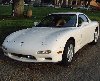
The FD weighs around 2800 lbs. If you remove 100 lbs, that is roughly 3.5% of the weight, so your car may accelerate roughly 3.5% faster. If you want to equate that to a HP gain, you could say that it would take 3.5% less HP to accelerate the car (as quickly as before) at the new weight.
I know that isn't perfect, but I think it answers his question.
If you truly are, as your name implies a "fatman", losing some of your weight will have the same effect as removing it from the car.
The FD weighs around 2800 lbs. If you remove 100 lbs, that is roughly 3.5% of the weight, so your car may accelerate roughly 3.5% faster. If you want to equate that to a HP gain, you could say that it would take 3.5% less HP to accelerate the car (as quickly as before) at the new weight.
I know that isn't perfect, but I think it answers his question.
If you truly are, as your name implies a "fatman", losing some of your weight will have the same effect as removing it from the car.
Last edited by adam c; Jul 23, 2004 at 05:33 PM.
Lives on the Forum
Joined: Feb 2001
Posts: 9,617
Likes: 8
From: Dallas
Originally Posted by adam c
If you remove 100 lbs, that is roughly 3.5% of the weight, so your car may accelerate roughly 3.5% faster.
All cars no matter what the power have the highest rate of acceleration at slower speeds. Pick any gear you want (keeping the car within its power band obviously) and accelerate from 30-50 mph and then do the same from 60-80 mph. You'll always do the 30-50 quicker even though the change in speed is 20 mph in both cases.
Originally Posted by DamonB
Not any more accurate than anything else. Doesn't take into account initial speed, momentum or drag.........


