


three rotor build.costs and other questions!


Thread Starter
Junior Member
Joined: Jan 2017
Posts: 5
Likes: 0
From: North Carolina chaple hill
three rotor build.costs and other questions!
Hello, i would like to see how much my "Dream rx7" would cost to build and obtain.I would use this for mostly street/Drag racing, probably nothing around a track. Im pretty new to the rotary engine and would wonder what the end price for my rx7 would be.I think it would be easier to just type this out in a bullet format
- Three rotor cosmo engine
- tri plated clutch
- injectors+injector racks/ rails (forgot what they are called)
- turbo that would produce anywhere between 30-35 psi
- good street tires
- radiator
- rear axles
- o-rings
- spark plugs
- throttle body

Rotorhead

Joined: Feb 2001
Posts: 9,136
Likes: 39
From: Charlottesville, Virginia, USA
The base cost for a 20B conversion is about $35,000 not including the car, but would include the EMS, ignition, fuel system, tuning, and everything else needed just to get it running. With 30-35psi boost you will need to completely replace the transmission, driveshaft, and rear axle, and will need a lot of chassis stiffening, roll cage, and lots of safety equipment. All together you are probably looking at around $80,000 or so at minimum, probably more like $150,000 with premium parts, paint, and body work. This car will not be very streetable.
Contact these guys for a more accurate quote:
DEFINED AUTOWORKS | Service Repair Upgrades | Performance for Mazda RX7 | RX-7 | RX8
Contact these guys for a more accurate quote:
DEFINED AUTOWORKS | Service Repair Upgrades | Performance for Mazda RX7 | RX-7 | RX8

i think he missed on the point that the factory block can't handle that kind of boost. in fact the 20B is a weaker engine due to torsional twisting than the 2 rotors are. fact is they break more easily and reinforcing them requires external modifications to support the internal ones.
the lower the boost the better, when still managing to keep your goals somewhat straight. going with a bigger turbo allows you to make bigger numbers with less pressure but at the cost of spool.
the lower the boost the better, when still managing to keep your goals somewhat straight. going with a bigger turbo allows you to make bigger numbers with less pressure but at the cost of spool.
Last edited by RotaryEvolution; Mar 1, 2017 at 06:53 PM.



Better buy stock in transmissions, diffs, driveshafts, axles etc. Why not build a 2 rotor with a big turbo first and see if you need more? I wouldn't worry about emissions. Pre '96 there is no emissions test in NC. Safety inspection only.
Rotorhead
Joined: Feb 2001
Posts: 9,136
Likes: 39
From: Charlottesville, Virginia, USA
Also, I'm not sure why you are so obsessed with boost. Are you having a contest with a friend to see whose engine has the most boost or something? It would be a lot cheaper to see who can have the highest tire pressure.
Oh, I just remembered that Banzai Racing also does 20B conversions, so here is their contact info:
Banzai Racing Home Page

Originally Posted by squirrelflight9
Hello, i would like to see how much my "Dream rx7" would cost to build and obtain.I would use this for mostly street/Drag racing, probably nothing around a track. Im pretty new to the rotary engine and would wonder what the end price for my rx7 would be.I think it would be easier to just type this out in a bullet format
- Three rotor cosmo engine
- tri plated clutch
- injectors+injector racks/ rails (forgot what they are called)
- turbo that would produce anywhere between 30-35 psi
- good street tires
- radiator
- rear axles
- o-rings
- spark plugs
- throttle body
If you have the kind of cash already mentioned, you won't be building this car, but commissioning it, in which case the shop you decide to hire will be making nearly all these decisions for you.
Trending Topics
Thread Starter
Junior Member
Joined: Jan 2017
Posts: 5
Likes: 0
From: North Carolina chaple hill
i think he missed on the point that the factory block can't handle that kind of boost. in fact the 20B is a weaker engine due to torsional twisting than the 2 rotors are. fact is they break more easily and reinforcing them requires external modifications to support the internal ones.
the lower the boost the better, when still managing to keep your goals somewhat straight. going with a bigger turbo allows you to make bigger numbers with less pressure but at the cost of spool.
the lower the boost the better, when still managing to keep your goals somewhat straight. going with a bigger turbo allows you to make bigger numbers with less pressure but at the cost of spool.


the typical method used is pinning. simply put, you machine the tension bolt holes around the perimeter of the housing and use extra dowels or use thicker bolts or studs. it's a lot of precision machine work and can be costly. the hardware can be costly, too.
it essentially decreases the engine's tendency to twist under load.
it essentially decreases the engine's tendency to twist under load.
Thread Starter
Junior Member
Joined: Jan 2017
Posts: 5
Likes: 0
From: North Carolina chaple hill
The more power, the more it will cost and the more difficult it will be to drive on the street. It depends on what you are willing to give up for a given amount of performance, and only you can make that choice. We all have our own concept of what is worth the money and what is worth the trouble.
Also, I'm not sure why you are so obsessed with boost. Are you having a contest with a friend to see whose engine has the most boost or something? It would be a lot cheaper to see who can have the highest tire pressure.
Oh, I just remembered that Banzai Racing also does 20B conversions, so here is their contact info:
Banzai Racing Home Page
Also, I'm not sure why you are so obsessed with boost. Are you having a contest with a friend to see whose engine has the most boost or something? It would be a lot cheaper to see who can have the highest tire pressure.
Oh, I just remembered that Banzai Racing also does 20B conversions, so here is their contact info:
Banzai Racing Home Page
Thread Starter
Junior Member
Joined: Jan 2017
Posts: 5
Likes: 0
From: North Carolina chaple hill
If you're new to the rotary, how is this your dream RX7?....it sounds like you're listing a bunch of "buzz word" items without much rhyme or reason. I'd suggest spending more time reading and learning so you can have a better idea of what you want, what is possible, and what it's going to take to get there.
If you have the kind of cash already mentioned, you won't be building this car, but commissioning it, in which case the shop you decide to hire will be making nearly all these decisions for you.
If you have the kind of cash already mentioned, you won't be building this car, but commissioning it, in which case the shop you decide to hire will be making nearly all these decisions for you.
Last edited by squirrelflight9; Mar 2, 2017 at 05:43 PM.
the typical method used is pinning. simply put, you machine the tension bolt holes around the perimeter of the housing and use extra dowels or use thicker bolts or studs. it's a lot of precision machine work and can be costly. the hardware can be costly, too.
it essentially decreases the engine's tendency to twist under load.
it essentially decreases the engine's tendency to twist under load.
OP, the potential with the 3 rotor is only marginally better than the 2 rotors but requires a lot more preparation work in order to keep it in one piece.
displacement is not always a replacement. parts cost for the 3 rotor engines can be up to 10 times that of a 2 rotor, if you can find the parts. one could buy 3 brand new REW engines for the price of one rebuilt used 20B.
Last edited by RotaryEvolution; Mar 2, 2017 at 06:05 PM.
Jonathan (Goopy) and i spoke about it a few years back and that pretty much made up my mind. previous to that i had gone back and forth about pinning and could never really commit to it - even though i get the premise. when i found out that there are larger bolts and studs out there, it was much more appealing to me.
yeah, back when i started pinning it was more an experiment for us to make big numbers but it wasn't ideal. when you tore apart the engines you could see that the pins fit more sloppily into the block afterward and the pins were getting tweaked since they are hollow. add in that machining parts to match the already pinned set made it that much more difficult as the tolerances had to be exact and it just created an all around not ideal scenario.
i was seeing hairline cracks in the dowels, you start to really reconsider if something is a good idea. i haven't ever had any issues with oversize studding.
i was seeing hairline cracks in the dowels, you start to really reconsider if something is a good idea. i haven't ever had any issues with oversize studding.
Last edited by RotaryEvolution; Mar 2, 2017 at 10:15 PM.
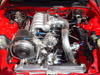
Here is my personal 20B build, with a mods list that you can add up and get yourself a ballpark. Banzai Racing 20B Conversion Suspension & Drivetrain Modifications

Hello, i would like to see how much my "Dream rx7" would cost to build and obtain.I would use this for mostly street/Drag racing, probably nothing around a track. Im pretty new to the rotary engine and would wonder what the end price for my rx7 would be.I think it would be easier to just type this out in a bullet format
- Three rotor cosmo engine
- tri plated clutch
- injectors+injector racks/ rails (forgot what they are called)
- turbo that would produce anywhere between 30-35 psi
- good street tires
- radiator
- rear axles
- o-rings
- spark plugs
- throttle body


If you're new to the rotary, how is this your dream RX7?....it sounds like you're listing a bunch of "buzz word" items without much rhyme or reason. I'd suggest spending more time reading and learning so you can have a better idea of what you want, what is possible, and what it's going to take to get there.
If you have the kind of cash already mentioned, you won't be building this car, but commissioning it, in which case the shop you decide to hire will be making nearly all these decisions for you.
If you have the kind of cash already mentioned, you won't be building this car, but commissioning it, in which case the shop you decide to hire will be making nearly all these decisions for you.
Now on to something more realistic. How much would it cost to build my dream 4x4 with a 26b?