


i want to push 380 to the wheels


i want to push 380 to the wheels
Is NA better with a turbo or the turbo 2 engine is better? or what performance could get that kind of power im still new on the rotary even tho i own 2, n own one of them for a 1 year and 5 months



Why a fascination with 380hp? Why not 379?
To start, about $5-10k to throw at it
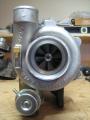
Big turbo & manifold
Standalone EMS
Better fuel pump
Bigger injectors
Aftermarket FPR
FMIC
Bigger wheels and tires
Odds and ends to make it work
To start, about $5-10k to throw at it
Big turbo & manifold
Standalone EMS
Better fuel pump
Bigger injectors
Aftermarket FPR
FMIC
Bigger wheels and tires
Odds and ends to make it work


Basically I'm asking if it's better to turbo the NA engine or the Turbo 2 engine, some shop around here told me it's better to boost the NA motor instead bc it runs a lower compression ratio. I was under the impression that NA engines run a higher compression ratio than a turbo'ed one, or does rotary engines have an exception.
Trending Topics


Basically I'm asking if it's better to turbo the NA engine or the Turbo 2 engine, some shop around here told me it's better to boost the NA motor instead bc it runs a lower compression ratio. I was under the impression that NA engines run a higher compression ratio than a turbo'ed one, or does rotary engines have an exception.
The compression difference doesn't dictate the redline. S4 TII and N/A were 7k redline, S5 TII was 7k redline, and S5 n/a was 8k redline. That is probably due to differences in intake design.



Joined: Dec 1999
Posts: 7,855
Likes: 517
From: Behind a workbench, repairing FC Electronics.
S4 and earlier rotors are cast iron. (Note the sandy, grainy texture of the surface of the rotor surface as well as the wide variances in weight.
S5 rotors are cast, then machined. (Note the milling lines in the dished area of the rotors.)
The S5 rotors have much better tolerances and therefore more predictable clearance between the rotor and housing. They are also more consistent in weight, and therefore more balanced. This results in less strain on bearings and less lateral loading on the eccentric shaft.
With S5 rotors, it's just a little closer to having a blueprinted and balanced engine.
This is what makes it more tolerant of the higher RPMs.
However, it should be noted that the Apex seals will chatter against the rotor housings at as low as 7000-7500 RPM... While short stints at this speed are okay, sustaining it will cause excess flaking of your chromium plating and low compression. Solution would be to use carbon, ceramic, or other composite apex seals. (However these are light weight and will not seal as well, resulting in low compression at low engine speeds. They also wear out faster. Pick your poison)



I disagree.
I say again that the S5 TII was a 7k redline vs the n/a 8k redline. If what you say is true, why the 1 k difference using the same rotors (of course the compression difference)? Plus the S5 n/a has the VDI system which shows power through the whole range of the engine.
I am willing to bet that the S5 TII intake isn't designed for flow over 7k, making a higher redline useless. I do know that the S5 TII intake is starting to restrict my air flow at 4k rpm or so when run as an N/A.
I say again that the S5 TII was a 7k redline vs the n/a 8k redline. If what you say is true, why the 1 k difference using the same rotors (of course the compression difference)? Plus the S5 n/a has the VDI system which shows power through the whole range of the engine.
I am willing to bet that the S5 TII intake isn't designed for flow over 7k, making a higher redline useless. I do know that the S5 TII intake is starting to restrict my air flow at 4k rpm or so when run as an N/A.
Joined: Dec 1999
Posts: 7,855
Likes: 517
From: Behind a workbench, repairing FC Electronics.
I disagree.
I say again that the S5 TII was a 7k redline vs the n/a 8k redline. If what you say is true, why the 1 k difference using the same rotors (of course the compression difference)? Plus the S5 n/a has the VDI system which shows power through the whole range of the engine.
I am willing to bet that the S5 TII intake isn't designed for flow over 7k, making a higher redline useless. I do know that the S5 TII intake is starting to restrict my air flow at 4k rpm or so when run as an N/A.
I say again that the S5 TII was a 7k redline vs the n/a 8k redline. If what you say is true, why the 1 k difference using the same rotors (of course the compression difference)? Plus the S5 n/a has the VDI system which shows power through the whole range of the engine.
I am willing to bet that the S5 TII intake isn't designed for flow over 7k, making a higher redline useless. I do know that the S5 TII intake is starting to restrict my air flow at 4k rpm or so when run as an N/A.
Perhaps the turbo redline was lowered to protect the turbocharger?

Junior Member

Joined: Apr 2005
Posts: 12
Likes: 0
From: queens, ny
Redline indicates mechanical limits of the engine. Passing them would damage the engine. The intake has nothing to do with this.
S4 and earlier rotors are cast iron. (Note the sandy, grainy texture of the surface of the rotor surface as well as the wide variances in weight.
S5 rotors are cast, then machined. (Note the milling lines in the dished area of the rotors.)
The S5 rotors have much better tolerances and therefore more predictable clearance between the rotor and housing. They are also more consistent in weight, and therefore more balanced. This results in less strain on bearings and less lateral loading on the eccentric shaft.
With S5 rotors, it's just a little closer to having a blueprinted and balanced engine.
This is what makes it more tolerant of the higher RPMs.
However, it should be noted that the Apex seals will chatter against the rotor housings at as low as 7000-7500 RPM... While short stints at this speed are okay, sustaining it will cause excess flaking of your chromium plating and low compression. Solution would be to use carbon, ceramic, or other composite apex seals. (However these are light weight and will not seal as well, resulting in low compression at low engine speeds. They also wear out faster. Pick your poison)
S4 and earlier rotors are cast iron. (Note the sandy, grainy texture of the surface of the rotor surface as well as the wide variances in weight.
S5 rotors are cast, then machined. (Note the milling lines in the dished area of the rotors.)
The S5 rotors have much better tolerances and therefore more predictable clearance between the rotor and housing. They are also more consistent in weight, and therefore more balanced. This results in less strain on bearings and less lateral loading on the eccentric shaft.
With S5 rotors, it's just a little closer to having a blueprinted and balanced engine.
This is what makes it more tolerant of the higher RPMs.
However, it should be noted that the Apex seals will chatter against the rotor housings at as low as 7000-7500 RPM... While short stints at this speed are okay, sustaining it will cause excess flaking of your chromium plating and low compression. Solution would be to use carbon, ceramic, or other composite apex seals. (However these are light weight and will not seal as well, resulting in low compression at low engine speeds. They also wear out faster. Pick your poison)


Thread
Thread Starter
Forum
Replies
Last Post
diabolical1
2nd Generation Specific (1986-1992)
30
Jan 30, 2016 05:50 AM
Jose A.
3rd Generation Specific (1993-2002)
19
Aug 27, 2015 11:41 PM