


Sub install location / other help


Thread Starter
Joined: Aug 2007
Posts: 461
Likes: 0
From: Sammamish, wa
Sub install location / other help
I recently upgraded my stereo and speakers with an amp in my car and my next move is on to a subwoofer, but I don't really know what to get or where to put it.
I'm not looking to shatter glass or break the bank, but I do want something that can provide good bass for mostly rock/metal while driving down the highway. Any suggestions as to how many watts I should be looking at or what brands?
I also am planning on fabbing my own box out of MDF and fiberglass but not sure where to put it. I know I don't want to put it in one of the bins; was thinking in a back corner, but aimed where? At the glass?
Any input would be great Oh, and it's for an FC, using FD alt and an optima redtop.
I'm not looking to shatter glass or break the bank, but I do want something that can provide good bass for mostly rock/metal while driving down the highway. Any suggestions as to how many watts I should be looking at or what brands?
I also am planning on fabbing my own box out of MDF and fiberglass but not sure where to put it. I know I don't want to put it in one of the bins; was thinking in a back corner, but aimed where? At the glass?
Any input would be great
Oh, and it's for an FC, using FD alt and an optima redtop.

Let me see...
Yes, I would design the box to be aimed toward the rear. Ive had setups front firing and up-firing, neither of which sounded right to me.
I also am a metal/rock listener. IMO a dual 8" setup works best for the type of bass in rock. a single 10" will gain you lower notes, but will miss out on faster, tighter bass. I have an FD, but I believe you have more space to do a box than i did. You could do 2-10's, but that may drown out the rest of your setup depending on what you have. Making your box to air space specs is crucial. So space/size may be the deciding factor there.
Hard to say on wattage, because it depends on what subs you go with, which u dont know yet either. A JL Audio sub may want 500W RMS vs a Kicker that takes 150W. I can throw out all kinds of brands of subs, but it comes down to personal preference really. I think Kicker Solobarics can get loud, but sound like crap where a JL sub has awesome sound quality to go with the output. But you pay for it. The possibilites are endless. Best i can say is go to your local car audio shops and listen to their stuff. Then go and buy the stuff a lot cheaper from the net when you find what you like. woofersetc.com has deals all the time and every brand under the sun when you want to price things out. I just got a Soundstream amp with bass **** to replace my old Fosgate amp. It is 100W more powerful and the **** makes life easier. Was $110 plus shipping. Great price for an amp rated at 400W constant power. For my 2-8's its perfect. Pick your subs first, then go find an amp to run them. Happy shopping!
Yes, I would design the box to be aimed toward the rear. Ive had setups front firing and up-firing, neither of which sounded right to me.
I also am a metal/rock listener. IMO a dual 8" setup works best for the type of bass in rock. a single 10" will gain you lower notes, but will miss out on faster, tighter bass. I have an FD, but I believe you have more space to do a box than i did. You could do 2-10's, but that may drown out the rest of your setup depending on what you have. Making your box to air space specs is crucial. So space/size may be the deciding factor there.
Hard to say on wattage, because it depends on what subs you go with, which u dont know yet either. A JL Audio sub may want 500W RMS vs a Kicker that takes 150W. I can throw out all kinds of brands of subs, but it comes down to personal preference really. I think Kicker Solobarics can get loud, but sound like crap where a JL sub has awesome sound quality to go with the output. But you pay for it. The possibilites are endless. Best i can say is go to your local car audio shops and listen to their stuff. Then go and buy the stuff a lot cheaper from the net when you find what you like. woofersetc.com has deals all the time and every brand under the sun when you want to price things out. I just got a Soundstream amp with bass **** to replace my old Fosgate amp. It is 100W more powerful and the **** makes life easier. Was $110 plus shipping. Great price for an amp rated at 400W constant power. For my 2-8's its perfect. Pick your subs first, then go find an amp to run them. Happy shopping!
Thread Starter
Joined: Aug 2007
Posts: 461
Likes: 0
From: Sammamish, wa
so two 8's perhaps? I'm looking for sound quality over sound level, but i still want it to be loud enough to enjoy. Right now my speakers produce next to no bass, and i loooove bass in my metal.


3 8's sound clean as hell. and yes, there is nothin better than subbin some hardcore or metal.
2 quality 8's will be plenty loud when matched with a good amp. So when you are sub shopping, you want to look for SQ subs over SPL subs. Plenty to choose from. Maybe google Sq subs as a start and get an idea of price range and reviews to narrow it down. there are real hardcore audio heads that you will get plenty of feedback from.

Junior Member
Joined: Dec 2006
Posts: 10
Likes: 0
From: Hawaii
I have done my share of installs, right now my wife is rolling 30ft3 of box.. yes 12 12s. There are 3 deciding factors in a stereo: low price, small space, good sound... choose 2. Honestly rate these 3, and get a range of each, then go see a reputable install shop. If you come to them with an idea of these 3, atleast prioritizing them, it will show them you are serious and not just asking questions to kill time until a movie starts. Even if you don't buy their product they still want you to be happy if you use their brand. Your system sounding good will show others that the brand they sell sounds good.
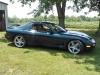
I was rolling a single Kicker 10" L7 in my FD, but the 2 ohm load toasted my alternator so I'm going to 2 Kicker 10" L7s wired for 4 ohms. Half the current but twice the surface area so I should be about the same volume. Recommended enclosure is .88-1.0 cu. ft. for a sealed box.
Trending Topics
Thread Starter
Joined: Aug 2007
Posts: 461
Likes: 0
From: Sammamish, wa
I was rolling a single Kicker 10" L7 in my FD, but the 2 ohm load toasted my alternator so I'm going to 2 Kicker 10" L7s wired for 4 ohms. Half the current but twice the surface area so I should be about the same volume. Recommended enclosure is .88-1.0 cu. ft. for a sealed box.
I've always been partial to 12's, but these Kicker are amazing. By using a square cone the cone area of the 10" is nearly identical to a round 12" but requires about half the enclosure space. Compare .66-1.0 cu ft for the 10 to .88-2.0 cu ft for the 12. The 12's will go a little deeper than the 10's but unless you are an extreme basshead I don't think you'd notice the difference.
You can easily wire at 2 Ohms and turn the gain or output down on the amplifier. Just want to clarify that being wired at 2 Ohms did not toast your alternator. Perhaps being wired at 2 Ohms and having your gains high on the amp did it. How you wire is up to you. At 4 ohms you will get about half the max output of the amp. An amp will last forever like this, but its exactly that, half of what its capable of. I dont see the difference if you are going to go from a single 10" wired at 2Ohms to now 2 wired at 4 Ohms. You may get the same output, but have now sacrificed more space and more money to get there. If you have an amp rated at 300W@ 2Ohms and 150W @ 4 Ohms, you now have 150W to 2 subs. thats 75W a piece. If you wired them at 2 ohms it would be 150W a piece, or stick to the single sub at 300W.
There are a lot of variables. Did you use a bass boost on the amp? Gains as I said before?
Not sure who said the 2ohm load fried your alternator. Throwing phrases like this around can be very misleading is all I can say. the fact it was wired at 2ohms did not do it alone. I run all my systems at 2 ohms to get the most out of my amps. they already over rate them as it is. Never had an alternator go out. Have drained plenty of batteries though.
There are a lot of variables. Did you use a bass boost on the amp? Gains as I said before?
Not sure who said the 2ohm load fried your alternator. Throwing phrases like this around can be very misleading is all I can say. the fact it was wired at 2ohms did not do it alone. I run all my systems at 2 ohms to get the most out of my amps. they already over rate them as it is. Never had an alternator go out. Have drained plenty of batteries though.
You can easily wire at 2 Ohms and turn the gain or output down on the amplifier. Just want to clarify that being wired at 2 Ohms did not toast your alternator. Perhaps being wired at 2 Ohms and having your gains high on the amp did it. How you wire is up to you. At 4 ohms you will get about half the max output of the amp. An amp will last forever like this, but its exactly that, half of what its capable of. I dont see the difference if you are going to go from a single 10" wired at 2Ohms to now 2 wired at 4 Ohms. You may get the same output, but have now sacrificed more space and more money to get there. If you have an amp rated at 300W@ 2Ohms and 150W @ 4 Ohms, you now have 150W to 2 subs. thats 75W a piece. If you wired them at 2 ohms it would be 150W a piece, or stick to the single sub at 300W.
There are a lot of variables. Did you use a bass boost on the amp? Gains as I said before?
Not sure who said the 2ohm load fried your alternator. Throwing phrases like this around can be very misleading is all I can say. the fact it was wired at 2ohms did not do it alone. I run all my systems at 2 ohms to get the most out of my amps. they already over rate them as it is. Never had an alternator go out. Have drained plenty of batteries though.
There are a lot of variables. Did you use a bass boost on the amp? Gains as I said before?
Not sure who said the 2ohm load fried your alternator. Throwing phrases like this around can be very misleading is all I can say. the fact it was wired at 2ohms did not do it alone. I run all my systems at 2 ohms to get the most out of my amps. they already over rate them as it is. Never had an alternator go out. Have drained plenty of batteries though.
Given the fact that I thoroughly tested the alternator before having it rebuilt I can say without a doubt the amount of current required by the car/stereo was more than the alternator could supply. I drove around with all electrical loads turned off for more than an hour and the voltage on my turbo timer was reading 14.1 - 14.4vdc. Turned on the headlights - still no problems after 20 minutes, but the voltage was down to 13.9vdc. Turned on the A/C - began feeling slight roughnesss in the way the car was running after about 10 minutes and the voltage was down to 13.6 vdc. Turned on the stereo - within about 3 minutes the car was running like crap and the voltage was down to 12.3 - 12.8vdc. Turned everything back off and within a couple minutes the car was running normal again and the voltage was back up to normal. This is concrete evidence that the alternator was being overloaded.
In addition, with the subs wired for 2 ohms I would draw in the neighborhood of 90 amps @ 14.4v for the stereo. The car requires about 65-70 amps if the A/C and headlights are on. Added together that is 145-150 amps. My stock alternator is rated at 100 amps. Trying to squeeze 140+ amps out of an alternator designed to provide 100 amps, even for a short period of time, will most assuredly damage or destroy the rectifier. With the subs wired for 4 ohms the current draw drops to around 60 amps for the stereo so with the alternator upgrade, the addition of the 20 farad capacitor and the increased load I should be well within the safe zone.
The amp, gain was set to nominal and no bass boost applied, but even if it was and that was what damaged the alternator it would be because that increased the current draw even more, so having the subs wired for 2 ohms is just as likely to have caused it as any gain or boost applied.
As for your theory on power in regards to 2 ohm vs 4 ohm, what you state is theoretically correct, but irrelevant in my situation. My concern is not for how many watts I am pushing, it is for the amount of current required to be generated by my alternator. According to Ohm's Law, doubling the load from 2 to 4 ohms causes a reduction in current by half. Granted it does decrease power by 50%, which equates to a 3db loss in sound pressure, but adding the 2nd sub results in a 3db gain in sound pressure because I effectively doubled the cone area of the subwoofer. Therefore the end result is my sound pressure, read volume, will be effectively the same as when I was running 2 ohms, but I'll be using half the current to do it. Some other added bonuses are an amp capable of running at 2 ohms, but running at 4 ohms will run cooler, cleaner and longer than the same amp running 2 ohms.
As for the increased cabinet size, the new cabinet is nearly the same size as the old cabinet. This is because the original cabinet was purposely built oversized. The additional cost was $0 because I already had the additional sub. As a matter of fact if this doesn't work out at 4 ohms I also have the subs to go 2 ohm with dual subs. Before I do that though you can bet I will take some precise current readings on a test bench to determine exactly how much load I will be putting on my alternator.

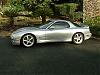
I build a 10" sub box into my storage compartment in the back on one side and teh amps on the other side, its great! i love that everything is hidden so no one has any idea that i have a sub and 2 amps until i play it, its impossible for someone to steal also!! and it pounds hard. ive got some pics if yourd like to try it.. personally its the best possible location in a fb or fc for subs.
Full Member

Joined: Dec 2008
Posts: 99
Likes: 0
From: hawaii
stereo most likely didnt kill the alt. ive done multiple systems where the amp draw well over drew the alt. output. to kill the alt with a stereo you have to:
have the car running slam the stereo well above the alt. output to the point it drains your battery then pulls from the alt. by then your voltage will be dropping where your protection should shut the amp off or clip the hell out of the amps power supply.
bypassing the amps protection would be the only way the stereo will kill the alt certanly.
have the car running slam the stereo well above the alt. output to the point it drains your battery then pulls from the alt. by then your voltage will be dropping where your protection should shut the amp off or clip the hell out of the amps power supply.
bypassing the amps protection would be the only way the stereo will kill the alt certanly.
While I cannot beyond doubt say that the stereo caused it, the evidence is pretty substantial that it did. I mean, since that is the only modification I have done that would increase the current draw and it happened not long after the stereo was installed. Up until then I had abolutely no problems. Coincidence? Maybe, but chances are it was the stereo.
Given the fact that I thoroughly tested the alternator before having it rebuilt I can say without a doubt the amount of current required by the car/stereo was more than the alternator could supply. I drove around with all electrical loads turned off for more than an hour and the voltage on my turbo timer was reading 14.1 - 14.4vdc. Turned on the headlights - still no problems after 20 minutes, but the voltage was down to 13.9vdc. Turned on the A/C - began feeling slight roughnesss in the way the car was running after about 10 minutes and the voltage was down to 13.6 vdc. Turned on the stereo - within about 3 minutes the car was running like crap and the voltage was down to 12.3 - 12.8vdc. Turned everything back off and within a couple minutes the car was running normal again and the voltage was back up to normal. This is concrete evidence that the alternator was being overloaded.
In addition, with the subs wired for 2 ohms I would draw in the neighborhood of 90 amps @ 14.4v for the stereo. The car requires about 65-70 amps if the A/C and headlights are on. Added together that is 145-150 amps. My stock alternator is rated at 100 amps. Trying to squeeze 140+ amps out of an alternator designed to provide 100 amps, even for a short period of time, will most assuredly damage or destroy the rectifier. With the subs wired for 4 ohms the current draw drops to around 60 amps for the stereo so with the alternator upgrade, the addition of the 20 farad capacitor and the increased load I should be well within the safe zone.
The amp, gain was set to nominal and no bass boost applied, but even if it was and that was what damaged the alternator it would be because that increased the current draw even more, so having the subs wired for 2 ohms is just as likely to have caused it as any gain or boost applied.
As for your theory on power in regards to 2 ohm vs 4 ohm, what you state is theoretically correct, but irrelevant in my situation. My concern is not for how many watts I am pushing, it is for the amount of current required to be generated by my alternator. According to Ohm's Law, doubling the load from 2 to 4 ohms causes a reduction in current by half. Granted it does decrease power by 50%, which equates to a 3db loss in sound pressure, but adding the 2nd sub results in a 3db gain in sound pressure because I effectively doubled the cone area of the subwoofer. Therefore the end result is my sound pressure, read volume, will be effectively the same as when I was running 2 ohms, but I'll be using half the current to do it. Some other added bonuses are an amp capable of running at 2 ohms, but running at 4 ohms will run cooler, cleaner and longer than the same amp running 2 ohms.
As for the increased cabinet size, the new cabinet is nearly the same size as the old cabinet. This is because the original cabinet was purposely built oversized. The additional cost was $0 because I already had the additional sub. As a matter of fact if this doesn't work out at 4 ohms I also have the subs to go 2 ohm with dual subs. Before I do that though you can bet I will take some precise current readings on a test bench to determine exactly how much load I will be putting on my alternator.
Given the fact that I thoroughly tested the alternator before having it rebuilt I can say without a doubt the amount of current required by the car/stereo was more than the alternator could supply. I drove around with all electrical loads turned off for more than an hour and the voltage on my turbo timer was reading 14.1 - 14.4vdc. Turned on the headlights - still no problems after 20 minutes, but the voltage was down to 13.9vdc. Turned on the A/C - began feeling slight roughnesss in the way the car was running after about 10 minutes and the voltage was down to 13.6 vdc. Turned on the stereo - within about 3 minutes the car was running like crap and the voltage was down to 12.3 - 12.8vdc. Turned everything back off and within a couple minutes the car was running normal again and the voltage was back up to normal. This is concrete evidence that the alternator was being overloaded.
In addition, with the subs wired for 2 ohms I would draw in the neighborhood of 90 amps @ 14.4v for the stereo. The car requires about 65-70 amps if the A/C and headlights are on. Added together that is 145-150 amps. My stock alternator is rated at 100 amps. Trying to squeeze 140+ amps out of an alternator designed to provide 100 amps, even for a short period of time, will most assuredly damage or destroy the rectifier. With the subs wired for 4 ohms the current draw drops to around 60 amps for the stereo so with the alternator upgrade, the addition of the 20 farad capacitor and the increased load I should be well within the safe zone.
The amp, gain was set to nominal and no bass boost applied, but even if it was and that was what damaged the alternator it would be because that increased the current draw even more, so having the subs wired for 2 ohms is just as likely to have caused it as any gain or boost applied.
As for your theory on power in regards to 2 ohm vs 4 ohm, what you state is theoretically correct, but irrelevant in my situation. My concern is not for how many watts I am pushing, it is for the amount of current required to be generated by my alternator. According to Ohm's Law, doubling the load from 2 to 4 ohms causes a reduction in current by half. Granted it does decrease power by 50%, which equates to a 3db loss in sound pressure, but adding the 2nd sub results in a 3db gain in sound pressure because I effectively doubled the cone area of the subwoofer. Therefore the end result is my sound pressure, read volume, will be effectively the same as when I was running 2 ohms, but I'll be using half the current to do it. Some other added bonuses are an amp capable of running at 2 ohms, but running at 4 ohms will run cooler, cleaner and longer than the same amp running 2 ohms.
As for the increased cabinet size, the new cabinet is nearly the same size as the old cabinet. This is because the original cabinet was purposely built oversized. The additional cost was $0 because I already had the additional sub. As a matter of fact if this doesn't work out at 4 ohms I also have the subs to go 2 ohm with dual subs. Before I do that though you can bet I will take some precise current readings on a test bench to determine exactly how much load I will be putting on my alternator.
Variables, thats what I said. I could sit and compare notes but I really dont even like the internet. Trying to save this guy some space and money. I would recommend a good mono amp rated at 2Ohms any day to run a good, efficient system.
Thread Starter
Joined: Aug 2007
Posts: 461
Likes: 0
From: Sammamish, wa
I'm a bit confused here. dblboinger, are you using the same amp? If so, I think you'll be drawing the same current from your alt. 900w is 900w, which is ~62amps at 14.4v, no matter the load. (I'm studying electrical engineering at school right now)
Anyways, I think I'm leaning towards 2 8" so i can run 1 in each back corner of my car. And it seems I'll get good response out of them for my favorite metal songs
Anyways, I think I'm leaning towards 2 8" so i can run 1 in each back corner of my car. And it seems I'll get good response out of them for my favorite metal songs

Savanna Rx-7


Joined: Jun 2004
Posts: 1,577
Likes: 12
From: yokosuka japan
too much mis info guys
points to consider:
how much power are you sending to the fronts? ever go to a concert...where does the music come from? not the rear...all musicians and music come from the front.
So invest in quality front speakers. (and a proper install) a good set of front speakers should run you at least 400 (retail) and will give you an amazing amount of bass. once you have that covered then you can look at how much power is needed to bring the sub level up to where it needs to be. This assumes prper cross over points, sounddeadning and solid MDF baffels for mounting.
next as mentioned above...cost, space, soundquality pick two and that will determine your subwoofer and amp.
do not scrimp on the power wireing. safety should be paramount. any shop that does no bring you up on the subject of safety and wireing should be avoided like syphalis carrying honch ho's .
Then look at accesories to make it all happy.. capacitors (help's your alternator live longer by smoothing out the spikes in power consumption)
dblboinger:
the fact that it was wired in 2 Ohms made absolutely no difference in the alternator going out. the amount of amperage/wattage used did. you could have done the same at 4 Ohms, or 8 ohms it makes absolutely no diff. your alternator was probably weak to start with.
If you want to avoid that look towards separate battery/capacitor banks (2-3 large caps in paralell they buffer the battery and alternator from the spikes and peaks that can damage them. it will not prevent you from blowing the alternator from straight out abuse, but it will protect it from the occasional bit of stupidity.
the other options are re-wound high output alternators. beware of any alts that are re-wired for more than a 35-40% upgrade though as they are susceptible to thermal overloading, which is already a problem in the rotary world.
things to remember are that stereo matching and tuning can be as involved as tuning your ecu. I have done both though only the stereo work was as a paid professional.
kenn
how much power are you sending to the fronts? ever go to a concert...where does the music come from? not the rear...all musicians and music come from the front.
So invest in quality front speakers. (and a proper install) a good set of front speakers should run you at least 400 (retail) and will give you an amazing amount of bass. once you have that covered then you can look at how much power is needed to bring the sub level up to where it needs to be. This assumes prper cross over points, sounddeadning and solid MDF baffels for mounting.
next as mentioned above...cost, space, soundquality pick two and that will determine your subwoofer and amp.
do not scrimp on the power wireing. safety should be paramount. any shop that does no bring you up on the subject of safety and wireing should be avoided like syphalis carrying honch ho's .
Then look at accesories to make it all happy.. capacitors (help's your alternator live longer by smoothing out the spikes in power consumption)
dblboinger:
the fact that it was wired in 2 Ohms made absolutely no difference in the alternator going out. the amount of amperage/wattage used did. you could have done the same at 4 Ohms, or 8 ohms it makes absolutely no diff. your alternator was probably weak to start with.
If you want to avoid that look towards separate battery/capacitor banks (2-3 large caps in paralell they buffer the battery and alternator from the spikes and peaks that can damage them. it will not prevent you from blowing the alternator from straight out abuse, but it will protect it from the occasional bit of stupidity.
the other options are re-wound high output alternators. beware of any alts that are re-wired for more than a 35-40% upgrade though as they are susceptible to thermal overloading, which is already a problem in the rotary world.
things to remember are that stereo matching and tuning can be as involved as tuning your ecu. I have done both though only the stereo work was as a paid professional.
kenn
Last edited by kenn_chan; Sep 20, 2009 at 04:03 PM.
Since the effiiciency of the amp also doesn't change a decrease in output current results in a reduction in input current to the same magnitude. So where I was drawing around 30A (24a output current x amp efficiency of say 80%) now I will be drawing around 15A. I've been working in electronics and car audio for 30+ years so I think I know what I'm talking about.
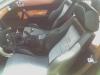
I got an fc I this was my set up a jl 8" in a kicker k8 box ran by a cerwin vega 300xl the bass was clean loud inside... but it was very subtle outside it kicked ***... then I had 2 inverted 6.5 mid bass drivers in the shock towers ran by an auto tech 4 ch 50.4 I didn't think it was all that loud cuz I do car audio for a living but my nieghbor came and told me it was way to loud and to turn it down... the dome of the glass and the hatch echos all the sound..
points to consider:
how much power are you sending to the fronts? ever go to a concert...where does the music come from? not the rear...all musicians and music come from the front.
So invest in quality front speakers. (and a proper install) a good set of front speakers should run you at least 400 (retail) and will give you an amazing amount of bass. once you have that covered then you can look at how much power is needed to bring the sub level up to where it needs to be. This assumes prper cross over points, sounddeadning and solid MDF baffels for mounting.
next as mentioned above...cost, space, soundquality pick two and that will determine your subwoofer and amp.
do not scrimp on the power wireing. safety should be paramount. any shop that does no bring you up on the subject of safety and wireing should be avoided like syphalis carrying honch ho's .
Then look at accesories to make it all happy.. capacitors (help's your alternator live longer by smoothing out the spikes in power consumption)
dblboinger:
the fact that it was wired in 2 Ohms made absolutely no difference in the alternator going out. the amount of amperage/wattage used did. you could have done the same at 4 Ohms, or 8 ohms it makes absolutely no diff. your alternator was probably weak to start with.
If you want to avoid that look towards separate battery/capacitor banks (2-3 large caps in paralell they buffer the battery and alternator from the spikes and peaks that can damage them. it will not prevent you from blowing the alternator from straight out abuse, but it will protect it from the occasional bit of stupidity.
the other options are re-wound high output alternators. beware of any alts that are re-wired for more than a 35-40% upgrade though as they are susceptible to thermal overloading, which is already a problem in the rotary world.
things to remember are that stereo matching and tuning can be as involved as tuning your ecu. I have done both though only the stereo work was as a paid professional.
kenn
how much power are you sending to the fronts? ever go to a concert...where does the music come from? not the rear...all musicians and music come from the front.
So invest in quality front speakers. (and a proper install) a good set of front speakers should run you at least 400 (retail) and will give you an amazing amount of bass. once you have that covered then you can look at how much power is needed to bring the sub level up to where it needs to be. This assumes prper cross over points, sounddeadning and solid MDF baffels for mounting.
next as mentioned above...cost, space, soundquality pick two and that will determine your subwoofer and amp.
do not scrimp on the power wireing. safety should be paramount. any shop that does no bring you up on the subject of safety and wireing should be avoided like syphalis carrying honch ho's .
Then look at accesories to make it all happy.. capacitors (help's your alternator live longer by smoothing out the spikes in power consumption)
dblboinger:
the fact that it was wired in 2 Ohms made absolutely no difference in the alternator going out. the amount of amperage/wattage used did. you could have done the same at 4 Ohms, or 8 ohms it makes absolutely no diff. your alternator was probably weak to start with.
If you want to avoid that look towards separate battery/capacitor banks (2-3 large caps in paralell they buffer the battery and alternator from the spikes and peaks that can damage them. it will not prevent you from blowing the alternator from straight out abuse, but it will protect it from the occasional bit of stupidity.
the other options are re-wound high output alternators. beware of any alts that are re-wired for more than a 35-40% upgrade though as they are susceptible to thermal overloading, which is already a problem in the rotary world.
things to remember are that stereo matching and tuning can be as involved as tuning your ecu. I have done both though only the stereo work was as a paid professional.
kenn
Kenn....I'm running 90w/chan to a $700 pair of Focal 6.5 components in the front around 60w/chan to a set of Focal 6.5 coaxes for rear fill.
My power cable is 2 gauge from the alternator to the stock fuse box under the hood. Since my battery is in the storage bin I ran 1/0 gauge via a battery cut-out and Tsunami 200A fuse to the Optima Yellow battery. Then 1/0 from the battery to the Tsunami 20farad cap and 4 gauge to each amp input. Most say that is overkill, but my opinion is better too big than too small. No cable loss for this guy.
My stock 100A alternator was rewound for 148A verified on a test bench at 2800rpm.
My amp is an Alpine MRP-M1000 pushing 2 Kicker S10L74's wired in series/parallel to present a 4 ohm load. The enclosure is made from 3/4" mdf (only because I couldn't find any 1"). My front amp is an Alpine MRP-F550 pushing the aforementioned speaker arrangement, which are all 4 ohms. Gain is set near nominal and no bass boost is added. My standpoint is if you need to use bass boost then you didn't do something right.
If you read my last response to Scrims you will see how I show that it definitely could be the amount of current that the stereo was drawing that damaged my alternator. To even hint that the current drawn by the amps will not decrease by going to a 4 ohm load is simply wrong, as proved by Ohms' Law. If you read back a few entries you will see that I also stated nothing was definite, but by the results of my tests I proved that the stereo was the single biggest current draw I had. That coupled to the fact that the problem didn't occur until after the stereo was installed shows it is the most likely cause. I will succumb to the fact that the 2 ohm sub was not the ONLY problem, but it definitely was a big contributor and to say it "had absolutely nothing to do with it" is simply absurd. Maybe my alternator was weak, that I'll never know. My approach now is to eliminate everything that could have contributed to the failure. Bigger alternator, a good stiffening cap and a smaller load should all combine to give me a very reliable system.
Thread Starter
Joined: Aug 2007
Posts: 461
Likes: 0
From: Sammamish, wa
If you are studying electronics you should be aware of Ohm's law, which states that E=IxR. E or voltage pk-pk of an amplifier is a design function and will never change for that amplifier. That being said, if you double the load resistance from 2 ohms to 4 ohms the current will be cut in half. Since power is a function of resistance and current (I squared times R), or voltage and current (E x I) or voltage and resistance ( E squared over R). Whatever formula you chose if E stays constant and resistance is doubled you will find you get half as much power. Allow me to give an example: Amplifier voltage = 48v & load resistance = 2 ohms. Current will be 24 amps (48v/2ohms) and power will be 1152 watts (24Ax24Ax2ohms). Now use that same amp and make load resistance 4 ohms. Current will be 12 amps (48v/4ohms) and power will be 576w (12Ax12Ax4ohms). Exactly half what it was at 2 ohms.
Since the effiiciency of the amp also doesn't change a decrease in output current results in a reduction in input current to the same magnitude. So where I was drawing around 30A (24a output current x amp efficiency of say 80%) now I will be drawing around 15A. I've been working in electronics and car audio for 30+ years so I think I know what I'm talking about.
Since the effiiciency of the amp also doesn't change a decrease in output current results in a reduction in input current to the same magnitude. So where I was drawing around 30A (24a output current x amp efficiency of say 80%) now I will be drawing around 15A. I've been working in electronics and car audio for 30+ years so I think I know what I'm talking about.
For example. Your amp supplies 1000watts to one 2-ohm sub (that one sub gets all 1000w). You wire another 2-ohm sub in series, resulting in 4ohms, now your amp is only supplying 500watts TOTAL. Each sub will only see 250watts.
Now, what each sub does with this power it recieves I do not know. I'm not a speaker person. If that somehow turns in the same output, so be it. I'm just saying what the speakers will see.
If you want to argue it more, i suggest you start another thread, this one was started to discuss a decent priced setup that will fill nicely for rock/metal type music, and the best place to install it for best sound.
Granted it does decrease power by 50%, which equates to a 3db loss in sound pressure, but adding the 2nd sub results in a 3db gain in sound pressure because I effectively doubled the cone area of the subwoofer. Therefore the end result is my sound pressure, read volume, will be effectively the same as when I was running 2 ohms, but I'll be using half the current to do it.
And the answer is....In the Speaker Design Cookbook, Vance Dickason states "any 2 drivers wired in phase, regardless of the electrical connections, will increase power sensitivity by 3db over a single driver. Therefore a series connected pair, for the same volume setting, yields identical SPL of a single driver" it also states if I wired them all in parallel I would see a 6db gain in SPL, but then I'd be down to 1 ohm so tha makes perfect sense.
Thread Starter
Joined: Aug 2007
Posts: 461
Likes: 0
From: Sammamish, wa
And the answer is....In the Speaker Design Cookbook, Vance Dickason states "any 2 drivers wired in phase, regardless of the electrical connections, will increase power sensitivity by 3db over a single driver. Therefore a series connected pair, for the same volume setting, yields identical SPL of a single driver" it also states if I wired them all in parallel I would see a 6db gain in SPL, but then I'd be down to 1 ohm so tha makes perfect sense.
Anyways, I'm still looking at 2 8" subs. Thinking either JL audio or Fosgate? maybe? Not looking to win car audio competitions or anything and i prefer SQ over SPL. Space isn't a big bother to me.
Full Member
Joined: Dec 2008
Posts: 99
Likes: 0
From: hawaii
you guys are way to **** about this small system. if you killed your alt with such a small amp and blame it on the stereo your retarded.
yes you get 3db gain by adding another driver at the same impedance load. every time you double your drivers you gain 3. so 1 to 2 gain 3, 2 to 4 gain 3 more.
you can also gain 3 db by doubling power to the same driver.
porting also is another variable.
this rule works well up to 150spl after that its common to only gain 1 flowing the same rules.
in my sound car ive ran over 500amp draw off a civic stock alt and never killed the alt. as much as i wanted to so i could get a new one. ive done it to lots and lots of cars.
because loading more subs in a rx7 throws off weight i went for big power over big box and more subs.
if you want your cake and eat it too get a single 8" dd with a 400rms amp.
yes you get 3db gain by adding another driver at the same impedance load. every time you double your drivers you gain 3. so 1 to 2 gain 3, 2 to 4 gain 3 more.
you can also gain 3 db by doubling power to the same driver.
porting also is another variable.
this rule works well up to 150spl after that its common to only gain 1 flowing the same rules.
in my sound car ive ran over 500amp draw off a civic stock alt and never killed the alt. as much as i wanted to so i could get a new one. ive done it to lots and lots of cars.
because loading more subs in a rx7 throws off weight i went for big power over big box and more subs.
if you want your cake and eat it too get a single 8" dd with a 400rms amp.