When you click on links to various merchants on this site and make a purchase, this can result in this site earning a commission. Affiliate programs and affiliations include, but are not limited to, the eBay Partner Network.
No major updates on the FD (which is a GOOD thing) but I wanted to post that for the 3rd year in a row, I'll be participating in a track event with Racing for ALS to raise money towards ALS research. Last year a few of you were generous enough to donate to the cause. If anyone is feeling generous again, please consider donating. 100% of your donation is tax-deductible! I'm still on the fence between the FD or the Type R to run the event this year though! Here is a link to my fundraising page.
I pulled the wheel off and placed it on a somewhat flat surface (the cover of my rolling tool chest) and sure enough, it's warped. I'm debating if I should just take a hammer to it and try to flatten it out, even though it won't be perfect and try it out or just find a solid used one / FFE kit?
so i found out how to do this.
as usual i did it the easy way. i took the belt off because to change the turbo i need to take the air pump off....
i casually tossed the belt to the side. put car together and fire it up and the PFC is throwing CAS codes
sure enough i measure the CAS gap and its off (i had checked it a couple months ago looking for a misfire)
particularly the irotary.com link <wink wink, nudge nudge>
.
.
I just read the iRotary blog and frankly I'm quite annoyed. While the message that proper clearance is essential isn't up for debate, I have some issues with how things where stated and that in the end, the post was more self serving (e.g. look how good our seals are) vs being a just a useful piece of information to the RX7 community. I'm also annoyed that he used my thread to get some of the additional information or updates rather than consulting me directly, but it's internet, people can do what they want and for the most part say what they want.
But for those you who stumble upon this post, let me save you reading my mega build thread and provide some addition information that was left out or just incorrect:
When my 1st motor with iRotary seals blew and I spoke to the iRotary team, they were quick to say it wasn't their fault, which I can understand. When I told them who my builder was, they said they knew him, trusted him, and that it wasn't likely a builder issues.
So when the author says "after an extensive examination, the only unusual finding was an extremely abnormal rotor groove witness mark left on the sides of the apex seals as shown in Example 2. This was communicated to the owner of the engine, but this observation was dismissed as possibly just another lack of culpability by a manufacturer." -- THIS IS CRAP. Their first finger point was to blame my tuner and that was not a very cordial phone call between all parties. At NO point during this first tear down did they EVER mention this was an issue with the Rotor groove. If it was, I would have communicated this to my builder vs spending more money and going through engine rebuild #2 and #3. This perhaps is what bothers me the most. Yes, they said it wasn't their fault, but they never blamed the builder because of the prior relationship they with him. They simply said your tuner is the problem and repeatedly named dropped all the people who successfully ran their seals as if that somehow made me or my wallet feel better. When my tuner wouldn't provide his locked tune to them, they doubled down on blaming him.
I don't like the statement "Once again, this engine builder did not bother to check the condition of the rotor grooves or the clearance between the second set of new apex seals from a different brand and the rotor apex seal grooves." and "Neither the condition of the apex seal grooves in these rotors, nor the measurement of the clearance between the I-Rotary apex seals and their respective rotor apex seal grooves was evaluated before assembly of this engine."
These statements are not facts. They are assumptions. They have no idea what my builder did or didn't do during both engine 1 and 2 rebuild. Could this have happened? Yes. Do we know it did? No. They made assumptions that he was sloppy based on the inspection of the Rotor at the 3rd rebuild. We have no idea if the gap was so visible or pronounced during the first rebuild. Perhaps things were closer to spec when the iRotary seals went in and the first dyno run made them start to get our of spec? I don' t know, but neither do they. Bottom line is by the time we saw the rotor grooves out of spec, those rotors had seen 2 dyno sessions (one for each rebuild) and a track day. Any of those plus break in miles could have causes the rotor gap to get as bad as it was during the 3rd rebuild. We won't know for sure but the implication that the builder just didn't do it is an assumption, not a fact. In fact, Bryan was very adamant he checks the clearance and gap with any build.
He did not have the other seals from my 2nd rebuild to analyze nor does he have the latest compression numbers or information on my 3rd rebuild. For someone who is an engineer, it's just plain sloppy to post information from my post and make inferences about other brands of seals, without doing the same type of analysis on the 2nd set of seals or the ones currently in my engine. As someone who also went to college for engineering, my professors would have a field day if I came in with partial data to support a statement that my product was better than someone else's.
Lastly, writing the location of the builders/tuner involved in his post has ZERO relevance to the topic or message he's trying to convey. While he didn't call anyone out by name, the fact that his post got back to me and this community means anyone can go through my post and identify the parties involved. Unless someone is going to read this entire build thread, it's easy for people make assumptions about the quality of the work of the people involved. Should Bryan at Rotorsports Racing have caught this issue? Yes. However per my point above, we don't know the state of the rotor at the time of rebuild 1 or 2 or have any proof he purposely didn't measure the clearance. For all the shitty things you read about any number of businesses in the rotary world, in my 6 years of being involved in this community, I have maybe heard of 1 negative experience with Rotorsports Racing.
Now I've been really busy with my kids that driving the FD and updating my thread has largely fallen to the wayside but I will say this: I'm done chasing compression numbers. From talking to both Steve and Bryan, who both have extensive building and racing backgrounds, compression numbers aren't always the sole indicator of the health of an engine. My car starts hot and cold with no issues and pulls good vacuum at idle. My most recent compression numbers are:
Rotor1: 83 78 65
Rotor2: 70 72 66
Judging how well an engine seals when it's spinning at < 300 RPM vs when it's running at thousands of RPM where the spinning motion aids in forcing the seals outwards agains the housings to make a seal isn't exactly a perfect test. Long before compression testers were available to the masses, the logic of does it start hot, cold, and pull good vacuum at idle was how people builders and racers tested. What I do know is my car does all these things and did 2 days at the track and hasn't failed. Now, if my car struggles to start, then I'll take those numbers a lot more seriously as symptom but stressing out was just causing me to not enjoy driving the car. This is my philosophy but it doesn't have to be yours. What I do know is that I have properly clearance rotors, housing that were new for rebuild 2, and a tune that is quite conservative from a tuner who tunes 100's of cars a year. Why my numbers aren't where I expect them to be is still a big fricking mystery, but until it breaks, I'm not losing sleep over it any more.
BTW, if the author(s) of the iRotary post happen to be lurking here, feel free to contact me if you want to discuss anything I said above.
IMO better to know what's out there than to not know.
Dr. I seems like the jerk here, I agree with DJSeto that the blog post is a self-serving monologue without a solid factual basis. On the surface, to a prospective buyer, it can seem well informed but the truth it is is steered towards making others look bad instead of being an objective assessment.
It serves as a good reason for me to never use the products offered by him, the poor show of character is evident and is off putting.
never mind that other seals subsequently had issues in this engine as well. <poke >
.
i went and looked at every thread i could find with "warped seals" and invariably those threads had someone who said "same thing happened to me" so i looked at those too
(i should have just ended up with a list of links, and then you can go read for yourself, but i'm a plank, and didn't)
so apart from a few bad batches of seals, which happen with the aftermarket. sometimes they get recalled, sometimes not.
the failures are brand agnostic, there is no correlation with seal failure and seal brand, at all. or any other hardware really, ECU, plug choice, premix, none of that matters.
Second. the only real common ground amongst the seal failures is that its usually a complex build. typically its new engine, new ecu, new fuel system, new turbo etc.
its not always possible to figure out what the root cause is, but its often bad tune, incorrect assembly, or some combination. in just about every case, some detail gets sorted out, and the subsequent engine is fine.
third, if the seals job is to act as a "fuse" and "save" the engine in case there is something wrong, they are actually doing that.
fourth, this saving the housings thing isn't really the case, these aftermarket seals don't break and leave big gouges like the stock seals, but the really heavy wear on the housings often makes them unusable.
so in conclusion, the aftermarket seals seem like they do the intended job. the more complex the build, the more points of failure, and the more things need to be checked and verified
i went and looked at every thread i could find with "warped seals" and invariably those threads had someone who said "same thing happened to me" so i looked at those too
(i should have just ended up with a list of links, and then you can go read for yourself, but i'm a plank, and didn't)
so apart from a few bad batches of seals, which happen with the aftermarket. sometimes they get recalled, sometimes not.
the failures are brand agnostic, there is no correlation with seal failure and seal brand, at all. or any other hardware really, ECU, plug choice, premix, none of that matters.
Second. the only real common ground amongst the seal failures is that its usually a complex build. typically its new engine, new ecu, new fuel system, new turbo etc.
its not always possible to figure out what the root cause is, but its often bad tune, incorrect assembly, or some combination. in just about every case, some detail gets sorted out, and the subsequent engine is fine.
third, if the seals job is to act as a "fuse" and "save" the engine in case there is something wrong, they are actually doing that.
fourth, this saving the housings thing isn't really the case, these aftermarket seals don't break and leave big gouges like the stock seals, but the really heavy wear on the housings often makes them unusable.
so in conclusion, the aftermarket seals seem like they do the intended job. the more complex the build, the more points of failure, and the more things need to be checked and verified
This post might just have one of the largest length to insight ratios in the forum's history. 25+ years of debate and discussion on this forum about this car's most contentious topic and we suddenly get it all summarized in like 10 sentences lol
I couldn't help but be reminded of a certain pearl of wisdom imparted by Mick Jagger to Andy Warhol in 1969. See paragraph two, holds as true for rotary engines as it does for album jackets.
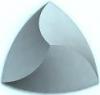
Not long after I got my FD, I came across a 3D printed model of a 13B. I thought it was pretty slick but 3D printers weren’t quite there and they required a ton of tinkering. Times have changed and I picked up a Bambu P1S 3D printer a few weeks ago. Behold my engine (even moves)!
On car build related note, the car did great at DGRR last month. No real issues other than the occasional issue where it didn’t always start up as quick as I thought. @Molotovman noted that it sounds like my starter was spinning a little slow. I bypassed the relayed in the driver footwell per his and others advice and now the car starts like a champ every time!
My AC is still being finicky but I tracked it down to my clutch in my AC compressor getting stuck. It ran all DGRR (700+ miles of driving) but stopped a few weeks back. I applied 12V direct to the compressor clutch and no engagement, but I did get sparks so I know it was conducting electricity. I loosened the belt and hand spun the compressor and hit it gently with a mallet in the front. Gave it power and it went click and is blowing cold again.
Not long after I got my FD, I came across a 3D printed model of a 13B. I thought it was pretty slick but 3D printers weren’t quite there and they required a ton of tinkering. Times have changed and I picked up a Bambu P1S 3D printer a few weeks ago. Behold my engine (even moves)!
Are you still liking your NOCO NLP30 battery?
Do you use a trickle charger with it?
Also, how did you mount/secure it?
sorry I didn’t respond sooner. I think rx7club emails are going to my spam. I love the battery. It’s mounted in my rear passenger bin. I use their noco charger with it.