


External Oiling Mod


Thread Starter
Full Member
Joined: Nov 2022
Posts: 57
Likes: 0
From: London, England
External Oiling Mod
Hey guys, first post and excited to be here!
Anyway, I was looking around the RX7 youtube scene and saw many people referencing an external oil mod as a requirement when solid doweling an engine. I understand the flow path of oil through the engine and just have a few questions:
Does this mod simply mean running oil lines from the oil filter housing to the front iron to provide flow when the solid dowels are installed?
Does anyone have a guide on how to do this or any links to kits that can be used for this mod?
Looking forward to the replies, thanks in advance!
Anyway, I was looking around the RX7 youtube scene and saw many people referencing an external oil mod as a requirement when solid doweling an engine. I understand the flow path of oil through the engine and just have a few questions:
Does this mod simply mean running oil lines from the oil filter housing to the front iron to provide flow when the solid dowels are installed?
Does anyone have a guide on how to do this or any links to kits that can be used for this mod?
Looking forward to the replies, thanks in advance!


First off if you are doing this you would need to be chasing MASSIVE horsepower or building a full track build. Is this the case for you?
This is a mod that's deep end exotic, you probably won't find much info on it. This is typically on full-out super high horsepower builds by a professional engine builder.
Dale
This is a mod that's deep end exotic, you probably won't find much info on it. This is typically on full-out super high horsepower builds by a professional engine builder.
Dale
Thread Starter
Full Member
Joined: Nov 2022
Posts: 57
Likes: 0
From: London, England
Thanks for the reply!
I used to own a 650 rwhp MK4 Supra and absolutely loved it to bits, took it to the track every month or so for a good 2 and a half years until I sold it for my FD. I am looking for pretty high HP numbers here as that car made such an impression on me and I love taking my cars to the track.
I used to own a 650 rwhp MK4 Supra and absolutely loved it to bits, took it to the track every month or so for a good 2 and a half years until I sold it for my FD. I am looking for pretty high HP numbers here as that car made such an impression on me and I love taking my cars to the track.


Thanks for the reply!
I used to own a 650 rwhp MK4 Supra and absolutely loved it to bits, took it to the track every month or so for a good 2 and a half years until I sold it for my FD. I am looking for pretty high HP numbers here as that car made such an impression on me and I love taking my cars to the track.
I used to own a 650 rwhp MK4 Supra and absolutely loved it to bits, took it to the track every month or so for a good 2 and a half years until I sold it for my FD. I am looking for pretty high HP numbers here as that car made such an impression on me and I love taking my cars to the track.


Joined: Mar 2001
Posts: 31,796
Likes: 3,210
From: https://www2.mazda.com/en/100th/
there is a plug at the passage that goes to the bearing, so its fairly straight forward. you can't use a tapered fitting, it will crack the iron.
back in the day the racers used to do this to add an extra oil feed to the front bearing, you might search for "loop line" also


essentially yes. the stock oil gallery is through the stock dowel, so if you remove that you need to add something...
there is a plug at the passage that goes to the bearing, so its fairly straight forward. you can't use a tapered fitting, it will crack the iron.
back in the day the racers used to do this to add an extra oil feed to the front bearing, you might search for "loop line" also
there is a plug at the passage that goes to the bearing, so its fairly straight forward. you can't use a tapered fitting, it will crack the iron.
back in the day the racers used to do this to add an extra oil feed to the front bearing, you might search for "loop line" also
You certainly can use a tapered fitting provided you are careful. That said I'd still prefer straight cut threads and a Dowty washer.
Trending Topics
Thread Starter
Full Member
Joined: Nov 2022
Posts: 57
Likes: 0
From: London, England
essentially yes. the stock oil gallery is through the stock dowel, so if you remove that you need to add something...
there is a plug at the passage that goes to the bearing, so its fairly straight forward. you can't use a tapered fitting, it will crack the iron.
back in the day the racers used to do this to add an extra oil feed to the front bearing, you might search for "loop line" also
there is a plug at the passage that goes to the bearing, so its fairly straight forward. you can't use a tapered fitting, it will crack the iron.
back in the day the racers used to do this to add an extra oil feed to the front bearing, you might search for "loop line" also

Joined: Oct 2001
Posts: 6,279
Likes: 724
From: Florence, Alabama
FYI, i am doing this mod on any new block i build that has a turbo larger than an 8374, or if it is an 8374/SXE62 and will be used close to max (500).
i am going to do a thread on block integrity shortly. the FD motor is a 13 inch torque arm completely levered against the rear iron. all of this twist is levered against a half inch section of the front dowel that nests in a weak cast iron cavity.
it is no accident that you can buy as many mid and rear irons as you want but you will be very lucky to find a front iron.
while it is possible to break a front iron from knock it is also possible to break it from twist.
enter one piece solid dowel pins and the attendant reroute of the oil line. easy peasy plus you eliminate the 90 degree- very unfriendly to flow- turns which are just drilled intersectional straights. you lose at least one and replace the other w a nice bend and a straight shot to the front bearing. win win.
while a proper stud kit adds clamp i have found that around the 500 area you still get interplate movement. Mazda added dowel pins for a reason. they provide radial resistance to the most significant forces within the engine.
OE thru bolts (9.37 mm) and normal 10 mm stud kits do not.
note the pic. the top bolt is 10 mm. no radial support here, the next is the OE thru bolt and the other is the dowel pin which does resist radial force.

here's a pic of one of the two solid dowels...

most of the above is a "why." you are asking about the "how." there are a couple of pics on the forum.
i am really really happy as to how i fixtured my setup and will be posting all the details. .
a few years ago i shared the view of many... that solid one piece dowels were for the 2% lunatic fringe and since my max power level is 600 and only briefly, i didn't need to go there. that was before i noticed a number of broken front irons. interestingly they all seem to happen in the high 5000 low 6000, around peak torque, which is by definition, peak twist. as the value of our cars/engines/parts/labor rises it makes increased sense to go the extra mile.
solid dowels probably not needed in the 400 sector but a good investment in the 500+ neighborhood.
i am going to do a thread on block integrity shortly. the FD motor is a 13 inch torque arm completely levered against the rear iron. all of this twist is levered against a half inch section of the front dowel that nests in a weak cast iron cavity.
it is no accident that you can buy as many mid and rear irons as you want but you will be very lucky to find a front iron.
while it is possible to break a front iron from knock it is also possible to break it from twist.
enter one piece solid dowel pins and the attendant reroute of the oil line. easy peasy plus you eliminate the 90 degree- very unfriendly to flow- turns which are just drilled intersectional straights. you lose at least one and replace the other w a nice bend and a straight shot to the front bearing. win win.
while a proper stud kit adds clamp i have found that around the 500 area you still get interplate movement. Mazda added dowel pins for a reason. they provide radial resistance to the most significant forces within the engine.
OE thru bolts (9.37 mm) and normal 10 mm stud kits do not.
note the pic. the top bolt is 10 mm. no radial support here, the next is the OE thru bolt and the other is the dowel pin which does resist radial force.
here's a pic of one of the two solid dowels...
most of the above is a "why." you are asking about the "how." there are a couple of pics on the forum.
i am really really happy as to how i fixtured my setup and will be posting all the details. .
a few years ago i shared the view of many... that solid one piece dowels were for the 2% lunatic fringe and since my max power level is 600 and only briefly, i didn't need to go there. that was before i noticed a number of broken front irons. interestingly they all seem to happen in the high 5000 low 6000, around peak torque, which is by definition, peak twist. as the value of our cars/engines/parts/labor rises it makes increased sense to go the extra mile.
solid dowels probably not needed in the 400 sector but a good investment in the 500+ neighborhood.
Last edited by Howard Coleman; Nov 9, 2022 at 08:27 AM.

Thread Starter
Full Member
Joined: Nov 2022
Posts: 57
Likes: 0
From: London, England
FYI, i am doing this mod on any new block i build that has a turbo larger than an 8374, or if it is an 8374/SXE62 and will be used close to max (500).
i am going to do a thread on block integrity shortly. the FD motor is a 13 inch torque arm completely levered against the rear iron. all of this twist is levered against a half inch section of the front dowel that nests in a weak cast iron cavity.
it is no accident that you can buy as many mid and rear irons as you want but you will be very lucky to find a front iron.
while it is possible to break a front iron from knock it is also possible to break it from twist.
enter one piece solid dowel pins and the attendant reroute of the oil line. easy peasy plus you eliminate the 90 degree- very unfriendly to flow- turns which are just drilled intersectional straights. you lose at least one and replace the other w a nice bend and a straight shot to the front bearing. win win.
while a proper stud kit adds clamp i have found that around the 500 area you still get interplate movement. Mazda added dowel pins for a reason. they provide radial resistance to the most significant forces within the engine.
OE thru bolts (9.37 mm) and normal 10 mm stud kits do not.
note the pic. the top bolt is 10 mm. no radial support here, the next is the OE thru bolt and the other is the dowel pin which does resist radial force.
here's a pic of one of the two solid dowels...
most of the above is a "why." you are asking about the "how." there are a couple of pics on the forum.
i am really really happy as to how i fixtured my setup and will be posting all the details. .
a few years ago i shared the view of many... that solid one piece dowels were for the 2% lunatic fringe and since my max power level is 600 and only briefly, i didn't need to go there. that was before i noticed a number of broken front irons. interestingly they all seem to happen in the high 5000 low 6000, around peak torque, which is by definition, peak twist. as the value of our cars/engines/parts/labor rises it makes increased sense to go the extra mile.
solid dowels probably not needed in the 400 sector but a good investment in the 500+ neighborhood.
i am going to do a thread on block integrity shortly. the FD motor is a 13 inch torque arm completely levered against the rear iron. all of this twist is levered against a half inch section of the front dowel that nests in a weak cast iron cavity.
it is no accident that you can buy as many mid and rear irons as you want but you will be very lucky to find a front iron.
while it is possible to break a front iron from knock it is also possible to break it from twist.
enter one piece solid dowel pins and the attendant reroute of the oil line. easy peasy plus you eliminate the 90 degree- very unfriendly to flow- turns which are just drilled intersectional straights. you lose at least one and replace the other w a nice bend and a straight shot to the front bearing. win win.
while a proper stud kit adds clamp i have found that around the 500 area you still get interplate movement. Mazda added dowel pins for a reason. they provide radial resistance to the most significant forces within the engine.
OE thru bolts (9.37 mm) and normal 10 mm stud kits do not.
note the pic. the top bolt is 10 mm. no radial support here, the next is the OE thru bolt and the other is the dowel pin which does resist radial force.
here's a pic of one of the two solid dowels...
most of the above is a "why." you are asking about the "how." there are a couple of pics on the forum.
i am really really happy as to how i fixtured my setup and will be posting all the details. .
a few years ago i shared the view of many... that solid one piece dowels were for the 2% lunatic fringe and since my max power level is 600 and only briefly, i didn't need to go there. that was before i noticed a number of broken front irons. interestingly they all seem to happen in the high 5000 low 6000, around peak torque, which is by definition, peak twist. as the value of our cars/engines/parts/labor rises it makes increased sense to go the extra mile.
solid dowels probably not needed in the 400 sector but a good investment in the 500+ neighborhood.

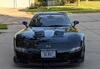
 What are those fittings on the filler neck for?
The lower -6an will probably be used as oil return from the Turbosmart pressure regulator for the turbo oil feed; the other -6an to connect with the rear turbo oil return and the front -10 for the PCV catch can setup.
Neit- are you also running the solid dowels?
As I continue to do more recent research, I am finding that building a 600rwp+ motor is significantly different that my old FD build.
As I continue to do more recent research, I am finding that building a 600rwp+ motor is significantly different that my old FD build.
The oil loop I added just to improve flow to the front bearing plus I'm running a front E&J ball bearing support. Also some oil flow/pressure mods like ported oil galleys, o-ringed oil pump, increased pressure regulator, etc.
The rotating assembly is balanced to 10250rpm but I'll limit it to 9500-9800.

Last edited by neit_jnf; Nov 10, 2022 at 05:24 PM.

Rotary Enthusiast
Joined: Dec 2016
Posts: 928
Likes: 1,060
From: Bangkok
A lot of things honestly. The last higher HP(for its time) build I went through was the early 2000s. Coming from a T78 half bridge with alcohol injection. The hardware technology(turbos, manifolds, ECU, etc.) is on a completely different level. I also feel that a lot in the rotary community have really dug deeper into modifying the motor-- IE Solid dowels, External oil mod, enlarging holes in the irons for tension bolts, etc. E85 vs pump vs AI and theories on each. I feel like many people have pushed the envelope (good or bad) and the community is able to learn from it.

Thread
Thread Starter
Forum
Replies
Last Post
SoundwaveFD
3rd Generation Specific (1993-2002)
2
Nov 22, 2012 09:53 AM
Fitness Stain
2nd Generation Specific (1986-1992)
20
Feb 10, 2006 03:38 PM